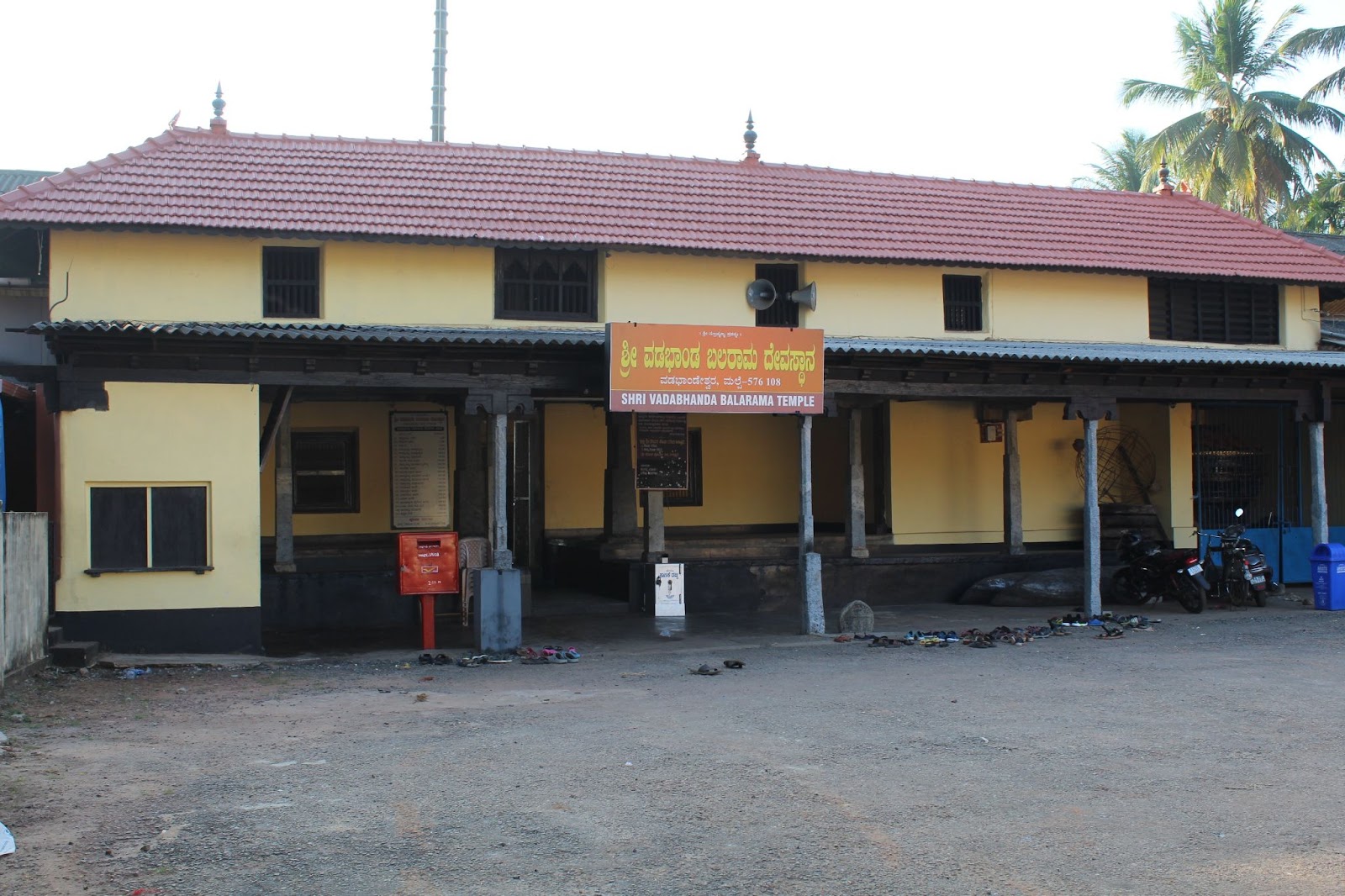
Image Source: Vijay Anand
About Vadabhandeshwara Temple
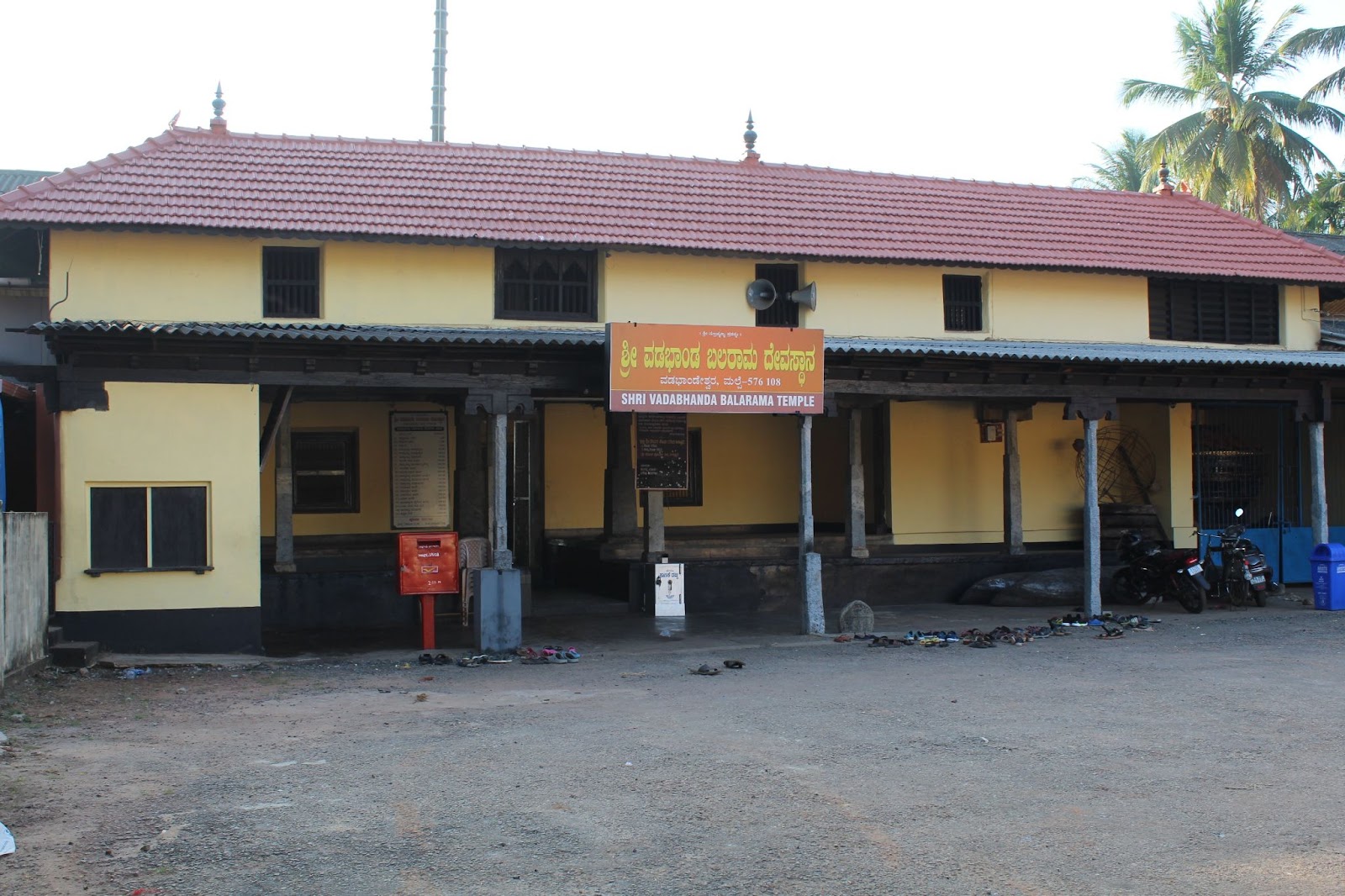
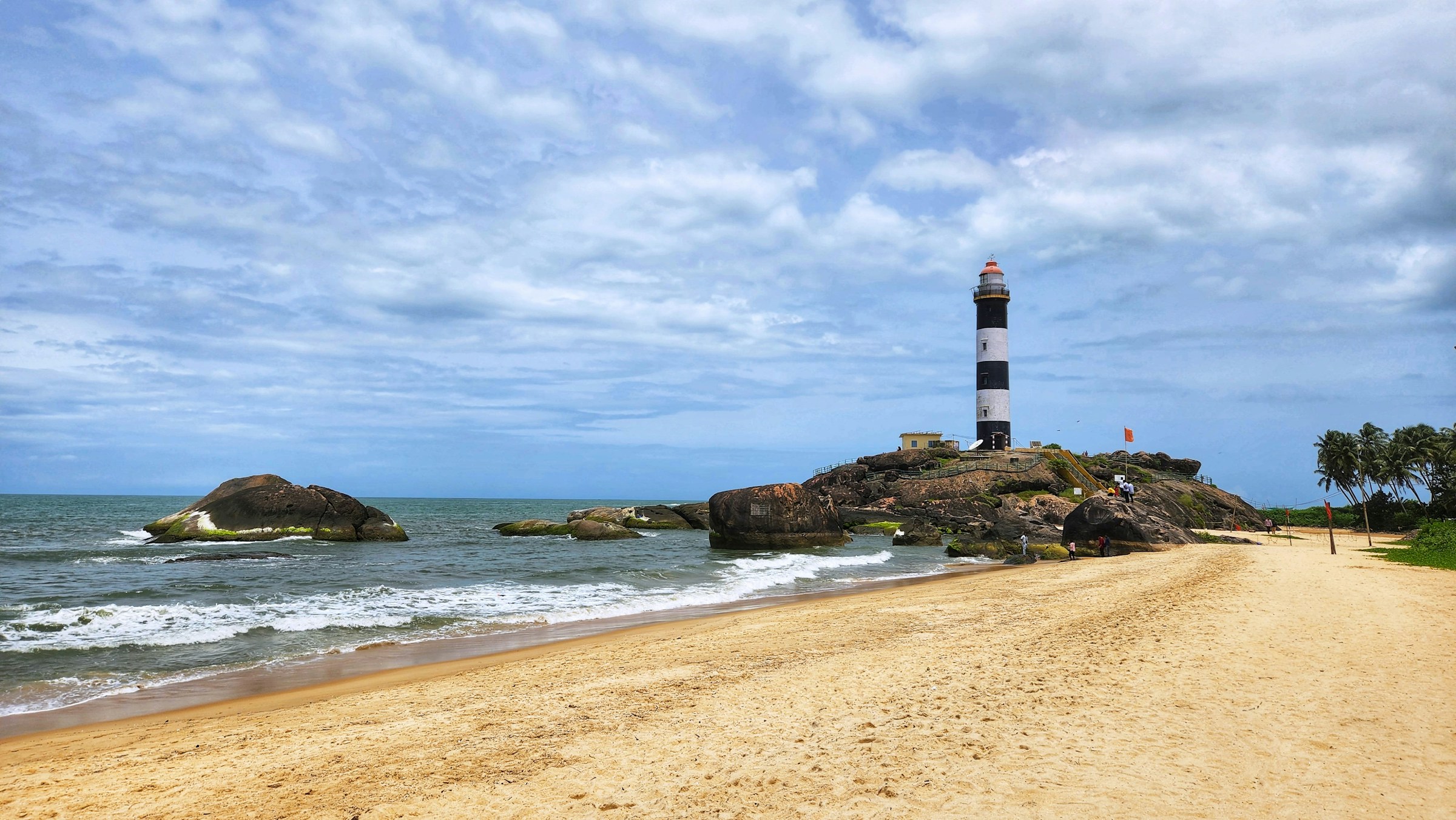
Dedicated to Lord Sri Balarama, Vadabhandeshwara Temple is an ancient and spiritually significant Hindu temple located near Malpe Beach in the Udupi district, Karnataka. Unlike large temple complexes, Vadabhandeshwara Temple is modest in scale. It occupies a beautiful position on a rocky island in the Arabian Sea and is accessible only during low tide.
The temple reflects the religious landscape of Udupi, Malpe, and the wider Tulunadu coastal region, where Vaishnava traditions, sea-based livelihoods, and sacred geography intersect.
History
The temple is dedicated to Lord Sri Balarama, also known as Vadabhandeshwara, who is considered a protector and a symbol of strength and righteousness. According to Indian mythology, Madhvacharya, who was the founder of the Dvaita philosophy, washed the sacred idol of Lord Krishna at Malpe beach. But before installing the Krishna idol at the famous Udupi Sri Krishna Matha, he installed an idol of Lord Balarama at Vadabhandeshwara. Historically significant, the temple is an important part of the spiritual and cultural heritage of the region.
Who Is Lord Balarama?
Lord Sri Balarama is one of the most important figures in the Vaishnava tradition and is worshipped as the elder brother of Lord Krishna. He is regarded as an incarnation of Adi Shesha, the cosmic serpent that serves as the resting bed of Lord Vishnu, symbolizing stability and support of the universe. In Hindu philosophy, Balarama represents strength tempered by discipline, forming a moral and physical counterbalance to Krishna’s divine playfulness and diplomacy.
Balarama is traditionally depicted holding a plough (Hala) and a mace (Gada). The plough symbolizes control over land, agriculture, and order, as well as the power to realign what has gone astray, while the mace represents righteous strength used for protection rather than domination. In scriptures such as the Bhagavata Purana, Harivamsa, and Mahabharata, Balarama is portrayed as a guardian of dharma, known for his uncompromising sense of justice and moral clarity. His decision to remain neutral during the Kurukshetra War further emphasizes his belief in restraint and ethical balance.
In Udupi’s Vaishnava tradition, Lord Balarama—also known as Balabhadra or Halaayudha—is worshipped as the embodiment of inner strength, self-control, and stability. Temples dedicated to him, such as Vadabhandeshwara Temple, emphasize the philosophy that true power lies in control over ego, impulses, and chaos, a theme that aligns closely with the temple’s coastal setting and symbolic role.
Meaning and Local Interpretation
The name Vadabhandeshwara carries layered meanings derived from local linguistic and spiritual traditions. The word “Vada Bandha” in regional usage refers to binding, fastening, or restraining, while “Eshwara” denotes the supreme divine principle. Although the term “Eshwara” is often associated with Shiva, in this context it reflects the supreme authority embodied by Lord Sri Balarama. Local belief holds that the deity here symbolically “binds” destructive natural forces and negative energies, particularly those arising from the sea. This interpretation resonates strongly with coastal communities of Malpe, Udupi, Kaup, and nearby fishing villages, who revere the temple as a protective spiritual anchor.
Mythological and Religious Significance
Vadabhandeshwara Temple is closely connected to Vaishnava belief systems prevalent in Udupi, where Lord Balarama is revered as a guardian of dharma and discipline. According to regional traditions, Balarama’s presence along the coast represents the control of primal forces, especially water and land.
As the wielder of the plough (Hala), Balarama symbolizes both agricultural fertility and territorial balance—an important concept in a region where farming and fishing coexist. Devotees believe the temple acts as a kshetrapala, or guardian deity, spiritually safeguarding the coastline from calamities and ensuring stability for seafarers and local residents.
Architecture
Vadabhandeshwara Temple reflects traditional coastal temple architecture, shaped primarily by environmental necessity rather than ornamental grandeur. The structure is built using durable stone to withstand salt-laden winds, strong tides, and seasonal monsoon storms. The temple features a compact garbhagriha, housing the idol of Lord Sri Balarama, with minimal exterior decoration. The low-height superstructure reduces wind resistance, while the thick stone walls provide long-term resilience. The weathered appearance of the temple, marked by centuries of exposure to the sea, enhances its sense of antiquity and sacred endurance.
Worship of Lord Sri Balarama
In Vadabhandeshwara Temple , Lord Sri Balarama is worshipped as the embodiment of strength governed by discipline. Known by names such as Balabhadra and Halaayudha, Balarama represents moral order, physical power, and spiritual restraint. In the context of Udupi’s Vaishnava heritage, he complements Lord Krishna’s divine playfulness with firmness and balance. Devotees approach the deity seeking stability in life, inner control, protection from adversity, and harmony with natural forces.
Rituals and Daily Worship Practices
Rituals at Vadabhandeshwara Temple follow local Vaishnava customs adapted to coastal conditions. Worship is conducted primarily during low tide, when access to the temple is possible. Abhishekam is performed using water, milk, and tender coconut water, reflecting the coastal environment.
Offerings of tulasi leaves, flowers, and simple naivedya are common. Many devotees perform pradakshina in silence, facing the sea, and engage in meditation, allowing the sound of waves to become part of their spiritual experience.
Festivals and Auspicious Occasions
A number of visitors arrive during Balarama Jayanti, Krishna Janmashtami, and other Vaishnava festivals observed in Udupi. Devotees from Udupi town, Malpe, Kaup, Brahmavar, and surrounding villages visit the temple in large numbers. So carefully plan the pilgrimage according to tide schedules. The temple also holds significance during Makara Sankranti and other seasonal transitions, when the balance between natural elements is ritually acknowledged.
Best Time to Visit
- The temple can be visited year-round, but the winter months (October to February) offer pleasant weather for exploring the area.
- Visiting during festivals provides an opportunity to witness the temple’s vibrant cultural activities.
How to Reach
- By Air: The nearest airport is Mangalore International Airport, about 60 km from Malpe.
- By Rail: The closest railway station is Udupi Railway Station, which is well connected to major cities.
- By Road: The area is well connected by NH-66 from Mangaluru and Kundapura. Regular buses and taxis are available from Udupi to Malpe.
Nearby Attractions
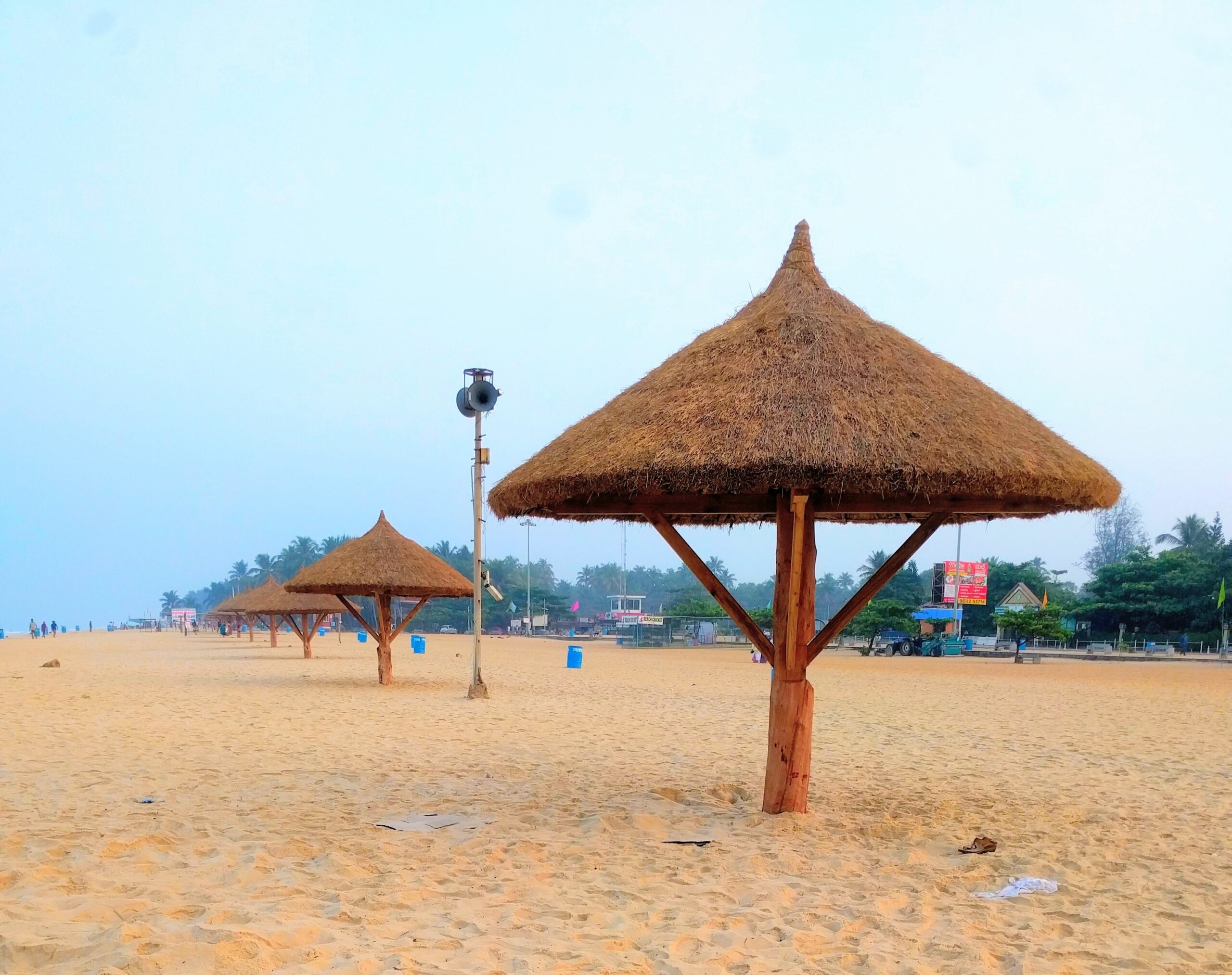
Visit the temple along with Malpe Beach and nearby attractions like St. Mary’s Island.
Map of Vadabhandeshwara Temple
FAQS
- Q: Where is Vadabhandeshwara Temple located?
Vadabhandeshwara Temple is located near Malpe Beach in Udupi district, Karnataka, on a rocky outcrop in the Arabian Sea.
- Q. Which deity is worshipped at Vadabhandeshwara Temple?
The temple is dedicated to Lord Sri Balarama, the elder brother of Lord Krishna and an important deity in the Vaishnava tradition.
- Q: Why is Vadabhandeshwara Temple accessible only during low tide?
The temple is built on a natural rocky island, and a stone pathway connecting it to the shore becomes visible only during low tide, while high tide submerges the path.
- Q: What is the significance of the name “Vadabhandeshwara”?
The name signifies binding or restraint, symbolizing the divine power of Lord Balarama to control destructive forces and maintain balance between land and sea.
- Q: Is Vadabhandeshwara Temple connected to Udupi Krishna Temple?
Yes, the temple is spiritually linked to Udupi’s Vaishnava tradition and is revered by devotees of both Lord Krishna and Lord Balarama.
- Q: What is the best time to visit Vadabhandeshwara Temple?
The best time to visit is early morning or evening during low tide, preferably outside the monsoon season.
- Q: Is it safe to visit the temple during monsoon?
No, visiting during monsoon or high tide is not recommended due to strong waves, slippery rocks, and safety risks.
- Q: Are there any special festivals celebrated at the temple?
Yes, the temple sees increased devotion during Balarama Jayanti, Krishna Janmashtami, Makara Sankranti, and other Vaishnava festivals.
- Q: Who usually worships at this temple?
The temple is visited by local devotees from Udupi, Malpe, Kaup, Brahmavar, fishermen communities; Vaishnava followers; and spiritual seekers.
- Q: What makes Vadabhandeshwara Temple unique among Udupi temples?
Its coastal island location, tidal accessibility, dedication to Lord Balarama, and strong symbolism of restraint and balance make it unique.