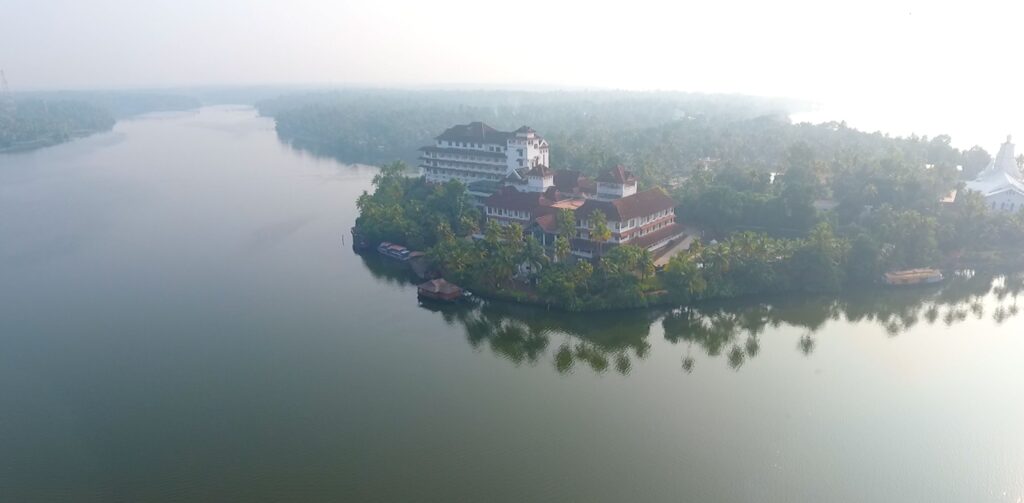
Image Source: The Raviz
About Ashtamudi Lake
Ashtamudi Lake, located in the Kollam district of Kerala, is one of the most picturesque and significant wetlands of South India. Known as the gateway to Kerala’s backwaters, this sprawling lake is famous for its unique topography, thriving biodiversity, and cultural importance. The name Ashtamudi translates to “eight coned” in Malayalam, referring to the lake’s eight arms or channels that spread out like branches, creating a stunning labyrinth of waterways.
Geography and Features
Covering an area of nearly 61 square kilometers, Ashtamudi is the second-largest lake in Kerala, after Vembanad. It stretches over 16 kilometers, eventually draining into the Arabian Sea at Neendakara, an important fishing harbor. The lake is fed by the Kallada River, while its intricate network of canals and creeks sustains surrounding villages and towns.
One of its most striking features is the palm-fringed banks and mangrove vegetation, which provide both ecological balance and scenic charm. The lake also has several islands, including Munroe Island (Munrothuruthu), a cluster of small islets where tourists can witness rustic village life and canoe through narrow canals.
Ecological Importance
Designated as a Ramsar Wetland of International Importance in 2002, Ashtamudi Lake supports a diverse ecosystem. It is home to:
Mangroves and wetland vegetation, which act as nurseries for fish and prawns.
A variety of bird species, including cormorants, egrets, herons, and migratory birds.
A thriving population of fish and clams, sustaining the traditional livelihoods of the local communities.
The lake is particularly famous for its short-neck clam fishery, which provides food and income for thousands of families around Kollam.
Tourism and Experiences
Ashtamudi is a central hub for Kerala backwater tourism, second only to Alappuzha and Kumarakom. Key attractions and experiences include:
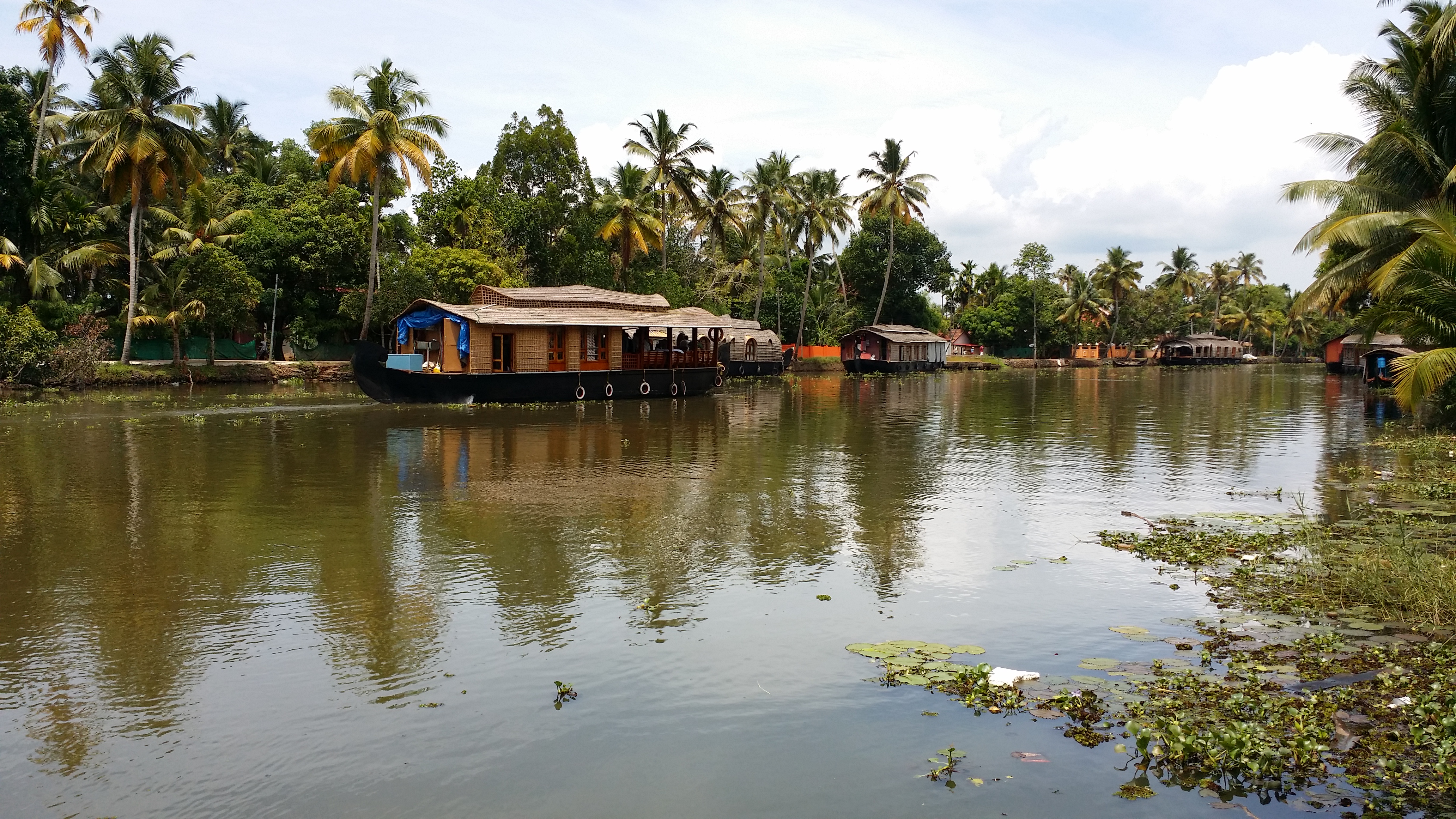
Houseboat Cruises – Visitors can embark on serene journeys in kettuvallams (houseboats), gliding past fishing villages, coconut groves, and traditional coir-making units.
Munroe Island – Known for canoe tours through narrow canals, village walks, and views of migratory birds.
Backwater Resorts – Numerous luxury and heritage resorts line the lake’s banks, offering Ayurveda therapies and cultural programs.
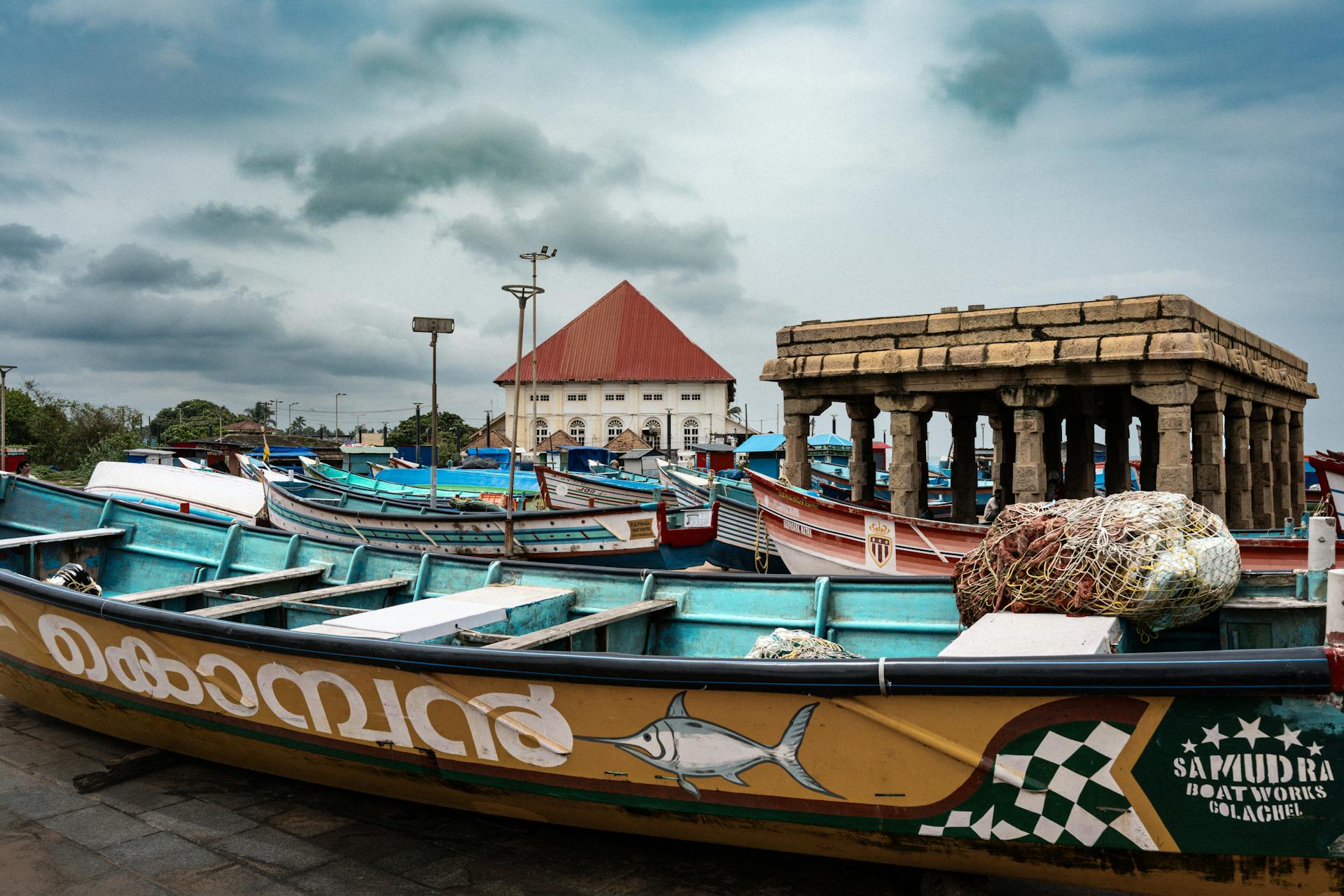
Neendakara Harbor – A major fishing port where travelers can watch fishing trawlers and seafood auctions.
Chinese Fishing Nets – Traditional cheena vala fishing nets, seen along the lake’s banks, are iconic to Kollam and Ashtamudi.
Cultural and Local Life
Ashtamudi is deeply tied to the cultural fabric of Kollam. The lake has historically been a trade and transport hub, linking Kerala’s inland waterways with the Arabian Sea. Villages along the shore still thrive on coir-making, clam fishing, prawn farming, and toddy tapping. Visitors also get a glimpse of local traditions such as temple festivals, Kathakali performances, and snake boat races, which are held in the region during festive months.
Best Time to Visit
November to February – The most pleasant season, ideal for backwater cruises and sightseeing.
June to September – The monsoon months, when the lake is lush and full, offering a raw and dramatic charm, though cruises may be limited.
August – To witness boat races and Onam festivities around Kollam and the backwaters.
How to Reach Ashtamudi Lake
Ashtamudi Lake is one of Kerala’s most beautiful backwater destinations and the second-largest lake in the state. Known for its palm-fringed shores, traditional houseboat cruises, and tranquil waterways, the lake is centered around Kollam and is well connected by air, rail, road, and water transport.
By Air
The nearest airport is Trivandrum International Airport, located approximately 70 km south of Ashtamudi Lake. The airport is connected to major Indian cities and several international destinations. From the airport, visitors can hire taxis or take buses to Kollam, reaching the lake in about 1.5 to 2 hours.
By Train
The nearest railway station is Kollam Junction Railway Station, one of the busiest railway stations in Kerala. It is located just a few kilometers from the lake and enjoys direct rail connectivity with cities such as Thiruvananthapuram, Kochi, Chennai, Bengaluru, and Mumbai. Auto-rickshaws and taxis are readily available from the station.
By Road
Kollam is well connected by National Highway 66 and a network of state highways. Regular KSRTC and private buses operate from Thiruvananthapuram, Kochi, Alappuzha, and other major towns in Kerala. Travelers driving from Kochi can reach Ashtamudi Lake in approximately 4 to 5 hours.
By Water
One of the most memorable ways to reach or explore Ashtamudi Lake is through Kerala’s inland waterways. Houseboats, ferries, and backwater cruises operate between Kollam and nearby destinations, offering visitors scenic views of villages, coconut groves, and mangrove-lined channels.
Nearby Attractions
Thangassery Lighthouse – A historic colonial-era lighthouse offering panoramic views.
Jatayu Earth Center – The world’s largest bird sculpture, located in Chadayamangalam.
Punalur and Thenmala – Scenic destinations in the foothills of the Western Ghats.
Alappuzha Backwaters – Just a short houseboat ride away for those seeking extended cruises.
Google Maps
FAQs
1. Why is Ashtamudi Lake famous?
Ashtamudi Lake is famous for its extensive backwater network, houseboat cruises, rich biodiversity, mangrove ecosystems, and picturesque landscapes. The name “Ashtamudi” means “eight braids” or “eight branches,” referring to its unique shape with multiple channels.
2. What is the best time to visit Ashtamudi Lake?
The ideal time to visit is between October and March when the weather is pleasant and suitable for boating, sightseeing, and outdoor activities.
3. Are houseboat cruises available on the lake?
Yes. Houseboat cruises are among the most popular activities on Ashtamudi Lake. Visitors can choose from day cruises, sunset cruises, and overnight houseboat stays.
4. How much time is needed to explore Ashtamudi Lake?
A half-day trip is sufficient for a short boat ride, while a full-day or overnight stay is recommended to fully experience the lake and surrounding backwaters.
5. Is Ashtamudi Lake suitable for family trips?
Yes. The calm waters, scenic surroundings, and comfortable houseboat experiences make it an excellent destination for families, couples, and nature lovers.
6. Can visitors spot wildlife around the lake?
Yes. The lake supports a variety of fish, birds, and aquatic life. Birdwatchers can often spot kingfishers, cormorants, herons, and migratory birds in certain seasons.
7. Are there accommodation options near the lake?
Yes. The area offers a range of accommodations, including luxury resorts, waterfront hotels, houseboats, and budget-friendly homestays.
8. Is swimming allowed in Ashtamudi Lake?
Swimming is generally not a common tourist activity due to boat traffic and varying water conditions. Visitors should follow local safety guidelines.
9. What activities can tourists enjoy at Ashtamudi Lake?
Popular activities include houseboat cruises, canoe rides, village tours, fishing experiences, birdwatching, photography, and enjoying Kerala’s traditional cuisine at lakeside resorts.
10. Can Ashtamudi Lake be visited as a day trip?
Yes. Travelers staying in Kollam can easily visit the lake as a day trip. It is also accessible as a day excursion from Thiruvananthapuram, though an overnight stay offers a more immersive backwater experience.