Image Source: Vinay.chittora
About the Brokpa Tribe
Ladakh is known for its breathtaking landscapes, crystal-clear lakes, rugged mountains, ancient monasteries, and vast cold deserts. Yet among these remarkable features exists a unique community that stands apart from the region’s predominantly Tibetan-Buddhist culture—the Brokpa tribe. Often referred to as the inhabitants of Ladakh’s “Aryan Valley,” the Brokpas are one of the most fascinating ethnic groups in the Himalayas.
The Brokpa people differ from many other communities in Ladakh in terms of language, traditions, physical features, and cultural practices. For decades, they have attracted the attention of historians, anthropologists, and travelers due to claims that they are descendants of an ancient Indo-Aryan population. Some local legends even link them to the soldiers of Alexander the Great, although no conclusive historical or genetic evidence has confirmed this theory.
Where Do the Brokpas Live?
The traditional homeland of the Brokpa tribe lies in the remote Aryan Valley of western Ladakh. Historically, the community inhabited the villages of Dah, Hanu, Darchik, and Garkon, located along the banks of the Indus River in the Batalik sector near the Line of Control.
These villages are surrounded by dramatic mountain landscapes, terraced fields, apricot orchards, and narrow valleys that remain relatively untouched by mass tourism. Due to their remote location, the Brokpa settlements preserved their distinct culture and traditions for centuries.
Today, Dah and Hanu are the most frequently visited villages and serve as the cultural heart of the Brokpa community. Visitors can witness traditional homes, colorful attire, and age-old customs that continue to thrive despite the influences of modernization.
Origin and Cultural Identity
The word “Brokpa” is believed to have originated from the ancient Sanskrit term “Darada,” referring to the Dardic people who historically inhabited parts of the western Himalayas. The Brokpas speak Brokskat, a unique Dardic language that differs significantly from Ladakhi and Tibetan dialects spoken elsewhere in the region.
One of the reasons the tribe has gained worldwide attention is the long-standing belief that they are descendants of a “pure Aryan” lineage. According to local folklore, soldiers accompanying Alexander the Great reached this region during their campaigns and later settled in the area, marrying local women and establishing communities. Over generations, these stories became an important part of the tribe’s identity.
However, historians and researchers continue to debate these claims. While the Brokpas possess distinct cultural and linguistic characteristics, there is currently no definitive genetic or historical evidence proving direct descent from Alexander’s soldiers or supporting claims of a “pure Aryan race.”
Distinctive Lifestyle and Traditions
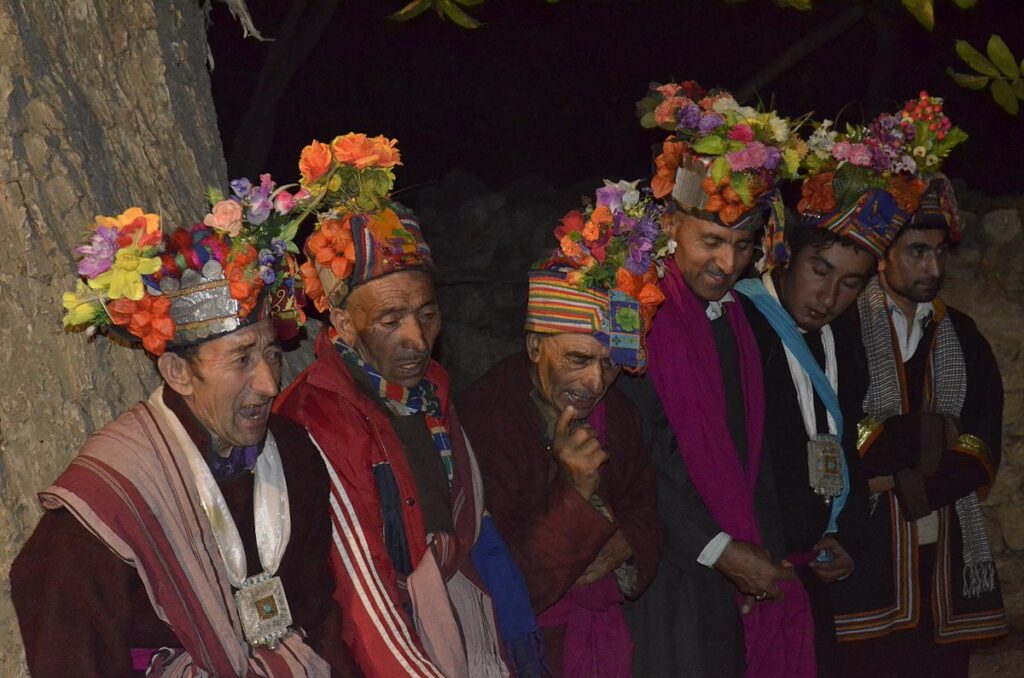
The Brokpa people are known for their vibrant traditional dress and unique cultural practices. Women often wear elaborate headgear decorated with fresh flowers, beads, coins, and precious stones, creating one of the most recognizable traditional costumes in Ladakh.
Agriculture remains an important part of daily life. The community cultivates barley, wheat, vegetables, and fruits, particularly apricots and walnuts. Traditional songs, dances, and seasonal festivals continue to play a central role in preserving their heritage.
Many Brokpas practice a blend of Buddhism and ancient indigenous traditions, reflecting centuries of cultural evolution in this isolated Himalayan region. Their close connection with nature is evident in local rituals, agricultural customs, and community celebrations.
Opening to Tourism
For many years, the Brokpa villages remained largely inaccessible to outsiders due to their remote location and strategic position near the border. Only a limited number of villages were initially opened to visitors. Gradually, restrictions eased, and by 2010, more villages became accessible to tourists.
The opening of the Aryan Valley brought increasing numbers of researchers, photographers, backpackers, and cultural enthusiasts eager to learn about the community’s unique way of life. Tourism has provided additional income opportunities for local residents through homestays, guided tours, and handicraft sales.
At the same time, the growing interest has led to several myths and sensational stories regarding the tribe’s ancestry. While such narratives continue to attract curiosity, experts emphasize that the Brokpa community should be appreciated primarily for its rich cultural heritage, language, traditions, and historical significance rather than unverified racial theories.
How to Reach the Brokpa Villages
The Brokpa villages are located approximately 160–180 kilometers west of Leh and can be reached by road through the scenic Leh–Khaltsi–Batalik route.
By Air
The nearest airport is the Leh Airport, officially known as Kushok Bakula Rimpochee Airport. Regular flights connect Leh with Delhi and several major Indian cities. From Leh, visitors can hire a taxi or join a guided tour to the Aryan Valley.
By Road
The most convenient route is from Leh via Khaltsi, Domkhar, and Batalik. The journey takes approximately 5–6 hours and offers stunning views of the Indus River, mountain landscapes, and traditional Ladakhi villages.
Best Time to Visit
The ideal time to visit the Brokpa villages is between May and September, when roads remain open and the weather is pleasant. During summer, visitors can also witness local festivals and agricultural activities.
Nearby Attractions
Lamayuru Monastery
One of Ladakh’s oldest and most spectacular monasteries, famous for its dramatic moon-like landscape and centuries-old Buddhist heritage.
Alchi Monastery
Renowned for its ancient wall paintings and Indo-Tibetan artistic traditions, Alchi is one of the most important cultural sites in Ladakh.
Batalik
A strategically significant region known for its scenic valleys and historical importance during the Kargil conflict.
Kargil
The second-largest town in Ladakh, offering cultural attractions, local markets, and access to several remote Himalayan destinations.
Indus River
The lifeline of Ladakh, the Indus flows alongside many Brokpa settlements and provides stunning landscapes for photography and exploration.
FAQs
1. Who are the Brokpa people?
The Brokpas are an indigenous ethnic community living in the Aryan Valley of Ladakh, known for their distinct culture, language, and traditions.
2. Where do the Brokpas live?
They primarily reside in the villages of Dah, Hanu, Darchik, and Garkon in western Ladakh.
3. Are the Brokpas descendants of Alexander the Great’s soldiers?
This is a popular local belief, but there is no conclusive historical or genetic evidence supporting the claim.
4. What language do the Brokpas speak?
They speak Brokskat, a Dardic language distinct from Ladakhi and Tibetan dialects.
5. Can tourists visit Brokpa villages?
Yes. The villages are open to tourists, and many visitors stay in local homestays to experience the culture firsthand.
6. What is unique about Brokpa traditional dress?
Women wear elaborate floral headgear decorated with fresh flowers, beads, and ornaments, making it one of the most distinctive traditional costumes in the Himalayas.
7. What is the best time to visit the Aryan Valley?
The best time is from May to September when weather conditions are favorable and roads remain accessible.
8. How far are the Brokpa villages from Leh?
The villages are approximately 160–180 kilometers from Leh and can be reached in about 5–6 hours by road.
9. What are the main occupations of the Brokpa people?
Agriculture, horticulture, livestock rearing, and tourism-related activities are the primary sources of livelihood.
10. Why is the Aryan Valley famous?
The valley is famous for its unique Brokpa culture, scenic landscapes, traditional villages, and the long-standing legends surrounding the community’s ancestry.