Image Source: SHUBHAM KOSTA
About Gwalior Fort
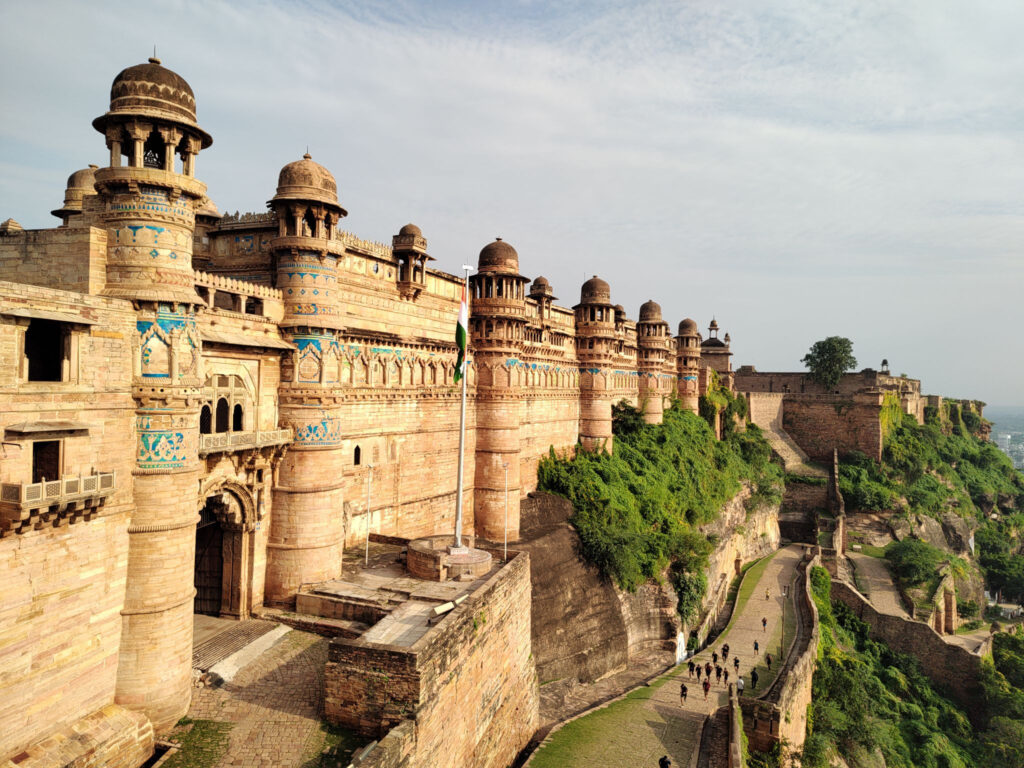
Perched dramatically atop the rocky Gopachal Hill, Gwalior Fort is one of the most magnificent hill forts in India and a symbol of the rich heritage of Madhya Pradesh. Often referred to as the “Pearl Among Fortresses,” this massive fort dominates the skyline of Gwalior and offers visitors a fascinating journey through centuries of history, architecture, art, and culture.
Spread across nearly 3 square kilometers, the fort complex is home to grand palaces, ancient temples, intricately carved Jain sculptures, reservoirs, and impressive gateways. Whether you’re a history enthusiast, an architecture lover, or simply a traveler seeking breathtaking views, Gwalior Fort promises an unforgettable experience.
History of Gwalior Fort
The origins of Gwalior Fort date back to the 8th century when it was built by King Suraj Sen. According to local legend, Suraj Sen was suffering from leprosy when he met a sage named Gwalipa. The sage guided him to a sacred water tank known as Suraj Kund, whose waters cured the king’s illness. In gratitude, Suraj Sen established the fort and named it after the saint.
Over the centuries, the fort witnessed the rule of several powerful dynasties, including the Tomars, Delhi Sultans, Mughals, Marathas, Scindias, and the British. Each ruler left behind architectural and cultural influences that can still be seen throughout the complex today.
The fort also played an important role during India’s First War of Independence in 1857. Freedom fighters such as Rani Lakshmibai of Jhansi and Tatya Tope fought bravely in and around Gwalior during the uprising, making the fort a significant landmark in India’s struggle for freedom.
Architecture of Gwalior Fort
Gwalior Fort is renowned for its imposing sandstone walls that rise dramatically from the hilltop. The fort complex includes several palaces, temples, gateways, water tanks, and historical structures spread across a vast area.
Visitors can enter through the grand Hathi Pol (Elephant Gate), adorned with beautiful carvings, or through the historic Badalgarh Gate. The fort’s architecture reflects a blend of Rajput, Mughal, and Hindu influences, making it a living museum of India’s architectural evolution.
Man Mandir Palace – The Jewel of the Fort
One of the most spectacular attractions inside the fort is the Man Mandir Palace, built by Raja Man Singh Tomar between 1486 and 1516 CE. The palace is famous for its colorful glazed tile work featuring images of ducks, elephants, peacocks, flowers, and geometric patterns.
Its beautifully decorated courtyards, underground chambers, and intricately designed interiors showcase the artistic excellence of the Tomar dynasty. The palace also carries tales of royal sacrifice and political intrigue. Historical records mention the imprisonment of Prince Murad, brother of Emperor Aurangzeb, within these walls.
Gujari Mahal Museum
Located at the foot of the fort, Gujari Mahal was built by Raja Man Singh Tomar for his beloved queen Mrignayani. Today, the palace serves as an archaeological museum and houses an impressive collection of sculptures, inscriptions, bronze artifacts, and rare antiquities dating from the 1st century BCE onwards.
The museum offers valuable insights into the region’s artistic and cultural heritage and is a must-visit for history lovers.
Teli Ka Mandir – An Architectural Wonder
Teli Ka Mandir is the tallest temple within Gwalior Fort and one of its most remarkable monuments. Built around the 9th century during the reign of Mihira Bhoja of the Pratihara dynasty, the temple stands nearly 100 feet high.
What makes this temple unique is its striking fusion of North Indian Nagara and South Indian Dravidian architectural styles. The temple’s elaborate carvings, towering structure, and depictions of Garuda, the divine vehicle of Lord Vishnu, highlight the exceptional craftsmanship of ancient Indian artisans.
Saas-Bahu Temples
The Saas-Bahu Temples, also known as the Sahastrabahu Temples, are among the finest examples of medieval temple architecture in central India. Built during the 11th century, these temples are dedicated to Lord Vishnu and feature intricate carvings, ornate pillars, and beautifully sculpted ceilings.
Despite their popular name, the temples have no direct connection to mothers-in-law and daughters-in-law. Their nickname evolved from the original name “Sahastrabahu.”
The peaceful surroundings and detailed stonework make these temples a favorite stop for visitors exploring the fort.
Jain Sculptures of Gopachal Hill
One of the most awe-inspiring sights at Gwalior Fort is the collection of giant Jain rock-cut sculptures carved directly into the cliffs of Gopachal Hill. Created between the 14th and 15th centuries during the Tomar period, these sculptures depict various Jain Tirthankaras.
There are more than 1,500 carvings ranging from a few inches in height to colossal statues exceeding 50 feet. Among them, the most famous is the towering image of Rishabhanatha (Adinatha), the first Jain Tirthankara. These sculptures are considered some of the finest examples of Jain rock-cut art in India.
Local Experience at Gwalior Fort
A visit to Gwalior Fort is not just about monuments and history. The fort offers spectacular panoramic views of Gwalior city, especially during sunrise and sunset. Visitors can explore hidden pathways, ancient reservoirs, and centuries-old structures while enjoying the cool breeze from the hilltop.
In the evening, the Light and Sound Show held inside the fort brings its history to life through narration, music, and visual effects. It is highly recommended for travelers who want to understand the fort’s fascinating past.
How to Reach Gwalior Fort
By Air
The nearest airport is Gwalior Airport, located about 12 km from the fort. Regular flights connect Gwalior with major Indian cities such as Delhi, Mumbai, and Bengaluru.
By Train
Gwalior Junction Railway Station is one of the major railway stations in North India and is well connected to Delhi, Agra, Jhansi, Bhopal, Mumbai, and other important cities.
By Road
Gwalior enjoys excellent road connectivity through National Highways. Buses and taxis are readily available from nearby cities such as Agra, Jhansi, Indore, and Bhopal.
Local Transport
Auto-rickshaws, taxis, and local buses can easily take visitors to the fort entrance. Many travelers prefer hiring a local guide to better understand the fort’s rich history and hidden stories.
Nearby Attractions
Jai Vilas Palace
A magnificent royal palace known for its grand Durbar Hall, European-style architecture, and fascinating museum.
Gujari Mahal Museum
An excellent archaeological museum showcasing ancient sculptures and artifacts.
Tomb of Tansen
The resting place of the legendary musician Tansen, one of Emperor Akbar’s Navratnas.
Sun Temple
A beautiful modern temple inspired by the famous Konark Sun Temple of Odisha.
Tigra Dam
A peaceful picnic spot located on the outskirts of Gwalior, ideal for nature lovers.
Maps
FAQs
What is Gwalior Fort famous for?
Gwalior Fort is famous for its massive hilltop location, historic palaces, ancient temples, Jain rock-cut sculptures, and its association with several important dynasties of India.
How much time is needed to explore Gwalior Fort?
Most visitors spend 3–5 hours exploring the major attractions within the fort complex.
Is there an entry fee for Gwalior Fort?
Yes, entry fees are applicable for certain monuments within the fort complex. Charges may vary for Indian and foreign tourists.
What is the best time to visit Gwalior Fort?
The ideal time to visit is between October and March when the weather is pleasant for sightseeing.
Is photography allowed inside the fort?
Photography is generally permitted in most areas, although some museum sections may have restrictions.
Can visitors attend the Light and Sound Show?
Yes, the fort hosts an evening Light and Sound Show that narrates the history of Gwalior Fort and its rulers. It is one of the most popular experiences for visitors.