Image Source: PRAVEEN KUMAR
Overview
Among the many architectural wonders of Khajuraho, the Chausath Yogini Temple stands out as one of the oldest and most historically significant monuments in the region. Recognized as a monument of national importance and protected by the Archaeological Survey of India (ASI), this ancient temple is located within the Western Group of Temples in Khajuraho. It lies about 1.5 km from Khajuraho Bus Stand and just a short distance from the famous Kandariya Mahadev Temple.
Unlike the ornate sandstone temples that Khajuraho is famous for, the Chausath Yogini Temple offers visitors a glimpse into an earlier phase of temple architecture. Its weathered stone walls and open-air design tell stories of a bygone era, making it a fascinating destination for history lovers, architecture enthusiasts, and spiritual seekers alike.
The Oldest Surviving Temple in Khajuraho
The name “Chausath Yogini” literally means “Sixty-Four Yoginis.” The temple was originally dedicated to the 64 Yoginis, powerful female deities associated with the worship of Goddess Kali and Tantric traditions. According to local beliefs, the temple once contained 64 cells for the Yoginis, while a central or principal shrine served as the abode of Goddess Kali herself.
Built during the 9th century by the Chandela rulers, the temple is considered the earliest surviving structure in Khajuraho. Although time and natural weathering have taken their toll, around 35 of the original shrines can still be seen today, offering valuable insights into the religious practices and architectural styles of ancient India.
Architecture of Chausath Yogini Temple
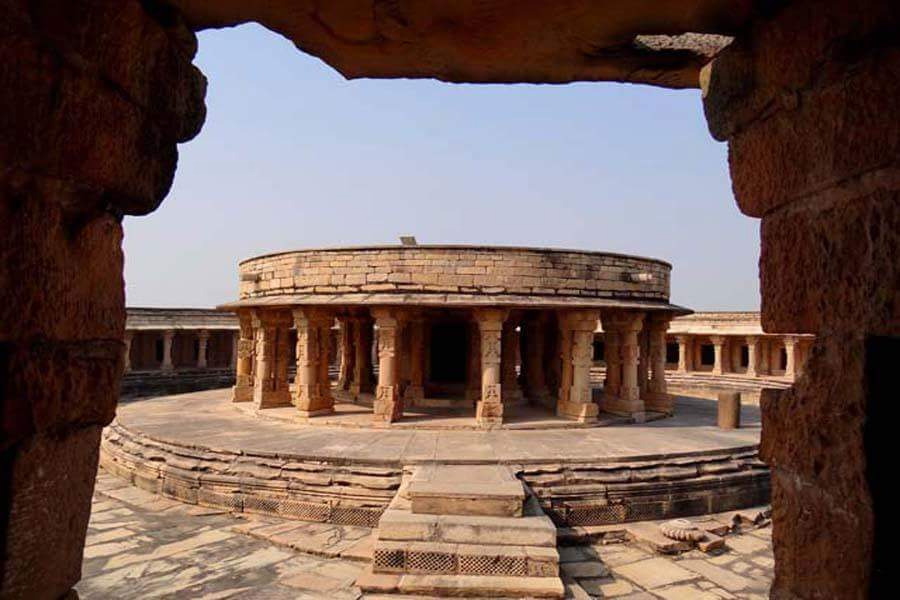
The Chausath Yogini Temple is unique among Khajuraho’s monuments because of its open-air quadrangular layout. Unlike the towering temples that dominate the Khajuraho skyline, this structure was built using coarse granite rather than sandstone, making it one of the few granite temples in the region.
The temple stands on a raised platform and originally consisted of a series of small shrine cells arranged around a large open courtyard. Each cell featured a modest entrance and was topped with a simple curvilinear shikhara. The main shrine was located opposite the entrance and likely served as the focal point of worship.
Its minimalist design reflects an earlier architectural tradition before the grand and highly decorated temples of Khajuraho were constructed. Despite its simplicity, the temple possesses a distinctive charm that sets it apart from the rest of the temple complex.
A Tale of Lost Sculptures
Over the centuries, many of the sculptures and idols that once adorned the temple disappeared due to natural deterioration and historical events. However, archaeological excavations uncovered several remarkable sculptures that provide a glimpse into the temple’s artistic heritage.
Among the most significant discoveries were three impressive statues of goddesses, now preserved in the Khajuraho Archaeological Museum. These sculptures have been identified as representations of Brahmani, Maheshwari, and Hingalaja (or Mahishamardini). Renowned for their intricate craftsmanship and historical value, they are considered some of the oldest surviving sculptures found in Khajuraho.
These preserved artworks continue to showcase the artistic excellence and spiritual traditions that flourished under the Chandela dynasty.
Why Visit Chausath Yogini Temple?
While it may not be as grand or elaborately carved as the famous Kandariya Mahadev Temple, the Chausath Yogini Temple offers a rare opportunity to witness the origins of Khajuraho’s architectural legacy. The peaceful surroundings, ancient ruins, and rich historical significance make it a rewarding stop for anyone interested in India’s cultural and spiritual heritage.
A visit here allows travelers to connect with the early history of the Chandela kingdom and explore one of the most unique temple traditions in medieval India.
How to Reach Chausath Yogini Temple
Chausath Yogini Temple is located within the Western Group of Monuments in Khajuraho, Madhya Pradesh.
By Air: The nearest airport is Khajuraho Airport, situated about 5 km away. Taxis and auto-rickshaws are readily available from the airport.
By Train: Khajuraho Railway Station is approximately 6 km from the temple. Visitors can hire taxis, auto-rickshaws, or local transport to reach the site.
By Road: Khajuraho is well connected to major cities such as Jhansi, Satna, Chhatarpur, and Bhopal. Local taxis, auto-rickshaws, and rental bikes are convenient options for exploring the temple complex.
Since the temple is located close to the Western Group of Temples, it can easily be included in a sightseeing tour of Khajuraho.
Nearby Attractions
Kandariya Mahadev Temple
The largest and most magnificent temple in Khajuraho, known for its soaring shikhara and exquisite carvings.
Lakshmana Temple
One of the best-preserved temples in Khajuraho, dedicated to Lord Vishnu and famous for its detailed sculptures.
Devi Jagdambi Temple
A beautiful temple featuring elegant carvings and a serene atmosphere.
Vishwanath Temple
Dedicated to Lord Shiva, this temple is renowned for its artistic excellence and impressive architecture.
Khajuraho Archaeological Museum
Home to numerous sculptures and artifacts recovered from the temples of Khajuraho, including statues discovered at the Chausath Yogini Temple.
Light and Sound Show
An engaging evening experience that narrates the history of Khajuraho and the Chandela dynasty through lights, music, and storytelling.
Maps
FAQs
1. Why is the Chausath Yogini Temple famous?
The temple is famous for being the oldest surviving temple in Khajuraho and for its association with the worship of the 64 Yoginis in Tantric traditions.
2. Who built the Chausath Yogini Temple?
The temple was built by the Chandela rulers during the 9th century.
3. What makes the temple unique?
Its open-air quadrangular design and granite construction make it distinctly different from the sandstone temples for which Khajuraho is famous.
4. Are all 64 shrines still intact?
No. Only about 35 shrine cells survive today, while the rest have been lost over time.
5. Is the temple part of the UNESCO World Heritage Site?
Yes. It forms part of the Khajuraho Group of Monuments, a UNESCO World Heritage Site.
6. How much time is needed to visit the temple?
Most visitors spend around 20–30 minutes exploring the temple, though history enthusiasts may wish to spend longer studying its architecture and significance.
7. Can the temple be visited along with other Khajuraho monuments?
Yes. It is located within the Western Group of Temples and can easily be explored alongside other major attractions in Khajuraho.