Image Source:flickr
Introduction
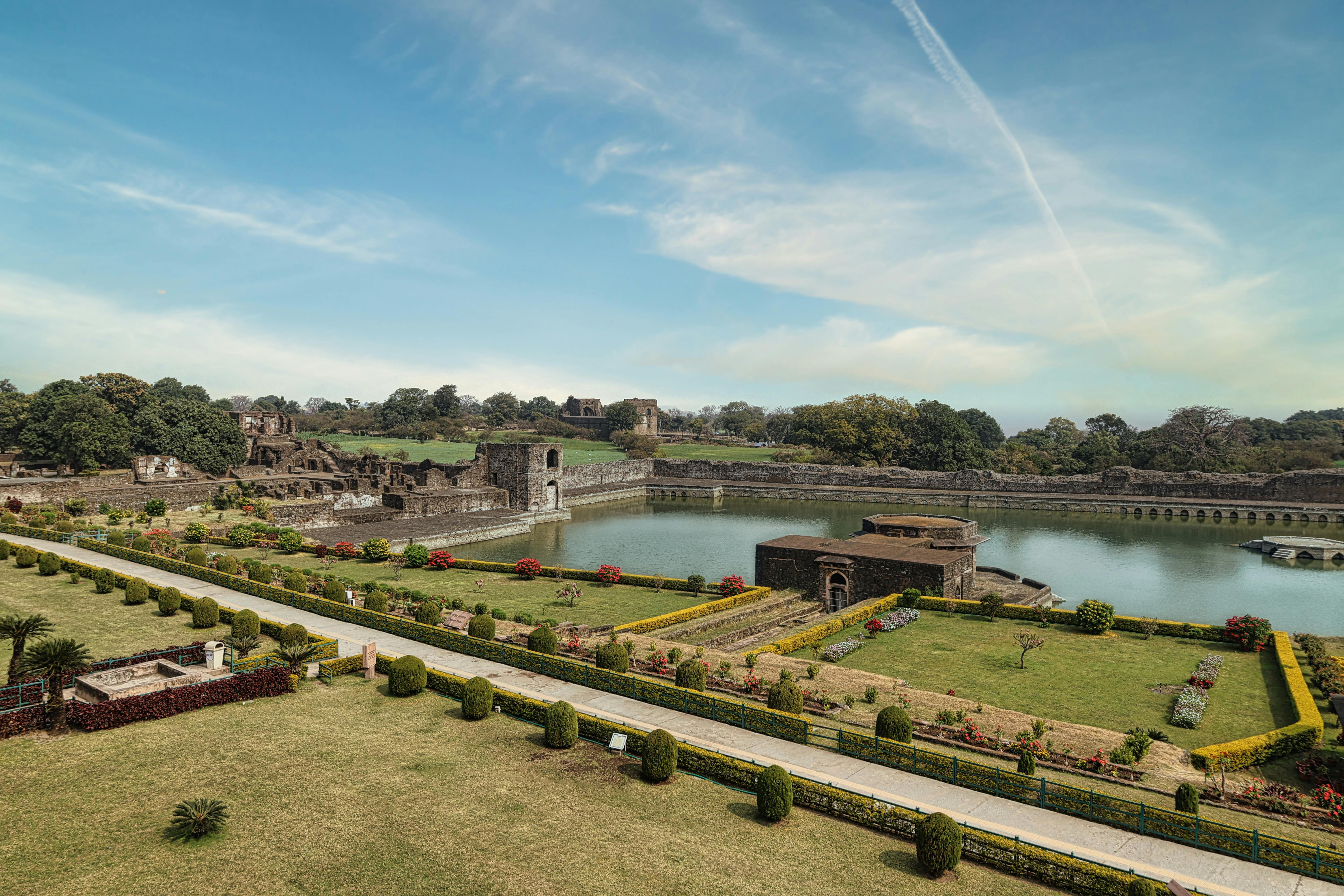
Nestled amid the historic ruins of Mandu in Madhya Pradesh, the Dilawar Khan Mosque stands as one of the earliest Islamic monuments in the region. Built in 1405 AD, this remarkable structure reflects the beginning of the architectural traditions that later flourished under the Malwa Sultanate. Though often overshadowed by Mandu’s grand palaces and forts, the mosque holds immense historical significance and offers visitors a glimpse into the region’s rich medieval heritage.
Surrounded by the scenic landscapes of the Vindhya hills, the mosque remains a peaceful destination for history enthusiasts, architecture lovers, and travelers exploring the ancient city of Mandu.
History of Dilawar Khan Mosque
The Dilawar Khan Mosque was commissioned by Dilawar Khan Ghori, the Pashtun governor of Malwa who later established himself as the independent Sultan of the Malwa Sultanate. Constructed in 1405 AD, it is considered one of the earliest surviving Islamic structures in Mandu, which later became the capital of the Malwa kingdom.
The mosque was built during a period of political transition when Islamic rule was becoming firmly established in central India. Like many early Indo-Islamic monuments, builders incorporated materials from older Hindu and Jain temples into the structure. This practice was common during the medieval era and contributed to the mosque’s unique blend of architectural styles.
Today, the mosque serves as an important reminder of Mandu’s early Sultanate history and the cultural exchanges that shaped the region’s architectural identity.
Architecture of Dilawar Khan Mosque
The architecture of the Dilawar Khan Mosque beautifully combines Islamic design principles with local craftsmanship. Although smaller and less elaborate than some of Mandu’s later monuments, the mosque possesses a distinctive charm that reflects the early stages of Malwa Sultanate architecture.
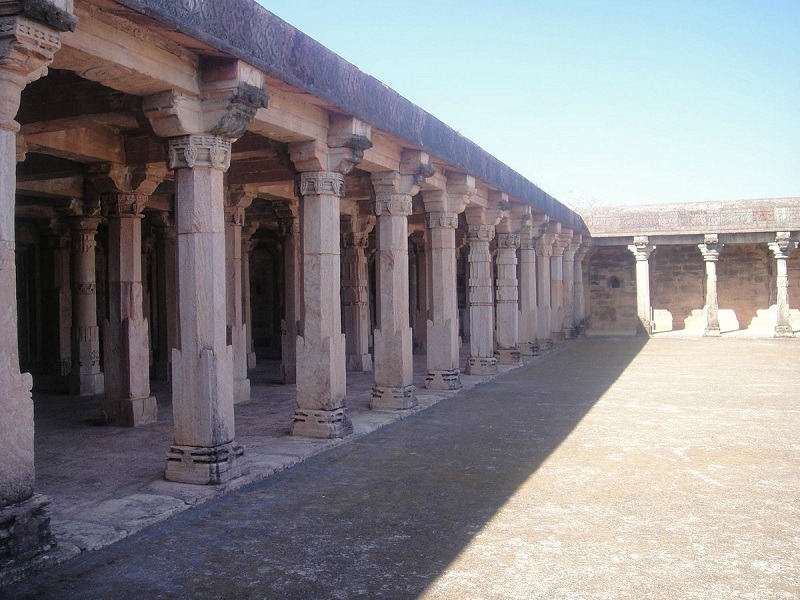
The mosque features a central entrance that opens into a large open courtyard, which forms the heart of the complex. Surrounding the courtyard is a colonnaded corridor on three sides, leading visitors toward the prayer hall. This layout follows traditional Islamic mosque architecture while incorporating regional design influences.
The spacious prayer hall is supported by rows of intricately carved stone pillars. Many of these pillars, along with sections of the ceilings, display a strong influence of Hindu and Jain artistic traditions. Floral motifs, decorative carvings, and detailed stonework reveal the craftsmanship of local artisans who contributed to the monument’s construction.
One of the most fascinating aspects of the mosque is the harmonious blend of Islamic and indigenous architectural elements. The arches and structural design reflect Islamic aesthetics, while the columns and ceiling decorations retain the characteristics of earlier temple architecture.
Although parts of the monument have suffered the effects of time, the mosque still preserves traces of beautiful wall paintings that have survived for centuries. These remnants provide visitors with a rare glimpse into the artistic excellence and cultural richness of the Malwa Sultanate period.
Today, the Dilawar Khan Mosque stands as an important architectural landmark in Mandu, offering valuable insights into the evolution of Indo-Islamic architecture in central India.
Timings
The Dilawar Khan Mosque is generally open to visitors from 6:00 AM to 7:00 PM every day. Early morning and late afternoon are the best times to visit, as the weather is pleasant and the soft sunlight enhances the beauty of the historic structure.
Entry Fee
Visitors exploring the Mandu monuments can typically access the site through the Archaeological Survey of India (ASI) ticket system.
- Indian Citizens: ₹25 per person
- Foreign Nationals: ₹100 per person
Entry fees are subject to revision, so visitors are advised to verify the latest charges before planning their trip.
Best Time to Visit
The ideal time to visit Dilawar Khan Mosque is between October and March when the weather remains pleasant and comfortable for sightseeing. The monsoon season also adds a special charm to Mandu, covering the surrounding hills and ruins with lush greenery and creating picturesque views.
How to Reach Dilawar Khan Mosque
By Air
The nearest airport is Devi Ahilya Bai Holkar Airport in Indore, located approximately 100 km from Mandu. Regular flights connect Indore with major Indian cities. From the airport, visitors can hire a taxi to reach Mandu.
By Rail
The nearest major railway station is Indore Junction, which is well connected to cities across India. Another nearby railway station is Ratlam Junction. From either station, buses and taxis are available for Mandu.
By Road
Mandu enjoys good road connectivity with Indore, Dhar, and other cities in Madhya Pradesh. The mosque is situated within the historic Mandu complex and can easily be reached by local taxis, auto-rickshaws, or private vehicles once you arrive in Mandu.
Nearby Attractions
Jahaz Mahal
One of Mandu’s most famous landmarks, Jahaz Mahal appears like a ship floating between two lakes. Its elegant design and scenic surroundings make it a must-visit attraction.
Hindola Mahal
Known as the “Swinging Palace,” Hindola Mahal is admired for its sloping walls and impressive Afghan-style architecture.
Hoshang Shah’s Tomb
Often regarded as India’s first marble mausoleum, this magnificent tomb is believed to have inspired the design of the Taj Mahal.
Jami Masjid
A grand mosque built in the Afghan architectural style, Jami Masjid is among Mandu’s most significant historical monuments.
Baz Bahadur’s Palace
This beautiful palace offers panoramic views of the surrounding countryside and showcases a blend of Mughal and Rajput architectural influences.
Rani Roopmati Pavilion
Perched on a hilltop, this iconic structure offers breathtaking views of the Narmada Valley and is closely associated with the legendary love story of Baz Bahadur and Roopmati.
Maps
FAQs
1. Where is Dilawar Khan Mosque located?
Dilawar Khan Mosque is located in Mandu, Dhar district, Madhya Pradesh.
2. Who built the Dilawar Khan Mosque?
The mosque was built by Dilawar Khan Ghori in 1405 AD.
3. Why is the mosque historically important?
It is one of the earliest Islamic monuments in Mandu and marks the beginning of Malwa Sultanate architecture in the region.
4. What architectural style does the mosque follow?
The mosque combines Islamic architectural features with elements borrowed from Hindu and Jain temple traditions.
5. Are there any entry fees to visit the mosque?
The mosque is generally included within the heritage sites of Mandu. Visitors should check current ticketing arrangements at the site.
6. How much time is needed to explore the mosque?
Most visitors spend around 20 to 30 minutes exploring the mosque and its surroundings.
7. What is the best season to visit Mandu?
The winter season from October to March is considered the best time for sightseeing.
8. Can photography be done at the mosque?
Yes, photography is generally allowed, making it a popular spot for history and architecture enthusiasts.
9. Is the mosque suitable for family visits?
Yes, it is a family-friendly historical attraction and can be visited by travelers of all ages.
10. Which attractions can be visited along with Dilawar Khan Mosque?
Visitors often combine their trip with Jahaz Mahal, Jami Masjid, Hoshang Shah’s Tomb, Hindola Mahal, Baz Bahadur’s Palace, and Rani Roopmati Pavilion.