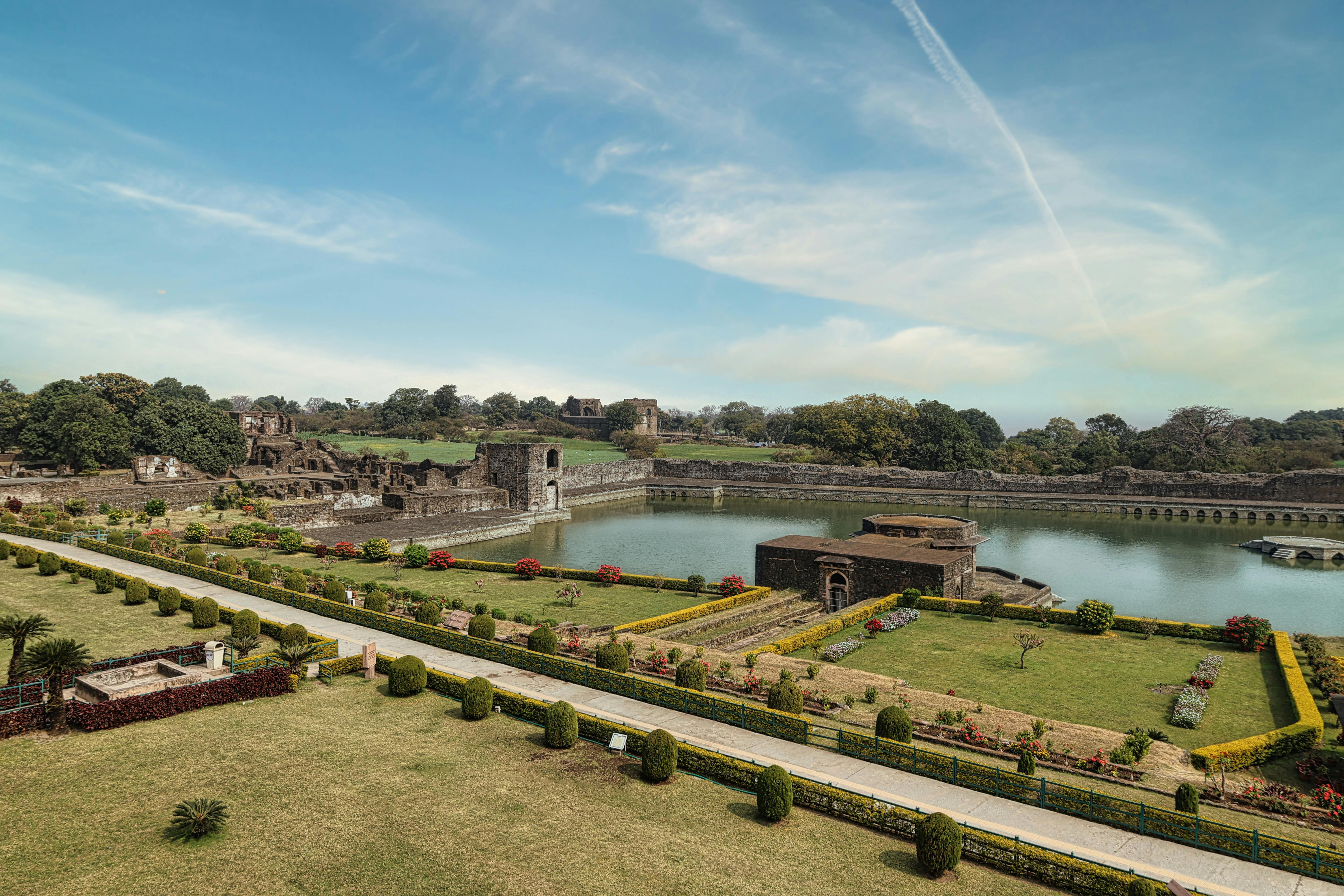
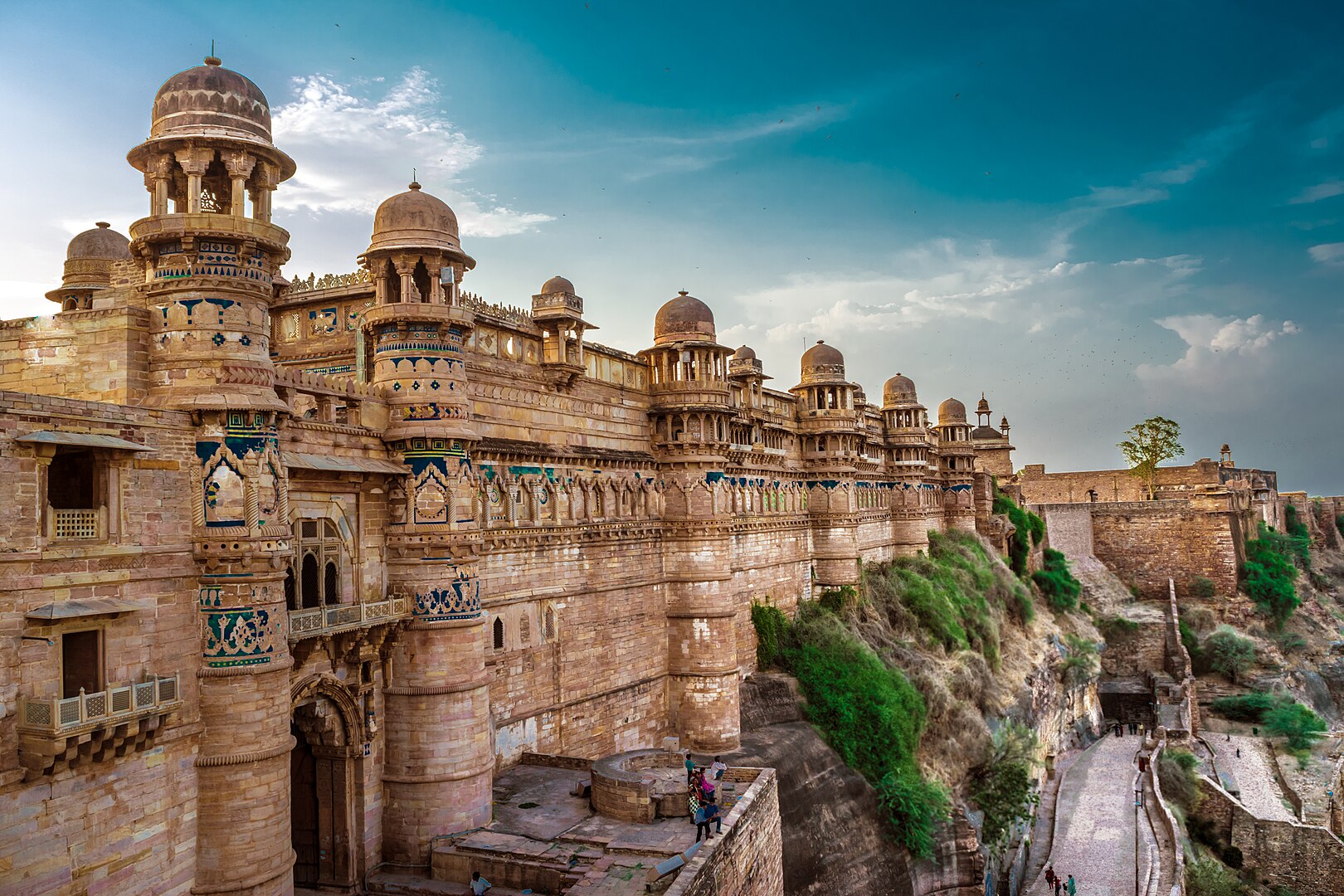
Image Source: Rajkumar Gajji
Introduction
Hathi Mahal is one of the lesser-known yet striking monuments in the historic town of Mandu. Known for its unusual design and quiet surroundings, this structure offers a refreshing break from the more crowded attractions in Mandu. Its blend of architectural creativity and historical transformation—from a leisure retreat to a tomb—makes it a fascinating stop for history lovers and curious travelers alike.
History and Architecture
Hathi Mahal stands out for both its story and its design. It was originally built as a pleasure resort, a place meant for relaxation and leisure, before being later converted into a tomb. This shift in purpose gives the monument a unique character compared to other structures in Mandu.
The name “Hathi Mahal” comes from its most eye-catching feature—massive pillars that resemble the sturdy legs of an elephant. There are four such pillars at the corners, along with one additional pillar in the middle of each side, bringing the total to 12. These heavy, rounded supports give the structure a strong and grounded appearance.
Interestingly, unlike many other monuments in Mandu that are elevated on high platforms, Hathi Mahal is built directly at ground level. The structure has arched openings on three sides, allowing natural light and ventilation to pass through easily. Above it rises a large dome, set on an octagonal base. Decorative bands running along the dome add to its height and visual appeal, making it an impressive architectural element.
At the center of the complex is an open courtyard with a single memorial, creating a peaceful and almost isolated atmosphere. The actual grave, however, lies in an underground chamber beneath this courtyard. While the entrance to this crypt still exists, it has been sealed, adding a touch of mystery to the monument.
How to Reach
Hathi Mahal is located within the historic town of Mandu (Mandav) in the Dhar district of Madhya Pradesh. The monument lies near Darya Khan’s Tomb and is approximately 2 km from the Mandu Bus Stand, making it easily accessible by road.
By Air
The nearest airport is Devi Ahilya Bai Holkar Airport, Devi Ahilya Bai Holkar Airport in Indore, about 95–100 km from Mandu. Taxis and private cabs are readily available from the airport to Mandu.
By Rail
The nearest major railway station is Indore Junction, which is well connected to Delhi, Mumbai, Bhopal, Ahmedabad, and other major cities. From the station, visitors can hire a taxi or take a bus to Mandu.
By Road
Mandu enjoys good road connectivity with Indore, Dhar, Ratlam, and Ujjain. Regular buses operate from Indore and Dhar to Mandu. Once in Mandu, local taxis, auto-rickshaws, and private vehicles can be used to reach Hathi Mahal conveniently.
Nearby Attractions of Hathi Mahal
Darya Khan’s Tomb
Located adjacent to Hathi Mahal, this impressive tomb belongs to Darya Khan, a noble of the Malwa Sultanate. The monument is known for its large dome and elegant Islamic architectural features.
Jahaz Mahal
One of Mandu’s most iconic monuments, Jahaz Mahal appears like a floating ship between two lakes. Its unique design and beautiful surroundings make it a favorite among visitors.
Hindola Mahal
Known as the “Swinging Palace,” Hindola Mahal is famous for its sloping walls and grand audience hall. It is one of the finest examples of Malwa Sultanate architecture.
Jami Masjid
This magnificent mosque is among the largest medieval mosques in India and showcases impressive Afghan-inspired architecture.
Hoshang Shah’s Tomb
Often regarded as India’s first marble mausoleum, this architectural masterpiece is believed to have inspired elements of the Taj Mahal’s design.
Baz Bahadur’s Palace
Perched amid scenic surroundings, the palace was built by the last independent ruler of Mandu and offers panoramic views of the region.
Rani Roopmati Pavilion
One of Mandu’s most photographed landmarks, the pavilion offers spectacular views of the Narmada Valley and is associated with the legendary love story of Baz Bahadur and Roopmati.
Ashrafi Mahal
A historic complex consisting of a madrasa and victory tower ruins, located opposite the Jami Masjid.
Nilkanth Mahadev Temple
A revered Shiva temple set amidst lush greenery and natural springs, attracting both pilgrims and tourists.
Rewa Kund
A historic reservoir associated with Rani Roopmati and Baz Bahadur, known for its tranquil atmosphere and historical significance.
Hathi Mahal is best explored as part of a full-day heritage tour of Mandu, allowing visitors to experience the remarkable blend of history, architecture, and natural beauty that has made this ancient city one of Madhya Pradesh’s most treasured destinations.
Timings
- Open daily: 8:00 AM – 6:00 PM.
Entry Fees
- Indian visitors: ₹25.
- Foreign tourists: ₹300.
Maps
FAQs
1. Why is it called Hathi Mahal?
The monument gets its name from its elephant-leg-shaped pillars, which are its most distinctive feature.
2. What was the original purpose of Hathi Mahal?
It was initially built as a pleasure resort and later converted into a tomb.
3. Is the underground chamber open to visitors?
No, the underground crypt is sealed and not accessible to visitors.
4. How long does a visit usually take?
A typical visit takes around 30–45 minutes.
5. When is the best time to visit?
The best time to explore Hathi Mahal is during the cooler months (October to March) or in the early morning and evening.
6. What else can I see nearby?
You can visit nearby attractions like the Darya Khan Tomb and explore other historical sites spread across Mandu.