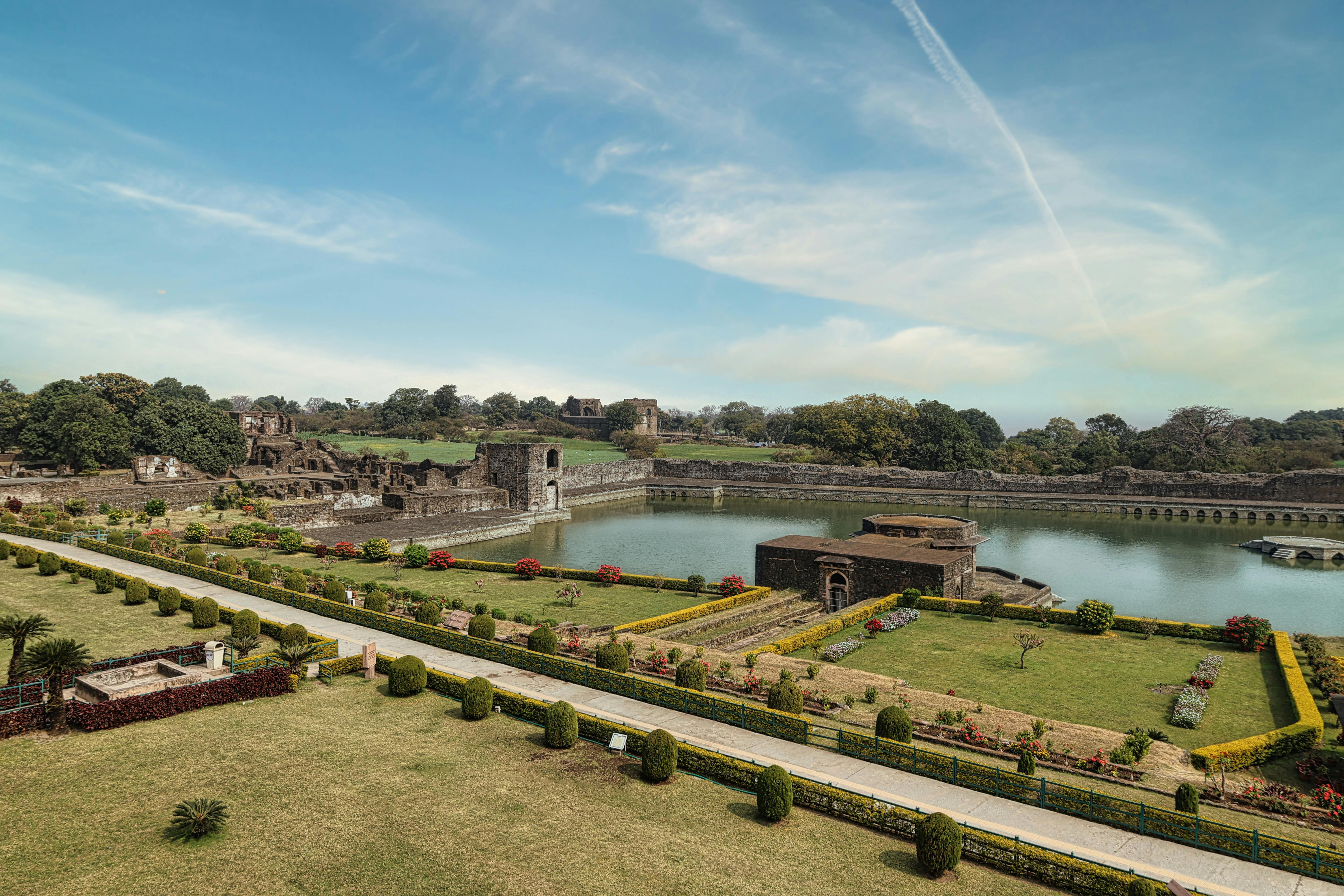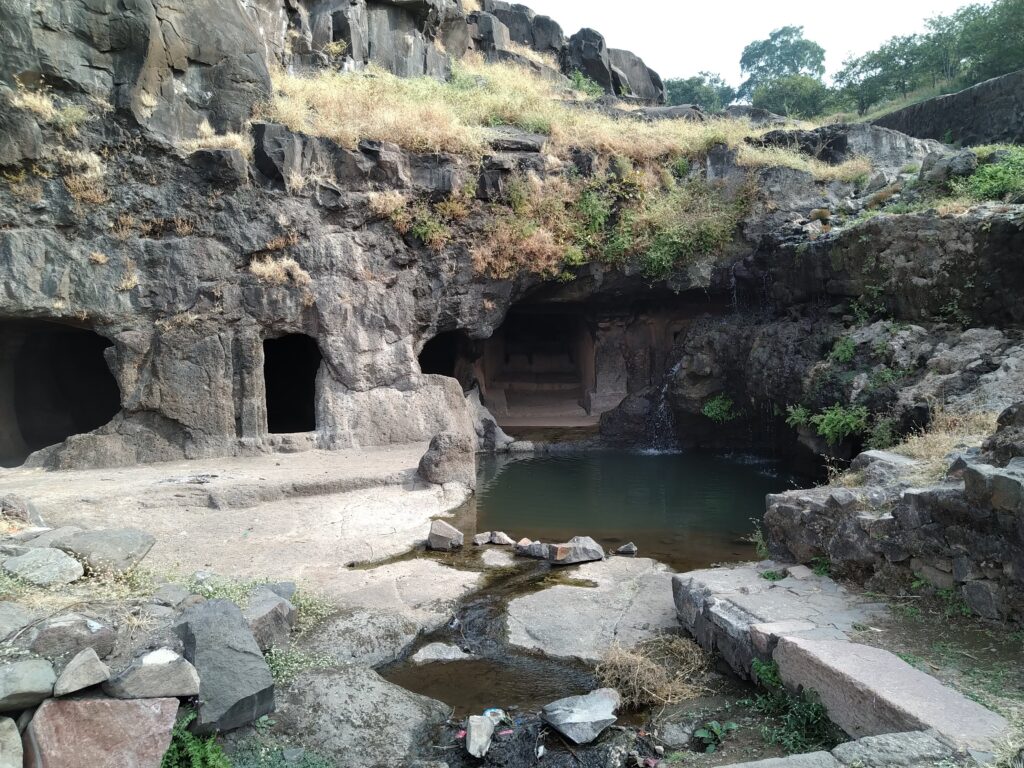
Image Source: Manoj Pillai
About Lohani Caves
If you’re exploring Mandu, Lohani Caves is one of those quietly fascinating spots that often surprises visitors. Set along the edge of the Mandu plateau, this ancient rock-cut site blends history, mystery, and a peaceful atmosphere—along with one of the best sunset views in the region.
The caves are generally believed to date back to the 11th or 12th century, though their exact origin is still uncertain. Unlike many other monuments in Mandu, there are no inscriptions or detailed carvings that clearly explain who built them or for what purpose. Because of this lack of evidence, historians have put forward different theories over time. Some traditions associate the site with pre-Islamic Shaivite yogis, adding a spiritual layer to its mysterious past. This uncertainty is part of what makes Lohani Caves so intriguing for history lovers and curious travelers alike.
Architecture and Historical Significance
Lohani Caves are simple in design but quite unique in structure. The site features several shell-shaped rock-cut chambers arranged around a large water storage tank. This tank is carved directly into the rock and is believed to have served as a reliable water source for the people who once occupied or visited the site.
One of the most important archaeological discoveries here was a collection of nearly 80 stone statues of Hindu deities, including Parvati, Shiva, Vishnu, and Lakshmi. These artifacts were found during excavation in the storage tank area and are now preserved at the nearby Chappan Mahal museum.
Adding to the site’s historical intrigue is a 5-meter-high monolithic pillar located to the south of the caves. It is believed to be the remains of an earlier temple structure that once stood in the area, suggesting that this site may have had significant religious importance in the past.
Why Visit Lohani Caves?
Lohani Caves may not be as grand as Mandu’s famous palaces and forts, but it offers something equally special—silence, open landscapes, and a sense of stepping back in time. The atmosphere here is calm and reflective, making it a great stop for travelers who prefer less crowded heritage sites.
The viewpoint above the caves becomes especially beautiful during sunset. As the sun drops over the Malwa plateau, the entire landscape glows in golden tones, and the ruins take on a dramatic silhouette. It’s a favorite spot for photographers, history enthusiasts, and anyone who enjoys quiet scenic moments.
How to Reach Lohani Caves
Lohani Caves is located within the historic town of Mandu in Madhya Pradesh.
By Air: The nearest airport is Devi Ahilyabai Holkar Airport in Indore, around 90–100 km away.
By Rail: Indore Junction is the closest major railway station, well connected to cities like Delhi, Mumbai, and Bhopal. From there, taxis and buses are available to Mandu.
By Road: Mandu is easily accessible by road from Indore (about 100 km), Dhar, and Maheshwar. Once in Mandu, Lohani Caves can be reached by local taxis, autos, or sightseeing vehicles as part of the standard heritage circuit.
Best Time to Visit: October to March is ideal, as the weather remains pleasant for exploring outdoor monuments.
Nearby Attractions in Mandu
Mandu is full of architectural wonders, and Lohani Caves fits perfectly into a larger heritage trail. Nearby places worth visiting include:
- Jahaz Mahal – The famous “Ship Palace” built between two lakes
- Hindola Mahal – Known for its sloping, swing-like walls
- Rani Roopmati Pavilion – A scenic viewpoint linked to royal legends
- Baz Bahadur Palace – A beautiful example of Afghan-style architecture
- Rewa Kund – A historic water reservoir with cultural significance
- Chappan Mahal Museum – Houses artifacts and statues discovered around Lohani Caves
Maps
At 1 km from the Mandu bus stand, the Bagh Caves are situated in the Mandu region of Madhya Pradesh.
Timings: 8 AM – 5 PM
Entry: Free
FAQs
1. What is Lohani Caves known for?
Lohani Caves is known for its mysterious origins, rock-cut chambers, ancient water tank, and scenic sunset viewpoint.
2. How old are Lohani Caves?
They are generally believed to date back to the 11th–12th century, though the exact history remains unclear.
3. Are there any statues inside the caves today?
No. The statues discovered here have been moved to the nearby Chappan Mahal museum for preservation.
4. How much time is needed to visit Lohani Caves?
Around 30 to 45 minutes is enough, though many visitors stay longer to enjoy the sunset.
5. Is Lohani Caves suitable for families?
Yes, it is suitable for families, but visitors should be careful around uneven rocky areas.
6. What is the best time to visit?
Late afternoon is ideal, especially to catch the sunset view from the top.
7. Can it be covered with other Mandu sites in one day?
Yes, it is commonly included in a full-day Mandu sightseeing itinerary along with other major monuments.