Rukhad Wildlife Sanctuary is one of Madhya Pradesh’s most underrated wildlife destinations. Located in Seoni district near the Maharashtra border, this peaceful sanctuary forms an important part of the Pench Tiger Reserve landscape. While thousands of tourists head to the popular safari zones of Pench every year, Rukhad remains a relatively untouched wilderness where visitors can experience dense teak forests, abundant wildlife, scenic landscapes, and uncrowded safaris.
Originally established to protect the Indian Gaur (Indian Bison), Rukhad has evolved into a vital wildlife corridor that connects Pench with other forests of Central India. The sanctuary plays a crucial role in tiger conservation by allowing animals to move safely across protected habitats.
Whether you’re a wildlife photographer, birdwatcher, conservation enthusiast, or simply looking for a quieter alternative to India’s famous national parks, Rukhad Wildlife Sanctuary offers an unforgettable jungle experience.
About Rukhad Wildlife Sanctuary
Rukhad Wildlife Sanctuary lies within the southern Satpura landscape and is managed as part of the greater Pench conservation area. It was once popularly known as the Rukhad Bison Sanctuary because of its healthy population of Indian Gaur, one of the largest wild cattle species in the world.
Today, the sanctuary supports a rich variety of mammals, reptiles, birds, and plant life. Because tourism is still developing here, visitors often enjoy peaceful safaris with very few vehicles, making wildlife sightings feel more natural and immersive.
Quick Information
| Information | Details |
|---|---|
| Location | Seoni District, Madhya Pradesh |
| State | Madhya Pradesh |
| Landscape | Satpura Hills |
| Area | Approximately 275 sq. km. |
| Famous For | Indian Gaur, Tigers, Leopards, Birdwatching |
| Best Time to Visit | October to June |
| Safari Duration | Around 3–4 hours |
| Ideal Stay | 2 Days |
| Nearest Airport | Nagpur |
| Nearest Railway Station | Seoni, Nagpur |
Why Visit Rukhad Wildlife Sanctuary?
Unlike commercial wildlife destinations that attract hundreds of safari vehicles every day, Rukhad offers something increasingly rare in India—silence.
Here, visitors can spend hours driving through dense forests while listening to bird calls, spotting gaur grazing in meadows, tracking fresh tiger pugmarks, or watching deer cautiously move through the undergrowth.
Major highlights include:
- Less crowded safari experience.
- Rich biodiversity.
- Excellent birdwatching.
- Scenic forest drives.
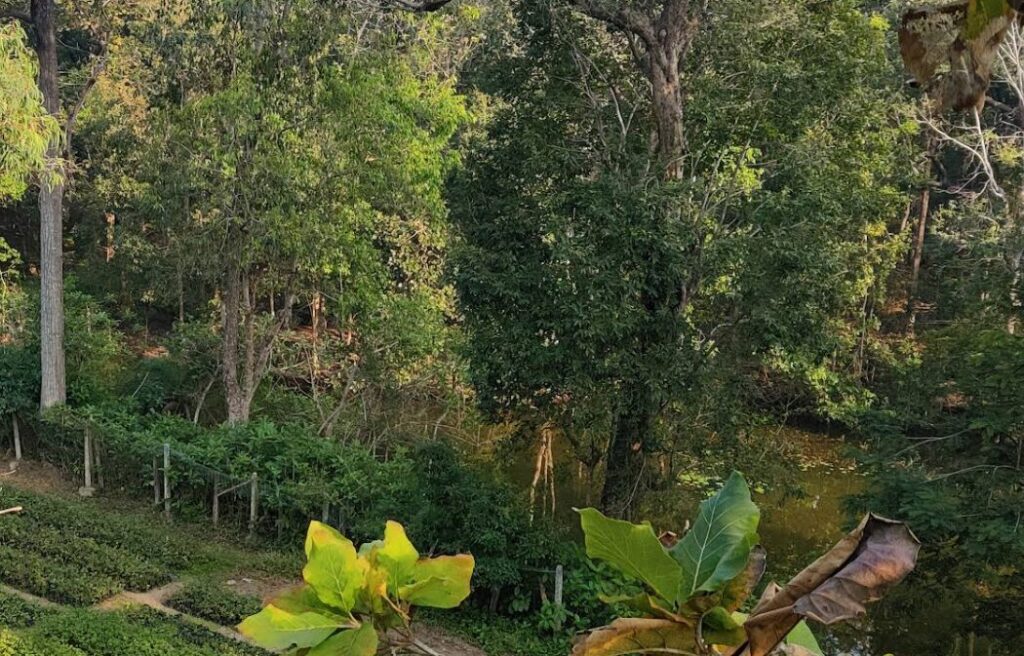
- Beautiful teak and bamboo forests.
- High chances of spotting Indian Gaur.
- Important tiger movement corridor.
- Great destination for wildlife photography.
History of Rukhad Wildlife Sanctuary
The forests around Rukhad have long been recognized for their ecological significance. The sanctuary was originally notified to conserve the rapidly declining population of the Indian Gaur. Over time, wildlife researchers discovered that the forests also served as a natural corridor for tigers, leopards, sloth bears, and other large mammals moving between Pench and neighboring forests.
Conservation measures, including wildlife-friendly highway underpasses on NH-44, have strengthened habitat connectivity, making Rukhad an increasingly important component of Central India’s tiger conservation landscape.
Flora of Rukhad Wildlife Sanctuary
The sanctuary is dominated by tropical dry deciduous forests.
Major tree species include:
- Teak.
- Bamboo.
- Mahua.
- Tendu.
- Saja.
- Dhaora.
- Haldu.
- Arjun.
- Bija.
- Lendia.
- Amla.
- Jamun.
During the monsoon, the forest transforms into lush greenery, while summer opens up visibility, making animal sightings easier.
Wildlife in Rukhad Wildlife Sanctuary
The sanctuary supports an impressive range of mammals.
Tigers
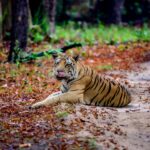
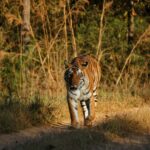
Although tiger density is lower than in Pench’s core zones, Rukhad forms an active tiger corridor. Fresh pugmarks, scent markings, alarm calls, and occasional sightings make every safari exciting.
Leopards
Leopards thrive in the rocky terrain and often remain hidden during the day.
Indian Gaur
The Indian Gaur is the sanctuary’s flagship species.
Adult males can weigh over 1,000 kg and are among the largest wild bovines on Earth. Seeing a herd quietly grazing in the forest is one of Rukhad’s signature experiences.
Other Mammals
Visitors may encounter:
- Sloth Bear.
- Sambar Deer.
- Chital.
- Barking Deer.
- Nilgai.
- Wild Boar.
- Four-horned Antelope.
- Indian Hare.
- Jackal.
- Jungle Cat.
- Indian Fox.
- Striped Hyena.
- Porcupine.
- Langur.
- Rhesus Macaque.
Birdwatching at Rukhad Wildlife Sanctuary
Birdwatchers consider Rukhad a hidden gem.
More than 200 species of birds have been recorded in the region.
Popular sightings include:
- Indian Paradise Flycatcher.
- Crested Serpent Eagle.
- Grey-headed Fish Eagle.
- White-eyed Buzzard.
- Changeable Hawk-Eagle.
- Indian Roller.
- Green Bee-eater.
- Plum-headed Parakeet.
- Grey Hornbill.
- Malabar Pied Hornbill (occasionally).
- Black Drongo.
- White-throated Kingfisher.
- Peafowl.
- Woodpeckers.
- Owls.
Winter attracts numerous migratory birds.
Safari Experience
A safari through Rukhad is less about chasing tiger sightings and more about understanding an entire forest ecosystem.
Experienced guides interpret alarm calls, identify animal tracks, explain tree species, and help visitors appreciate the intricate relationships between wildlife and habitat.
The absence of large tourist crowds often creates a more authentic and relaxed safari experience.
Best Time to Visit Rukhad Wildlife Sanctuary
October to February
This is the most pleasant season.
Temperatures remain comfortable, landscapes are green after the monsoon, and birdwatching is excellent.
Ideal for:
- Families.
- Nature lovers.
- First-time visitors.
- Photography.
March to June
Summer provides the best opportunities for wildlife sightings.
Animals frequently gather around waterholes, making it easier to observe gaur, deer, and predators.
Temperatures can exceed 40°C, so early morning safaris are recommended.
July to September
The sanctuary usually remains closed during the monsoon because of heavy rainfall, slippery roads, and the breeding season for wildlife.
Rukhad Wildlife Sanctuary Safari Timings
Safari timings change seasonally but generally follow this schedule:
Morning Safari
- Approximately 6:00 AM to 10:00 AM.
Evening Safari
- Approximately 3:00 PM to 6:30 PM.
Visitors should verify timings before arrival, as they vary with sunrise and sunset.
Safari Booking
Advance booking is recommended during weekends and holidays.
Safari bookings are generally managed through the Madhya Pradesh Forest Department or authorized eco-tourism operators. Visitors should carry a valid government-issued photo ID.
Entry Fees
Entry fees, vehicle charges, guide fees, and camera charges may change periodically.
It is advisable to check the latest rates before planning your trip.
How to Reach Rukhad Wildlife Sanctuary
By Air
Dr. Babasaheb Ambedkar International Airport, Nagpur is the nearest airport, located approximately 100–120 km away.
Regular flights connect Nagpur with Delhi, Mumbai, Bengaluru, Hyderabad, Kolkata, Chennai, Pune, and other major cities.
By Train
The nearest railway stations include:
- Seoni
- Nagpur
Nagpur offers better rail connectivity and more transport options.
By Road
Rukhad is easily accessible via NH-44.
Approximate driving distances:
- Nagpur – 110 km.
- Seoni – 40 km.
- Jabalpur – 170 km.
- Bhopal – 360 km.
Private taxis are available from both Nagpur and Seoni.
Google Maps
Where to Stay
Accommodation options include:
- Eco-lodges
- Forest rest houses (subject to availability)
- Luxury jungle resorts near Pench
- Mid-range safari resorts
- Nature camps
Many travelers stay near Pench and include Rukhad as a day safari.
Things to Do
Besides jeep safaris, visitors can enjoy:
- Wildlife photography/
- Birdwatching/
- Nature walks (where permitted),
- Landscape photography.
- Learning about forest ecology.
- Exploring nearby tribal villages.
- Relaxing at eco-resorts.
Nearby Attractions
Combine your trip with:
- Pench Tiger Reserve.
- Totladoh Dam.
- Seoni Forests.
- Tribal villages.
- Nature interpretation centers.
Suggested 2-Day Itinerary
Day 1
- Arrive at Nagpur or Seoni.
- Check into a jungle lodge.
- Lunch.
- Evening safari in Rukhad.
- Campfire dinner.
Day 2
- Morning safari.
- Birdwatching session.
- Visit Totladoh Dam.
- Lunch.
- Return journey.
Responsible Tourism Tips
- Do not feed wildlife.
- Avoid loud conversations during safaris.
- Never step out of the vehicle unless permitted.
- Wear earth-toned clothing.
- Carry reusable water bottles.
- Respect your guide’s instructions.
- Leave no litter behind.
Travel Tips
- Carry binoculars.
- Bring a camera with a telephoto lens.
- Wear comfortable cotton clothing.
- Keep sunscreen, sunglasses, and a hat.
- Carry insect repellent.
- Mobile networks may be weak inside the sanctuary.
- Book accommodation well in advance during peak season.
Frequently Asked Questions
Is Rukhad Wildlife Sanctuary worth visiting?
Yes. It offers peaceful safaris, rich biodiversity, excellent birdwatching, and a chance to experience Central India’s forests away from heavy tourist traffic.
Is Rukhad part of Pench Tiger Reserve?
Yes. It forms part of the greater Pench landscape and serves as an important wildlife corridor.
Which animals can be seen?
Indian Gaur, Bengal Tiger, Leopard, Sloth Bear, Sambar, Chital, Nilgai, Wild Boar, Jackal, Jungle Cat, Hyena, and over 200 bird species.
What is the best time to visit?
October to June is ideal. Summers offer the best wildlife sightings, while winters are perfect for pleasant weather and birdwatching.
How many days are enough?
A 2-day trip is ideal to enjoy multiple safaris and nearby attractions.
Final Thoughts
Rukhad Wildlife Sanctuary remains one of Central India’s best-kept wildlife secrets. Its tranquil forests, healthy populations of Indian Gaur, rich birdlife, and ecological importance make it a rewarding destination for travelers who value authentic nature experiences over crowded tourist hotspots. Whether paired with a visit to Pench Tiger Reserve or explored on its own, Rukhad promises memorable safaris, beautiful landscapes, and a deeper appreciation of India’s remarkable forest ecosystems.