Image Source: Wikimedia/Thincat
About Nanda Devi Sanctuary
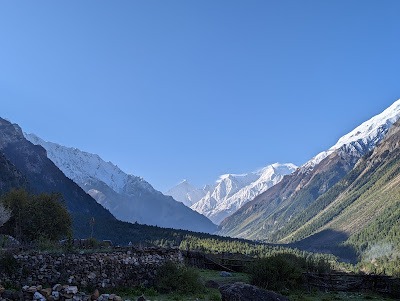
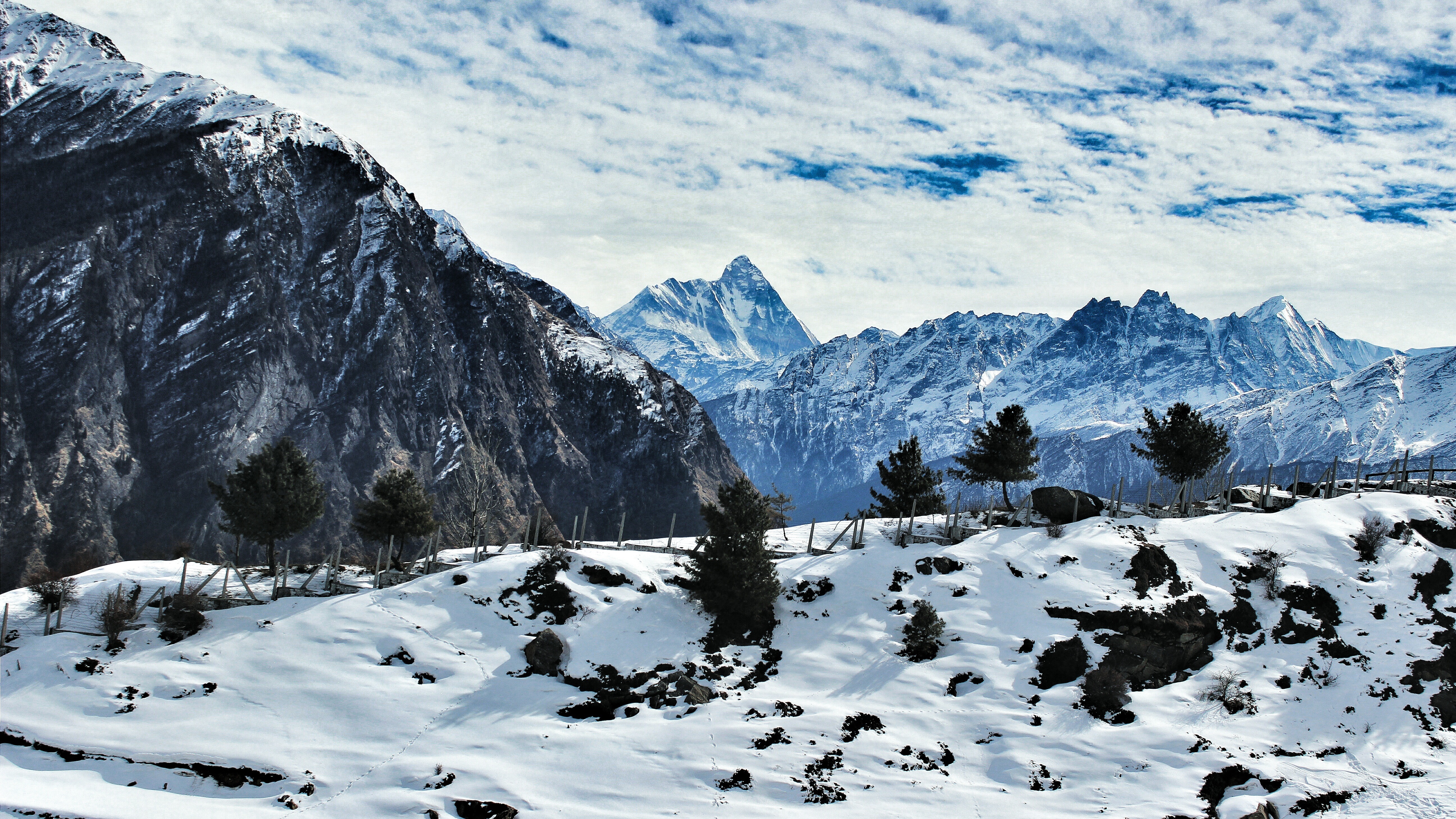
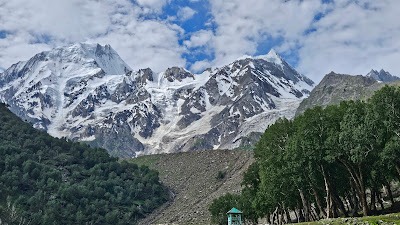
At the heart of Nanda Devi National Park lies the Nanda Devi Sanctuary, which forms the most important and strictly protected core of the park. This sanctuary is a deeply enclosed high-altitude mountain basin, surrounded almost entirely by towering Himalayan peaks and sharp ridgelines. Because of its natural enclosure and extreme terrain, the sanctuary has remained one of the most pristine wilderness areas in the Indian Himalayas.
The sanctuary is not just a protected area in name; it is a geographically distinct natural structure. Its enclosed layout creates isolation, limits human access, and supports unique alpine ecosystems that are rarely disturbed by external influences. This is why the sanctuary functions as the ecological heart of the national park.
The Sanctuary Wall and Natural Boundaries
One of the defining features of the Nanda Devi Sanctuary is the natural “sanctuary wall.” This wall is formed by a continuous ring of high mountain ridges and peaks on the northern, eastern, and southern sides. These ridges rise sharply, acting as physical barriers that prevent easy entry into the sanctuary.
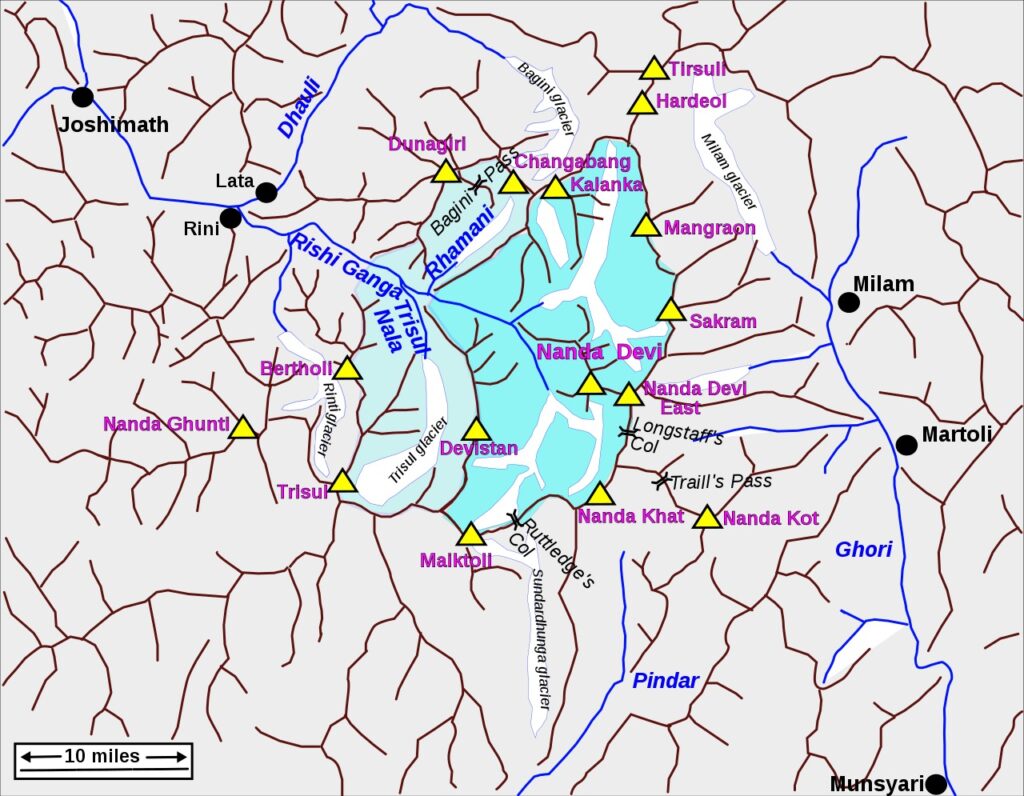
On the western side, the terrain descends dramatically into the Rishi Ganga Gorge, a deep and narrow canyon carved by glacial meltwater. This gorge serves two critical roles. First, it acts as the main drainage outlet for the sanctuary’s glaciers. Second, it forms the only natural opening in the otherwise enclosed mountain basin.
Together, these ridges and the gorge create a high-altitude bowl-shaped landscape, which isolates the sanctuary both ecologically and climatically. This isolation has helped preserve its fragile alpine environment for centuries.
Division of the Sanctuary: Inner and Outer Zones
The Nanda Devi Sanctuary is divided into two major spatial units: the Inner Sanctuary and the Outer Sanctuary. This division is central to understanding the geography and access patterns of the park.
Inner Sanctuary
The Inner Sanctuary occupies roughly two-thirds of the total sanctuary area and lies toward the eastern side of the basin. This zone contains the most extreme and elevated terrain, including Nanda Devi peak, which rises to 7,816 meters and is the highest mountain located entirely within India.
This area is dominated by massive glaciers, icefields, and steep rocky summits. The two major glaciers here are the Uttari Rishi Glacier to the north and the Dakshini Rishi Glacier to the south. These glaciers, along with smaller ice streams, feed the Rishi Ganga river system.
Because most of the Inner Sanctuary lies above the snowline, vegetation is sparse or absent, especially near the glaciers. The climate is harsh, and conditions are suitable only for highly adapted alpine species. Due to its sensitivity and inaccessibility, this zone is almost completely closed to tourism and human activity, making it the true ecological core of the park.
Outer Sanctuary
The Outer Sanctuary covers the remaining one-third of the sanctuary area and is located on the western side, closer to the Rishi Ganga Gorge. Although still extremely rugged and high-altitude, it is slightly more accessible than the Inner Sanctuary and has historically served as the main route of entry into the basin.
This zone is internally divided by the Rishi Ganga river.
The northern section is influenced by the Ramani Glacier, which flows down from the slopes of peaks like Dunagiri and Changabang.
The southern section is shaped by the Trisul Glacier, descending from the Trisul mountain group.
Historically, explorers and mountaineers first reached the Outer Sanctuary by crossing difficult high mountain passes, long before the Inner Sanctuary was ever accessed. Despite being called “outer,” this zone remains wild, remote, and strictly protected, with no permanent settlements.
How the Spatial Zones Fit Together
The sanctuary functions as a layered mountain system with a clear spatial logic. The Outer Sanctuary acts as the first zone encountered when approaching from lower Himalayan valleys. While still challenging, it serves as a transitional area between the outside world and the deeper wilderness.
Beyond this lies the Inner Sanctuary, completely enclosed by high ridges and glaciers. This inner basin forms the most isolated and inaccessible landscape within the park. Surrounding both zones is the sanctuary wall, which acts as a natural fortress, preventing easy movement in and out.
This arrangement creates a natural amphitheater of mountains, where geography itself enforces conservation. Because of this structure, the Nanda Devi Sanctuary has experienced very little human disturbance compared to other Himalayan regions.
Key Research Takeaways
The division between the Inner and Outer Sanctuary is the most important organizing principle of Nanda Devi National Park’s internal geography. It explains differences in accessibility, ecology, and historical exploration patterns.
The Rishi Ganga Gorge plays a crucial role as both a drainage channel and a natural boundary separating zones within the sanctuary. Meanwhile, the surrounding ridges form a protective barrier that has shielded the core landscape from human interference for decades.
For researchers, understanding the glacier systems, ridge formations, and drainage patterns is essential for studying biodiversity distribution, climate influence, and the history of Himalayan exploration in this region.