Image Source: lakshya dixit
About Orcha fort
There are several forts that line up in central India. A huge flat plain has attracted several kings to establish their empires because it is abundant in rivers, forests, and mountain ranges like the Satpura, Vindhyas, etc. The fort we are going to talk about is Orcha Fort, which is situated in the small town of Orcha in the Tikamgarh district of Madhya Pradesh.
The Orchha Fort is a mix of Mughal and Rajput architectural styles that looks very beautiful in the sunset setting on the banks of the Betwa River. It’s a major river that originates in the Vindhya range and flows through Madhya Pradesh before joining the Yamuna. The river adds to the beauty of the fort complex and provides a serene and picturesque backdrop.
History
The first forts were built by the Bundela Rajput kings during the 16th and 17th centuries. Rudra Pratap Singh, the first king of Orchha, began the construction of the Orchha fort in 1501. It was later further expanded by succeeding kings, particularly by Mukund Shah, who ruled from 1554 to 1592.
Orchaa Fort consists of several buildings, including Jahangir Mahal, Raj Mahal, Mahal, and Sheesh Mahal. JahaMahalmahal was built in the 17th century by King Bir Singh Deo to commemorate his meeting with Mugal Emperor Jahangir. Raj Mahal, famous for its elaborate murals and paintings, was built by Madhukar Shah. Sheesh Mahal, also known as the Palace of Mirrors and known for its intricate glasswork, was also built by the same king.
During their time, Orchha forts have seen several wars and battles. Aurangzeb attacked and captured the fort in the 17th century, but later it was regained by the Bundela Rajput. During 1857, Orchaa forts were again the focal point. They were a stronghold of rebels.
Architecture
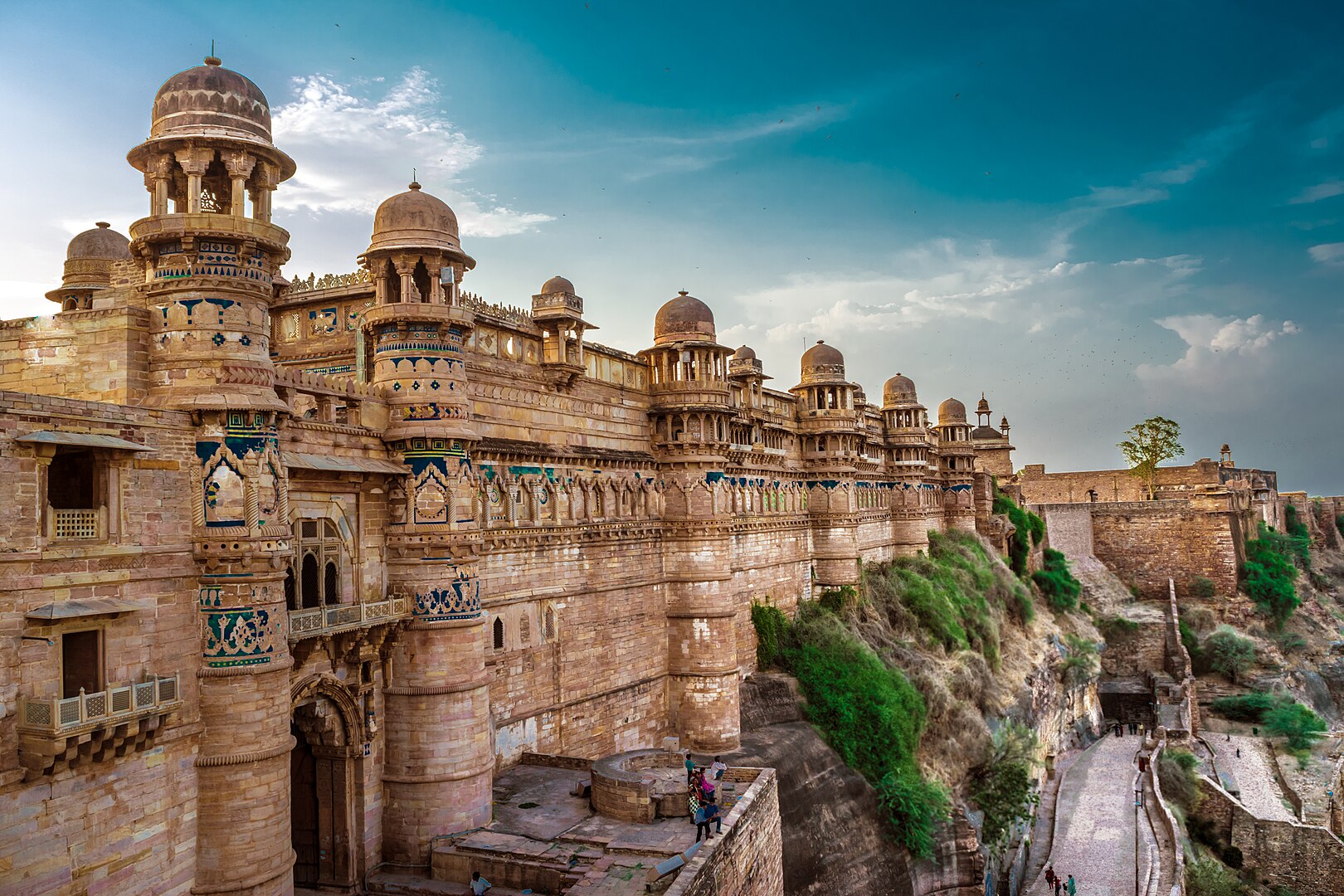
Spread over an area of 12 acres, the fort comprises several buildings, places, and temples reflecting Mugal and Rajput architectural styles.
The Orchha Fort is surrounded by walls and bastions. There are four main gateways: the Jahangir gate (east gate), the Datia gate (west gate), the Bhander gate (north gate), and the Urvai gate (south gate).
Inside the forts are several temples, palaces, gardens, and courtyards. The places are interconnected by a series of courtyards. Jahangir Mahal, the most famous one, is located at the centre of the palace complex. It was built by Raja Singh Deo.
On the southern part of the fort, there is a famous temple named Ram Raja Temple that is surrounded by a large courtyard. The idol of Ram is enshrined and is now considered one of the most important pilgrimage sites in India. Beautiful paintings and frescoes adorned the walls of the temple.
Phool Bagh
Phool Bagh is a famous garden that is located inside the fort. It lies beside the temple and has several fountains and flower beds that add overall greenery and charm.
Sheesh Mahal
Sheesh Mahal is a small palace that is located near Jahangir Mahal. Famous for its intricate mirror work, it was built in the 18th century by the Bundela ruler, Udhaybhan Singh.
Pieces of glass and mirror were imported from Belgium and fitted on the walls and ceilings of the rooms. The mirror was polished and fitted into special patterns and designs in form of natural and geometric shapes . The reflection of lights creates dazzling effects in the minds of visitors.
Best time to visit Orchha Fort
The best time to visit Orchha Fort is during the monsoon and in the winter months, from October to February.
Timing: 9 am to 5 pm
Sound and light show
English – 7:30 pm
Hindi – 8.45 pm
Entry fees
Indian -Rs 10
Foreigner – Rs 250
How to Reach Orchha Fort

By Road: Orchha is well connected to other major cities in Madhya Pradesh and neighbouring states by road. It is located on National Highway 27, which connects Jhansi and Khajuraho. Buses and taxis are available from Jhansi, Khajuraho, and other nearby cities to reach Orchha. The distance from Jhansi to Orchha is approximately 18 km, and it takes around 30 minutes to reach by road.
| Jhansi | 18 km |
| Gwalior | 120 km |
| Khajuraho | 172 km |
| Bhopal | 340 km |
| Delhi | 579 km |
| Agra | 253 km |
| Lucknow | 321 km |
| Varanasi | 535 km |
| Mumbai | 1078 km |
| Kolkata | 1206 km |

By Train: Orchha has its own railway station, which is well connected to major cities in India. The station is located on the Jhansi-Manikpur section of the North Central Railway. Regular trains run between Jhansi and Orchha, and the journey takes around 20 minutes. Some of the popular trains that pass through Orchha are the Bundelkhand Express, Mahakaushal Express, and Utkal Express.

By Air: The nearest airport to Orchha is the Gwalior airport, which is approximately 120 km away. It is well connected to major cities in India, such as Delhi, Mumbai, and Jaipur. From the airport, one can hire a taxi or take a bus to reach Orchha.
Nearby Attractions from Orchha Fort
Orchha Chhatris
Located along the serene banks of the Betwa River, the Orchha Chhatris are among the most iconic landmarks in the town. These royal cenotaphs were built in memory of the Bundela rulers and offer spectacular views, especially during sunrise and sunset. The reflection of the chhatris in the river creates a picturesque scene that attracts photographers and history enthusiasts alike.
Ram Raja Temple
Just a short walk from Orchha Fort, Ram Raja Temple is one of the most unique temples in India where Lord Rama is worshipped as a king. The temple was originally intended to house an idol temporarily, but local beliefs led to it becoming a permanent shrine. The daily guard of honor and royal rituals make it a fascinating place to visit.
Lakshmi Narayan Temple
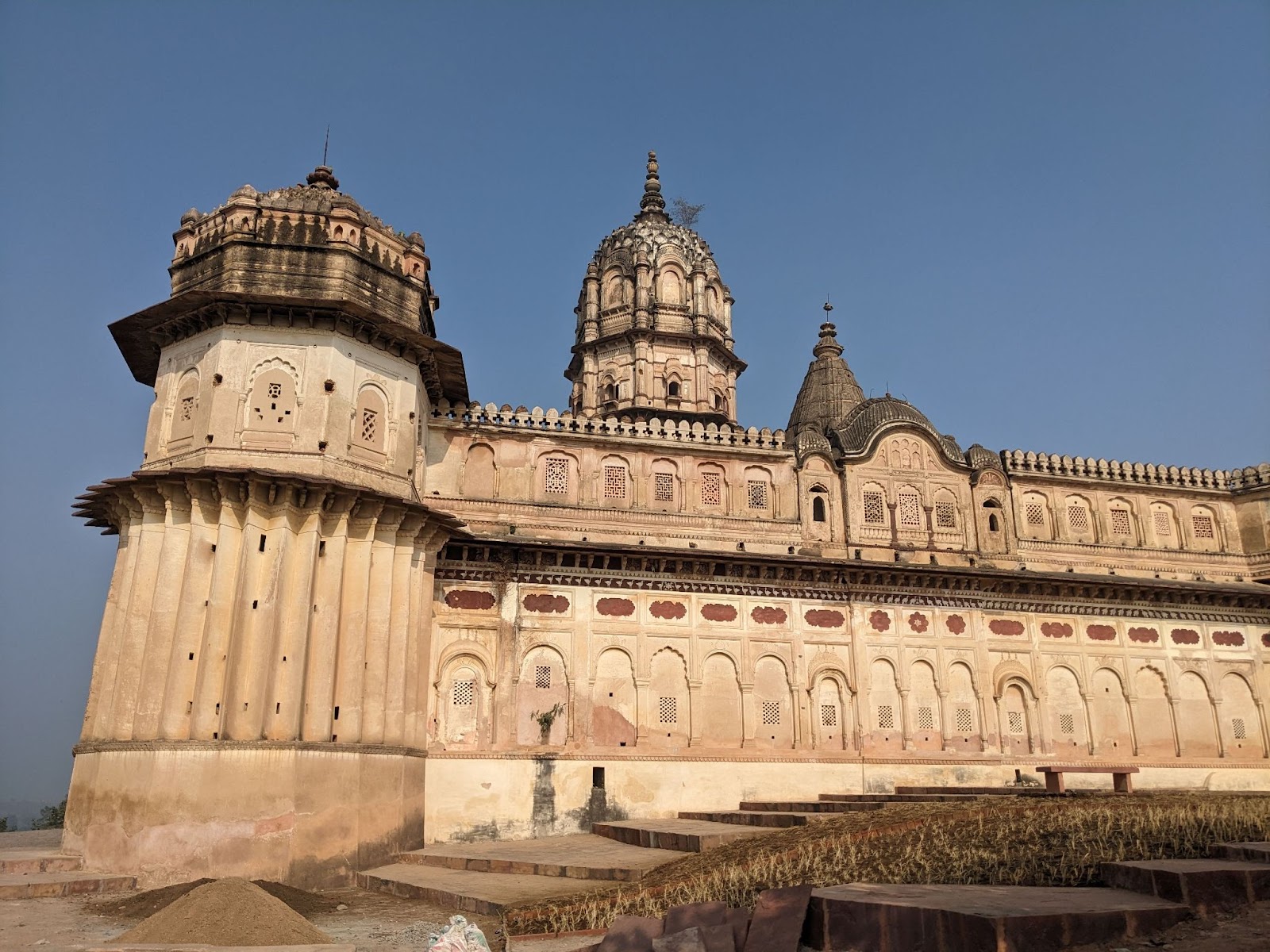
Situated about 2 km from the fort complex, this temple stands out for its unusual blend of temple and fort architecture. The interiors are adorned with vibrant murals depicting mythology, historical events, and scenes from Bundela history, making it a must-visit for art lovers.
Betwa River
Flowing alongside Orchha, the Betwa River provides a peaceful escape from sightseeing. Visitors can enjoy riverside walks, birdwatching, photography, and seasonal rafting activities. The riverbanks near the fort offer some of the most scenic views in the region.
Phool Bagh
This historic garden was once the royal retreat of the Bundela kings. Featuring fountains, underground cooling systems, and beautifully landscaped grounds, Phool Bagh offers a glimpse into the luxurious lifestyle of Orchha’s rulers.
Chaturbhuj Temple
Located close to the fort complex, Chaturbhuj Temple is known for its towering spires and grand architecture. Visitors can climb to the upper levels for panoramic views of Orchha’s monuments, temples, and surrounding countryside.
FAQs
1. What is Orchha Fort famous for?
Orchha Fort is famous for its magnificent palaces, historic temples, royal courtyards, and its blend of Rajput and Mughal architectural styles.
2. Who built Orchha Fort?
The fort complex was established by Raja Rudra Pratap Singh, the founder of Orchha, in the early 16th century and was expanded by subsequent Bundela rulers.
3. What are the main attractions inside Orchha Fort?
The major attractions include Raja Mahal, Jahangir Mahal, Rai Praveen Mahal, Sheesh Mahal, and several courtyards and gateways.
4. How much time is required to explore Orchha Fort?
Most visitors spend around 2 to 4 hours exploring the fort complex and its various palaces and monuments.
5. What is the best time to visit Orchha Fort?
The best time to visit is between October and March when the weather is pleasant for sightseeing.
6. Is photography allowed inside Orchha Fort?
Yes, photography is generally permitted, and the fort offers numerous opportunities for architectural and landscape photography.
7. Can visitors climb to the top of Jahangir Mahal?
Yes, visitors can access several upper levels of Jahangir Mahal, which provide stunning views of Orchha town and the Betwa River.
8. Is Orchha Fort suitable for family visits?
Absolutely. The fort is a family-friendly destination that combines history, culture, architecture, and scenic beauty.
9. How far is Orchha Fort from Jhansi?
Orchha Fort is located approximately 18 km from Jhansi and can be reached by road in about 30 to 40 minutes.
10. Are guides available at Orchha Fort?
Yes, local guides are often available near the entrance and can provide detailed insights into the history and architecture of the fort complex.