Image Source: Rahil Sherasiya
About Adhai Din Ka Jhonpra
Nestled at the foot of the Taragarh hills in the historic city of Ajmer, Adhai Din Ka Jhonpra is one of the most fascinating monuments in Rajasthan. Known for its remarkable blend of Hindu, Jain, and Islamic architectural styles, this centuries-old structure stands as an important example of early Indo-Islamic architecture in India. Though today it functions as a historical mosque, the monument carries layers of history that reflect political change, artistic transformation, and cultural interaction during medieval India.
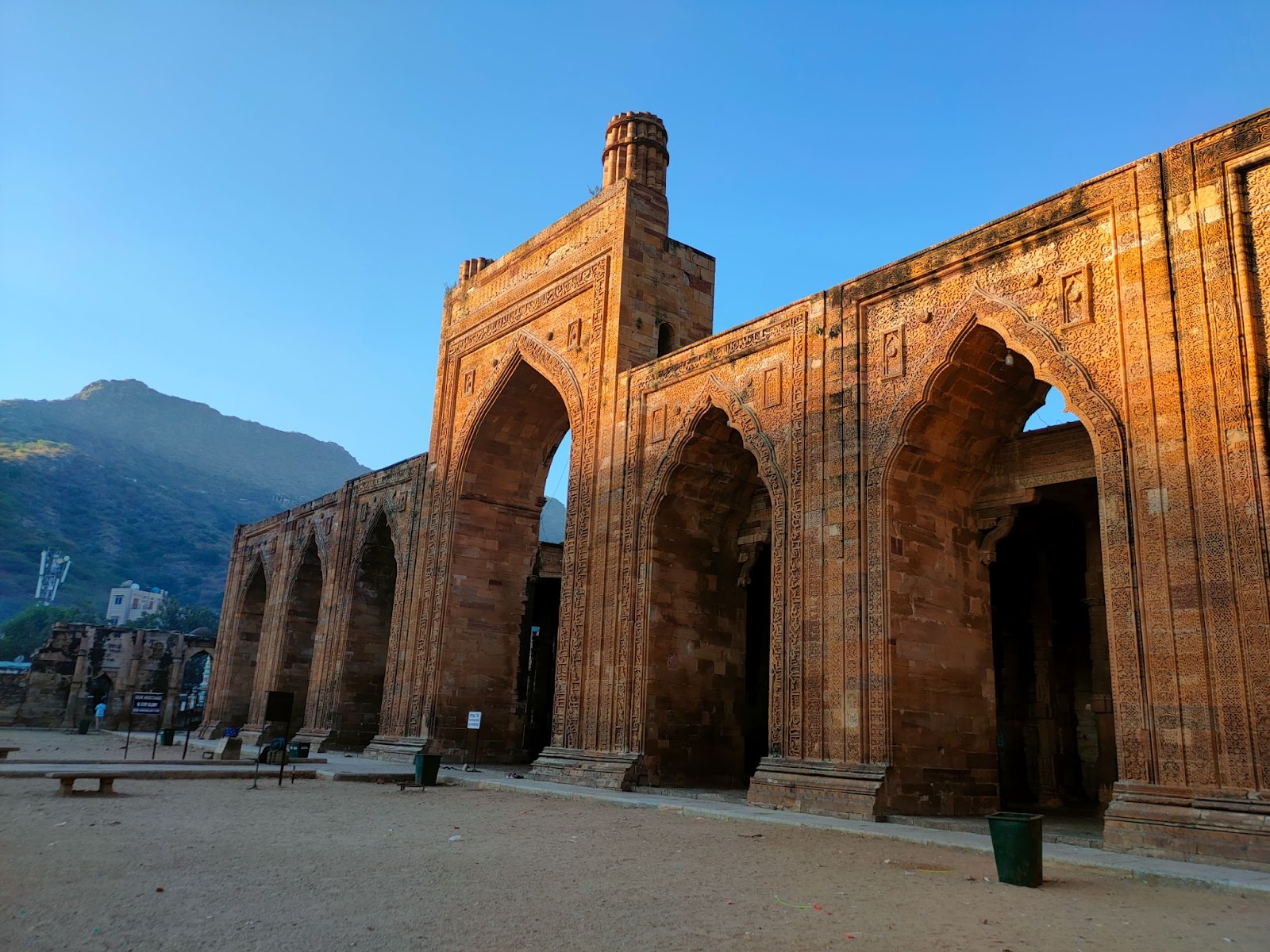
The structure immediately captures attention with its massive arches, intricately carved pillars, and detailed stonework. Unlike many later Mughal monuments that display uniform Islamic architecture, Adhai Din Ka Jhonpra reveals visible traces of the artistic traditions that existed before the arrival of Islamic rule in the region. This unique architectural fusion makes the monument not only historically significant but also visually extraordinary.
Meaning Behind the Name
The name “Adhai Din Ka Jhonpra,” which literally translates to “The Hut of Two and a Half Days,” has intrigued historians and visitors for generations. Several stories attempt to explain the origin of this unusual name.
One popular belief is that the mosque was constructed within two and a half days on the orders of Muhammad Ghori after his victory in the Second Battle of Tarain. Another theory, supported by the Archaeological Survey of India, suggests that a fair lasting two and a half days was once held near the site, giving rise to the name. Some scholars from the 18th century associated the place with gatherings of fakirs celebrating the anniversary of Panjaba Shah. Sufi interpretations offer a more spiritual explanation, suggesting that the name symbolizes the temporary and short-lived nature of human life on earth.
Although historians continue to debate the true origin of the name, the mystery surrounding it only adds to the monument’s charm.
Historical Background and Origins
The origins of Adhai Din Ka Jhonpra are deeply connected to the political and cultural changes that took place in North India during the late 12th century. According to Jain traditions, the site originally housed a magnificent Sanskrit college or temple complex built by Seth Viramdev Kala in the 7th century CE. The complex is believed to have been an important center of learning and religious activity.
After Muhammad Ghori defeated Prithviraj Chauhan in 1192 during the Second Battle of Tarain, the region of Ajmer came under Muslim control. Historical accounts state that Ghori ordered his general and slave commander, Qutb-ud-din Aibak, to convert the structure into a mosque. The work reportedly began immediately, and parts of the structure were hastily adapted so prayers could be offered without delay.
The mosque was designed by Abu Bakr of Herat, a skilled architect from Central Asia. Although the entire monument could not be completed within the legendary “two and a half days,” a prayer screen and essential sections were finished quickly enough for use. Inscriptions found within the mosque mention the year 1199 CE, making it one of the oldest surviving mosques in India.
Later, Sultan Iltutmish further expanded and beautified the mosque by adding ornamental screens and decorative elements. Over the centuries, however, the structure gradually lost its religious prominence and fell into neglect. After India’s independence in 1947, the monument came under the protection of the Archaeological Survey of India, which continues to preserve it today.
Architectural Beauty of Adhai Din Ka Jhonpra
Adhai Din Ka Jhonpra is admired primarily for its exceptional architecture. The monument is a rare example of how different artistic traditions merged during the early years of Islamic rule in India. Much of the structure was built using materials taken from pre-existing Hindu and Jain temples, which explains the abundance of intricately carved pillars, floral motifs, and sculptural details.
The mosque is enclosed by seven impressive arched walls that create a grand and dramatic appearance. Quranic verses carved into the stone walls reflect Islamic artistic traditions, while the columns and decorative patterns strongly resemble temple architecture from Rajasthan and Gujarat.
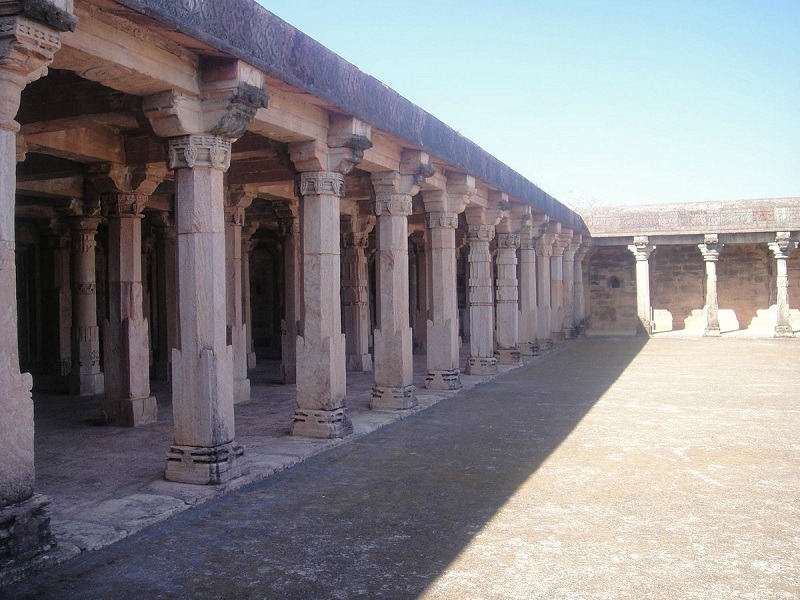
The entrance itself is relatively simple, but once inside, visitors are greeted by a forest of beautifully carved pillars supporting domes and arches. The mixture of styles creates an atmosphere unlike any other monument in India.
Intricate Facade and Interior Design
One of the most striking features of Adhai Din Ka Jhonpra is its elaborate facade. The front screen consists of elegant arches made from yellow limestone, each decorated with detailed carvings and geometric patterns. The central arch is especially impressive, surrounded by smaller arches inspired by Persian and Arab architectural traditions.
The arches are designed in a way that allows sunlight to filter through small openings, creating a mesmerizing play of light and shadow inside the prayer hall. This artistic use of light gives the monument a serene and timeless quality.
Inside the mosque, the main hall is supported by more than a hundred richly decorated pillars. Many of these pillars were originally part of Hindu and Jain temples, which is why they feature carvings of flowers, bells, chains, and mythological motifs. The domes resting upon these pillars display exceptional craftsmanship and reveal how local artisans adapted their traditional skills to meet new architectural demands.
Even today, visitors are often amazed by the fine stone carving work that has survived for over eight centuries.
Historical Debates and Colonial Observations
During the British colonial period, several historians and archaeologists studied the monument in detail. Alexander Cunningham, the first Director-General of the Archaeological Survey of India, observed that many pillars and decorative elements clearly belonged to earlier Hindu and Jain temples. He estimated that hundreds of temple pillars had been reused in the structure.
Similarly, James Tod suggested that the monument may once have been an important Jain religious site before its transformation into a mosque. These observations sparked ongoing discussions about the monument’s origins and the architectural practices of the medieval period.
Today, historians generally view Adhai Din Ka Jhonpra as a layered monument that reflects both destruction and adaptation, making it an important symbol of India’s complex historical past.
Preservation and Cultural Importance
At present, Adhai Din Ka Jhonpra is protected and maintained by the Archaeological Survey of India. Conservation efforts focus on preserving its delicate carvings, ancient inscriptions, arches, and pillars from weather damage and erosion.
The monument remains an important cultural landmark in Ajmer and attracts historians, architects, photographers, and travelers from around the world. Its combination of artistic traditions offers valuable insight into the early development of Indo-Islamic architecture in India.
Despite the centuries that have passed, the structure continues to stand as a silent witness to the political changes, religious transitions, and artistic achievements of medieval India.
Visiting Adhai Din Ka Jhonpra
Adhai Din Ka Jhonpra is located close to the famous Ajmer Sharif Dargah, making it easy to include in a sightseeing tour of Ajmer. The monument is open daily from 7:00 AM to 6:00 PM, and entry is free for visitors.
The best time to visit is during the winter months between October and March, when the weather in Rajasthan remains pleasant. Early morning and late afternoon visits are especially rewarding because the soft sunlight beautifully highlights the monument’s carvings and arches.
Visitors are advised to wear comfortable footwear and carry water, especially during the summer season, as temperatures in Ajmer can become quite high.
How to Reach Adhai Din Ka Jhonpra
By Air
The nearest airport is Kishangarh Airport, located about 25 km from Adhai Din Ka Jhonpra. Regular flights connect Kishangarh with major cities such as Delhi, Mumbai, and Hyderabad. From the airport, visitors can hire a taxi or take a bus to reach Ajmer.
By Train
Ajmer Junction Railway Station is the nearest railhead, situated around 2 km from the monument. The station is well connected to major Indian cities including Delhi, Jaipur, Ahmedabad, Mumbai, and Jodhpur. Auto-rickshaws and taxis are readily available from the station.
By Road
Ajmer enjoys excellent road connectivity through national and state highways. Regular government and private buses operate from Jaipur, Delhi, Udaipur, Jodhpur, and other cities in Rajasthan. Visitors traveling by car can easily reach the monument via well-maintained roads.
Local Transport
Adhai Din Ka Jhonpra is located close to Ajmer Sharif Dargah and can be reached conveniently by auto-rickshaw, taxi, e-rickshaw, or even on foot from many parts of central Ajmer. The narrow historic lanes around the monument are best explored by walking.
Nearby Attractions of Adhai Din Ka Jhonpra
Ajmer Sharif Dargah
Located about 1 km from Adhai Din Ka Jhonpra, this revered Sufi shrine is dedicated to Khwaja Moinuddin Chishti. It attracts millions of devotees from different faiths every year and is one of the most important pilgrimage sites in India.
Taragarh Fort
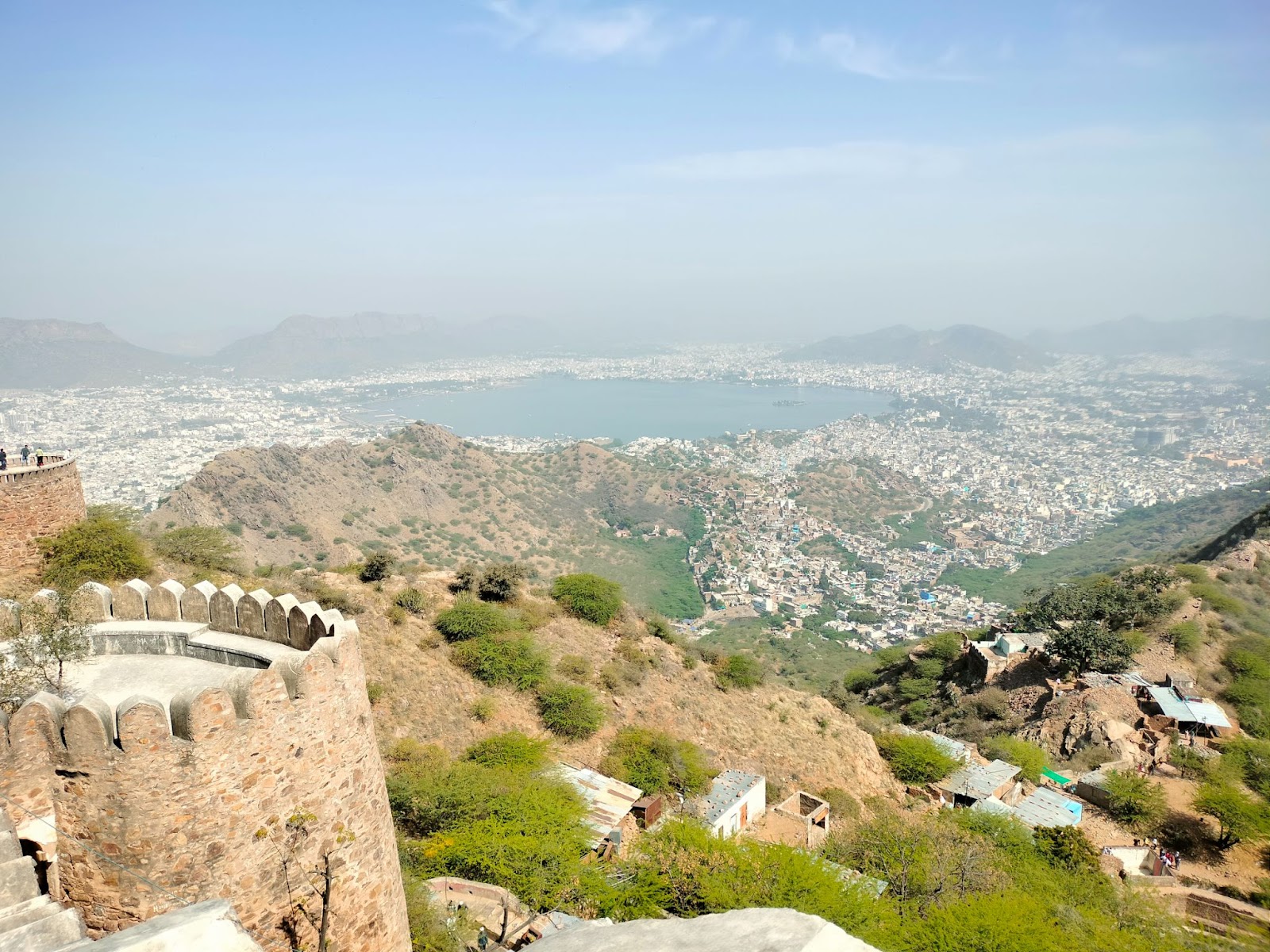
Perched atop a hill overlooking Ajmer, Taragarh Fort offers panoramic views of the city and the surrounding Aravalli hills. Known for its historic gateways and ancient reservoirs, the fort is a popular destination for history enthusiasts.
Ana Sagar Lake
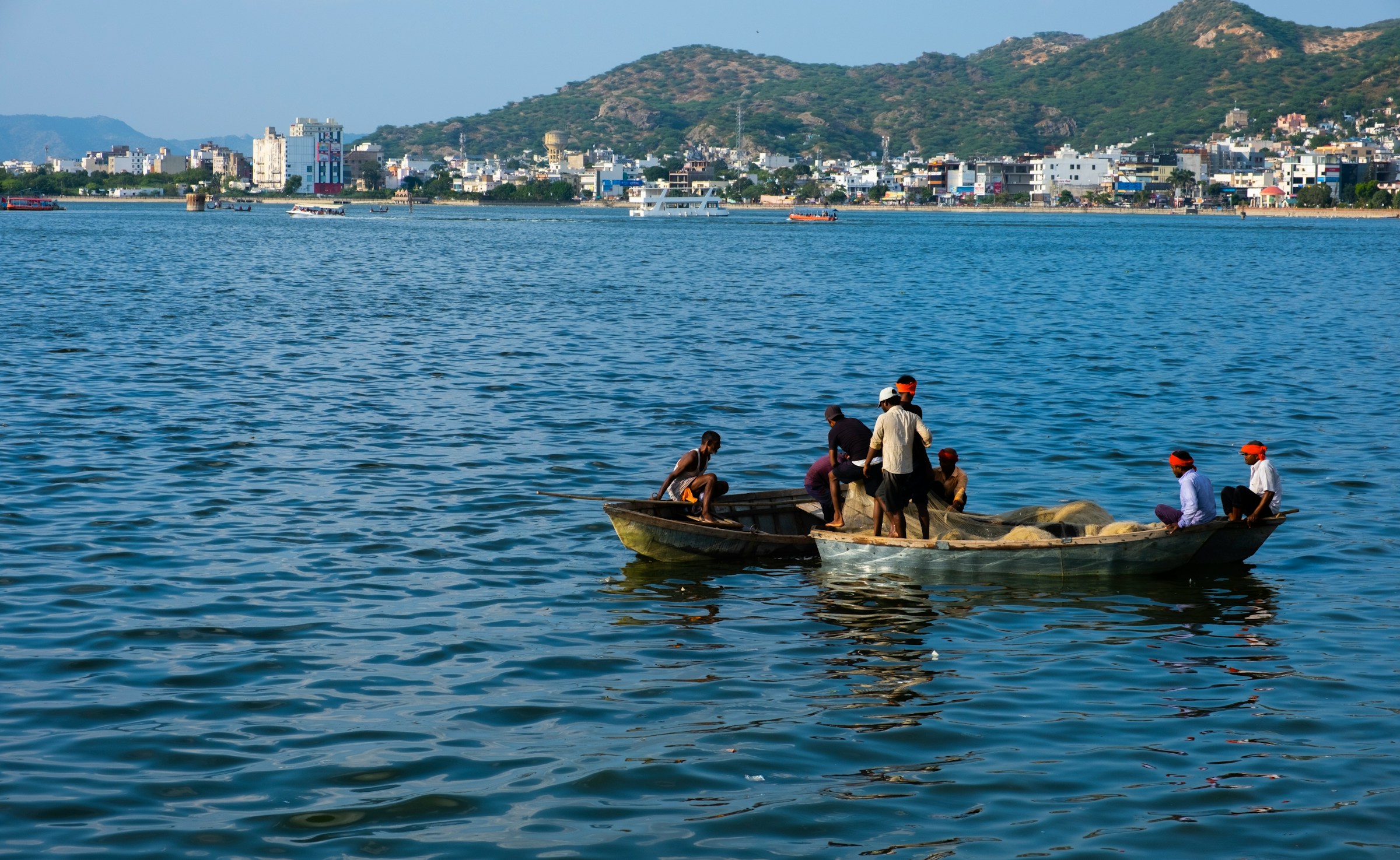
This picturesque artificial lake was built in the 12th century by Anaji Chauhan. Visitors can enjoy boating, lakeside walks, and beautiful sunset views while admiring the surrounding gardens.
Akbari Fort and Museum
Built by Akbar in the 16th century, this historic fort now houses a museum displaying Rajput and Mughal artifacts, sculptures, paintings, and archaeological finds from the region.
Soniji Ki Nasiyan (Red Temple)
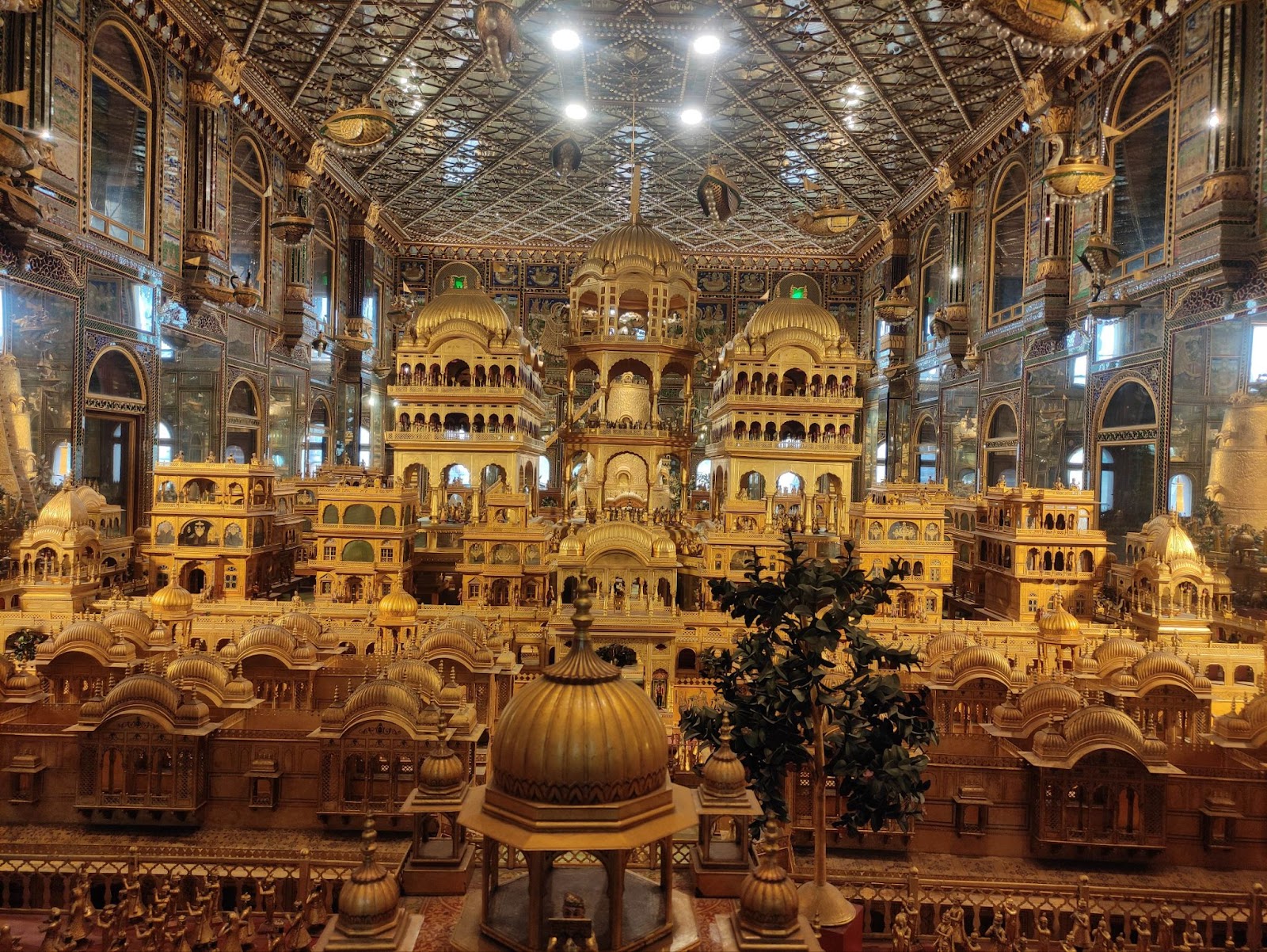
Famous for its stunning gold-plated interiors depicting Jain mythology, this Jain temple is one of Ajmer’s most remarkable architectural attractions and is often referred to as the “Golden Temple of Ajmer.”
Foy Sagar Lake
Situated on the outskirts of Ajmer, Foy Sagar Lake is a tranquil spot surrounded by hills. It is an excellent place for photography, picnics, and enjoying peaceful views away from the city’s bustle.
Map and Location of Adhai Din Ka Jhonpra
A significant religious and culturally important architectural site is located at a distance of 1.5 km from Ajmer Junction Railway Station and 500 m from Ajmer Dargah Sharif.
FAQ’s
Why is Adhai Din Ka Jhonpra famous?
Adhai Din Ka Jhonpra is famous for being one of the earliest examples of Indo-Islamic architecture in India. It is also known for its unique blend of Hindu, Jain, and Islamic architectural elements.
Who built Adhai Din Ka Jhonpra?
The mosque was commissioned by Qutb-ud-din Aibak after the victory of Muhammad Ghori in 1192 CE. It was later expanded and beautified by Iltutmish.
Was Adhai Din Ka Jhonpra originally a temple?
According to historical and archaeological studies, the site is believed to have originally contained Hindu and Jain temples or a Sanskrit college before being converted into a mosque.
What does the name “Adhai Din Ka Jhonpra” mean?
The name translates to “The Hut of Two and a Half Days.” Different legends explain the origin of the name, including stories about rapid construction and local fairs lasting two and a half days.
What are the visiting timings of Adhai Din Ka Jhonpra?
The monument is open every day from 7:00 AM to 6:00 PM.
Is there an entry fee for visitors?
No, entry to Adhai Din Ka Jhonpra is free for all visitors.
Which is the best time to visit Adhai Din Ka Jhonpra?
The best time to visit is between October and March, when the weather in Rajasthan is cooler and more comfortable for sightseeing.