Image Source: 360 panorama
Overview and History of Mehrangarh Fort
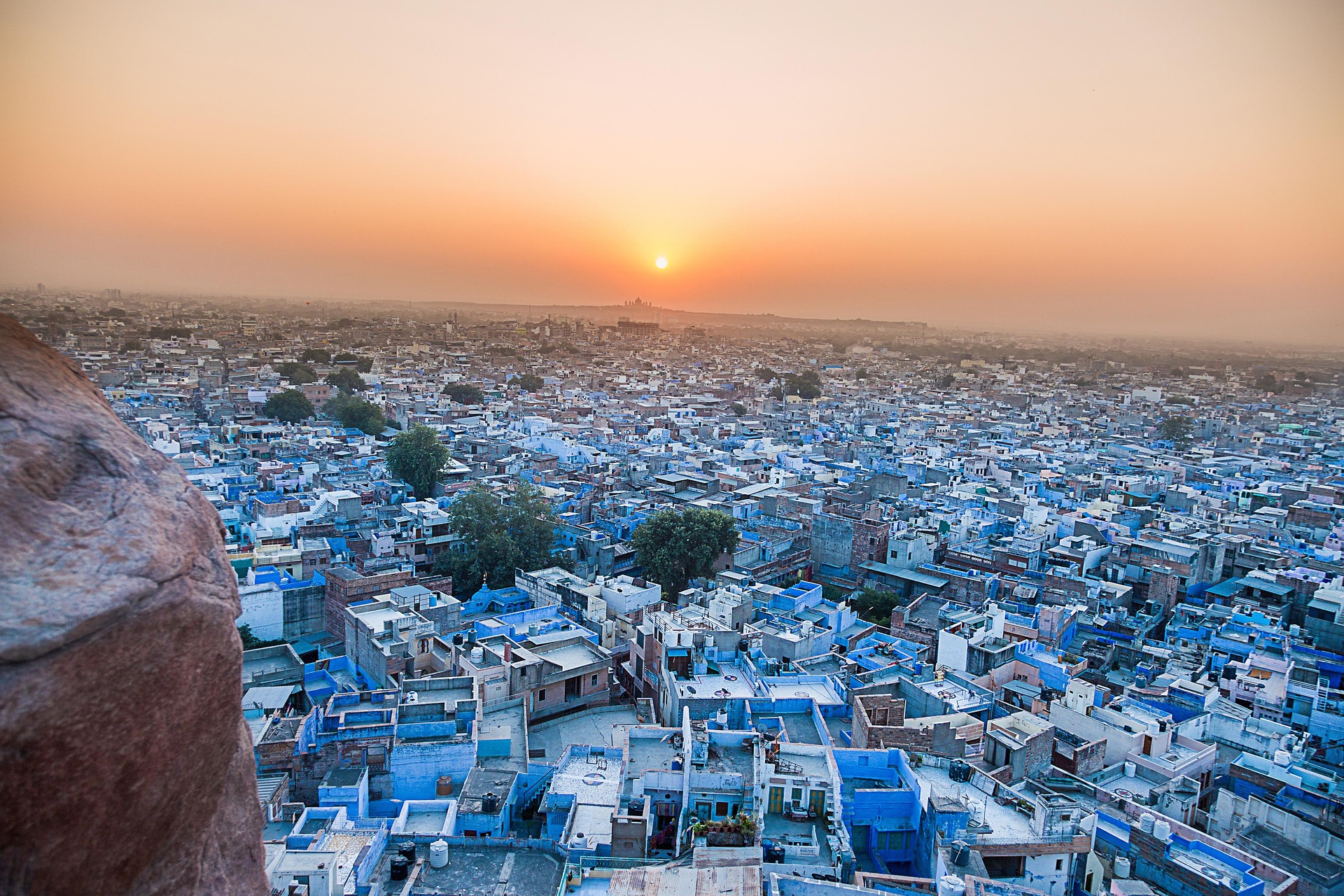
Towering proudly above the blue city of Jodhpur, Mehrangarh Fort is one of the most magnificent forts in India. Perched on a rocky hill around 400 feet above the city, this grand fortress offers breathtaking panoramic views of Jodhpur’s blue-painted houses and surrounding desert landscape. Located about 6 km from Jodhpur Fort Junction, the fort is not only a symbol of Rajput bravery and pride but also a masterpiece of architecture, history, and culture.
The construction of Mehrangarh Fort began in 1459 AD under the rule of Rao Jodha, the founder of Jodhpur. Although the foundation was laid during his reign, much of the structure visible today was developed over several centuries by successive rulers of Marwar, especially Maharaja Jaswant Singh between 1638 and 1678. Today, the fort is carefully preserved and managed by the Rathore royal family under Maharaja Gaj Singh II.
Mehrangarh Fort has witnessed centuries of battles, royal ceremonies, and political events, making it one of Rajasthan’s most historically significant monuments. Massive walls, imposing gates, intricately decorated palaces, and beautifully carved courtyards reflect the grandeur of Rajput architecture and the rich heritage of Marwar.
Legends and Folklore of Mehrangarh Fort
Like many ancient forts in Rajasthan, Mehrangarh Fort is surrounded by fascinating legends and local folklore. One of the most well-known stories is associated with a hermit named Cheeria Nathji, also called the “Lord of Birds.” It is believed that Rao Jodha displaced the hermit while building the fort on the hill. Angered by this, the hermit cursed the kingdom with a severe water shortage that reportedly lasted for several years.
Another popular tale speaks of a man named Raja Ram Meghwal, who is believed to have voluntarily sacrificed his life by being buried alive during the fort’s construction to ensure prosperity and protection for the kingdom. In return, Rao Jodha promised to look after his family and descendants. Even today, the descendants of Raja Ram Meghwal are said to live in an area known as Raj Bagh, and the story continues to be remembered with great respect.
These legends add a mystical charm to the fort and make it even more intriguing for visitors interested in Rajasthan’s rich oral traditions and cultural history.
Architecture of Mehrangarh Fort
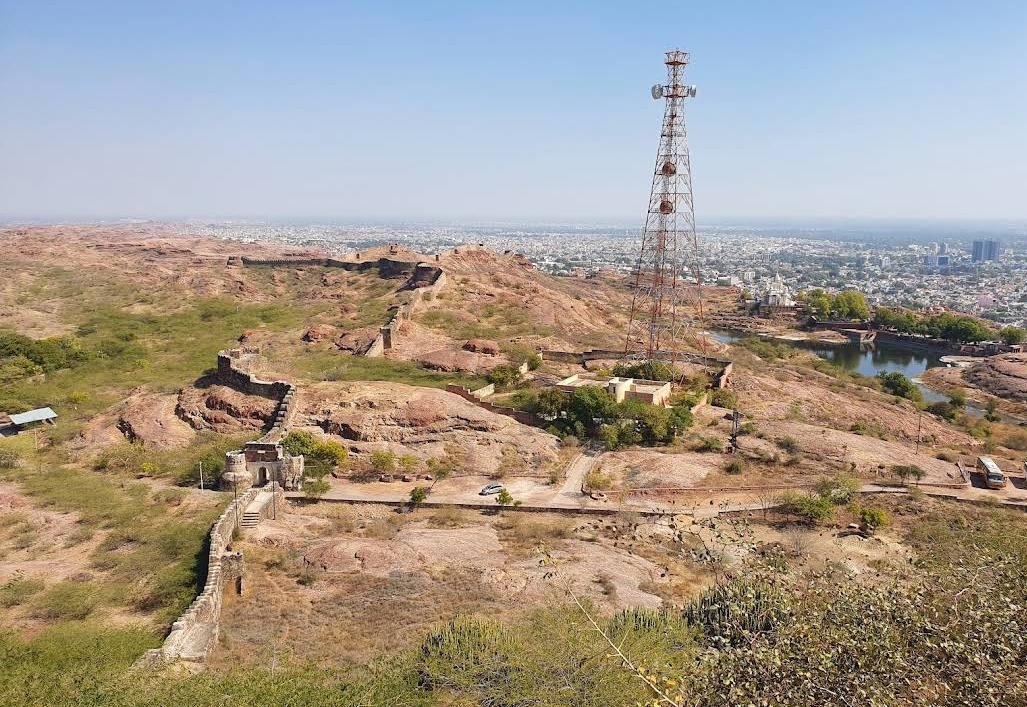
The architecture of Mehrangarh Fort is a stunning blend of strength, elegance, and artistic excellence. Surrounded by massive walls that rise nearly 120 feet high and stretch up to 70 feet thick in some places, the fort was designed to withstand enemy attacks while showcasing royal grandeur.
The fort complex is entered through seven majestic gates, each carrying historical significance. Among them, Jai Pol, also known as the Victory Gate, was built by Maharaja Man Singh to celebrate his victory over Jaipur and Bikaner armies. Fateh Pol was constructed by Maharaja Ajit Singh to commemorate the defeat of the Mughals.
Another important gateway is Loha Pol, the final gate leading into the fort. Near this gate, visitors can still see the handprints of royal queens who committed sati on the funeral pyre of Maharaja Man Singh in 1843. These marks stand as silent reminders of a tragic chapter in Rajput history.
Close to the fort lies the Chhatri of Kirat Singh Soda, a memorial dedicated to a brave soldier who lost his life defending the fort during battle.
Magnificent Palaces Inside the Fort
Inside the massive fort complex are several beautifully designed palaces known for their artistic carvings, decorated ceilings, mirror work, and royal courtyards.
Moti Mahal (Pearl Palace)
Built by Raja Sur Singh, Moti Mahal is one of the largest and most impressive chambers inside the fort. It once served as the royal audience hall where the king met his subjects and ministers. The palace houses the royal throne of Jodhpur, known as the Sringar Chowki. Delicate lattice windows, colorful stained glass, and beautifully carved walls make this palace truly remarkable.
Phool Mahal
Phool Mahal, or the “Palace of Flowers,” is considered one of the most luxurious rooms within the fort. Constructed by Maharaja Abhaya Singh, the palace features an intricately decorated gold ceiling, vibrant paintings, and royal interiors that were once used for private gatherings, music, and dance performances.
Sheesha Mahal
The Sheesha Mahal, or Mirror Palace, showcases exquisite mirror work combined with paintings of Hindu deities and religious themes. The artistic detailing inside the palace reflects the incredible craftsmanship of that era and creates a mesmerizing visual effect when illuminated.
Daulat Khana
Daulat Khana houses a valuable collection of royal artifacts, manuscripts, paintings, and decorative items belonging to the Rathore rulers. The gallery offers visitors a glimpse into the royal lifestyle and political history of Marwar.
Mehrangarh Fort Museum
Today, Mehrangarh Fort also serves as one of Rajasthan’s finest heritage museums. The museum displays an extraordinary collection of royal palanquins, antique weapons, costumes, paintings, and historical artifacts. The armory section is especially popular among visitors, featuring swords, shields, guns, and armor used by Rajput warriors.
The Daulat Khana gallery contains priceless objects linked to the Rathore dynasty and even artifacts associated with Mughal Emperor Akbar. The museum beautifully preserves the legacy of Rajasthan’s royal heritage and offers a deeper understanding of the region’s glorious past.
Chamunda Mata Temple
Situated at the southern edge of the fort complex, Chamunda Mata Temple is an important spiritual site within Mehrangarh Fort. The temple is dedicated to Goddess Chamunda, who has been worshipped as the guardian deity of the Rathore rulers for centuries.
The idol of the goddess was brought from Mandore, the old capital of Marwar, by Rao Jodha in 1460 and installed inside the fort. Even today, the temple attracts thousands of devotees, especially during Navratri, when the atmosphere becomes vibrant with prayers and celebrations.
Best Time to Visit Mehrangarh Fort
The best time to visit Mehrangarh Fort is between October and March, when the weather in Jodhpur remains pleasant and suitable for sightseeing. Early mornings and late afternoons are ideal for exploring the fort comfortably while enjoying stunning views of the city.
Visitors can also witness mesmerizing sunsets from the fort walls, making the experience even more memorable.
Timings and Entry Fee
Timings:
Mehrangarh Fort remains open daily from 9:00 AM to 5:00 PM.
Entry Fee:
- Indian Visitors: Approximately Rs. 70.
- Foreign Tourists: Approximately Rs. 600.
Additional charges may apply for camera usage, museum access, elevators, or audio guides.
Interesting Facts About Mehrangarh Fort
- Mehrangarh Fort is considered one of the largest forts in India.
- The fort walls still bear cannonball marks from past battles.
- The famous “Blue City” view of Jodhpur is best seen from the fort.
- Several Bollywood movies and international films have been shot here.
- The fort hosts the popular Rajasthan International Folk Festival and World Sacred Spirit Festival every year.
How to Reach Mehrangarh Fort
Perched on a rocky hill overlooking the Blue City of Jodhpur, Mehrangarh Fort is one of Rajasthan’s most iconic landmarks and is easily accessible by air, rail, and road.
By Air
The nearest airport is Jodhpur Airport, located about 5–9 km from the fort. Taxis, auto-rickshaws, and app-based cabs are readily available outside the airport. The journey to the fort typically takes around 15–25 minutes.
By Train
Jodhpur Junction Railway Station is situated approximately 5 km from Mehrangarh Fort. Visitors can hire taxis, auto-rickshaws, or local transport to reach the fort in about 15–20 minutes.
By Road
Jodhpur enjoys excellent road connectivity with major cities such as Jaipur, Udaipur, Jaisalmer, Delhi, and Ahmedabad. Travelers can reach the fort by private car, taxi, or state-run and private buses. Parking facilities are available near the fort entrance.
Nearby Attractions
1. Jaswant Thada
Located just a short walk from Mehrangarh Fort, Jaswant Thada is a beautiful white marble memorial built in memory of Maharaja Jaswant Singh II. The serene gardens, intricate carvings, and picturesque lake make it one of the most peaceful attractions in Jodhpur.
2. Ghanta Ghar (Clock Tower)
One of Jodhpur’s most recognizable landmarks, the Clock Tower stands at the heart of the old city. The surrounding area is bustling with local life and offers a glimpse into the city’s vibrant culture.
3. Sardar Market
Situated around the Clock Tower, Sardar Market is a popular shopping destination known for handicrafts, textiles, spices, antiques, and traditional Rajasthani souvenirs. It is an excellent place to experience local flavors and culture.
4. Rao Jodha Desert Rock Park
Located at the base of Mehrangarh Fort, this ecological park was created to restore the natural desert landscape of the region. Visitors can explore walking trails, native plant species, and scenic viewpoints.
5. Umaid Bhawan Palace
One of the grandest palaces in India, Umaid Bhawan Palace combines royal heritage with stunning architecture. Part of the palace functions as a museum showcasing the history of the Jodhpur royal family.
6. Toorji Ka Jhalra
This beautifully restored 18th-century stepwell is a fine example of traditional Rajasthani architecture. Surrounded by cafés and heritage buildings, it has become a popular cultural and photography spot.
7. Mandore Gardens
About 9 km from Mehrangarh Fort, Mandore Gardens features historic cenotaphs, temples, memorials, and lush green spaces. It was once the capital of the Marwar kingdom before Jodhpur was established.
8. Blue City Viewpoints
The areas surrounding Mehrangarh Fort offer some of the best panoramic views of Jodhpur’s famous blue-painted houses. Sunrise and sunset are particularly beautiful times to enjoy the cityscape.
Location
FAQs
Why is Mehrangarh Fort famous?
Mehrangarh Fort is famous for its massive architecture, rich Rajput history, stunning palaces, museum collections, and panoramic views of Jodhpur’s blue city.
Who built Mehrangarh Fort?
The fort was built by Rao Jodha, the founder of Jodhpur, in 1459 AD.
How much time is needed to explore Mehrangarh Fort?
Visitors usually require around 2 to 4 hours to properly explore the fort, museum, palaces, and temple.
Is photography allowed inside Mehrangarh Fort?
Yes, photography is allowed in most areas of the fort, though additional charges may apply for cameras and professional equipment.
What is the best time to visit Mehrangarh Fort?
The winter season, from October to March, is considered the best time to visit due to pleasant weather conditions.
Is there a museum inside Mehrangarh Fort?
Yes, the fort houses a well-maintained heritage museum displaying royal artifacts, paintings, weapons, costumes, and palanquins.
Can visitors see the blue houses of Jodhpur from the fort?
Yes, Mehrangarh Fort offers spectacular panoramic views of Jodhpur’s famous blue-painted houses, which is one of the major highlights of the visit.