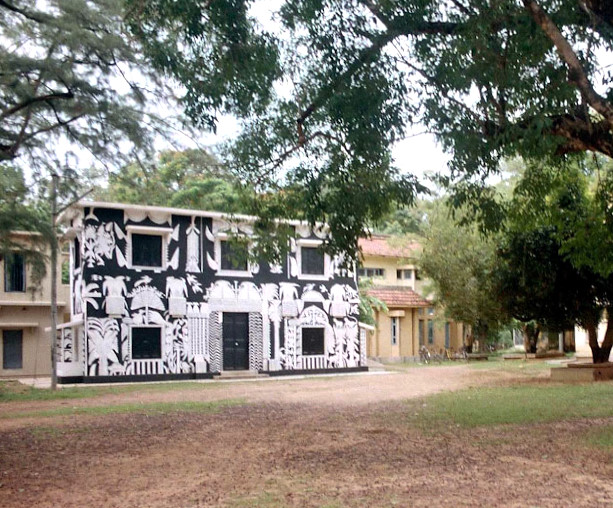
Image Source: Saptarshi Sanyal
About Shantiniketan Kala Bhavan Museum
Located in Shantiniketan, Birbhum, West Bengal, the Kala Bhavan Museum is an integral part of Visva-Bharati University, founded by Rabindranath Tagore. Established in 1919, the museum serves as a cultural and artistic hub, preserving and showcasing the rich legacy of Indian art, crafts, and the Bengal Renaissance.
Overview and Attractions
Kala Bhavan Museum is renowned for its extensive collection of paintings, sculptures, and folk art, reflecting the artistic vision of Tagore and his contemporaries. It provides visitors with a unique opportunity to explore traditional and modern Indian art forms in a scholarly and aesthetically rich environment.
Key highlights of Kala Bhavan Museum include:
Paintings by Nandalal Bose and Rabindranath Tagore: The museum houses masterpieces of Indian modern art, including works by eminent artists of the Bengal School of Art.
Sculptures and Folk Art: A collection of traditional terracotta, wood, and stone sculptures representing regional and tribal artistic traditions.
Textiles and Handicrafts: Exhibits showcasing handwoven fabrics, traditional crafts, and indigenous art forms, highlighting India’s rich cultural heritage.
Special Exhibitions and Workshops: Regular exhibitions and art workshops for students and visitors encourage creative engagement and appreciation of art.
Educational Significance: The museum supports research, learning, and documentation of Indian art, serving as a resource for students, scholars, and art enthusiasts.
Kala Bhavan Museum is a must-visit destination for art lovers, students, and tourists, offering an immersive experience in India’s artistic and cultural history.
Historical and Cultural Significance
Founded under the guidance of Rabindranath Tagore, Kala Bhavan was designed to blend art education with cultural exploration, making Shantiniketan a center of the Bengal Renaissance. It has nurtured generations of artists, scholars, and creative minds, preserving India’s artistic traditions while encouraging innovation and experimentation.
Nearby Attractions
Shantiniketan Kala Bhavan Museum is located within Visva-Bharati University, allowing visitors to explore other cultural and educational landmarks, including Rabindra Bhavan, Tagore’s Ashram, and Santiniketan’s open-air amphitheaters.
Best Time to Visit
The ideal time to visit Kala Bhavan Museum is from October to March, when the weather in Shantiniketan is pleasant for both indoor and outdoor exploration. Summers (April to June) can be warm, while the monsoon season (June to September) may affect travel plans.
How to Reach Shantiniketan Kala Bhavan Museum
Shantiniketan is well connected by road and rail from Kolkata. The nearest railway station is Shantiniketan (Bolpur), and taxis, buses, and local transport provide easy access to the museum within the campus.
Google Maps
FAQs
1. Where is the Kala Bhavan Museum located?
The Kala Bhavan Museum is located within the Visva-Bharati University campus at Santiniketan in Birbhum district, West Bengal.
2. Why is the Kala Bhavan Museum famous?
The museum is renowned for its outstanding collection of paintings, sculptures, sketches, prints, and artworks created by eminent artists associated with Kala Bhavan, including Nandalal Bose, Benode Behari Mukherjee, and Ramkinkar Baij.
3. Who founded Kala Bhavan?
Kala Bhavan was established in 1919 by Rabindranath Tagore as the fine arts institute of Visva-Bharati University.
4. What can visitors see in the museum?
Visitors can explore paintings, sculptures, murals, sketches, graphic prints, archival photographs, manuscripts, and works representing the Bengal School of Art and modern Indian art.
5. What is the best time to visit the Kala Bhavan Museum?
The best time to visit is between October and March, when the weather is pleasant. Visiting during the Poush Mela or Basanta Utsav also provides a rich cultural experience.
6. Is there an entry fee?
Yes. A nominal entry fee may be charged. Visitors should check the latest fee and visiting hours before planning their trip.
7. How much time is needed to explore the museum?
Most visitors spend 1–2 hours exploring the galleries and appreciating the artworks.
8. Is photography allowed inside the museum?
Photography is generally restricted inside the galleries to protect the artworks. Visitors should follow the museum’s guidelines.
9. Is the museum suitable for students and art enthusiasts?
Yes. The museum is an excellent destination for students, researchers, artists, and anyone interested in Indian art, culture, and the legacy of Santiniketan.
10. How can I reach the Kala Bhavan Museum?
The museum is easily accessible from Bolpur Railway Station, about 3 km away. It is well connected by taxis, auto-rickshaws, and local transport from the station and nearby towns.