Image Source: Shivajidesai29
About Pattadakal Temple Complex
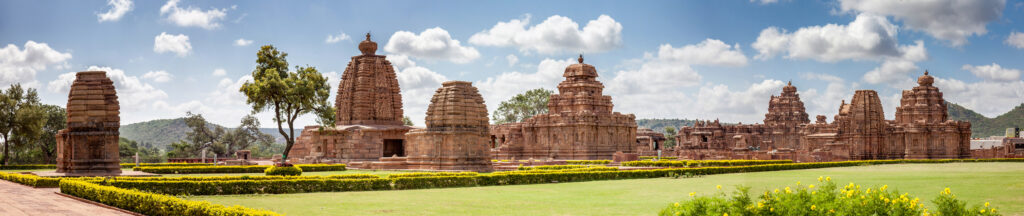
Pattadakal (also known as Pattadakallu or Raktapura) is one of the most iconic temple complexes of India, located on the west bank of the Malaprabha River in the Bagalkot district of northern Karnataka.
Dating back to the 7th and 8th centuries CE, Pattadakal is home to a cluster of Hindu and Jain temples that mark the zenith of Chalukyan art and architecture. Recognized as a UNESCO World Heritage Site, it is currently protected and managed by the Archaeological Survey of India (ASI).
Location and Accessibility
Pattadakal lies at the heart of the Malaprabha Valley, often called the cradle of Chalukyan architecture. It is situated about 23 km from Badami and 9.7 km from Aihole, two other significant centers of early temple construction. The Malaprabha River flows northwards here, a rare phenomenon in peninsular India, and is revered in Hindu tradition as the Uttarvahini Ganga, adding a sacred aura to the site.
Travelers can reach Pattadakal via road from Bagalkot (35 km), or by rail at Badami station on the Hubballi–Solapur line. The nearest airports are Hubballi and Belagavi (Sambra Airport), making the site accessible from Bengaluru, Pune, and Hyderabad.
History
The name Pattadakal literally translates to “Stone of Coronation”, signifying its role as the ceremonial ground for Chalukya dynasty coronations, including that of King Vinayaditya in the 7th century CE. Other historical names include Kisuvolal and Pattada-Kisuvolal. Together with Aihole and Badami, Pattadakal formed a powerful cultural and architectural hub, where experimentation in temple design flourished.
The complex became a melting pot where northern (Nagara) and southern (Dravida) architectural traditions merged seamlessly. After the Chalukyas, the site continued to attract patronage from the Rashtrakutas and the Later Chalukyas, with new temples being added between the 9th and 12th centuries CE. Despite invasions by the Delhi Sultanate in the 14th century, Pattadakal remained significant under the Vijayanagara Empire, and later passed under the control of the Bijapur Sultanate, Mughals, Marathas, and eventually the British. Archaeological findings at Bachinnagudda nearby also reveal Iron Age dolmens and megalithic monuments, suggesting the valley’s ritual and cultural significance long before the Chalukyas.
Architectural Style and Temples
The temples of Pattadakal are celebrated for their unique fusion of Dravidian vimana and Nagara shikhara styles, a balance that UNESCO describes as “eclectic art at its peak.” The complex consists of ten major temples—nine Hindu and one Jain—along with numerous smaller shrines.
The Hindu temples are primarily dedicated to Shiva, though they also carry elements of Vaishnavism (Vishnu) and Shaktism (goddess traditions). Their friezes narrate stories from the Ramayana, Mahabharata, and Bhagavata Purana, transforming the temples into visual scriptures.
Sangameshwara Temple: The oldest structure (697–733 CE), dedicated to Shiva, built in the Dravidian style. Excavations suggest an even earlier brick temple beneath.
Virupaksha Temple: The grandest and most sophisticated monument, commissioned by Queen Lokamahadevi around 740 CE to commemorate Vikramaditya II’s victory over the Pallavas. Its carvings reflect Shaivism, Vaishnavism, Shaktism, and epic narratives. This temple, inspired by the Kailasanatha temple of Kanchipuram, became a model for later South Indian temples including the Kailasa temple at Ellora.
Mallikarjuna (Trailokeshwara) Temple: Built by Queen Trailokyamahadevi, sister of Lokamahadevi, it closely mirrors Virupaksha in design but with subtle architectural differences.
Papanatha Temple: Stands apart from the main cluster, displaying a novel blend of Nagara and Dravida forms, richly decorated with Ramayana panels.
Galaganatha Temple: A pure Nagara temple, modeled on the Svarga Brahma Temple of Alampur.
Kadasiddheshwara, Jambulingeshwara, and Chandrashekhara Temples: Smaller shrines showing early experiments with northern-style shikharas.
The Jain Narayana Temple, built in the 9th century during the Rashtrakuta era, reflects Dravidian planning and houses an image of a Tirthankara. Excavations revealed evidence of an earlier Jain shrine, showing the religious diversity of Pattadakal.
Inscriptions and Art
Pattadakal is also a treasure of epigraphy and sculpture. Numerous Old Kannada inscriptions provide details about royal grants, temple construction, and cultural life. The walls feature exquisite reliefs, including depictions of Ravana lifting Mount Kailash, Shiva as Nataraja, and Krishna’s playful childhood episodes.
Some sculptures depict musical instruments like the long-necked lute, offering glimpses into the region’s artistic traditions. Notably, several artisans proudly inscribed their names beneath their carvings, especially in the Virupaksha temple, reflecting the growing status of artists in Chalukyan society.
How to Reach
Pattadakal is easily accessible from major towns of northern Karnataka.
By Road: It is about 22 km from Badami and 10 km from Aihole, both of which are part of the famous Chalukyan architecture circuit. Regular KSRTC buses and private taxis connect Pattadakal with Bagalkot (about 35 km away).
By Rail: The nearest railway station is Badami, which connects to Hubballi, Hospet, and Bengaluru.
By Air: The nearest airport is Hubballi Airport (about 140 km), while Belagavi Airport (180 km) also serves the region.
Nearby Attractions
1. Badami Cave Temples
Located about 22 km from Pattadakal, the Badami Cave Temples are among Karnataka’s most celebrated rock-cut monuments. Carved into red sandstone cliffs by the Chalukyas, these caves feature magnificent sculptures of Hindu and Jain deities and offer panoramic views of Agastya Lake.
2. Agastya Lake
Situated in Badami, this scenic lake is surrounded by sandstone hills, temples, and historic monuments. The tranquil setting makes it a popular spot for photography and sightseeing.
3. Bhutanatha Temple Complex
Nestled on the banks of Agastya Lake, the Bhutanatha Temple Complex is known for its beautiful Chalukyan architecture and picturesque location. The reflection of the temple in the lake creates one of Badami’s most iconic views.
4. Badami Fort
Perched atop rugged sandstone cliffs, Badami Fort offers breathtaking views of the surrounding landscape. Visitors can explore ancient gateways, watchtowers, inscriptions, and remnants of the Chalukya era.
5. Aihole
Located about 13 km from Pattadakal, Aihole is often called the “Cradle of Indian Temple Architecture.” The historic site contains more than 100 temples and monuments that showcase the early development of temple architecture in India.
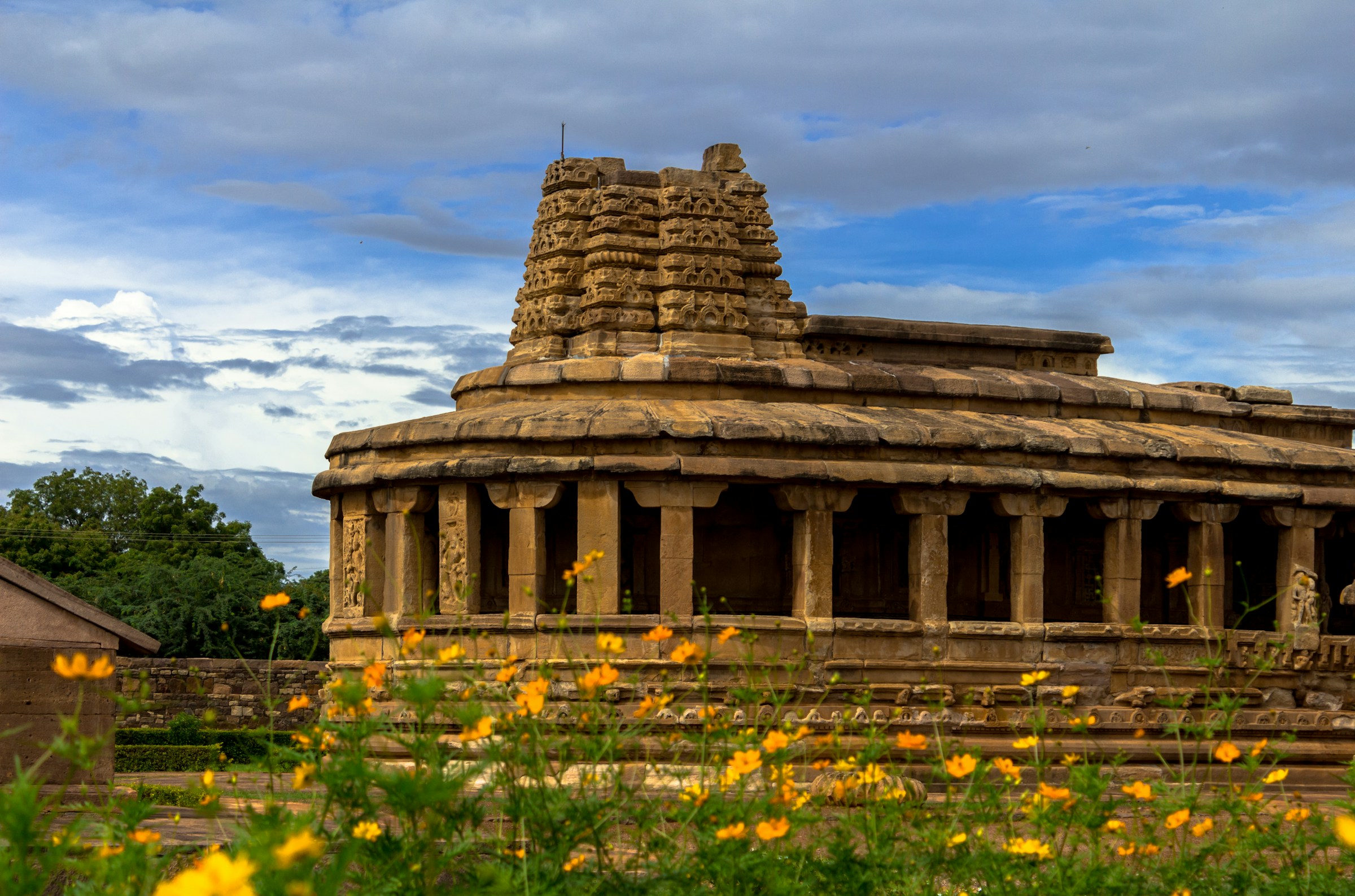
6. Durga Temple, Aihole
One of Aihole’s most famous monuments, the Durga Temple is renowned for its unique apsidal design and intricate stone carvings that reflect early Chalukyan craftsmanship.
7. Lad Khan Temple
Among the oldest temples in Aihole, this structure is notable for its distinctive architecture and historical significance in the evolution of temple design.
8. Mahakuta Temple Complex
Located near Badami, Mahakuta is a sacred complex dedicated to Lord Shiva. Surrounded by greenery and hills, it is famous for its ancient temples and natural spring-fed sacred tank.
9. Banashankari Temple
About 25 km from Pattadakal, this revered temple dedicated to Goddess Banashankari attracts devotees from across Karnataka. The temple is especially famous for the annual Banashankari Jatre festival.
10. Archaeological Museum, Pattadakal
Situated close to the temple complex, the museum houses sculptures, inscriptions, and artifacts recovered from Pattadakal and nearby Chalukyan sites, providing valuable insights into the region’s history.
Google Maps
FAQs
1. What is Pattadakal Temple Complex famous for?
Pattadakal is a UNESCO World Heritage Site known for its group of 7th–8th century temples built by the Chalukya dynasty. It is especially famous for showcasing a unique blend of North Indian (Nagara) and South Indian (Dravida) temple architecture in one place.
2. Where is the Pattadakal Temple Complex located?
The temple complex is located in the village of Pattadakal in the Bagalkot district of Karnataka, India, on the banks of the Malaprabha River. It lies near other historic sites like Badami and Aihole.
3. How many temples are there in Pattadakal?
There are ten major temples in total—nine Hindu temples dedicated mainly to Lord Shiva and one Jain temple dedicated to Parshvanatha. The temples are arranged in a planned complex with smaller shrines and monuments around them.
4. What makes the architecture of Pattadakal special?
The complex is renowned for its architectural fusion, where both Dravida (South Indian) and Nagara (North Indian) styles are used together. The temples also feature detailed carvings depicting scenes from the Ramayana, Mahabharata, and various Hindu deities.
5. Which is the most important temple in the complex?
The Virupaksha Temple is the most prominent structure in Pattadakal. Built in the 8th century by Queen Lokamahadevi, it is the largest temple in the complex and is still an active place of worship today.