Baglamukhi Temple
The Mata Baglamukhi Temple at Bankhandi in the Kangra district of Himachal Pradesh is one of the most spiritually powerful Shakti shrines in the western Himalayas. Dedicated to Maa Baglamukhi, the eighth Mahavidya among the Dasa Mahavidyas, the temple is revered for its association with stambhan shakti, the divine power that halts negativity, enemies, and destructive intentions. Set against the serene Himalayan foothills and surrounded by forests, the temple attracts devotees seeking victory in legal matters, relief from obstacles, protection from negative energies, and inner mental strength. Locally known as Baglamukhi Mata Mandir Bankhandi, the shrine holds a special place in the sacred geography of the Kangra Shakti belt.
Mythology
The history of the Baglamukhi Temple dates back to the Mahabharata period. According to legend, Raksha once stole the book of Brahma (the creator of the universe) and hid it in Pataal. Baglamukhi Mata was born to find the book and kill the rakshasa.
Another story says that Goddess Baglamukhi appeared when a cosmic storm arose to threaten the universe. She defeated the demon Mandansaura, who was causing such a disturbance, and restored the cosmic balance.
Role in Tantra
Baglamukhi is worshipped in Tantric rituals and practices. Anyone who is seeking to defeat enemies, resolve legal disputes, and achieve success in life pays a visit to the temple.
Devotees believed that she has the power to paralyze enemies and neutralize their speech and actions.
Rituals and Worship
Devotees perform Baglamukhi Havan and Mantra Sadhana for protection, victory in court cases, success in competitions, and resolving conflicts.
The Baglamukhi Mantra, “ॐ ह्लीं बगलामुखि सर्वदुष्टानां वाचं मुखं पदं स्तंभय जिव्हां कीलय बुद्धिं विनाशय ह्लीं ॐ स्वाहा” (Om Hleem Baglamukhi Sarvadushtanam Vacham Mukham Padam Stambhay Jivham Keelay Buddhim Vinashay Hleem Om Swaha), is chanted to seek her blessings.
The Baglamukhi Temple in Kangra is renowned for its distinctive blend of tantric, Vedic, and devotional rituals, many of which are unique to the worship of Goddess Baglamukhi. Here are the key rituals that set this temple apart:
Tantric Baglamukhi Puja and Anusthan
Baglamukhi Temple is a centre of tantric rituals. Baglamukhi Puja and Anusthan are performed by involving the chanting of powerful mantras, yantras (sacred diagrams), and mudras to invoke the goddess’s energy. Puja-specific needs-such as protection from enemies, victory in legal matters or removal of obstacles—last from 1 to 9 days.
Use of yellow is predominant in things like flowers, cloth, turmeric, and mustard that symbolized the goddess’s association with the yellow color and the earth element.
Mirch Havan (Chili Fire Ritual)
In this ritual, red chili peppers are offered into the sacred fire while chanting Baglamukhi mantras. According to the belief, it’s understood the ritual harnesses the fiery energy of the chilies to paralyze and neutralize enemies. Negative forces are dissolved with protection and victory for devotees.
136 Types of Havan (Fire Ceremonies)
136 different kinds of Havans (fire sacrifices) are performed in the temple. Each design is specifically proposed to appease the nine planets (Navagraha Havan). Anyone who is seeking victory in politics, business, or removal of black enemy obstacles performs this type of .
Such Havans are performed under the guidance of skilled priests with specific mantras and offerings like ghee, yellow mustard, turmeric, and grains.
Abhishek (Ritual Bathing)
The idol of Baglamukhi Jayanti is ritually bathed with sacred substances such as milk, honey, ghee, curd, and turmeric. Bestowing spiritual benefits, the event is considered highly auspicious, with numerous participants participating.
Yellow-Themed Rituals and Offerings
The yellow color dominated all rituals, with devotees wearing yellow clothes and offering rice, turmeric, and yellow sweets, and adorning the goddess with yellow drapes and flowers.
Parikrama and Mantra Chanting
In Parikrama, devotees perform parikrama (circumambulation) around the temple while continuously chanting the Baglamukhi mantra. Devotees seek the blessing of the goddess for protection and victory.
Niyam Vrat (Disciplined Fasting)
In Niyam Vrat (fast), Some keep a complete fast while others consume only yellow food. It’s believed this purifies the mind and body and helps in receiving the blessing of the goddess.
Maha Aarti and Distribution of Prasad
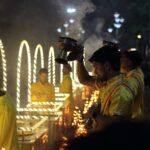
After the culmination of a day’s ritual, a grand evening Aarti (waving of lamps) happens in the temple. Temple is adorned with yellow lights. While devotees sing hymns and receive Prasad and yellow sweets.
Benefits of Performing a Baglamukhi Homa
Performing a Baglamukhi Homa (fire ritual) is believed to invoke the blessings of Goddess Baglamukhi, one of the ten Mahavidyas, and offers a range of spiritual and practical benefits:
Victory Over Adversaries and Legal Matters
Legal battles and conflict is a major source of dispute in today’s world. The ritual is performed to gain upper hand in disputes. It helps in paralyzing and neutralise adversaries and protection against evil.
Protection from Negative Energies and Evil Forces
If black magic, evil eye and malevolent forces are disturbing your life. Then the ritual provides protection against those negative energies. Its often recommended for those facing psychic attacks or influences.
Removal of Obstacles and Challenges
People visit in large numbers to the Baglamukhi temple to overcome obstacles in personal, professional, or business life. Various hurdles and unfavorable circumstances are removed by the goddess deity.
Financial and Business Prosperity
To bring prosperity in business and careers, devotees come and participate in rituals held in Baglamukhi. Its very beneficial for those facing property disputes or financial stagnation.
Mental Strength and Clarity
Negative thoughts, self-knowledge, and confusion are major obstacles in person’s life. Rituals helps in removing these and lead to greater focus, determination and wisdom.
Health and Longevity
Diseases, accidents and other health threat affects the overall longevity of life of a person. Performing rituals provides protection from such Illness, disasters and other health problems.
Spiritual Growth and Aura Enhancement
Kundalini that one enhance one’s aura and open higher chakras, helps devotees to awaken spiritual energy. It leads to deeper spiritual awareness and influence over circumstances.
Success in Interviews, Real Estate, and Career
Any student who is seeking success in competitive exams and interviews must pay visit to the temple. Any real estate dealings and professional advancement become easy with the blessing of deity.
Yellow Colour
Goddess Baglamukhi is associated with the color yellow. You will see devotees wearing yellow attire and offering yellow-colored items during worship. The whole temple is adorned with yellow flowers and decorations.
Festivals and Celebrations
During Navaratri, the temple witnesses a nine-day festival dedicated to Goddess Durga and her manifestation. Special tantrik rituals are performed at the temple during this time.
Thursdays are considered auspicious for the worship of Goddess Baglamukhi. Devotees visit in large numbers to offer prayers on that day.
Best Time to Visit
Navratri (March-April and September-October).
During these months, the temple is vibrant with festivities and rituals.
Yellow Thursday (Vasant Panchami).
It is considered highly auspicious to worship Goddess Baglamukhi.
Puja Path and Aarti Timing
| 5:00 am | Aarti In Morning |
| 6:00 am | Temple Opening to Visitors |
| 11:00 am to 11:30 am | Mata Ji Ka Bhog |
| 11:00 am to 11:30 am | Temple Closed |
| 5:00 pm to 5:30 pm | Evening’s Shringar |
| 5:00 pm to 5:30 pm | Temple Closed(in Winter) |
| 6:30 pm | Evening Aarti And Shaiya (In Winter) |
| 12:00 am night | Temple Closed (in Winter) |
Location of Famous Baglamukhi Temples
Madhya Pradesh (Pitambara Peeth, Datia)
The most famous Baglamukhi Temple is located in Datia, Madhya Pradesh, also known as Pitambara Peeth. Other temples dedicated to Baglamukhi can be found in various parts of India, including Haridwar and Guwahati.
Ravana
Ravana was an ardent devotee of Baglamukhi Devi. When Ram went to conquer Sri Lanka, he also worshipped Baglamukhi Devi to get victory over Ravana.
Architecture
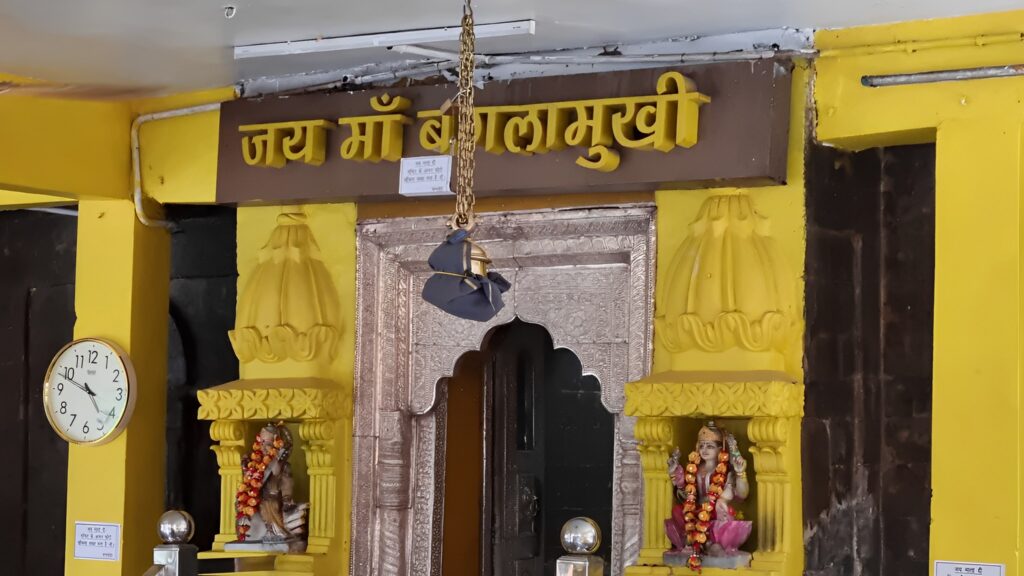
The entire temple has been painted yellow. Everything, from the clothes of the mother to the food offered, is yellow in color. When visitors visit the temple for darshan, they often wear yellow clothes. Mata Baglamukhi Devi sits on a golden throne decorated with a variety of jewels.
Regional Context and Shakti Circuit of Kangra
The Baglamukhi Temple at Bankhandi forms an important spiritual link in the Kangra Shakti circuit, which includes revered shrines such as Jwalamukhi, Chamunda Devi, and Brajeshwari Devi. This geographical clustering strengthens the belief that Kangra is a highly energized Shakti zone, where different manifestations of the Divine Mother protect and guide the region. Many pilgrims include Bankhandi in their broader Shakti Peetha yatra of Himachal Pradesh.
How to reach Baglamukhi Temple
By Road: The most convenient way to reach Baglamukhi Temple is by road. There are regular bus services available from nearby cities like Delhi, Chandigarh, Amritsar, and Jalandhar. One can also hire a taxi or drive to the temple by car.
| Delhi | 430 km |
| Chandigarh | 230 km |
| Dharamshala | 120 km |
| Shimla | 209 km |
| Amritsar | 183 km |
| Pathankot | 95km |
| Manali | 254 km |
| Kangra | 24 km |
| Haridwar | 438 km |
| Dehradun | 364 km |
By Train: The nearest railway station to Kangra is Pathankot Junction, which is around 90 km from the temple. From Pathankot, one can take a taxi or a bus to reach the temple.
By Air: The nearest airport to Kangra is the Gaggal Airport, also known as the Kangra Airport, which is about 20 km from the temple. From the airport, one can take a taxi or a bus to reach the temple.
Nearby Attractions
Masroor Rock Cut Temples
Located about 30 km from Baglamukhi Temple, the Masroor Rock Cut Temples are an extraordinary group of monolithic temples carved from a single rock. Often referred to as the “Ellora of Himachal Pradesh,” these ancient temples showcase remarkable architecture and offer stunning views of the Dhauladhar ranges.
Pong Dam Lake
Situated around 35 km away, Pong Dam Lake is a popular destination for birdwatchers and nature enthusiasts. The reservoir attracts thousands of migratory birds during winter and provides opportunities for boating, photography, and wildlife observation.
Kangra Fort
Approximately 25 km from the temple, Kangra Fort is one of the oldest and largest forts in India. Perched on a hill overlooking the Banganga and Manjhi rivers, the fort offers fascinating insights into the region’s history along with panoramic views of the surrounding valleys.
Kareri Lake
For trekking enthusiasts, Kareri Lake is a scenic high-altitude freshwater lake located in the Dhauladhar range. Surrounded by alpine meadows and dense forests, it serves as an excellent getaway for adventure seekers visiting the Kangra region.
Chamunda Devi Temple
Located about 20 km from Baglamukhi Temple, Chamunda Devi Temple is one of the most revered Shakti Peeths in Himachal Pradesh. Set against the backdrop of the Dhauladhar mountains, the temple attracts pilgrims and visitors seeking spiritual solace and picturesque surroundings.
FAQS
- Q: Where is Mata Baglamukhi Temple located in Himachal Pradesh?
The temple is located in Bankhandi village of Kangra district, in the lower Himalayan region of Himachal Pradesh.
- Q: What is Mata Baglamukhi worshipped for?
She is worshipped for victory over enemies, success in court cases, protection from negative energies, and mental stability.
- Q: Is the Bankhandi Baglamukhi Temple associated with Tantra?
Yes, the temple has strong Tantric roots, although regular Vedic worship is also practiced for general devotees.
- Q: Why is yellow color important in Baglamukhi worship?
Yellow represents haridra (turmeric), symbolizing knowledge, prosperity, and the goddess’s stambhan power.
- Q: When is the best time to visit the temple?
Navratri seasons and early morning hours are considered the most auspicious times for worship.