Image Source: Sharada Prasad CS
About Ujjayanta Palace
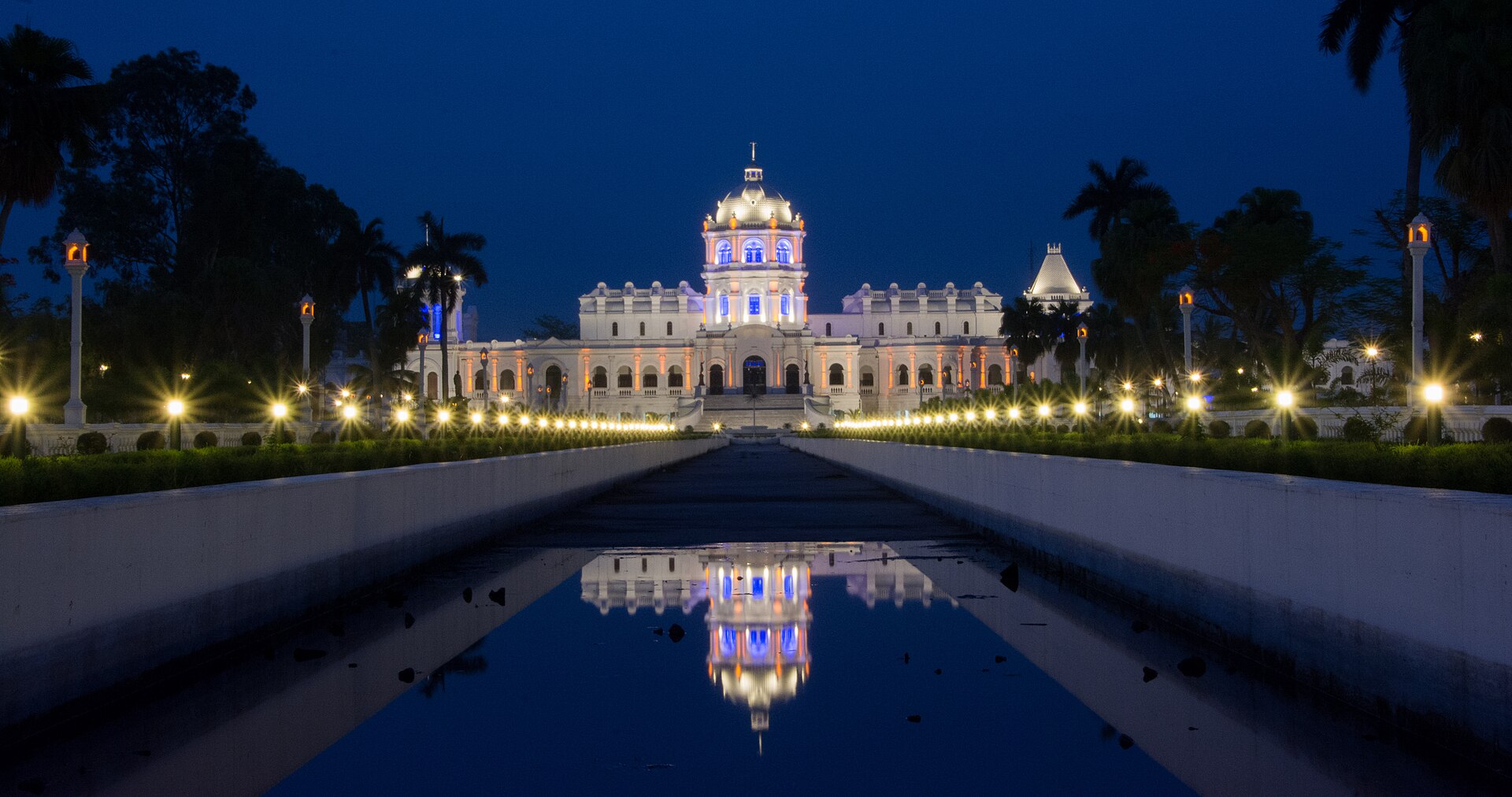
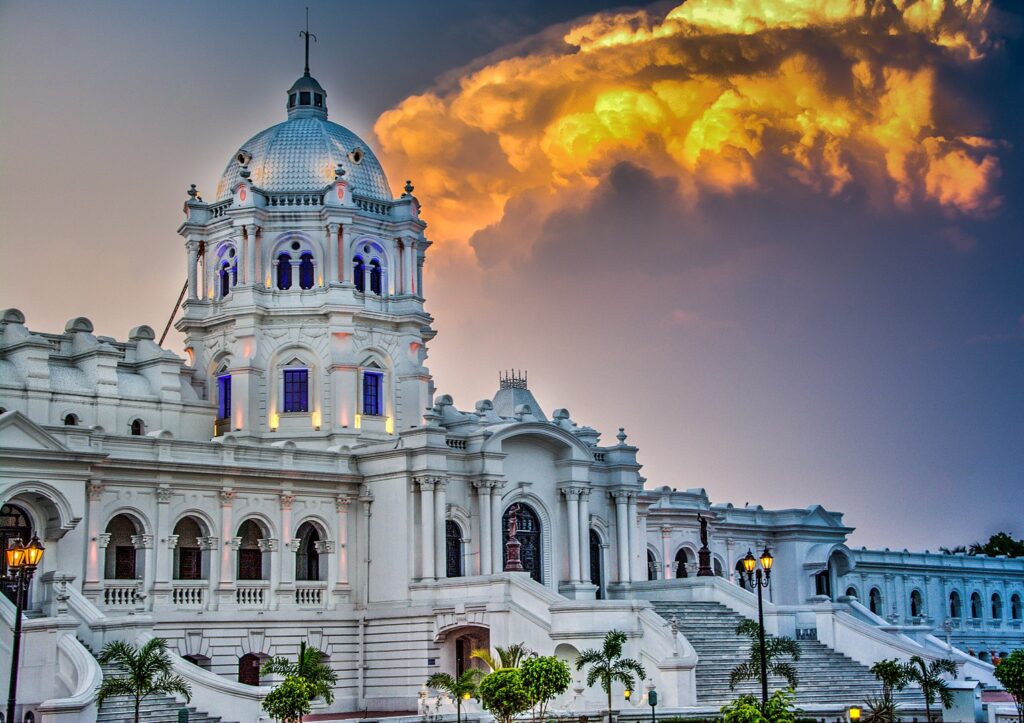
In the heart of Agartala stands the magnificent Ujjayanta Palace, one of the most iconic landmarks of Tripura. Surrounded by sprawling gardens, peaceful water bodies, and elegant white domes, the palace reflects the grandeur of Tripura’s royal past. Built in 1901 by Maharaja Radha Kishore Manikya of the Manikya dynasty, the palace once served as the royal residence of Tripura’s kings before the princely state merged with India in 1949.
Today, the palace has been transformed into a state museum and cultural center, welcoming travelers, historians, architecture enthusiasts, and people interested in the tribal heritage of Northeast India. With its royal charm and historical importance, Ujjayanta Palace remains one of the most visited attractions in Tripura.
Architectural Beauty of Ujjayanta Palace
The architecture of Ujjayanta Palace is a beautiful blend of Indo-Saracenic, Mughal, and European styles. The palace immediately captures attention with its large central dome, elegant arched entrances, tiled floors, and beautifully designed corridors. The massive white structure, illuminated during the evening hours, creates a truly regal atmosphere.
One of the most striking features of the palace is its symmetrical layout. The central dome rises prominently above the structure and is complemented by four smaller domes at the corners. Intricate woodwork, carved doors, decorative ceilings, and graceful staircases further enhance the royal ambiance.
The palace was designed not only for luxury but also for comfort. Spacious halls, airy balconies, and large windows were carefully planned to suit the climate of the region. European influences can be seen in the palace interiors, while Mughal-inspired gardens and domes give it a distinctly Indian identity. Even today, the palace stands as a fine example of royal architecture in Northeast India.
Ujjayanta Palace Museum
After restoration and renovation, the palace was converted into the Tripura State Museum, making it an important cultural destination in the state. The museum showcases the history, traditions, art, and tribal heritage of Tripura through well-curated galleries and exhibits.
Inside the museum, visitors can explore collections of ancient sculptures, coins, royal furniture, manuscripts, traditional ornaments, and historical photographs. There are also galleries dedicated to the indigenous tribes of Tripura, including the Tripuri, Reang, Chakma, Halam, and Jamatia communities. These exhibits offer fascinating insights into tribal lifestyles, traditional clothing, music, festivals, and craftsmanship.
The museum also explains the political and cultural evolution of Tripura, from the reign of the Manikya kings to the modern era. Audio-visual displays and informative exhibits make the experience engaging for visitors of all ages.
Gardens and Scenic Surroundings
The beauty of Ujjayanta Palace is not limited to the building itself. The palace complex is surrounded by lush Mughal-style gardens filled with ornamental plants, tall trees, fountains, and water channels. Walking through these gardens feels peaceful and refreshing, especially during the cooler months.
The palace grounds are ideal for photography, evening walks, and quiet relaxation. During sunset, the reflection of the palace domes in the nearby water bodies creates a mesmerizing view. The landscaped lawns and colorful flower beds further add to the charm of the place.
The surroundings of the palace are also well-maintained, making it a pleasant space for families and tourists spending time in Agartala.
Historical and Cultural Importance
Ujjayanta Palace is more than just a former royal residence. It represents the cultural identity and historical legacy of Tripura. The palace witnessed important political and social developments during the princely era and continues to preserve the memory of Tripura’s royal lineage.
Today, the palace often hosts cultural exhibitions, heritage programs, art events, and state celebrations. During festivals and cultural gatherings, traditional dance performances, folk music, handicraft displays, and tribal art exhibitions bring the palace grounds to life.
For anyone interested in understanding the history and traditions of Tripura, Ujjayanta Palace serves as an ideal starting point.
Best Time to Visit Ujjayanta Palace
The best time to visit Ujjayanta Palace is between October and March. During these months, the weather in Agartala remains cool and comfortable, making it pleasant for sightseeing and exploring the gardens.
Winter is especially suitable for photography and outdoor walks around the palace complex. The evenings are particularly beautiful when the palace lights illuminate the white domes and surrounding fountains.
The monsoon season from June to September brings heavy rainfall to Tripura, which may affect outdoor exploration, although the greenery around the palace becomes exceptionally vibrant during this period.
Nearby Attractions
Visitors exploring Ujjayanta Palace can also visit several nearby attractions in and around Agartala, including:
- Neermahal – A stunning water palace located in the middle of Rudrasagar Lake.
- Jagannath Temple – A beautiful Hindu temple known for its unique architecture.
- Heritage Park – A landscaped park showcasing miniature models of Tripura’s famous landmarks.
- Sepahijala Wildlife Sanctuary – Popular for birdwatching and wildlife.
- Gumti Wildlife Sanctuary – Known for its forests, migratory birds, and natural beauty.
How to Reach Ujjayanta Palace
By Air
The nearest airport is Maharaja Bir Bikram Airport, located around 8 km from the palace. The airport has regular flights connecting Agartala with major Indian cities such as Kolkata, Guwahati, and Delhi. Taxis, auto-rickshaws, and app-based cabs are easily available from the airport.
By Train
The nearest railway station is Agartala Railway Station at Badharghat, approximately 5 km away from the palace. The station is connected to several important cities in Northeast India and eastern India.
By Road
Agartala is well connected by road through National Highway 8. Government and private buses regularly operate from nearby northeastern states. Shared taxis and private cabs are also available for travelers arriving by road.
Local Transport
Within Agartala, auto-rickshaws, e-rickshaws, taxis, and cycle rickshaws are convenient and affordable options for local travel. Since the palace is centrally located, it can be reached easily from almost any part of the city.
Google Maps
FAQs
1. Why is Ujjayanta Palace famous?
Ujjayanta Palace is famous for its royal architecture, historical significance, and museum showcasing Tripura’s tribal and cultural heritage. It is one of the most important tourist attractions in Tripura.
2. Who built Ujjayanta Palace?
The palace was built by Maharaja Radha Kishore Manikya in 1901 as the royal residence of the Manikya dynasty.
3. Is Ujjayanta Palace now a museum?
Yes, the palace has been converted into the Tripura State Museum, where visitors can explore galleries related to history, tribal culture, art, and royal artifacts.
4. What is the best time to visit Ujjayanta Palace?
The best time to visit is from October to March when the weather remains pleasant and suitable for sightseeing.
5. How much time is needed to explore the palace?
Visitors usually spend around 2 to 3 hours exploring the museum galleries, palace interiors, and surrounding gardens.
6. Is photography allowed inside Ujjayanta Palace?
Photography may be restricted in certain museum sections, though outdoor photography around the palace and gardens is generally allowed. Visitors should check the latest rules at the entrance.
7. Can families and children visit the palace?
Yes, Ujjayanta Palace is a family-friendly destination. The gardens, open spaces, and museum exhibits make it enjoyable for visitors of all ages.
8. Are guides available at the palace?
Local guides are sometimes available near the entrance, and museum staff may also provide basic information about the exhibits and palace history.