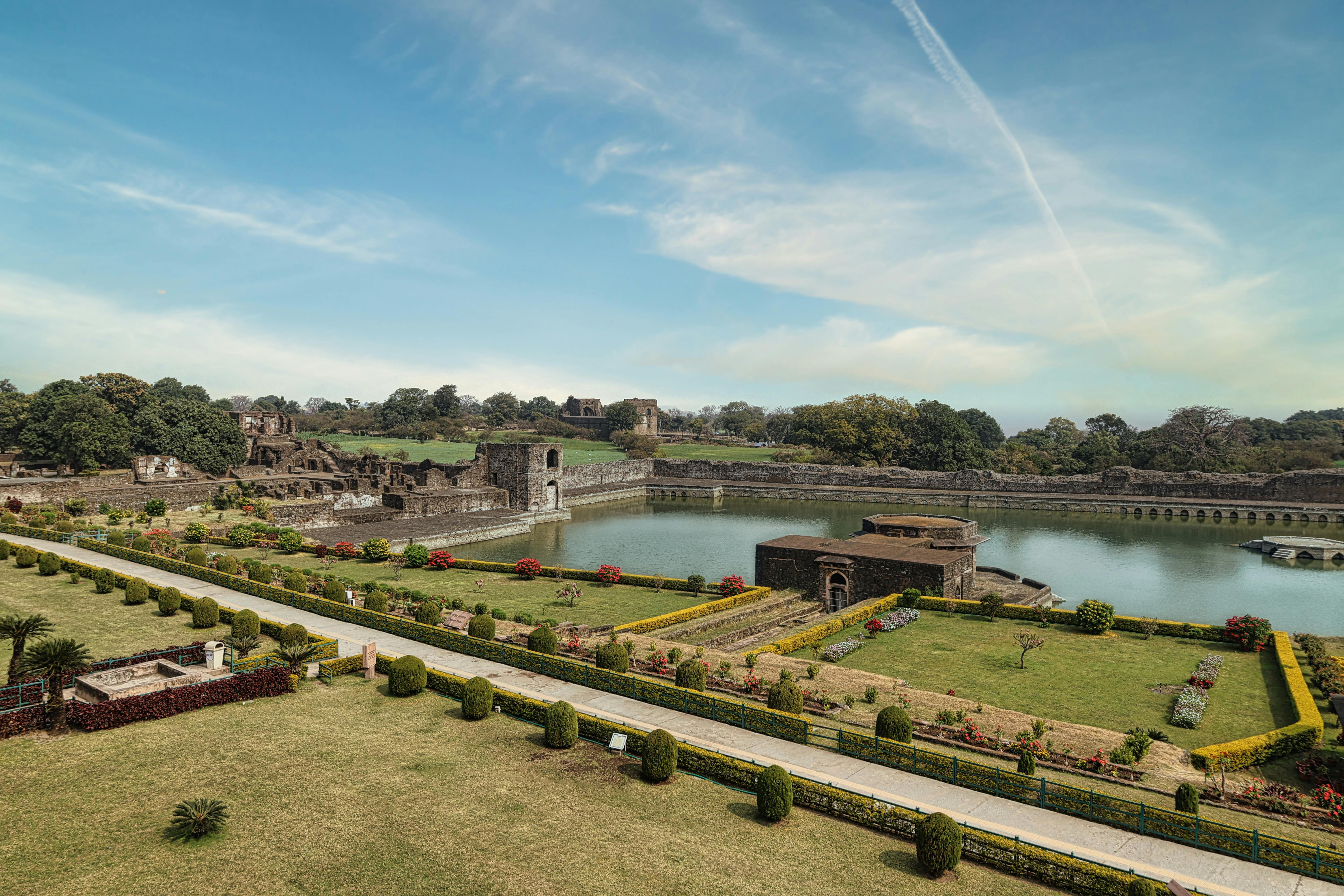
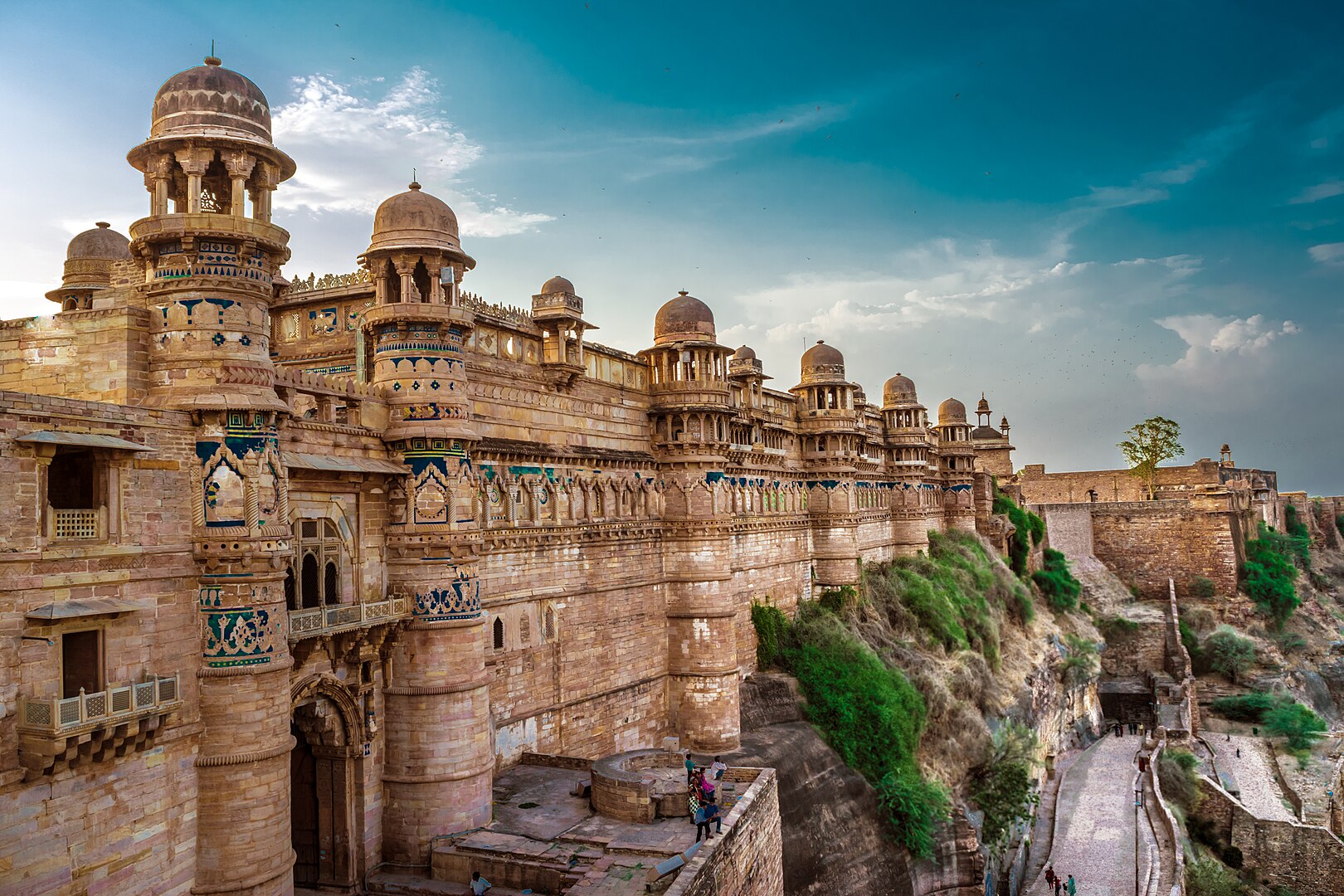
Image Source: IRSHAD ALI
Perched dramatically on a rocky plateau in Madhya Pradesh, Mandu (also known as Mandav) is a place where history, architecture, and natural beauty come together effortlessly. Surrounded by deep valleys of the Vindhya ranges, this ancient city feels like a world frozen in time—filled with grand ruins, palaces, mosques, and stories of love and power.
Often referred to as the “City of Joy,” Mandu offers visitors a fascinating journey through centuries of changing dynasties and cultural influences.
Early History & Origins
The roots of Mandu go back to as early as the 6th century. According to Sanskrit inscriptions, it was originally known as Mandap Durga, meaning a fortified place or hall associated with Durga worship. Over time, the name evolved into Mandu.
Its strategic location on a high plateau made it naturally secure, which is why it became an important fortified settlement. The region gained prominence when the Paramara rulers shifted their capital from Ujjain to Dhar, located close to Mandu. Although the capital later moved back to Dhar, Mandu remained a significant stronghold.
Rise Under Sultanate Rule
Mandu’s history took a major turn in the 13th and 14th centuries when it came under Muslim rule. In 1305, it was captured by the Delhi Sultanate. Later, when the central power weakened, the Afghan governor Dilawar Khan declared independence and established the Malwa Sultanate, renaming Mandu as Shadiabad, meaning “City of Joy.”
The city reached its peak during the reign of Hoshang Shah (1404–1435), who transformed Mandu into a flourishing cultural and architectural center. Many of the iconic monuments you see today were built during this golden period.
Architectural Grandeur of Mandu
Mandu is a treasure trove of Afghan architecture blended with local styles. Some of its most notable structures include:
- Jama Masjid Mandu – Inspired by the great mosques of Damascus, this grand structure features massive domes and elegant arches.
- Hoshang Shah’s Tomb – Considered India’s first marble mausoleum, it is said to have inspired the design of the Taj Mahal.
- Delhi Gate Mandu – One of the impressive प्रवेश gateways that once guarded the fortified city.
The architecture of Mandu stands out for its simplicity, symmetry, and durability, with structures built to withstand both time and weather.
Power Struggles & Changing Dynasties
After Hoshang Shah, Mandu saw a series of rulers and internal conflicts. The Khalji dynasty took control, but political instability, betrayals, and assassinations became common. Despite this, rulers like Ghiyas-ud-din Khalji contributed to the city’s cultural richness.
In 1526, Mandu was invaded by Bahadur Shah of Gujarat, followed by a brief takeover by Humayun in 1534.
Later, the romantic yet tragic figure Baz Bahadur ruled Mandu, but his reign ended when Akbar annexed the region into the Mughal Empire in 1561.
Decline & Maratha Rule
Mandu’s importance gradually declined under the Mughals, and by 1732, the Marathas took control of the region. They shifted the capital back to Dhar, leaving Mandu largely abandoned.
Over time, the once-thriving city turned into a quiet landscape of ruins—yet these ruins continue to tell powerful stories of its glorious past.
Mandu Today: A Living Heritage
Today, Mandu is a paradise for history lovers, photographers, and travelers seeking something offbeat. Monuments like Jahaz Mahal, Hindola Mahal, and Rani Roopmati Pavilion add to its charm, especially during the monsoon when the entire region turns lush green.
Walking through Mandu feels like stepping into a different era—where every structure whispers tales of kings, battles, romance, and architectural brilliance.
Best Time to Visit
The best time to visit Mandu is during the monsoon (July to September) and winter (October to February) seasons. Monsoon brings out the lush greenery and enhances the beauty of the ruins, while winter offers pleasant weather for exploration.
Travel Tips
- Wear comfortable shoes, as exploring Mandu involves a lot of walking.
- Hire a local guide to understand the rich history behind each monument.
- Carry water and essentials, especially during long explorations.
- Visit during sunrise or sunset for the best views and photography.
How to Reach Mandu

By Road:
Mandu can be easily reached by road as it is well-connected to major cities like Indore, Ujjain, Bhopal, and Dhar. State-run buses and private taxis are available from these cities to reach Mandu.

By Train:
The nearest railway station to Mandu is Ratlam Junction, which is located approximately 124 km away. From Ratlam, one can hire a taxi or take a bus to reach Mandu. Indore Junction railway station is also a convenient option, located about 95 km away.

By Air:
The nearest airport to Mandu is the Devi Ahilya Bai Holkar Airport in Indore, which is about 100 km away. From the airport, one can hire a taxi or take a bus to reach Mandu. There are direct flights to Indore from major cities in India like Delhi, Mumbai, Kolkata, and Hyderabad.
FAQs
1. Why is Mandu famous?
Mandu is famous for its historical monuments, Afghan-style architecture, and romantic legends like that of Baz Bahadur and Rani Roopmati.
2. What was the old name of Mandu?
It was originally called Mandap Durga, which later evolved into Mandu.
3. Who built the major structures in Mandu?
Many of the iconic buildings were constructed during the reign of Hoshang Shah and later rulers of the Malwa Sultanate.
4. Is Mandu worth visiting?
Absolutely. It offers a unique blend of history, architecture, and scenic beauty, making it a must-visit destination in Madhya Pradesh.
5. How much time is needed to explore Mandu?
Ideally, 1–2 days are enough to explore the major attractions at a relaxed pace.