Image Source: Debosmita Ghosh
Introduction
Set amidst the timeless ruins of Mandu, the grand Jami Masjid stands as one of the finest examples of Afghan architecture in India. With its massive domes, wide courtyards, and serene atmosphere, this mosque isn’t just a place of worship—it’s a window into Mandu’s glorious past. Its strategic location near the bustling Mandu Bazaar and close proximity to historic landmarks makes it an essential stop for anyone exploring the region.
Historical Background
If you’re visiting Mandu, missing Jami Masjid would mean overlooking one of its most important landmarks. Located near the elegant Hoshang Shah’s Tomb, the mosque was commissioned during the reign of Hoshang Shah and completed in 1454 under Mahmud Khilji.
At its height, the mosque served as a vibrant center for prayer, learning, and community life. Over the centuries, as Mandu declined, the mosque gradually lost its active religious role. Today, it stands preserved as a historical monument, offering visitors a glimpse into the spiritual and cultural life of the Malwa Sultanate.
Architectural Highlights
One of the most intriguing features of Jami Masjid is its inspiration. An inscription at the entrance reveals that it was modeled after the famous Damascus Mosque, linking its design to one of the most iconic mosques in the Islamic world.
The main entrance on the eastern side welcomes visitors through a grand staircase leading into a vast courtyard. As you step inside, you’ll notice a subtle blend of architectural styles—Islamic symmetry combined with decorative elements often seen in Hindu craftsmanship, such as marble door frames and lintels. This fusion reflects the shared artistic traditions of the time.
The mosque features three entry points:
- Eastern entrance – the primary public gateway.
- Northern entrance – traditionally used by priests.
- A private entrance – likely meant for royal or special use.
Courtyard & Prayer Hall
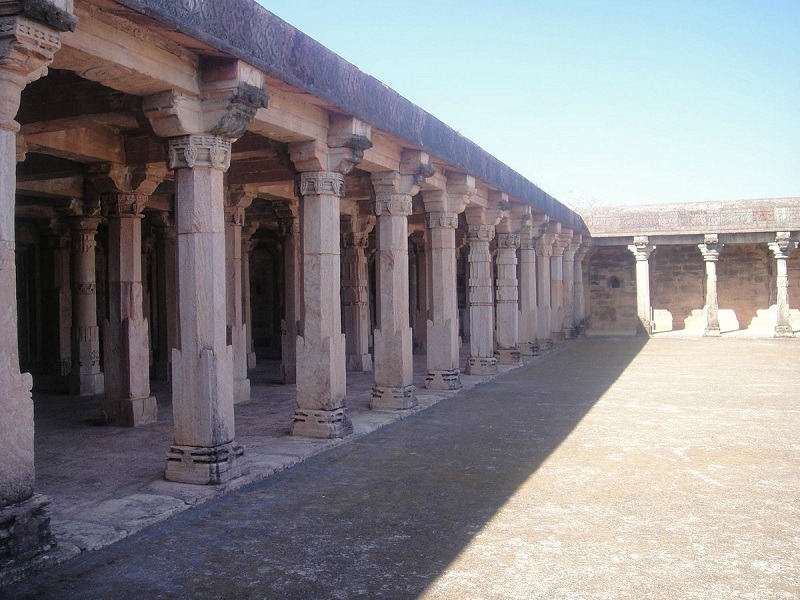
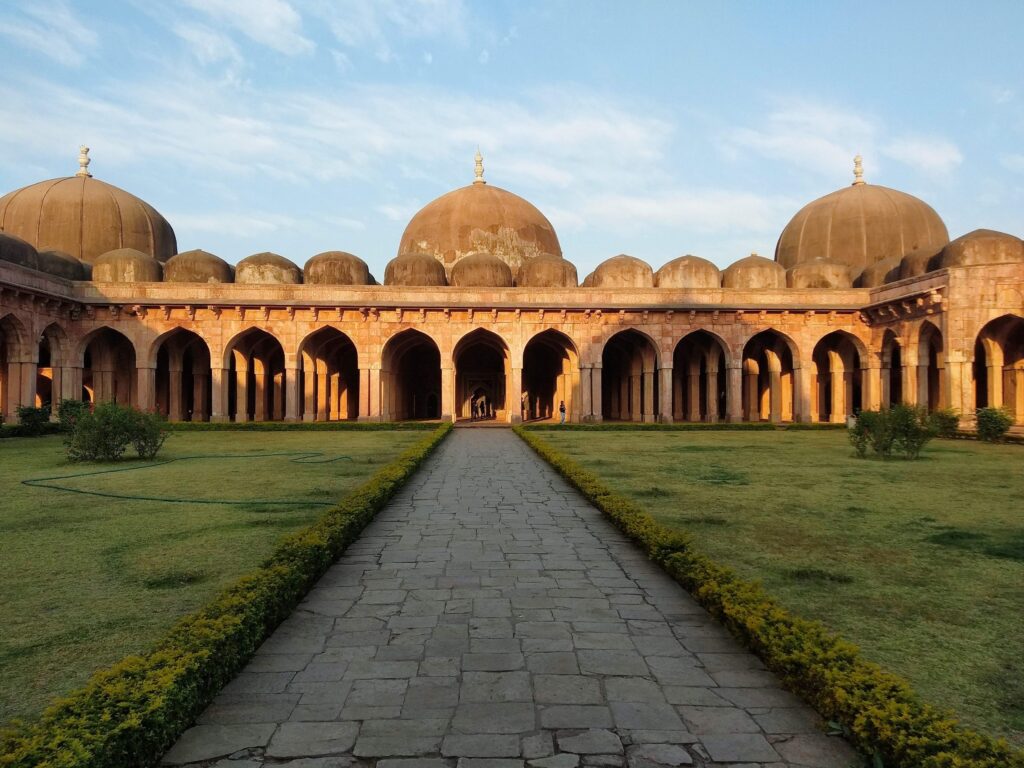
Entering from the eastern side, you’re greeted by a large open courtyard bordered by pillared verandas on three sides. These shaded corridors not only enhance the structure’s symmetry but also provide relief from the heat, showcasing thoughtful architectural planning.
The prayer hall is equally captivating, featuring:
- 58 small domes spread across the roof.
- 3 prominent central domes that dominate the skyline.
- Arched corridors adorned with intricate Islamic calligraphy.
At the center is the mihrab (prayer niche), decorated with Quranic verses, while the raised pulpit (minbar) stands as a fine piece of craftsmanship, complete with a delicate miniature marble pulpit.
Timings & Entry Fee
- Timings: 8:00 AM – 6:00 PM.
- Entry Fee:
- Indian visitors: ₹25.
- Foreign tourists: ₹100.
How to Reach
Jami Masjid is part of Mandu’s central group of monuments and is located just 500 meters from the Mandu bus stand. It’s easily accessible on foot or via a short auto ride.
Nearby Attractions
Hoshang Shah’s Tomb
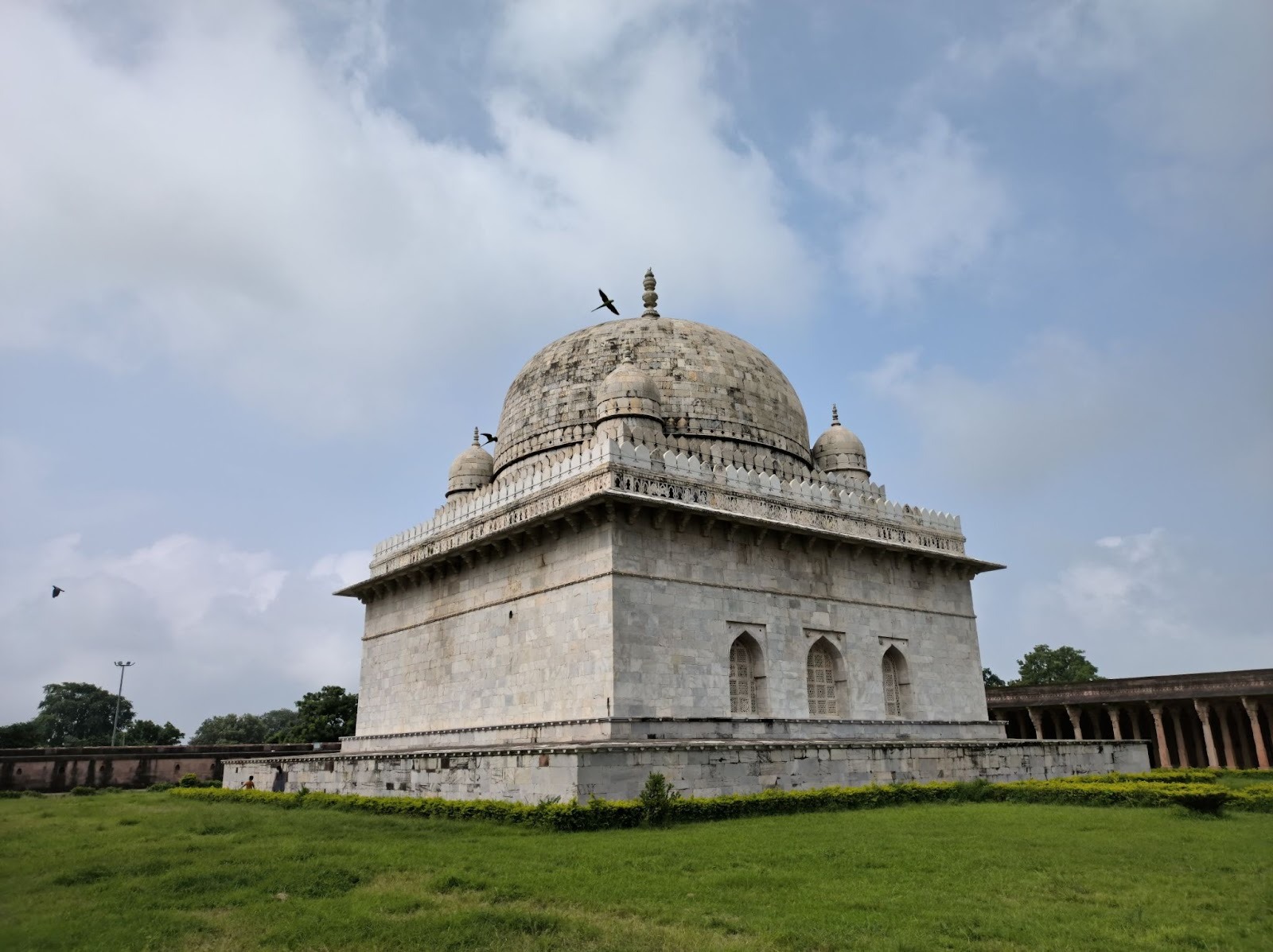
Located right next to Jami Masjid, Hoshang Shah’s Tomb is one of Mandu’s most celebrated monuments. Built entirely of white marble, it is regarded as India’s first marble mausoleum and is believed to have inspired the architects of the Taj Mahal.
Ashrafi Mahal
Situated directly opposite Jami Masjid, Ashrafi Mahal was originally established as an Islamic madrasa. Today, its ruins and remnants of a victory tower offer fascinating insights into Mandu’s medieval past.
Dilawar Khan Mosque
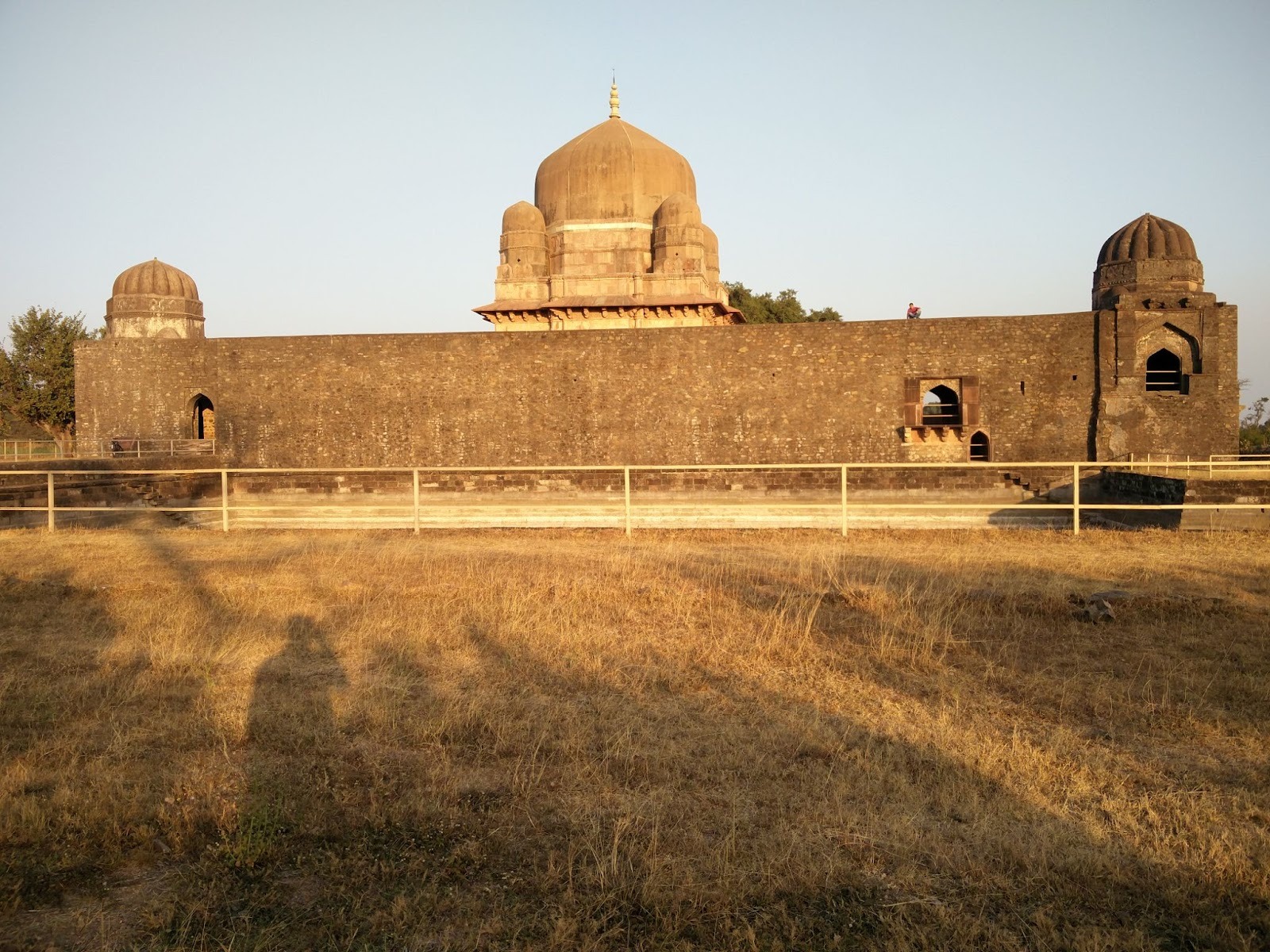
One of the earliest Islamic monuments in Mandu, Dilawar Khan Mosque showcases a unique blend of Hindu, Jain, and Islamic architectural styles. It is an important landmark for understanding the evolution of architecture in the Malwa Sultanate.
Jahaz Mahal
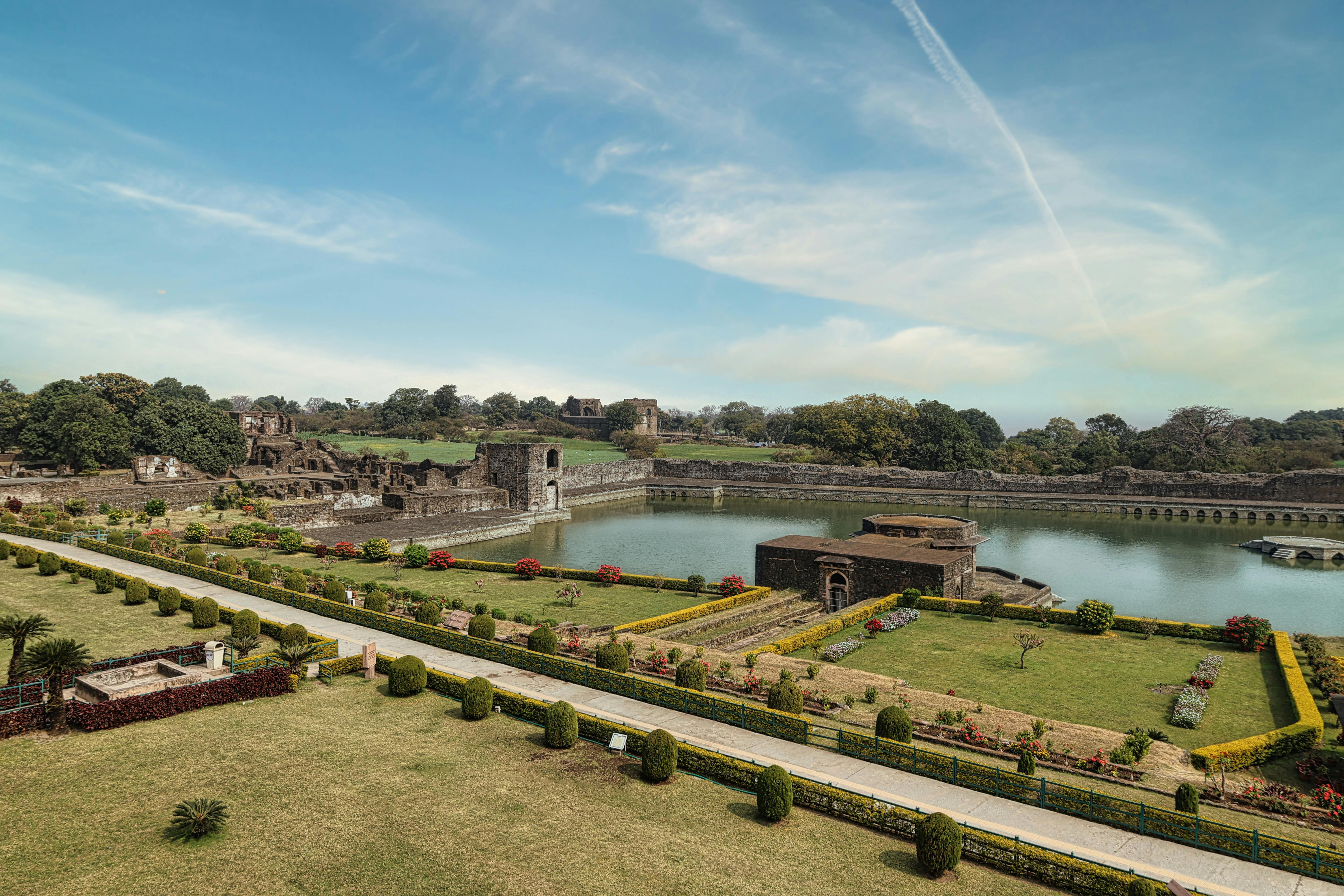
Located within the Royal Enclave complex, Jahaz Mahal is famous for its ship-like appearance. Surrounded by two artificial lakes, it is one of the most photographed monuments in Mandu.
Hindola Mahal
Known as the “Swinging Palace,” Hindola Mahal is admired for its sloping walls and magnificent audience hall. It is considered one of the finest examples of Afghan-style architecture in central India.
Taveli Mahal
A historic structure near Jahaz Mahal, Taveli Mahal now houses an archaeological museum displaying sculptures, inscriptions, and artifacts discovered across the Mandu region.
Baz Bahadur’s Palace
This beautiful palace was built by the last independent ruler of Mandu. The monument is known for its spacious courtyards, elegant architecture, and scenic surroundings.
Rani Roopmati Pavilion
Perched on the edge of a hill, this iconic pavilion offers panoramic views of the Narmada Valley and is associated with the famous love story of Baz Bahadur and Rani Roopmati.
Rewa Kund
A historic reservoir built to supply water to Rani Roopmati’s residence, Rewa Kund remains a peaceful attraction surrounded by lush greenery.
Nilkanth Mahadev Temple
Dedicated to Lord Shiva, this ancient temple is located amidst picturesque surroundings and attracts both pilgrims and tourists throughout the year.
Why You Should Visit
Jami Masjid is more than just a monument—it’s an experience. The calm ambiance, impressive scale, and intricate details make it a rewarding stop for history lovers, photographers, and travelers seeking quiet beauty. Its proximity to other major attractions makes it easy to include in a one-day Mandu itinerary.
FAQs
1. What is the historical significance of Jami Masjid, Mandu?
It was the main congregational mosque during the Malwa Sultanate and played a key role in the religious and social life of the region.
2. Who built the Jami Masjid?
The construction began under Hoshang Shah and was completed by Mahmud Khilji in 1454.
3. What makes its architecture unique?
Its design is inspired by the Damascus Mosque and features a blend of Islamic and local architectural elements.
4. How much time is needed to explore it?
Around 45 minutes to 1 hour is enough to explore the mosque comfortably.
5. Is photography allowed?
Yes, photography is generally permitted and the site is great for capturing architectural details.
6. What are the nearby attractions?
You can explore Hoshang Shah’s Tomb, Jahaz Mahal, and other historic structures within Mandu.