Image Source: Dr Abhijit Paul
About Chaturbhuj Temple
Located in the peaceful village of Jatakari near Khajuraho in Madhya Pradesh, the Chaturbhuj Temple is one of the lesser-explored yet architecturally significant temples of the region. Part of the southern group of Khajuraho temples, this ancient shrine reflects the artistic excellence and spiritual depth of the Chandela dynasty. Surrounded by a calm rural landscape, the temple offers a quieter and more meditative experience compared to the more crowded western temple complex.
Unlike many famous temples of Khajuraho known for their elaborate erotic sculptures, Chaturbhuj Temple stands apart because of its simplicity, spiritual atmosphere, and balanced architectural design. For travelers who want to explore the cultural soul of Khajuraho beyond the popular tourist spots, this temple is a rewarding place to visit.
History
The Chaturbhuj Temple was built around 1100 AD during the reign of the Chandela rulers, who were known for constructing some of India’s finest medieval temples. The Chandela dynasty played a major role in shaping the artistic and religious heritage of Bundelkhand, and Khajuraho became one of their greatest architectural achievements.
The name “Chaturbhuj” comes from the Sanskrit words Chatur meaning “four” and Bhuj meaning “arms,” referring to the four-armed form of Lord Vishnu. Interestingly, although the temple’s name is associated with Vishnu, the sanctum today houses a striking image that resembles Lord Shiva in a meditative form. Historians and archaeologists still discuss the exact identity and symbolism of the deity, making the temple even more intriguing for visitors interested in Indian temple history.
The temple is believed to have served as an important religious center for the local community during the Chandela period. Even after centuries, the structure continues to stand gracefully, preserving the craftsmanship and spiritual traditions of medieval India.
Architecture and Structural Beauty
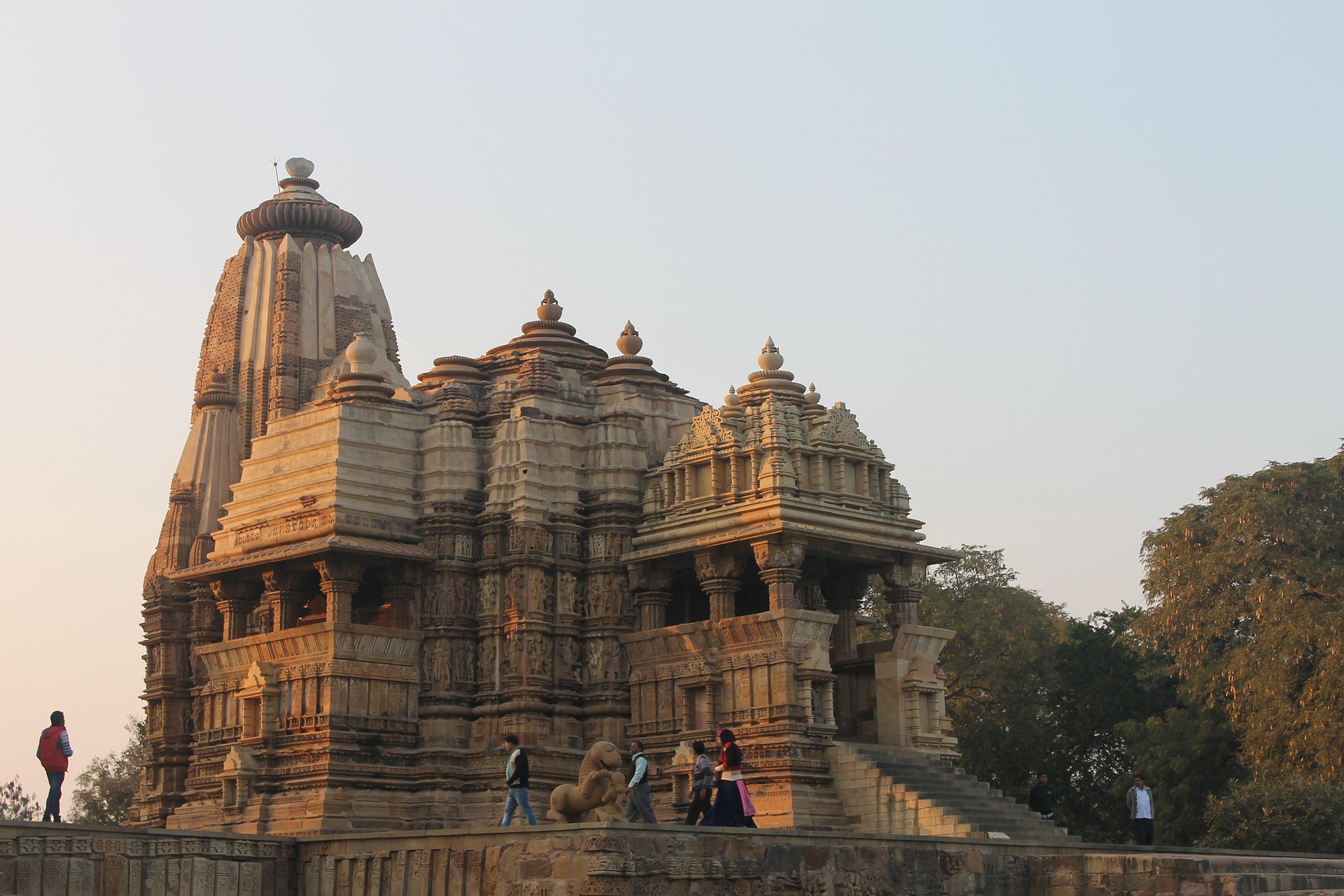
The Chaturbhuj Temple is built on a raised platform and faces west, which is relatively uncommon among Hindu temples that traditionally face east. This orientation adds a unique character to the structure and creates beautiful lighting effects during sunset hours.
Constructed in the classic Nagara style of temple architecture, the temple displays elegant proportions and refined carvings rather than excessive ornamentation. The exterior walls are decorated with finely sculpted figures of deities, celestial beings, guardians, and mythical animals. The lower bands of the temple feature images of Ashtavasus, Dikpalas, and lion-like mythical creatures that symbolize strength and protection.
One of the most beautiful parts of the temple is its entrance doorway. The doorway is richly carved with representations of Hindu gods such as Brahma, Vishnu, and Shiva. Symbols associated with sacred rivers and cosmic balance, including the crocodile, turtle, and Yamuna motifs, can also be seen near the entrance.
Although the tower or shikhara of the temple is comparatively modest when compared to larger Khajuraho temples like Kandariya Mahadev Temple, its balanced structure and graceful design create a timeless visual appeal.
The Sanctum and Main Deity
The inner sanctum of the temple houses a majestic 9-foot-tall idol that immediately captures attention. The sculpture is calm, dignified, and spiritually powerful. The absence of an ambulatory passage allows visitors to view the deity directly from the entrance, creating a strong visual connection with the sanctum.
The idol’s facial expression and posture convey serenity and introspection rather than grandeur. This calm atmosphere is one of the defining characteristics of Chaturbhuj Temple. Visitors often describe the experience as peaceful and less commercialized compared to the more famous temple complexes nearby.
The temple interiors are relatively simple, but the carefully carved pillars and stone detailing reveal the extraordinary craftsmanship of Chandela artisans. Every stone surface reflects the precision and artistic maturity achieved more than 900 years ago.
How Chaturbhuj Temple Differs from Other Khajuraho Temples
Khajuraho is globally famous for its erotic sculptures, but Chaturbhuj Temple is different in both mood and artistic focus. Here, spirituality takes center stage. The carvings are more restrained and devotional in nature, emphasizing divine imagery, symbolism, and meditative beauty instead of sensual themes.
Because of this, many travelers who prefer peaceful heritage experiences often find this temple more meaningful and less crowded. Photographers, architecture enthusiasts, and history lovers especially appreciate its quiet setting and uncluttered surroundings.
The temple also gives visitors a chance to understand the diversity of Khajuraho’s artistic traditions. Not every Chandela temple followed the same decorative style, and Chaturbhuj Temple beautifully demonstrates this variation.
Local Surroundings and Visitor Experience
Jatakari village, where the temple is located, still retains a traditional Bundelkhand atmosphere. Rural landscapes, seasonal fields, and small local settlements surround the area, making the journey to the temple pleasant and scenic.
Many travelers combine their visit with other southern group temples such as Duladeo Temple. Early morning and late afternoon are considered the best times to explore the temple because the sunlight enhances the sandstone carvings and the weather remains comfortable.
Local guides often share lesser-known stories about the Chandela kings, temple symbolism, and hidden details in the carvings. Visitors interested in photography can capture stunning views of the temple against the changing colors of the sky during sunset.
Best Time to Visit
The ideal time to visit Chaturbhuj Temple is between October and March when the weather in Khajuraho remains pleasant for sightseeing. Winters are especially comfortable for exploring the temple complexes and nearby attractions.
During February, the famous Khajuraho Dance Festival attracts artists and travelers from across the country. Although performances are mainly held near the western group of temples, the entire town becomes culturally vibrant during this period.
How to Reach Chaturbhuj Temple
Khajuraho is well connected by road, rail, and air.
- The nearest airport is Khajuraho Airport, located a short distance from the temple complex.
- Khajuraho Railway Station connects the town with major cities such as Jhansi and Mahoba.
- Local taxis, auto-rickshaws, and bicycles are commonly used to reach the southern group of temples.
The Chaturbhuj Temple is located about 3–4 kilometers from the main western group of Khajuraho temples, making it an easy addition to a day tour itinerary.
Why You Should Visit Chaturbhuj Temple
Chaturbhuj Temple is not just another historical monument—it is a place where art, devotion, and silence come together beautifully. The temple represents the refined architectural vision of the Chandela dynasty while offering a peaceful atmosphere away from tourist crowds.
For travelers interested in history, architecture, spirituality, or photography, this hidden gem of Khajuraho provides a memorable experience. Its simplicity, ancient charm, and cultural significance make it one of the most underrated temples in Madhya Pradesh.
Map and Location of Chaturbhuj Temple
FAQs
Where is Chaturbhuj Temple located?
Chaturbhuj Temple is located in Jatakari village near Khajuraho in Madhya Pradesh. It belongs to the southern group of Khajuraho temples.
Who built Chaturbhuj Temple?
The temple was built by the Chandela rulers around 1100 AD during the later phase of Khajuraho temple construction.
Which deity is worshipped in Chaturbhuj Temple?
The temple is associated with Lord Vishnu, but the sanctum houses a large meditative idol often identified with Lord Shiva.
Why is Chaturbhuj Temple famous?
The temple is famous for its elegant Nagara-style architecture, peaceful atmosphere, and absence of erotic carvings commonly seen in other Khajuraho temples.
What is the best time to visit Chaturbhuj Temple?
The best time to visit is from October to March when the weather remains pleasant for sightseeing.
Is Chaturbhuj Temple part of the UNESCO World Heritage Site?
Yes, the Khajuraho Group of Monuments, including Chaturbhuj Temple, is recognized as a UNESCO World Heritage Site.
How far is Chaturbhuj Temple from the main Khajuraho temples?
The temple is approximately 3–4 kilometers from the western group of Khajuraho temples.
Are guides available at the temple?
Yes, local guides are available in Khajuraho and can provide detailed insights into the temple’s history, architecture, and symbolism.