Image Source: Ashish Vasudev/ Google Maps
Introduction
The Men-Tsee-Khang Museum in Dharamshala is one of the most fascinating cultural sites in the Tibetan settlement of McLeod Ganj. It is part of the Tibetan Medical and Astro Institute (Men‑Tsee‑Khang) , an institution dedicated to preserving traditional Tibetan medicine and astrology. Visiting the museum offers travelers a rare opportunity to understand the ancient healing traditions of Tibet and how they survived in exile in India.
History of the Institute
The Tibetan Medical and Astro Institute, commonly called Men-Tsee-Khang , was originally founded in Tibet in 1916 by the 13th Dalai Lama to teach Tibetan medicine and astrology. After the Tibetan uprising of 1959 and the exile of Tibetans, Tenzin Gyatso re-established the institute in Dharamshala in 1961 to preserve these ancient sciences and provide healthcare to Tibetan refugees.
Today the institute runs medical colleges, research departments, pharmacies, and clinics across India while continuing to train Tibetan doctors and astrologers.
The museum itself was inaugurated on 23 March 1997 by the Dalai Lama , with the aim of educating visitors about Tibetan medicine and astro-science.
—
What You Will See Inside the Museum
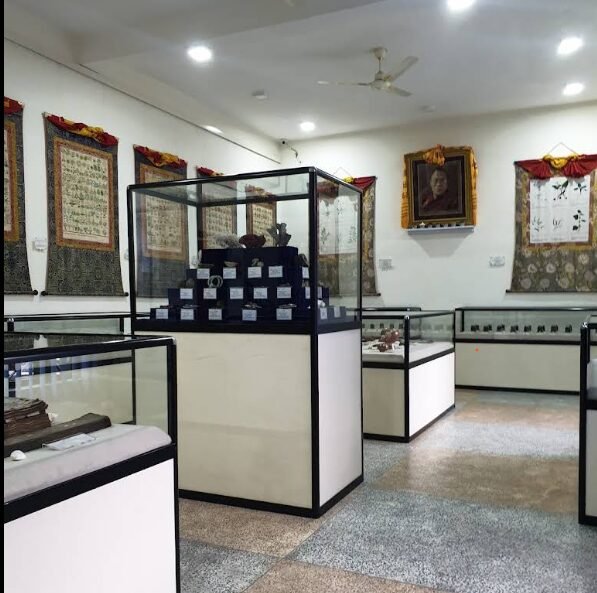
The museum contains three floors of exhibits explaining the sophisticated knowledge behind Tibetan medicine and astrology.
1. Tibetan Medical Paintings (Thangkas)
Colorful thangka paintings illustrate the human body, diseases, healing methods, and diagnostic techniques used in Tibetan medicine.
2. Medicinal Plants and Minerals
Displays include samples of herbs, woods, salts, stones, and precious minerals used in traditional Tibetan medicines. Many labels explain their medicinal uses—for example herbs used for digestion or minerals used for rejuvenation.
3. Ancient Medical Instruments
Visitors can see traditional tools used by Tibetan physicians, including surgical instruments and unusual devices used in therapies.
4. Astrology and Astronomical Charts
Tibetan astrology plays a major role in medical diagnosis and decision-making. The museum displays ancient manuscripts, astrological charts, and Tibetan calendars.
5. Rare Books and Medical Texts
The museum also showcases old Tibetan manuscripts explaining the Sowa Rigpa system, one of the world’s oldest holistic medical traditions.
—
Importance of Tibetan Medicine (Sowa Rigpa)
The system of medicine taught at Men-Tsee-Khang is known as Sowa Rigpa , meaning “science of healing.”
It combines elements of:
* Ayurveda from India.
* Chinese medicine.
* Buddhist philosophy.
* Indigenous Tibetan herbal knowledge.
Treatments often include herbal medicines, diet changes, meditation, and lifestyle adjustments.
—
Location
📍 Gangchen Kyishong, Dharamshala, Himachal Pradesh
The museum is located inside the Men-Tsee-Khang campus, close to several important Tibetan institutions.
Nearby attractions include:
* Tsuglagkhang Complex – residence of the Dalai Lama.
* Library of Tibetan Works and Archives.
* Tibet Museum.
—
How to Reach
From McLeod Ganj
* Distance: about 1–1.5 km.
* Walking time: 20–25 minutes.
* Route: Main Chowk → Temple Road → Gangchen Kyishong.
From Dharamshala
* Distance: about 4 km.
* Transport: taxi, auto-rickshaw, or local bus to McLeod Ganj.
From Kangra Airport (Gaggal)
* Distance: about 18 km.
* Taxi takes around 40 minutes.
—
Visiting Information
* Best time to visit: Morning or early afternoon.
* Time required: 30–60 minutes.
* Entry: Usually inexpensive or donation-based.
* Best season: March–June and September–November.
—
Why You Should Visit
For travelers interested in Tibetan culture, the Men-Tsee-Khang Museum provides a unique insight into:
* The science behind Tibetan healing traditions.
* The cultural heritage preserved by Tibetan refugees.
* The connection between medicine, spirituality, and astrology.
It is one of the most educational cultural attractions in McLeod Ganj , especially for those curious about Himalayan medicine and Buddhist knowledge systems.