Image Source: VishwaNath Sharma
About Ugra Narasimha Temple
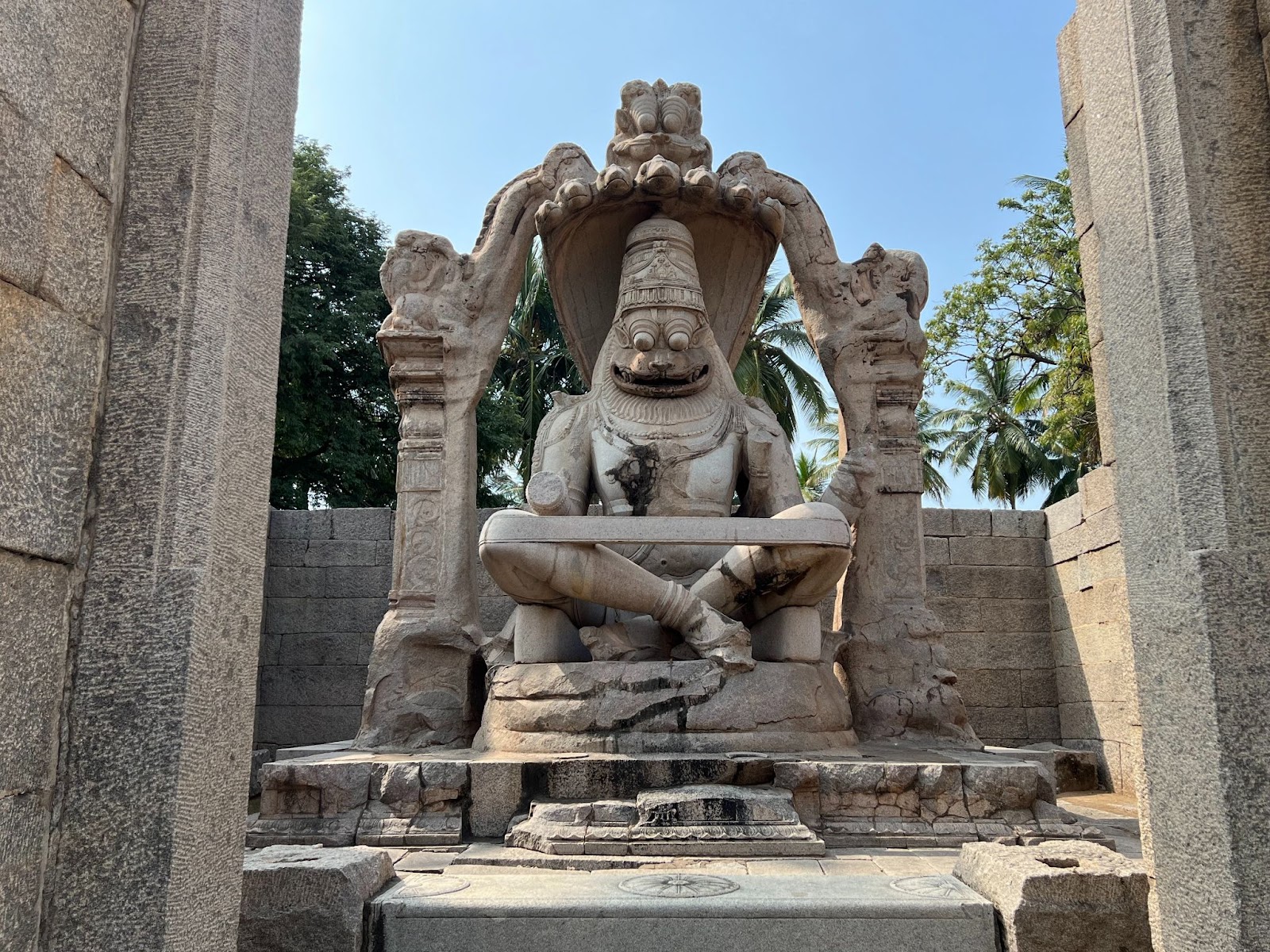
The Ugra Narasimha Temple is one of the most striking landmarks in Hampi and is famous for housing the largest monolithic sculpture in the region. Located just south of the Sri Krishna Temple, this magnificent statue stands at an impressive height of 6.7 meters (about 22 feet), making it one of the most iconic attractions in the UNESCO World Heritage Site of Hampi.
Carved in 1528 AD during the reign of Emperor Krishnadevaraya of the Vijayanagara Empire, the statue showcases the extraordinary craftsmanship of the era. The imposing figure of Lord Narasimha, the fierce incarnation of Lord Vishnu, attracts thousands of visitors every year who come to admire its grandeur and historical significance.
The Deity and Its Symbolism
Lord Narasimha is depicted seated in a cross-legged yogic posture atop the coiled body of Adisesha, the seven-headed serpent associated with Lord Vishnu. The serpent’s hoods rise majestically above the deity, forming a protective canopy. Lions carved on either side further enhance the statue’s regal and powerful appearance.
Originally, the sculpture portrayed Lord Narasimha with Goddess Lakshmi seated on his lap. This representation symbolized divine harmony and compassion. Because of Lakshmi’s presence, the statue was once known as the “Lakshmi Narasimha.”
However, during the destruction that followed the fall of the Vijayanagara Empire in 1565 AD, the statue suffered severe damage. The image of Goddess Lakshmi was destroyed, and today only fragments remain. Visitors can still observe one of Lakshmi’s broken hands attached to the sculpture, serving as a reminder of its original form.
Preservation and Historical Importance
Despite centuries of damage and weathering, the Ugra Narasimha statue continues to stand as a remarkable testament to the artistic brilliance of the Vijayanagara Empire. The remaining fragments of Goddess Lakshmi have been preserved at the Archaeological Museum in Kamalapura.
Today, the monument remains one of Hampi’s most photographed sites and offers visitors a glimpse into the grandeur of a bygone era. Surrounded by ancient ruins and boulder-strewn landscapes, the temple provides an unforgettable experience for history enthusiasts, photographers, and spiritual seekers alike.
Timings
The Ugra Narasimha Temple is generally open daily from 6:00 AM to 6:00 PM. Early morning and late afternoon are ideal times to visit, as the weather is pleasant and the soft sunlight enhances the beauty of the sculpture.
How to Reach Ugra Narasimha Temple
The Ugra Narasimha Temple is located within the core heritage area of Hampi in Karnataka’s Vijayanagara district.
- By Air: The nearest airport is Hubballi Airport, located about 165 km away. Kempegowda International Airport in Bengaluru is another major gateway, around 340 km from Hampi.
- By Train: The nearest railway station is Hospet Junction (Hosapete), approximately 13 km away. Auto-rickshaws, taxis, and local buses are readily available from the station to Hampi.
- By Road: Hampi is well connected by road to cities such as Bengaluru, Hubballi, and Ballari. Karnataka State Road Transport Corporation (KSRTC) buses operate regular services to Hampi and Hospet.
- Local Transport: Visitors can explore Hampi by bicycle, scooter rentals, auto-rickshaws, or on foot, as many monuments are situated close to one another.
Nearby Attractions
Several important monuments are located within walking distance of the Ugra Narasimha Temple:
- Sri Krishna Temple – A grand temple complex dedicated to Lord Krishna, known for its impressive architecture and carvings.
- Badavi Linga – Situated right beside Ugra Narasimha, this massive Shiva Linga stands in a water-filled chamber.
- Hemakuta Hill Temples – A cluster of ancient shrines offering panoramic views of Hampi, especially beautiful at sunrise and sunset.
- Virupaksha Temple – One of the oldest functioning temples in India and the spiritual heart of Hampi.
- Hampi Bazaar – A historic marketplace lined with ruins and local shops.
- Sasivekalu Ganesha and Kadalekalu Ganesha – Giant monolithic statues of Lord Ganesha carved from single rocks.
Maps
800 meters from Hampi Bus Stand, the Ugra Narasimha Temple, located south of Sri Krishna Temple.
FAQs
1. Why is it called Ugra Narasimha?
The term “Ugra” means fierce. The statue depicts Lord Narasimha, the fierce man-lion incarnation of Lord Vishnu, symbolizing the destruction of evil.
2. Is the statue still complete?
No. The original sculpture included Goddess Lakshmi seated on Narasimha’s lap, but it was damaged during the invasion of 1565 AD.
3. How much time is needed to visit the monument?
Most visitors spend around 20–30 minutes exploring the monument and nearby attractions like Badavi Linga.
4. Is there an entry fee?
The Ugra Narasimha Temple can usually be visited with the Hampi monument entry arrangements applicable to the area. Visitors are advised to check the latest ASI guidelines before visiting.
5. What is the best time to visit?
The ideal time to visit Hampi is between October and February when the weather is cooler and more comfortable for sightseeing.
6. Can photography be done at the site?
Yes, photography is allowed and the monument is especially popular among photographers due to its dramatic appearance and historical setting.