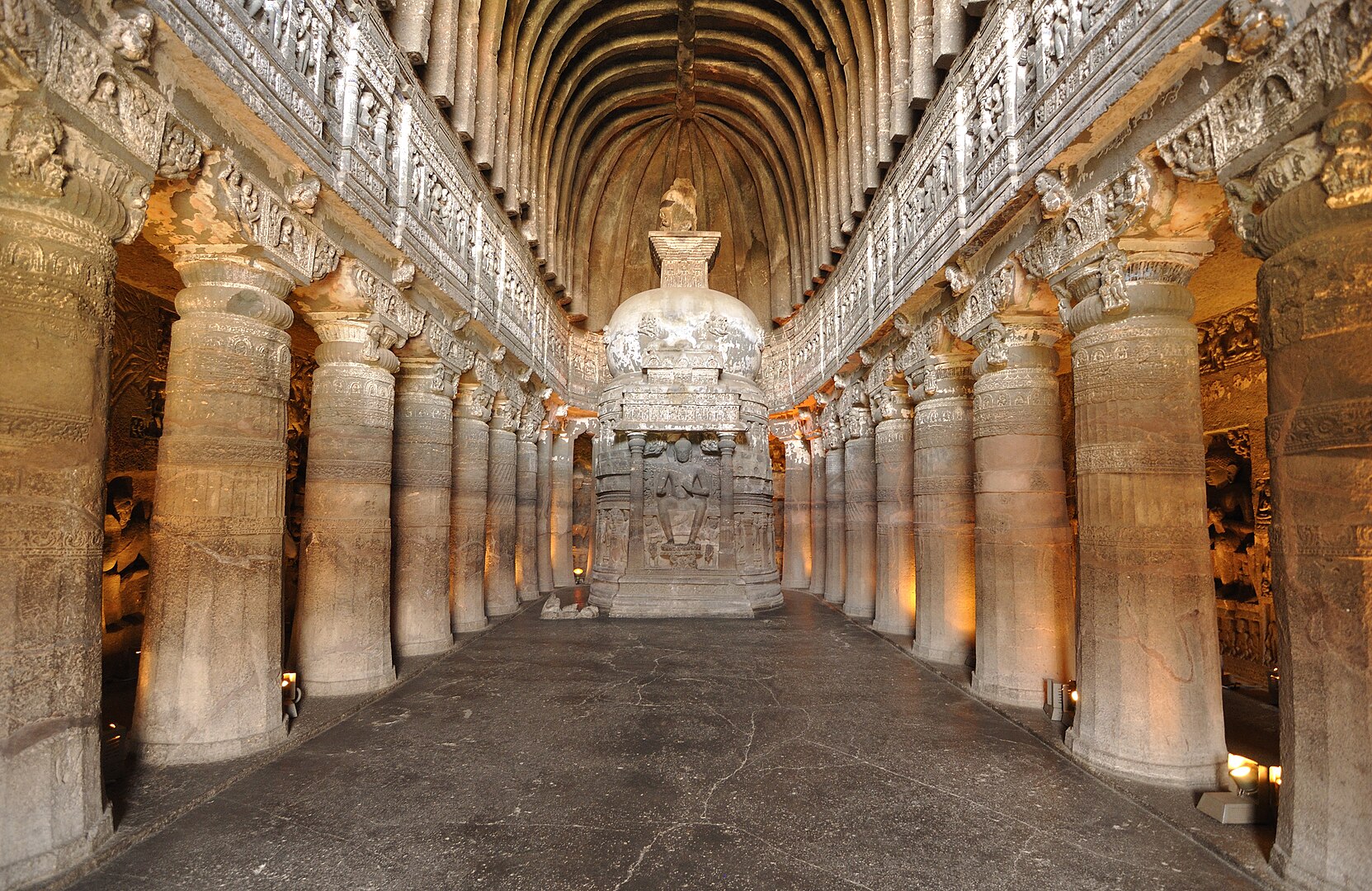
Image Source: Dyaneshwar
| Location | Sangam Mahuli, Satara, Maharashtra, India |
| Geographical Feature | Situated at the confluence of Krishna and Venna rivers |
| Elevation | Approximately 740 meters above sea level |
| Climate | Tropical; warm summers (March–June), monsoon rains (July–September), and pleasant winters (October–February) |
About Sangam Mahuli and Kshetra Mahuli
Sangam Mahuli and Kshetra Mahuli are two sacred villages that stand as a testament to Maharashtra’s rich heritage and spiritual significance. The two villages beckon travellers and pilgrims alike with their serene ambiance and spiritual charm.
Situated in the Satara district of Maharashtra, the village is nestled at the confluence of the Krishna and Venna rivers. Sangam Mahuli and Kshetra Mahuli have great importance in history and mythology and were once part of the Aundh Princely State. The region is a place where mythology, spirituality, and natural beauty converge seamlessly.
A popular pilgrimage destination in Satara, Sangam Mahuli boasts rich historical significance and architectural marvels. The Sri Kashi Vishweshwar temple lies at the heart of the region. Built in 1735 CE by Shripatrao Pant Pratinidhi, the temple is dedicated to Lord Shiva. Hmedapanth-style architecture tells about the region’s flair and artistic prowess.
History of Sangam Mahuli Temple
Situated at the confluence, the temple is believed to be a sacred site where saints and sages are believed to perform religious rituals. The temple dates back to the Yadava dynasty (12th–13th century CE) and gained prominence during the Maratha rule (17th–18th century CE) as rulers like Chhatrapati Shivaji Maharaj and Shahu Maharaj supported the temple and its upkeep.
Peshwa Balaji Bajirao (Nana Saheb) himself visited the temple, emphasising its importance.
Over the years, the temple has undergone several renovations to add several necessary structures for pilgrim comfort. During Mahashivratri and Kartik Purnima, thousands of pilgrims and thousands of devotees gather at the temple.
Architecture
| Style | Hemadpanti architecture (stone temple style from the Yadava period) |
| Material Used | Black basalt stone, locally sourced |
| Temple Layout | Main sanctum (garbhagriha), mandapa (pillared hall), entrance arch |
| Deities Worshipped | Lord Vishnu, Lord Shiva |
Sanctum (Garbhagriha)
Following traditional Hindu temple architecture, the sanctum is designed in such a way that minimal light enters into the sanctum. The inner sanctum houses Lord Vishnu’s idol and is considered highly sacred.
Mandapa (Prayer Hall)
Its the place where devotees gather in a spacious pillared hall for prayer and rituals. Beautiful floral pattern depicting mythology are carved on the stone pillars.
Entrance & Exterior
At the entrance there is a massive stone arch which is a typical example of Maratha-era temple architecture. On the outer walls, detailed sculptures of deities like Ganesha, Nandi(Shiva’s vehicle) and Parvati adorned the temple.
Before the entrance to the temple, there is a small stepwell (pushkarini) located nearby for ritual cleansing.
Temple’s Unique Architectural Features
Hemadpanti-style stonework: This style was developed during the Yadava Period. Its known for its strong stone masonry without the use of cement or mortar.
Carved Toranas (arches): To add grandeur to the structure, there are decorative arches at the entrance.
Sacred Confluence View: Aligning with vastue principles, the temple is built at the confluence of Krishna-Venna confluence for spiritual energy flow.
Exploring Sangam Mahuli

Image Source: HS Kanap
As you step into the temple premises, an imposing Nandi temple welcomes you. A magnificent 60-foot-tall lamppost carved out of a single stone gives wonder to think. The sanctum of the temple houses the divine lingam of Lord Shiva, which is exquisitely adorned with sculpture depicting various deities.
Embracing Kshetra Mahuli

Image Source: Jagannath Jawal
When you look up to the opposite bank of Krishan river , you enter into the beautiful village Kshetra Mahuli. A village step is a world of spirituality and tranquility. Here lies the beautiful Rameshwar temple that is dedicated to Lord Shiva. The temple boasts a nagara-style shikhara with a mesmerising Shivlingam surrounded by the serene water of the Krishna River. Intricate carvings adorning the temple walls and the ornate Nandi idol exude a sense of divinity and reverence.
Delving into History
Apart from the mystique of spirituality, Mahuli is remembered with its historical anecdotes. It was the birthplace of Ramshastri Prabhune He was the esteemed spiritual and political advisor of the fourth Peshva Madhavrav. Moreover, Mahuli witnessed pivotal moments in history, including the meeting between the last Peshwa Bajirav and Sir John Malcolm, preceding the Anglo-Maratha war. All these historical events reveal the significance of Mahauli.
Nearby Attractions
| Attraction | Distance from Sangam Mahuli |
| Ajinkyatara Fort | 7.5 km |
| Thoseghar Waterfalls | 30 km |
| Kaas Plateau (Valley of Flowers) | 28.3 km |
| Sajjangad Fort | 20 km |
How to Reach
Sangam Mahuli and Kshetra Mahuli are twin pilgrimage villages located at the sacred confluence of the Krishna and Venna rivers in Satara district, Maharashtra. Situated about 5 km from Satara city, the site is revered for its ancient Shiva temples, peaceful riverside setting, and historical significance. Kshetra Mahuli is also known as the birthplace of the renowned jurist Ramshastri Prabhune. The villages are home to the historic Kashi Vishweshwar Temple, Rameshwar Temple, and several other shrines that attract devotees throughout the year.
By Road
Sangam Mahuli is well connected by road and lies approximately 5 km from Satara city on the Satara–Pandharpur route. Visitors can easily reach the site by private vehicle, taxi, auto-rickshaw, or Maharashtra State Transport buses from Satara. The journey takes around 15–20 minutes from the city center.
By Train
The nearest railway station is Satara Railway Station, located about 6–7 km away. Auto-rickshaws and taxis are readily available outside the station for direct travel to Sangam Mahuli and Kshetra Mahuli.
By Air
The nearest airport is Pune International Airport, approximately 115–120 km away. From Pune, visitors can travel to Satara by road or rail and then proceed to the pilgrimage site.
Maps and Location
FAQs
1. Where are Sangam Mahuli and Kshetra Mahuli located?
They are located near Satara city in Maharashtra at the confluence of the Krishna and Venna rivers.
2. Why are Sangam Mahuli and Kshetra Mahuli famous?
They are famous for their ancient Shiva temples, sacred river confluence, religious importance, and historical connections to the Maratha period.
3. Which temples can be visited here?
The most prominent temples are the Kashi Vishweshwar Temple at Sangam Mahuli and the Rameshwar Temple at Kshetra Mahuli.
4. What is the significance of the river confluence?
The meeting of the Krishna and Venna rivers is considered highly sacred, making the site an important pilgrimage destination for devotees.
5. Is there any entry fee?
No, there is generally no entry fee for visiting the temples or the confluence area.
6. How much time is required to explore the site?
Most visitors can comfortably explore the temples and riverside surroundings in 1 to 2 hours.
7. Who was Ramshastri Prabhune?
Ramshastri Prabhune was a respected judge and advisor during the Peshwa era, and Kshetra Mahuli is recognized as his birthplace.
8. Is the site suitable for family visits?
Yes, the temples, riverside setting, and peaceful atmosphere make it an excellent destination for families, pilgrims, and history enthusiasts.
9. Are photography and sightseeing allowed?
Yes, visitors can enjoy photography of the temples, river confluence, and surrounding landscapes, while respecting temple rules and religious practices.
10. What are the nearby attractions?
Popular nearby attractions include Sajjangad Fort, Ajinkyatara Fort, Thoseghar Waterfalls, Kaas Plateau, Natraj Mandir, and the historic city of Satara.