Image Source: Prasad Arawkar
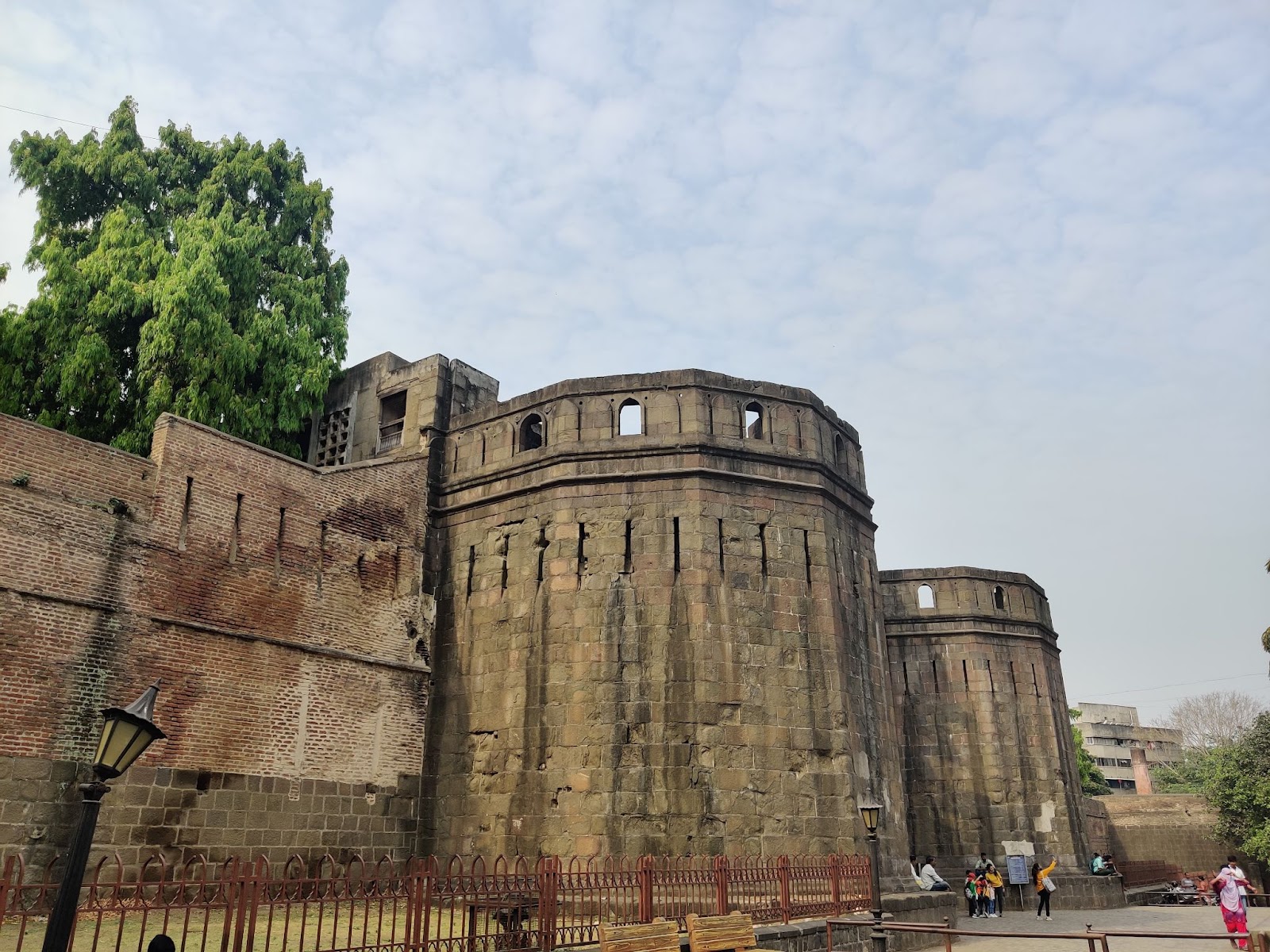
Located in the heart of Pune, Shaniwar Wada is a great Maratha architecture that shows the rich history of the Peshwa era. It was built in 1732 and served as the seat of peshwas of Maratha empire until 1818.
In a devastating fire event the fort interior was destroyed in 1828 but after renovation it continue to attract visitors offering a glimpse into India’s storied past.
History of Shaniwar Wada
Peshwa Baji Rao I laid the foundation of Shaniwar Wada on January 10, 1730. The name ‘Shaniwar Wada’ is derived from the Marathi words ‘Shaniwar’ (Saturday) and ‘Wada’ (residence), reflecting the day the foundation was laid. Its ceremonial opening takes place on January 22, 1732.
As peshwas moved to the residence the palace became the centre of Maratha politics in the 18th century. During the rise and fall of the Martha empire, the fort wintnessed significant events.
In 1818, the fort went into the hands of British following the Third Anglo-Maratha War. However again fire incident took place in 1828 leaving behind the structure that stands today.
Architecture of Shaniwar Wada
A classic example of Maratha craftsmanship, Shaniwar wada is influenced by Mughal designed elements. It is fortified with walls encompassing five gateways and nine bastion towers:
Dilli Darwaza (Delhi Gate): Symbolizing the Maratha’s aspirations its the main entrance that faces toward north toward Delhi.The massive gate is designed to allow elephants adorned with howdahs to pass through and is fortified with steel spikes to deter enemy attacks.
Mastani Darwaja (Mastani Gate): This gate was named after Mastani, the second wife of Peshwa Baji Rao I. It was used forher private entrance and exit from the fort.
Khidki Darwaja (Window Gate): The gate is unique in the way that it features a window among the fort’s entrance.
Ganesh Darwaja (Ganesh Gate): It was used by the ladies of the fort to visit the nearby Kasba Ganapati temple. Its located near the Ganesh Rang Mahal.
Narayan Darwaja (Narayan Gate): This gate is associated with the assassination of Narayanrao Peshwa. Through this gate it was his body taken out.
Inside the fort, the palace complex consist remnants of structures such as the Thorlya Rayancha Diwankhana (court reception hall of the eldest royal), Naachacha Diwankhana (dance hall), and Juna Arsa Mahal (mirror hall).
The palace walls are decorated with intricate carvings and paintings depicting scenes from the Ramayana and Mahabharata. Among it the most notable feature is the sixteen-petal lotus-shaped fountain that showcases the aesthetic sensibilities of the era.
Visiting Information
Timings: The fort is open daily from 8:00 AM to 5:00 PM.
Entry Fee: ₹5 for Indian citizens and ₹125 for foreign nationals.
Light & Sound Show: Visitors can experience a captivating light and sound show that narrates the history of Shaniwar Wada. The show is held daily in Marathi from 7:15 PM to 8:10 PM and in English from 8:15 PM to 9:10 PM. The entry fee for the show is ₹25 per person.
How to Reach from Delhi
Pune is well-connected to Delhi by air, rail, and road:
By Air: Several daily flights operate between Indira Gandhi International Airport (DEL) in Delhi and Pune International Airport (PNQ). The flight duration is approximately 2 hours. From Pune Airport, Shaniwar Wada is about 10 kilometers away, and you can reach it by taxi or auto-rickshaw in around 30 minutes.
By Train: Multiple trains connect New Delhi Railway Station (NDLS) to Pune Junction (PUNE), with journey times ranging from 16 to 24 hours, depending on the train. From Pune Junction, Shaniwar Wada is approximately 3 kilometers away, accessible by local transport.
By Road: The distance between Delhi and Pune is about 1,450 kilometers. While a road trip offers scenic views, it requires significant travel time and planning.
Nearby Attractions
While visiting Shaniwar Wada, consider exploring other notable sites in Pune:
Lal Mahal: A historic palace associated with Chhatrapati Shivaji Maharaj’s childhood.
Raja Dinkar Kelkar Museum: A museum showcasing a vast collection of Indian artifacts.
Dagdusheth Halwai Ganapati Temple: A famous temple dedicated to Lord Ganesha, known for its grandeur.
Maps and Location
FAQs
1. What is Shaniwar Wada famous for?
Shaniwar Wada is famous as the historic seat of the Peshwas of the Maratha Empire. Built in 1732, it is one of Pune’s most iconic landmarks and is renowned for its grand architecture, massive gates, and rich historical significance.
2. Where is Shaniwar Wada located?
Shaniwar Wada is located in the heart of Pune city, Maharashtra, near the old city area and easily accessible from major parts of the city.
3. Who built Shaniwar Wada?
The fort palace was built by Peshwa Bajirao I, the renowned Maratha general and prime minister of the Maratha Empire, in the early 18th century.
4. Why is it called Shaniwar Wada?
The name “Shaniwar Wada” comes from the Marathi words Shaniwar (Saturday) and Wada (residential complex). It is believed that the foundation stone was laid on a Saturday.
5. What happened to the original palace?
Much of the original palace was destroyed in a massive fire in 1828. Today, visitors can explore the surviving fortifications, gates, fountains, and foundations of the once-grand structure.
6. What are the visiting hours of Shaniwar Wada?
Shaniwar Wada is generally open daily from 8:00 AM to 6:30 PM. Visitors are advised to check current timings before planning their visit.
7. Is there an entry fee for Shaniwar Wada?
Yes, a nominal entry fee is charged for Indian and foreign visitors. Additional charges may apply for the evening light and sound show.
8. What is the Light and Sound Show at Shaniwar Wada?
The Light and Sound Show narrates the history of the Maratha Empire and the Peshwas through dramatic storytelling, music, and visual effects, making it a popular attraction for tourists.
9. What is the best time to visit Shaniwar Wada?
The best time to visit is between October and February when Pune experiences pleasant weather. Early mornings and evenings are ideal for sightseeing and photography.
10. How much time is needed to explore Shaniwar Wada?
Most visitors spend around 1 to 2 hours exploring the fort complex, learning about its history, viewing the remains of the palace, and attending the Light and Sound Show if scheduled.