Thrissur, often called the “Cultural Capital of Kerala,” stands as the vibrant heart of the state’s artistic, spiritual, and festive traditions. The city and its surrounding region form a living museum of Kerala’s music, dance, and temple culture. From the thunderous rhythm of the Thrissur Pooram to the tranquil waterfalls of Athirappilly, this district perfectly blends ancient tradition with natural splendour.
Geography and Overview
Located almost in the central part of Kerala, Thrissur is bordered by Palakkad to the east, Ernakulam to the north, and Malappuram to the south. The district is nourished by rivers like Chalakudy and Kecheri, and its terrain ranges from coastal plains to hilly uplands.
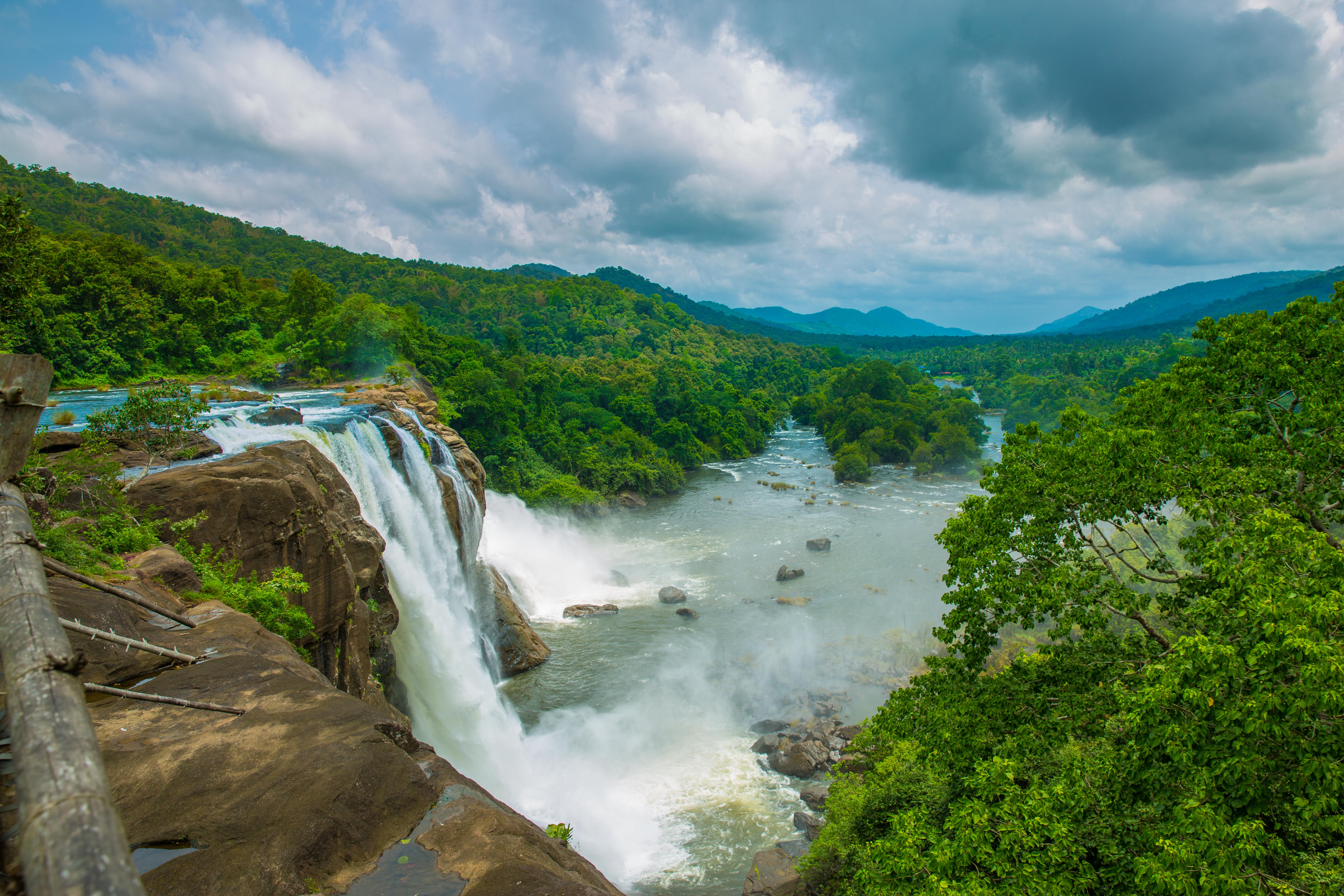
The district’s western part is filled with paddy fields and coconut groves, while the eastern region extends toward the forested Western Ghats. The Athirappilly and Vazhachal Waterfalls cascading from the Sholayar Range are among Kerala’s most famous natural attractions.
Historical Background
Thrissur’s name is derived from Thiru-Shiva-Perur, meaning “the town of Lord Shiva.” It was once the capital of the Cochin Kingdom and flourished as a hub of trade and cultural exchange. Under the rule of Sakthan Thampuran (Raja Rama Varma), Thrissur became a center of cultural renaissance. He established the Vadakkunnathan Temple at the city’s core and planned the circular city layout that still defines Thrissur’s geography today.
The region was deeply influenced by the Peruvanam Mahadeva Temple traditions and the migration of scholars and artists from across Kerala. During the colonial era, Thrissur’s cultural vibrancy coexisted with strong movements for education and reform.
Cultural Significance
Thrissur is Kerala’s cultural epicenter — home to classical performing arts, temples, and festivals. The city hosts Kerala Kalamandalam in nearby Cheruthuruthy, the premier institution for traditional art forms like Kathakali, Mohiniyattam, and Koodiyattam.
The Vadakkunnathan Temple, a UNESCO World Heritage Site candidate, remains the spiritual nucleus of the city. The temple complex and Thekkinkadu Maidan surrounding it serve as venues for the world-famous Thrissur Pooram, a grand festival of elephants, percussion, and fireworks that defines Kerala’s cultural identity.
Best time to visit Thrissur
Best Time to Visit: December to May, especially around Thrissur Pooram (April–May).
Top Attractions in Thrissur
Vadakkunnathan Temple
An architectural and spiritual marvel dedicated to Lord Shiva, this temple features magnificent woodwork and murals. It’s one of the oldest temples in Kerala and symbolizes the ancient Dravidian style of temple architecture.
Athirappilly Waterfalls
Known as the “Niagara of India,” Athirappilly is Kerala’s most spectacular waterfall. Located on the Chalakudy River, it cascades from a height of 80 feet amid lush rainforests, offering breathtaking views, especially during the monsoon.
Vazhachal Waterfalls
Just a few kilometers from Athirappilly, Vazhachal is surrounded by dense Sholayar forests. The area is ideal for picnics, nature photography, and trekking enthusiasts.
Punnathur Kotta (Elephant Sanctuary)
Located near Guruvayur, this sanctuary houses over 50 elephants belonging to the Guruvayur Temple. Visitors can watch elephants being bathed, fed, and trained — a unique experience for wildlife and culture lovers.
Guruvayur Temple
One of the most revered Krishna temples in India, Guruvayur Sri Krishna Temple is the spiritual soul of Thrissur district. The temple attracts millions of devotees annually and is considered the “Dwarka of the South.”
Kerala Kalamandalam
Founded by poet Vallathol Narayana Menon in 1930, this institution is dedicated to preserving Kerala’s classical performing arts. Visitors can attend performances or watch students practice Kathakali, Ottamthullal, and other traditional forms.
Chimmini and Peechi-Vazhani Wildlife Sanctuaries
These sanctuaries near Thrissur are rich in biodiversity and offer opportunities for jungle safaris, bamboo rafting, and trekking. The Peechi Dam also serves as a popular picnic and boating spot.
Snehatheeram Beach
Located near Thalikulam, this serene beach is known for its calm waters, children’s park, and sunset views — a perfect coastal escape close to the city.
Local Cuisine
Thrissur’s cuisine blends the spicy flavors of Kerala with temple-style vegetarian dishes. Local favorites include:
Puttu and Kadala Curry
Fish Moilee
Palada Payasam
Kallappam and Stew
Sadhya served on banana leaves during festivals.
Sweet lovers should try Unniyappam, Neyyappam, and the famous Palada Pradhaman during temple feasts.