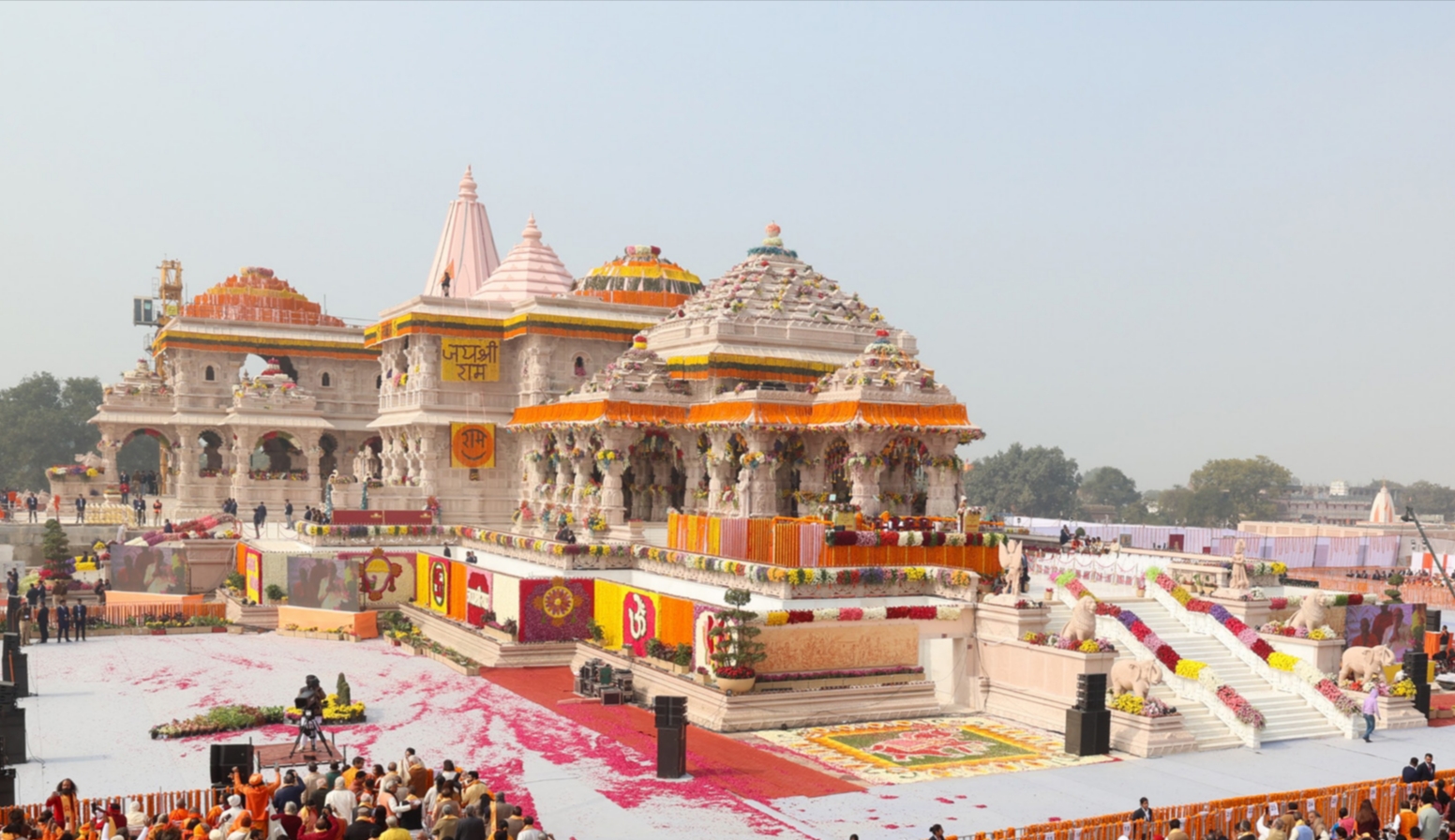
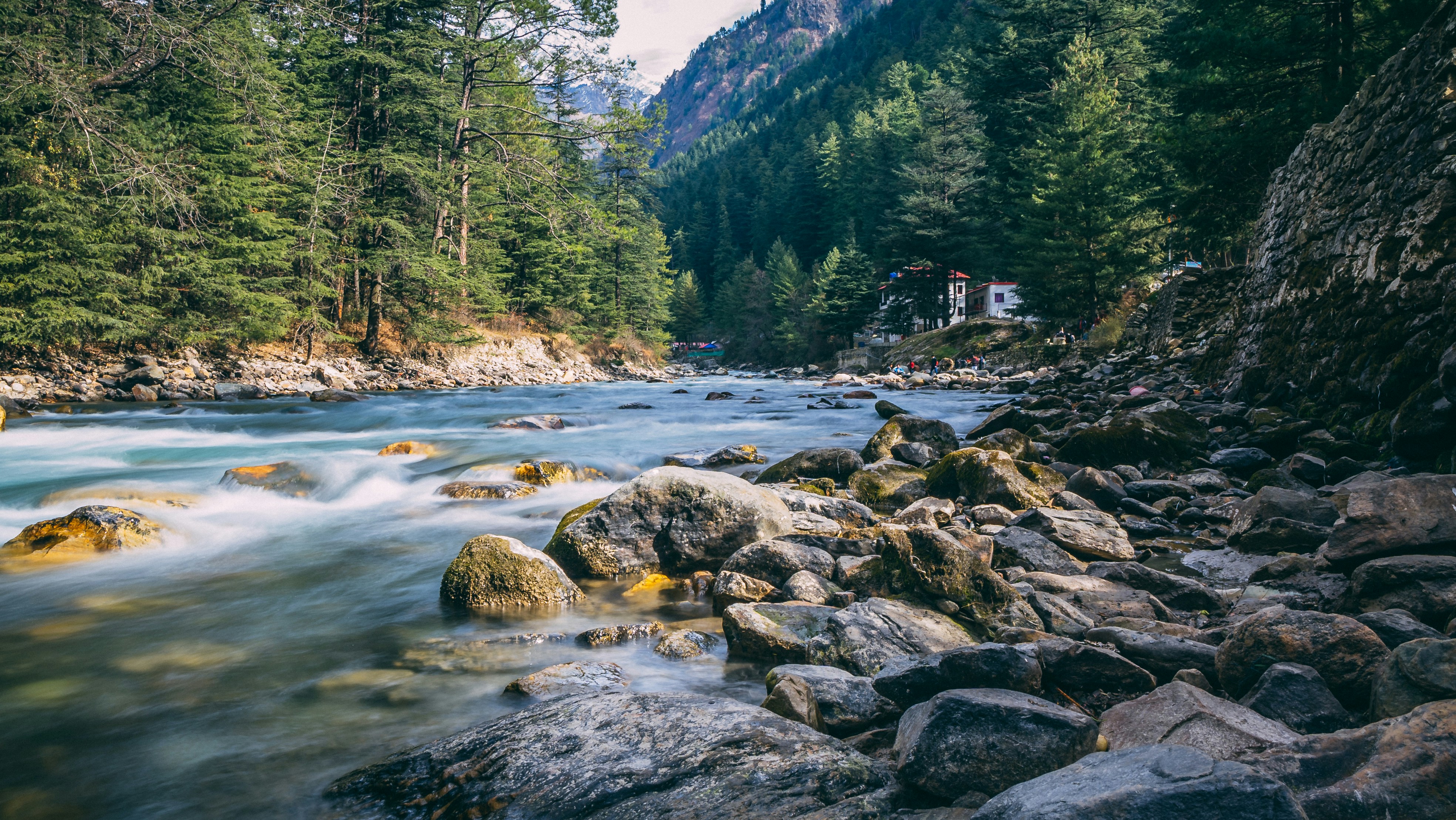
Image Source: Hemant Rathod
About Jhula Devi Temple
Nestled amidst the peaceful pine and oak forests of Ranikhet in Uttarakhand’s Almora district, Jhula Devi Temple is one of the region’s most revered Hindu shrines. Located about 5 km from Ranikhet Bus Stand and close to the famous Chaubatia Gardens, this centuries-old temple attracts thousands of devotees and tourists every year. Dedicated to Goddess Durga, the temple is especially known for its thousands of hanging bells, each symbolizing a devotee’s fulfilled wish.
Believed to have originally been built during the 8th century, the temple was extensively renovated in 1935. Today, it stands not only as an important religious site but also as a peaceful destination where visitors can experience the spiritual atmosphere of Kumaon while enjoying the scenic beauty of the Himalayan foothills. The quiet surroundings, crisp mountain air, and panoramic forest views make Jhula Devi Temple a must-visit attraction in Ranikhet.
History and Religious Significance
Jhula Devi Temple has deep roots in local folklore and the religious traditions of the Kumaon region. According to popular legend, the forests surrounding present-day Ranikhet were once inhabited by numerous wild animals, particularly tigers and leopards, which frequently attacked nearby villages. The frightened villagers prayed earnestly to Goddess Durga, seeking protection from these dangerous predators.
It is believed that the Goddess appeared in the dream of a local shepherd and instructed him to dig at a particular location where her sacred idol lay buried. When villagers excavated the spot, they discovered the idol exactly as described. Interpreting this as a divine blessing, they built a temple at the site to honor the Goddess. Local belief holds that after the temple was established, attacks by wild animals gradually diminished, strengthening the faith of the local community.
Over the centuries, the temple has become one of Kumaon’s most important centers of worship, where devotees visit to seek blessings for health, prosperity, protection, and the fulfillment of personal wishes.
The Famous Bells of Jhula Devi Temple
The most striking feature of Jhula Devi Temple is the extraordinary collection of thousands of brass bells hanging from every corner of the temple complex. Unlike most temples where bells are limited to the entrance, almost every wall, railing, arch, and tree surrounding the shrine is adorned with bells of various sizes.
The tradition is closely associated with the belief that Goddess Durga fulfills the sincere wishes of her devotees. After a prayer is answered, devotees return to the temple to offer a bell as an expression of gratitude. Over generations, this practice has transformed the temple into a unique spiritual landmark where the gentle sound of countless bells creates a deeply peaceful atmosphere. The temple is especially vibrant during Navratri, when thousands of pilgrims gather to offer prayers and new bells.
Rama Mandir and Monastery
A short walk uphill from Jhula Devi Temple leads to the serene Rama Mandir, another important spiritual attraction in Ranikhet. Accessible by climbing a small flight of stone steps, the temple offers a calm environment surrounded by tall deodar and pine trees.
The temple complex also houses a traditional monastery where students receive education in Vedic scriptures, Sanskrit, philosophy, and mathematics. What makes the institution unique is its balanced approach, combining ancient Indian learning with modern educational methods. Visitors often appreciate the peaceful ambience, disciplined lifestyle of the students, and the opportunity to experience a living tradition of Vedic education.
Nearby Chaubatia Gardens
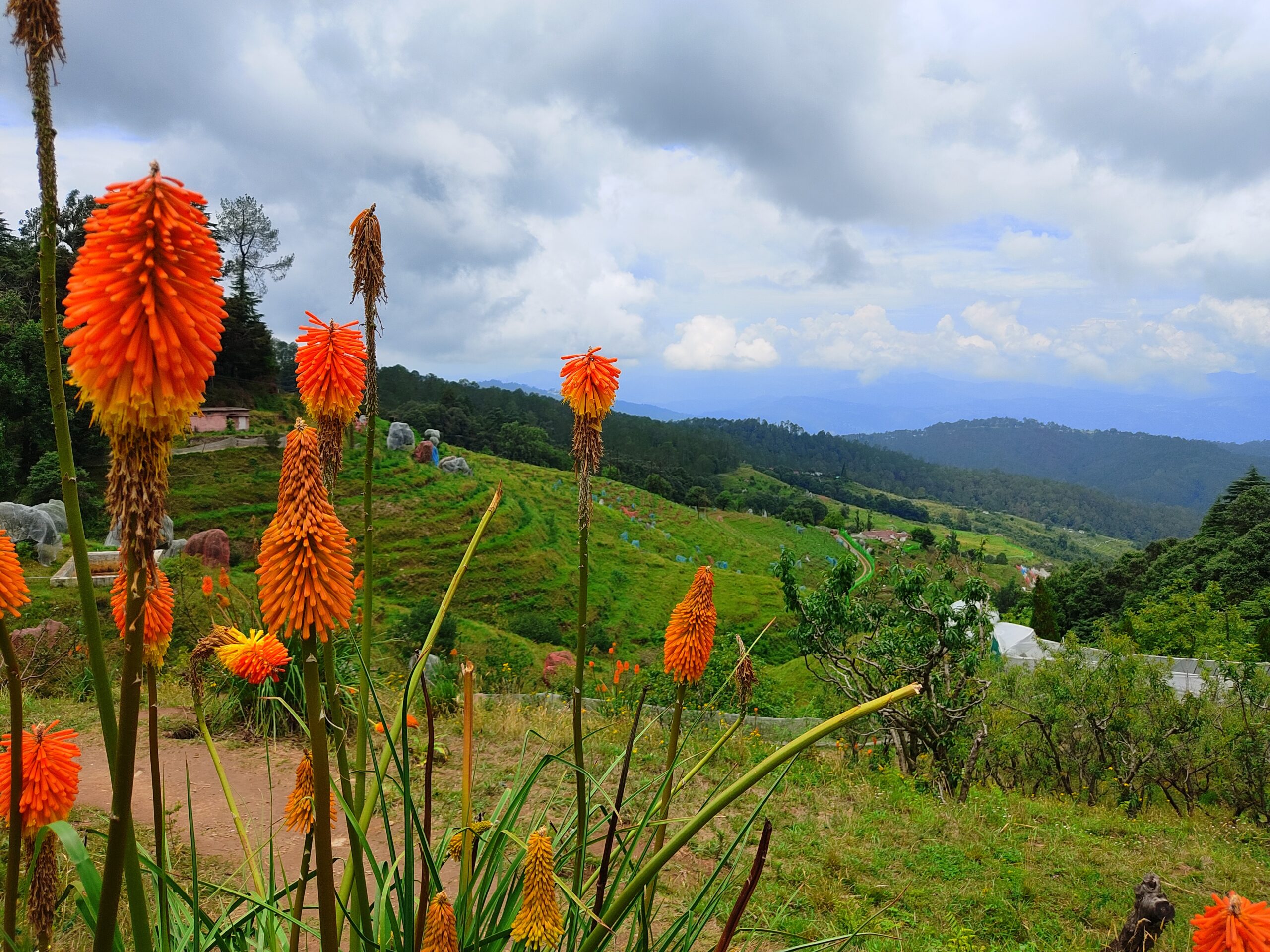
Located just a few minutes from the temple, Chaubatia Gardens is one of Ranikhet’s most popular attractions. Spread across lush mountain slopes, the gardens are famous for their orchards of apples, peaches, plums, apricots, and walnuts. During the fruiting season, the landscape becomes especially colorful and attracts nature lovers and photographers alike.
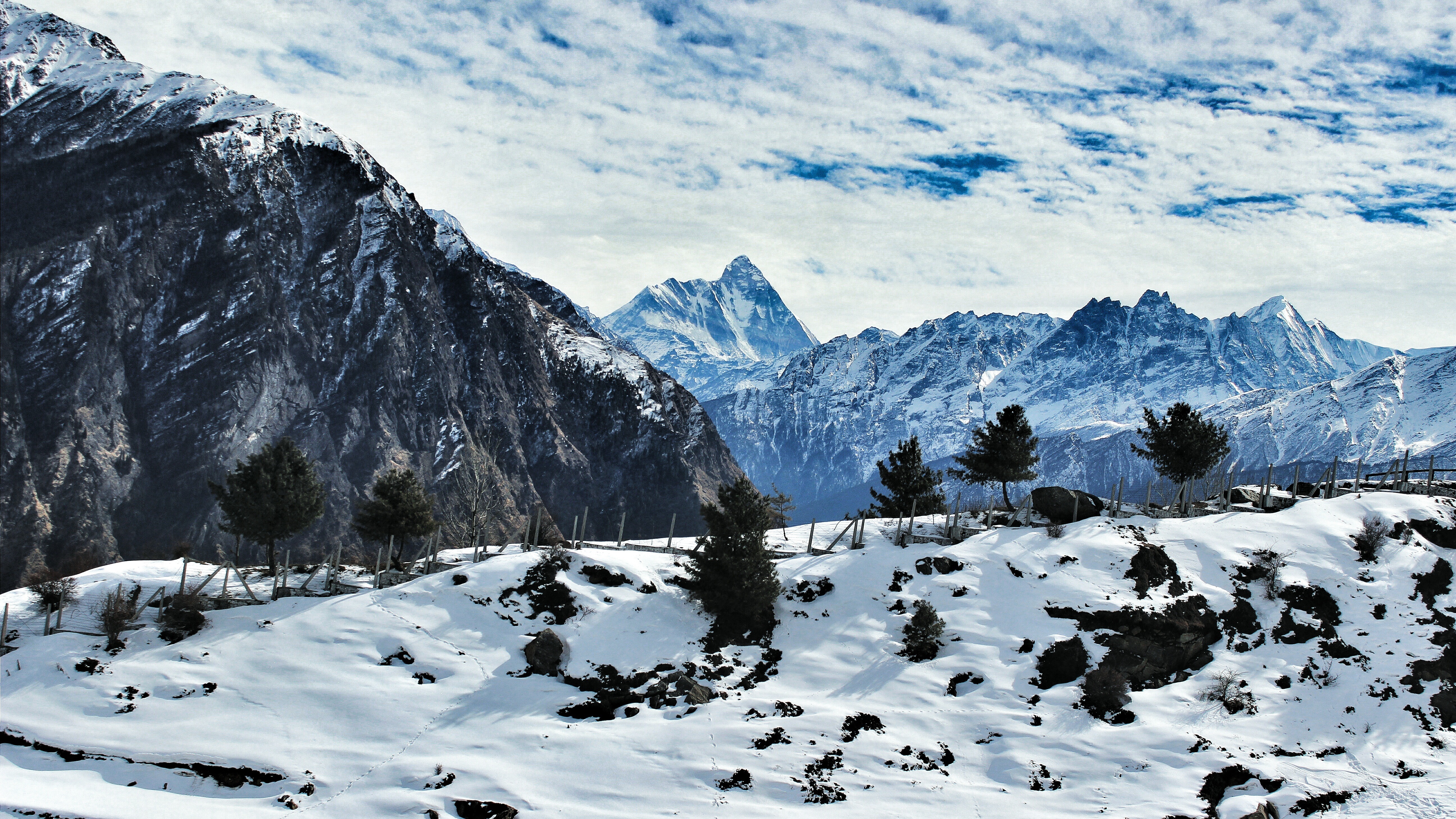
The gardens also offer spectacular views of the snow-covered Himalayan peaks, including Nanda Devi, Trishul, and Neelkanth, on clear days. A visit to Chaubatia Gardens perfectly complements a trip to Jhula Devi Temple, allowing visitors to enjoy both spirituality and nature in a single outing.
Visitor Information
Jhula Devi Temple remains open daily from 6:00 AM to 8:00 PM, allowing visitors ample time for worship and sightseeing. Early mornings and evenings are considered the most peaceful times to visit, when the temple atmosphere is calm and devotional prayers fill the air.
The temple does not charge an entry fee, although donations are welcomed for its upkeep. Visitors are expected to dress modestly, remove their footwear before entering the shrine, and maintain silence inside the temple premises. The temple is especially crowded during Navratri, Durga Puja, and other major Hindu festivals, when special ceremonies and devotional programs are organized.
How to Reach Jhula Devi Temple
Jhula Devi Temple is easily accessible from different parts of Uttarakhand and nearby cities.
By Road: The temple is located around 5 km from Ranikhet Bus Stand. Regular buses and shared taxis connect Ranikhet with Kathgodam, Haldwani, Almora, Nainital, Delhi, and other major towns. Local taxis are readily available from the bus stand to the temple.
By Rail: The nearest railway station is Kathgodam Railway Station, approximately 75 km away. Kathgodam is well connected to Delhi, Lucknow, Dehradun, and other major cities. From the station, taxis and buses operate regularly to Ranikhet.
By Air: The nearest airport is Pantnagar Airport, located about 115 km from the temple. Visitors can hire taxis from the airport to reach Ranikhet in around three to four hours, depending on road conditions.
Nearby Attractions
Chaubatia Gardens (2 km): Famous for fruit orchards, botanical plantations, peaceful walking trails, and magnificent Himalayan views.
Rama Mandir (Adjacent): A tranquil hilltop temple with a monastery preserving traditional Vedic education.
Bhalu Dam (3 km): A small scenic reservoir surrounded by forests, ideal for short walks and birdwatching.
Golf Ground Ranikhet (4 km): One of Asia’s highest golf courses, set amid beautiful pine forests and maintained by the Indian Army.
Mankameshwar Temple (6 km): A well-known temple dedicated to Lord Shiva, Radha-Krishna, and Hanuman, maintained by the Kumaon Regiment.
Kumaon Regimental Centre Museum (6 km): Showcases the proud military history of the Kumaon Regiment through weapons, uniforms, medals, and historical exhibits.
Maps
FAQs
1. Why is Jhula Devi Temple famous?
The temple is famous for its thousands of hanging bells offered by devotees whose wishes have been fulfilled, as well as its strong association with Goddess Durga.
2. Which deity is worshipped at Jhula Devi Temple?
The temple is dedicated to Goddess Durga, who is worshipped as the protector of the local people.
3. When was Jhula Devi Temple built?
The temple is believed to have originated in the 8th century and was reconstructed in 1935.
4. What are the temple timings?
The temple is generally open every day from 6:00 AM to 8:00 PM.
5. Is there an entry fee?
No. Entry to the temple is free for all visitors.
6. Why are there so many bells in the temple?
Devotees offer bells after their prayers are answered as a symbol of gratitude to Goddess Durga.
7. Which is the best time to visit?
March to June and September to November offer pleasant weather, while Navratri is the most vibrant festival season.
8. How far is Jhula Devi Temple from Ranikhet?
The temple is approximately 5 km from Ranikhet Bus Stand.
9. Can photography be done inside the temple?
Photography is generally allowed in the outer premises, but visitors should respect temple rules and avoid photographing the sanctum if restricted.
10. How much time should visitors spend at the temple?
Most visitors spend 1 to 2 hours, which is sufficient to explore the temple, offer prayers, and visit the nearby Rama Mandir and Chaubatia Gardens.