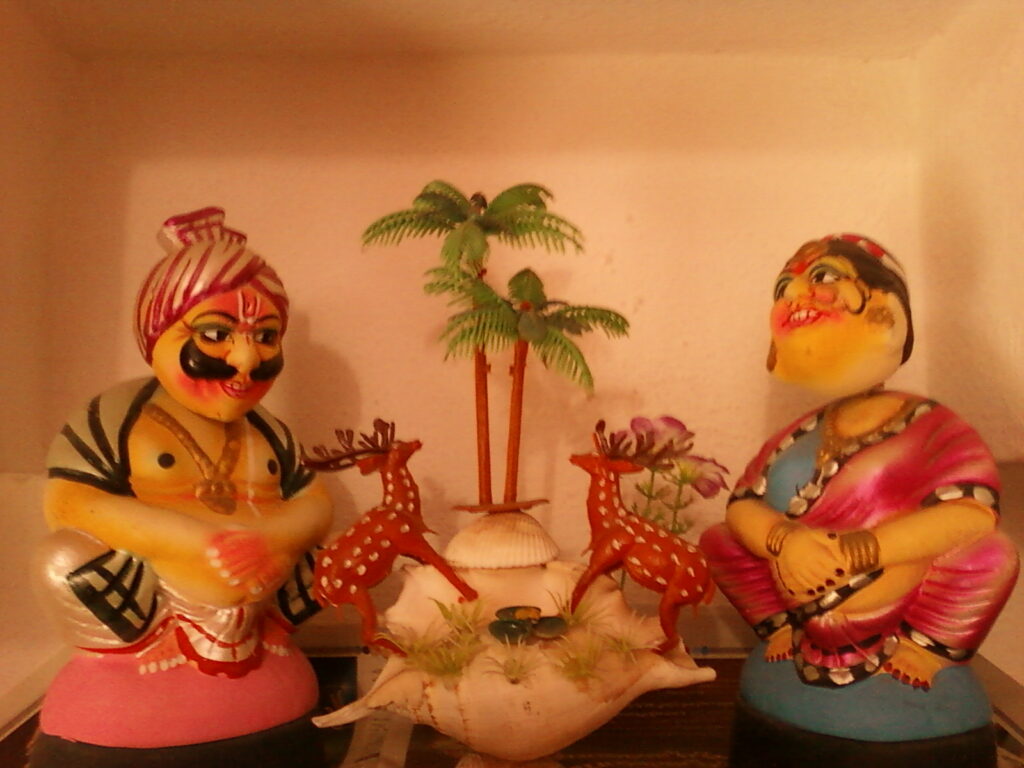
Image Source: Adityamadhav83
Kondapalli toys, locally known as Kondapalli Bommalu, are handcrafted wooden toys originating from Kondapalli village in the Krishna district, near Vijayawada, Andhra Pradesh. The craft is centered in Bommala Colony, which literally translates to “Toys Colony”, where generations of artisans continue this traditional art.
These toys have earned recognition as a Geographical Indication (GI) product of Andhra Pradesh, registered under the Geographical Indications of Goods (Registration and Protection) Act, 1999. The GI application was filed by the LANCO Institute of General Humanitarian Trust (LIGHT) in collaboration with Kondapalli wooden toy manufacturers, emphasizing the craft’s cultural and regional uniqueness.
Historical Background
The tradition of making Kondapalli toys dates back over 400 years. The artisans, known as Aryakhastriyas or Nakarshalu, trace their lineage to the Brahmanda Purana and are believed to have migrated from Rajasthan to Kondapalli in the 16th century.
According to tradition, their skills were passed down from Muktharishi, a sage blessed by Lord Shiva with knowledge in arts and crafts. Over centuries, the artisans have preserved both the techniques and cultural stories behind each handcrafted toy, making Kondapalli toys a living heritage of Andhra Pradesh.
Crafting Process and Materials
Kondapalli toys are primarily made from Tella Poniki, a softwood sourced from the nearby Kondapalli Hills, chosen for its lightweight and durable properties. The crafting process is meticulous: each piece of the toy is carved separately, and a natural paste called makku, made from tamarind seed powder and sawdust, is used to join the parts, add intricate details, and finish the surface.
Once assembled, the toys are colored with oil or water-based paints, vegetable dyes, or enamel, depending on the type and intended use. Popular figures include mythological characters, animals, birds, bullock carts, and village scenes, with masterpieces like the Dasavataram showcasing the artisans’ skill and creativity.
Cultural Significance
Kondapalli toys are deeply integrated into Andhra Pradesh’s cultural and religious practices. They are traditionally displayed during the festivals of Sankranti and Navratri, a presentation known as Bommala Koluvu, which symbolizes prosperity and artistic heritage in households. These toys are not merely decorative; they preserve local folklore, mythology, and rural life, making them both cultural and educational artifacts for communities.
Challenges and Preservation Efforts
Despite their cultural importance, the art of Kondapalli toy making is facing a decline. Challenges include low profits, the labor-intensive nature of production, the influence of Western toys, and limited interest among younger generations in pursuing the craft.
To address this, organizations such as Lepakshi and the LANCO Institute of General Humanitarian Trust (LIGHT) have initiated revival and support programs, including workshops, exhibitions, and market facilitation, ensuring that this 400-year-old tradition continues to thrive for future generations.