Image Source: Google Maps
About Rima
Tucked away in the far eastern corner of Arunachal Pradesh, Rima is a small yet fascinating frontier village surrounded by thick forests, rolling hills, and the soothing flow of the Rima River. Located close to the Indo–Myanmar border, the village remains one of the lesser-explored destinations in Northeast India. Its untouched natural beauty, peaceful atmosphere, and strong tribal traditions make it an ideal place for travelers looking to experience rural life away from crowded tourist circuits.
Unlike popular hill stations filled with commercial activity, Rima offers silence, simplicity, and a deep connection with nature. Life here moves at a slower pace, shaped by rivers, forests, seasonal farming, and tribal customs that have been preserved for generations.
A Hidden Frontier Settlement
Rima lies in a remote part of eastern Arunachal Pradesh, surrounded by the mist-covered hills of the Patkai range. Reaching the village is an adventure in itself. The route passes through winding mountain roads, dense tropical forests, bamboo groves, and scattered tribal settlements. During the journey, travelers often witness breathtaking landscapes where clouds drift lazily across the hills and waterfalls appear unexpectedly along roadside cliffs.
The village itself reflects the traditional architecture and lifestyle of the local communities. Bamboo and wooden stilt houses stand above the uneven ground, while kitchen gardens filled with vegetables and herbs surround most homes. Daily life remains closely tied to nature, and visitors can often see villagers weaving baskets, drying crops, fishing in nearby streams, or working in the fields.
Because of its remote location, Rima has managed to preserve an authentic cultural and ecological environment that is becoming increasingly rare in modern times.
The Beauty of the Rima River
The Rima River forms the heart of the village and plays an important role in the lives of local residents. Flowing gently through the valley, the river nourishes nearby fields and provides water for everyday activities. Its crystal-clear waters move across smooth stones and gravel banks, creating a peaceful landscape that perfectly complements the surrounding forests.
The riverbanks are especially beautiful during sunrise and sunset, when golden light reflects on the water and the hills glow under changing colors of the sky. Small wooden footbridges, patches of wildflowers, and shaded resting spots along the river make the area ideal for quiet walks and nature photography.
For villagers, the river is more than just a natural feature. It supports fishing, farming, washing, and social gatherings, while also holding cultural and spiritual significance in local folklore.
Tribal Culture and Traditional Lifestyle
Rima is home to indigenous tribal communities, particularly the Tangsa tribe and other nearby ethnic groups. These communities continue to preserve many of their traditional practices, languages, and customs despite gradual modernization in surrounding regions.
Handicrafts remain an important part of village life. Skilled artisans create bamboo baskets, cane products, bead ornaments, and beautifully woven shawls using traditional methods passed down through generations. These crafts are not only used in daily life but are also connected to festivals, ceremonies, and social identity.
Storytelling also plays an important role in the community. Elders often share folk tales and legends connected to the forests, rivers, and mountains surrounding the village. Many stories speak about protective spirits, ancestral journeys, and the sacred relationship between humans and nature.
Festivals celebrated in the region are vibrant occasions filled with traditional music, dance, community feasts, and colorful tribal attire. Visitors fortunate enough to witness these events can gain a deeper understanding of the cultural richness of eastern Arunachal Pradesh.
Nature and Biodiversity
Rima’s remote setting has allowed its ecosystems to remain largely untouched. The forests surrounding the village support a rich variety of plant and animal life, making the area appealing for birdwatchers, photographers, and nature enthusiasts.
The riverbanks and nearby forests are home to hornbills, barbets, kingfishers, migratory birds, and numerous butterfly species. Dense vegetation includes orchids, ferns, bamboo clusters, and towering hollong trees that thrive in the humid climate of the region.
The landscape changes beautifully with the seasons. During the monsoon months, the forests become intensely green and alive with flowing streams, while winter offers clear skies, crisp air, and better visibility of the hills and valleys.
Because tourism here remains limited, the environment retains a raw and unspoiled character that is increasingly difficult to find in more developed destinations.
Adventure and Exploration
For travelers interested in exploration, Rima serves as a gateway to remote frontier landscapes. The surrounding Patkai Hills offer opportunities for trekking, nature walks, and cultural exploration through nearby tribal villages.
Adventure seekers often combine a visit to Rima with journeys along sections of the historic Stilwell Road, a wartime route constructed during World War II that connected India to Myanmar and China. The region’s historical significance, combined with its dramatic scenery, creates a unique travel experience.
Nearby lakes, forest trails, and mountain viewpoints further add to the appeal of the region for offbeat travelers.
Best Time to Visit
The ideal time to visit Rima is between October and March. During these months, the weather remains pleasant, skies are clearer, and the river appears especially scenic. Winter mornings can be misty and cold, adding to the charm of the landscape.
The monsoon season, usually from June to September, brings heavy rainfall that can make roads difficult to navigate. However, the forests appear exceptionally lush during this time.
How to Reach Rima
The nearest major access point to Rima is through the town of Nampong in eastern Arunachal Pradesh. Travelers usually reach Nampong by road from Tinsukia in Assam. From there, local transport, shared vehicles, or guided tours can be arranged toward the remote border villages.
Due to the sensitive border location, travelers may need permits such as the Inner Line Permit (ILP) for Indian citizens or Protected Area Permits for foreign nationals. It is advisable to check the latest travel regulations before planning a trip.
Accommodation and Food
Accommodation options around Rima are simple and community-oriented. Small homestays and village guesthouses provide travelers with a chance to experience local hospitality firsthand. Meals usually consist of traditional home-cooked dishes prepared with locally grown vegetables, rice, bamboo shoots, smoked meat, and regional herbs.
Staying in local homes allows visitors to learn about tribal customs, farming practices, and everyday life in this remote Himalayan frontier.
Nearby Attractions
Several fascinating places can be explored near Rima:
- Pangsau Pass – A historic mountain pass near the India–Myanmar border known for its scenic beauty and wartime history.
- Stilwell Road – A famous World War II-era road passing through rugged mountain terrain.
- Patkai Hills – Forested hills ideal for trekking and nature exploration.
- Pangsau Lake – A peaceful lake surrounded by greenery near the border region.
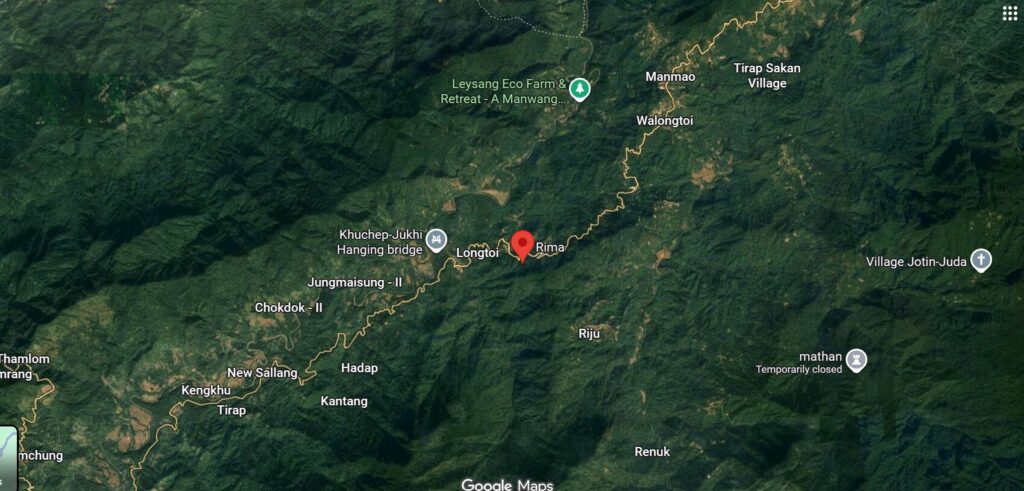
Google Maps
FAQs
Where is Rima located?
Rima is a remote village in eastern Arunachal Pradesh near the Indo–Myanmar border, surrounded by the Patkai Hills and forested landscapes.
Why is Rima famous?
Rima is known for its untouched natural beauty, peaceful river scenery, tribal culture, and remote frontier setting.
Which tribes live in Rima?
The village is primarily inhabited by Tangsa and other indigenous tribal communities of eastern Arunachal Pradesh.
What is the best time to visit Rima?
October to March is considered the best time because of pleasant weather and clearer road conditions.
Is a permit required to visit Rima?
Yes, travelers generally require an Inner Line Permit (ILP) to enter Arunachal Pradesh. Foreign visitors may need additional permits.
Are there hotels in Rima?
Accommodation is limited to basic homestays and village guesthouses that offer a simple but authentic local experience.
What activities can visitors enjoy in Rima?
Visitors can enjoy nature walks, river exploration, birdwatching, cultural interaction, photography, trekking, and exploring nearby frontier routes.
Is Rima suitable for regular tourists?
Rima is best suited for offbeat travelers, nature lovers, photographers, and people interested in tribal culture and remote landscapes rather than luxury tourism.