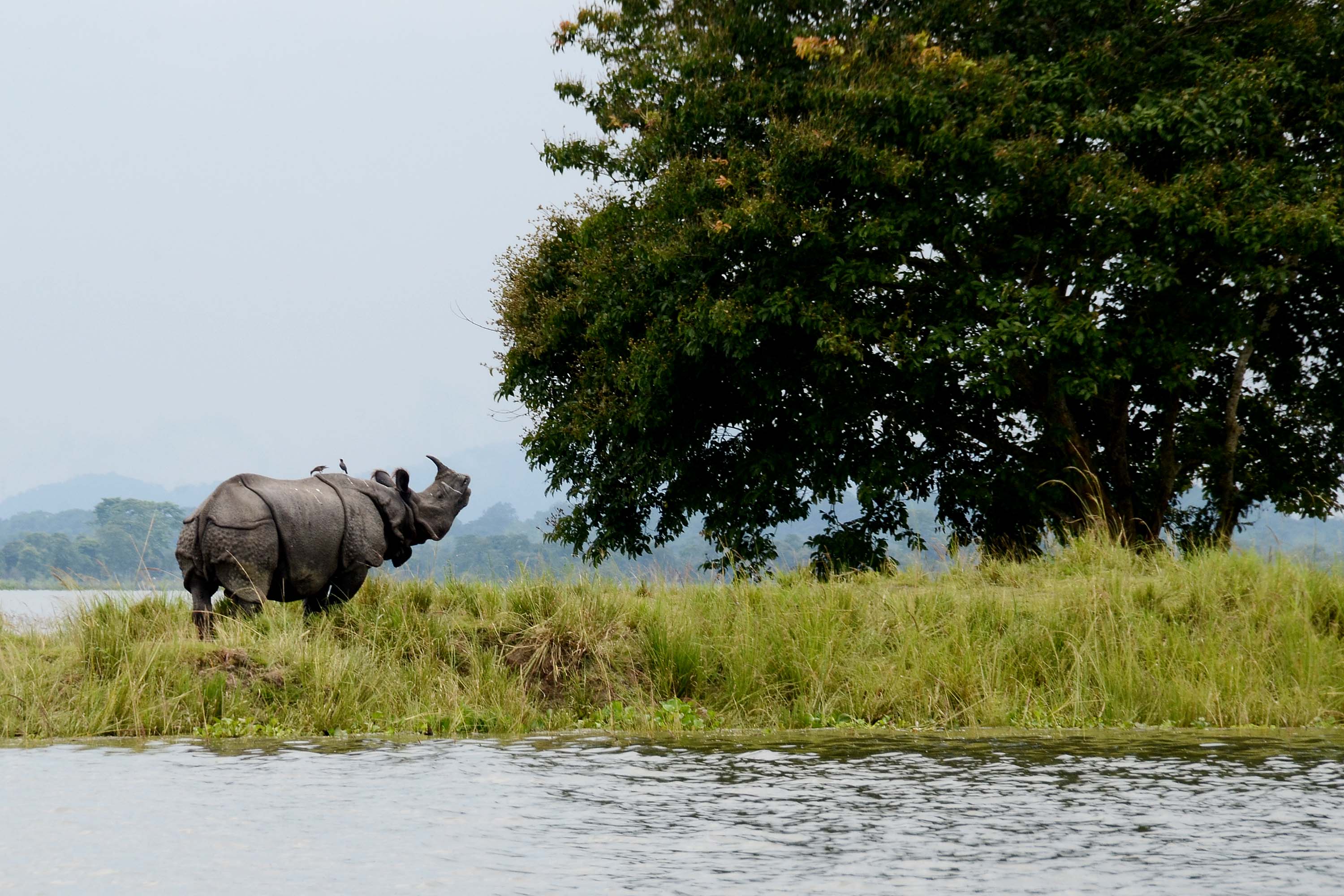
Image Source: Nejib Ahmed/ Wikipedia
Introduction
Orang National Park, located in Assam in northeastern India, is one of the state’s important wildlife destinations. Often called the “Mini Kaziranga” because of its grassland habitat and population of Indian one horned rhinoceroses, Orang offers visitors an opportunity to explore the floodplain ecosystem of the Brahmaputra River region.
The park is known for its rhinoceroses, Bengal tigers, Asian elephants, wild water buffalo, deer and rich birdlife. Its landscape includes tall elephant grass, wetlands, marshes, river channels and patches of woodland. These habitats are shaped by the annual monsoon and the changing course of rivers in the Brahmaputra valley.
Orang is especially interesting for travellers who want to explore Assam beyond its better known destinations. It can be combined with a journey through Tezpur, the northern Brahmaputra valley and other cultural and natural attractions in the region.
Unlike a hill forest or a dense tropical rainforest, Orang is primarily a floodplain wildlife landscape. Its open grasslands and wetlands provide important habitat for large herbivores, while its waterways support waterbirds and other wetland species. The best experience comes from understanding how the park’s wildlife, river system and seasonal flooding are connected.
Where Is Orang National Park Located?
Orang National Park is situated on the northern bank of the Brahmaputra River in Assam. It lies mainly in the Darrang and Sonitpur district region, with the park’s precise administrative boundaries and access arrangements best checked through current Assam Forest Department information.
The park is located to the northeast of Guwahati and can be reached by road from towns in the northern Brahmaputra valley. Tezpur is a useful regional base for travellers planning to combine Orang with other destinations in Assam.
Orang occupies part of the Brahmaputra floodplain, where rivers, wetlands, grasslands and seasonally inundated land form a complex ecosystem. This geographical setting is central to the park’s ecological importance.
Why Is Orang National Park Famous?
Orang is best known for its Indian one horned rhinoceros population and its floodplain wildlife habitat. Its resemblance to the grassland ecosystem of Kaziranga has earned it the popular nickname “Mini Kaziranga,” although the two parks differ in size, accessibility, wildlife populations and tourism infrastructure.
The park’s main attractions include:
- Indian one horned rhinoceros, one of India’s most recognisable large mammals.
- Bengal tigers and other carnivores that occupy the floodplain ecosystem.
- Wild water buffalo and Asian elephants.
- Swamp and riverine grasslands shaped by seasonal flooding.
- Wetlands that support resident and migratory birds.
- Opportunities to understand the ecological relationship between the Brahmaputra River and wildlife conservation.
Orang is particularly valuable because it protects a relatively small but important section of the wider Brahmaputra floodplain. Its grasslands and wetlands support species that depend on open, seasonally flooded landscapes.
History of Orang National Park
Orang has a long history of protection and changing conservation status. The area was declared a wildlife sanctuary in 1985 and later became a national park in 1999. It was subsequently included in tiger conservation initiatives, and the wider landscape has been important for protecting rhinoceroses and other threatened wildlife.
The park’s conservation history reflects the importance of safeguarding floodplain habitats in Assam. Such environments are dynamic: seasonal floods replenish soils, change water channels, create wetlands and influence the distribution of grasslands.
Protecting Orang therefore requires more than preventing hunting. It also involves managing habitat, reducing conflict between people and wildlife, maintaining ecological connections and responding to changes caused by flooding and human activity.
The park is part of the broader conservation landscape of Assam, a state recognised for its rhinoceros populations and internationally important wetlands and grasslands.
Geography and Landscape of Orang National Park
Orang National Park lies within the Brahmaputra floodplain, one of the most dynamic river landscapes in northeastern India. The terrain is relatively flat, with alluvial soils, grasslands, wetlands, water channels and patches of forest.
The Pachnoi River and Dhansiri River are important geographical features around the park. The Dhansiri is a tributary of the Brahmaputra, and the rivers and channels in this region influence seasonal flooding, soil conditions and the distribution of wildlife.
The park’s landscape includes two broad types of floodplain terrain. Lower areas are more recently formed by river processes, while higher alluvial terraces represent older floodplain surfaces. These differences influence vegetation, drainage and the availability of habitat during the wet and dry seasons.
During the monsoon, floodwaters can change the appearance of the landscape. Wetlands expand, channels carry more water and parts of the grassland may become inundated. In the drier months, animals may become easier to observe in accessible grassland and wetland areas.
This changing environment is essential to Orang’s ecology. Rather than viewing flooding only as a natural hazard, it is important to understand that seasonal floods also replenish the floodplain and help maintain the habitats on which wildlife depends.
Forest Types and Vegetation
Orang is not a uniformly wooded park. Its vegetation consists of several habitat types that support different species.
Eastern wet alluvial grasslands form an important part of the landscape. Tall grasses provide food and cover for rhinoceroses, deer and other herbivores.
Savanna grasslands and open patches offer feeding areas where animals can graze and where predators may search for prey.
Seasonal swamp forests develop in wetter areas, where the soil remains saturated or flooded during parts of the year. These habitats provide shelter for wildlife and support a variety of plants.
Moist deciduous forests and woodland patches provide shade, nesting sites and cover for birds, reptiles and mammals.
Wetlands, ponds and river channels support fish, turtles, waterbirds and other aquatic species.
The mixture of grassland, wetland and woodland is what makes Orang ecologically distinctive. Conservation management must maintain this diversity rather than allowing the entire landscape to become either densely wooded or dominated by a single vegetation type.
Wildlife of Orang National Park
Orang is best known for its large mammals, particularly the Indian one horned rhinoceros. However, the park’s wildlife is much more diverse, including predators, herbivores, birds, reptiles and aquatic species.
Indian One Horned Rhinoceros
The Indian one horned rhinoceros is Orang’s most recognisable animal and one of the main reasons travellers visit the park.
These large herbivores are adapted to floodplain grasslands and wetlands. They feed on grasses and other vegetation and often use waterlogged areas for cooling and wallowing.
Orang is particularly significant because it protects a rhinoceros population on the northern bank of the Brahmaputra. Its conservation value extends beyond tourism, as maintaining additional rhinoceros habitats helps support the long term survival of the species in Assam.
Bengal Tiger
Bengal tigers inhabit the park and the wider Orang Tiger Reserve. The tall grass, wetlands and woodland patches provide cover, while deer and wild pigs form part of the prey base.
Tigers are elusive animals, and sightings are never guaranteed. Visitors may see evidence of wildlife activity without encountering a tiger directly.
Orang’s role in tiger conservation also depends on the broader landscape. Connections between protected habitats are important because tigers require sufficient territory and opportunities to move between suitable areas.
Asian Elephant
Asian elephants use forest and grassland habitats across Assam, and elephants are among the mammals associated with the Orang landscape.
Their movement may depend on the season, availability of food and water, and conditions in surrounding areas. As with other large mammals, sightings depend on where the animals are moving during a particular visit.
Wild Water Buffalo
Wild water buffalo are another important species associated with Assam’s floodplain ecosystems. They depend on access to water, grasslands and suitable feeding areas.
Their presence reflects the importance of protecting wetlands and open grassland habitats, not simply forests.
Hog Deer and Other Herbivores
Hog deer are among the characteristic herbivores of Orang’s grasslands. Wild pigs and other deer species also contribute to the park’s food web.
Herbivores play a vital ecological role by feeding on vegetation and serving as prey for predators. Their distribution often changes with grass height, flooding and access to water.
Leopard and Smaller Mammals
Leopards and several smaller mammals occur in the wider landscape. Civets, porcupines and other species use the park’s woodland and grassland habitats.
These animals are less predictable to observe than rhinoceroses, particularly during a short safari. Their presence nevertheless contributes to the overall ecological importance of the reserve.
Gangetic River Dolphin
The Assam Forest Department also lists the Gangetic river dolphin among the wildlife associated with Orang. This freshwater dolphin inhabits river systems and is adapted to life in the waterways of the Ganges and Brahmaputra river basins.
A dolphin sighting should not be assumed during a visit to the national park. Its presence is associated with suitable river habitat, and seeing one depends on the location and conditions.
Birdwatching is one of Orang’s most interesting attractions. The park’s wetlands, grasslands, ponds and river channels create habitat for waterbirds, grassland specialists, raptors and migratory species.
Official Assam Forest Department information lists more than 200 recorded bird species, while the Wildlife Institute of India’s tiger reserve assessment records a higher figure for the wider reserve. The precise number depends on the survey and the area covered.
Important birds associated with Orang include:
- Bengal florican.
- Greater adjutant stork.
- Lesser adjutant stork.
- Spot billed pelican.
- White pelican.
- Brahminy duck.
- Northern pintail.
- Green pigeon.
- Other resident and migratory waterbirds.
The Bengal florican is particularly significant because it is a highly threatened grassland bird. Its survival depends on maintaining suitable grassland habitats, which are also important for other species.
Winter is generally a good time for birdwatching because migratory birds visit wetlands and suitable feeding areas. Early morning is often productive for listening to bird calls and observing birds in open habitats.
Carry binoculars if birds are a major interest. A wildlife safari can provide opportunities to watch birds, but dedicated birdwatching may require additional time and a guide familiar with local species.
Reptiles, Turtles and Aquatic Life
Orang’s wetlands and grasslands also support reptiles and aquatic wildlife.
Species recorded in official park information include the Indian rock python, king cobra, black krait, other cobras and monitor lizards. These animals are generally elusive and should never be approached or disturbed.
The park’s water bodies and channels support several species of turtles and tortoises. Fish are also ecologically important in the floodplain system, providing food for birds and other aquatic predators.
The combination of land and water habitats means that Orang should be understood as a complete floodplain ecosystem rather than simply a place to see rhinoceroses.
Best Time to Visit Orang National Park
The most suitable period for visiting Orang is generally November to April, according to Assam’s official tourism and forest information. Exact opening dates, safari availability and closures should be checked before travel.
November to February: Winter and Birdwatching
Winter is a comfortable time for exploring the park. Temperatures are generally more pleasant than during the hotter months, and migratory birds add interest to the wetlands.
This is a good period for travellers who want to combine a safari with birdwatching and sightseeing in the northern Brahmaputra valley.
March to April: Warmer Weather and Wildlife Viewing
As the dry season progresses, the weather becomes warmer. Changes in grassland conditions and water availability may influence where wildlife is seen.
Morning safaris are particularly useful during warmer weather. Carry drinking water and follow the guidance of your driver and guide.
May to October: Monsoon and Seasonal Restrictions
The monsoon brings heavy rainfall and flooding to Assam. Access to the park and the operation of safari activities may be restricted or suspended during this period.
Flooding can alter roads, grasslands and wetlands, making travel conditions unpredictable. If you are visiting Assam during the monsoon, confirm whether Orang is open before including it in your itinerary.
Things to Do
1. Take a Jeep Safari
A jeep safari is the main way to explore Orang’s accessible wildlife areas. It offers opportunities to look for rhinoceroses, deer, wild pigs, birds and, with luck, larger predators.
The experience is shaped by the open grassland and wetland environment. Animals may be visible in clearings, along water bodies or partly concealed by tall vegetation.
Safari routes and timings depend on current forest department rules, so check availability before planning your journey.
2. Observe Rhinoceroses in Their Natural Habitat
Rhinoceroses are the park’s principal attraction. Observing them from an authorised safari vehicle provides an opportunity to understand their feeding behaviour, use of wetlands and relationship with grassland habitats.
Keep a safe distance and never ask a driver to approach an animal too closely for photographs.
3. Go Birdwatching
Orang’s wetlands and grasslands attract a variety of birds, making the park suitable for both casual birdwatchers and visitors with a strong interest in ornithology.
Look for waterbirds around suitable wetlands and grassland birds in open areas. Bengal floricans are particularly important from a conservation perspective, but sightings are not guaranteed.
4. Explore the Floodplain Landscape
Even when large mammals are not immediately visible, the landscape offers plenty to observe. Notice how tall grass, open patches, ponds and river channels create different habitats.
A knowledgeable guide can explain how seasonal flooding influences animal movement, vegetation and the availability of food.
5. Learn About Rhinoceros and Tiger Conservation
A visit to Orang can provide insight into the challenges of protecting wildlife in a densely populated region. Habitat connectivity, poaching prevention, flood management and reducing conflict between people and animals are important conservation concerns.
Visitors can gain a better understanding of these issues by learning from authorised guides and official conservation information.
Places to Visit Near Orang National Park
Orang can be combined with several destinations in Assam. However, travel distances vary, and some places are better suited to a separate overnight stay.
1. Tezpur
Tezpur is a useful regional base for exploring the northern Brahmaputra valley. The town is known for its cultural history, temples, river scenery and green surroundings.
Visitors can explore historical and religious sites in and around the town and use it as a starting point for journeys towards Orang and other natural attractions.
Tezpur is particularly practical for travellers arriving through Salonibari Airport, subject to flight availability.
2. Nameri National Park
Nameri National Park lies in the foothills near the Assam Arunachal Pradesh border and offers a different wildlife environment from Orang.
Nameri is known for its forest habitats, birdlife and the Jia Bhoroli River landscape. It is a useful addition for travellers interested in combining floodplain grasslands with forest and foothill scenery.
Allow additional time for the road journey and confirm current access and activities before travelling.
3. Kaziranga National Park
Kaziranga National Park is one of Assam’s most famous wildlife destinations and is internationally recognised for its Indian one horned rhinoceros population.
Although Orang is sometimes called Mini Kaziranga, the two parks offer different visitor experiences. Kaziranga is much larger and has an established safari tourism network across multiple ranges.
Combining the parks can provide a broader understanding of Assam’s floodplain ecology and rhinoceros conservation, but it requires careful route planning.
4. Pobitora Wildlife Sanctuary
Pobitora Wildlife Sanctuary is another important rhinoceros destination in Assam. It lies closer to Guwahati than Orang and is known for its high rhinoceros density within a relatively small protected area.
Pobitora can suit travellers who want to explore a second rhinoceros habitat, although it is geographically separate from Orang and should not be treated as a quick nearby detour.
5. Madan Kamdev Archaeological Site
Madan Kamdev, near Baihata Chariali, is an archaeological site known for the remains of medieval temples and intricately carved stone sculptures.
It offers a cultural contrast to a wildlife trip and can be considered when travelling between the Guwahati region and destinations farther north. Check road distances and opening arrangements before planning a visit.
6. Sualkuchi
Sualkuchi is a traditional weaving town in Assam, particularly known for silk weaving. It is a good option for travellers interested in Assamese textiles, local craftsmanship and cultural tourism.
Sualkuchi is closer to the Guwahati region than to Orang itself, so it is best included as part of a wider Assam itinerary rather than a short excursion from the park.
How to Reach Orang National Park
By Air
Salonibari Airport near Tezpur is one of the closest airports. The Assam Forest Department lists it as approximately 60 to 80 kilometres from the park, depending on the reference point and route. Flight availability may be limited, so check schedules before relying on this option.
Lokpriya Gopinath Bordoloi International Airport in Guwahati offers another option, with a longer road transfer to Orang.
For travellers arriving from other parts of India, Guwahati may be more practical because it has a broader range of flight connections.
By Train
Rail access depends on the route and accommodation you choose.
Saloni and Rangapara railway stations are listed by the Assam Forest Department among the stations serving Orang. Rowta is another railway access point for the wider tiger reserve region. Tezpur and Guwahati may also be useful depending on your train connection.
Arrange a taxi or other road transfer from the railway station. Do not assume that the nearest station has frequent onward transport to the park entrance.
By Road
Orang is connected by road to Tezpur, Mangaldai, Guwahati and other settlements in Assam. The final approach depends on the entrance and the route in use.
From Guwahati, the journey generally takes several hours and can vary with traffic, road conditions and the precise destination. Tezpur is a useful regional base for those approaching from the north.
For a wildlife visit, a prearranged vehicle is often the most convenient option, especially if you need to reach the gate early in the morning.
Safari Booking, Timings and Entry Rules
Before travelling, confirm the current safari booking procedure with the park authorities or through the official Assam government services.
Useful official resources include:
Assam Forest Department: https://forest.assam.gov.in/
Assam Environment, Forest and Climate Change Department: https://environmentandforest.assam.gov.in/
Assam Tourism’s Orang National Park page: https://assamtourism.gov.in/Orang-National-Park.php
The Assam government’s online services portal may also provide safari booking facilities. Check the official department website for the current booking route rather than relying on third party websites.
Before booking, confirm the following:
- Whether the park is open on your planned date.
- The available safari slots and reporting times.
- The applicable entry fee, vehicle fee and guide charges.
- Whether bookings must be completed online or through an authorised local channel.
- The entry gate and reporting location.
- The identification documents required for visitors.
- Any seasonal restrictions or temporary closures.
Safari timings and charges can change, so it is best to confirm the current details directly before making travel arrangements.
Where to Stay Near Orang National Park
Orang is primarily a day tourism destination, and accommodation options are more limited than those around some of Assam’s larger wildlife parks.
Near the Park Entrance
The Assam Forest Department lists forest department accommodation and a dormitory near the park entrance. These facilities may have limited capacity, and advance reservations are required for the tourist lodge. Confirm availability and facilities directly with the department.
Tezpur offers private hotels and guesthouses and can be a practical base for travellers combining Orang with Nameri or other northern Assam destinations.
The main disadvantage is the road journey to the park, particularly if you need to reach the safari gate early.
Mangaldai and Nearby Towns
Mangaldai and other nearby settlements may provide accommodation options for visitors who prefer to stay closer to the park region.
Check the precise location of a property and the travel time to the entrance before booking.
Practical Accommodation Advice
Confirm whether breakfast is available before an early safari, whether the property can arrange transport, and whether you need to pay in advance. Because Orang has fewer accommodation choices than some larger wildlife destinations, avoid leaving your booking until the last minute during peak season.
Suggested Three Day Orang National Park Itinerary
Day 1: Arrive in Assam and Travel to the Orang Region
Arrive through Tezpur or Guwahati and travel to your chosen accommodation. If time allows, explore the local area and prepare for an early morning safari.
Confirm your permit, reporting time and transport arrangements before the end of the day.
Day 2: Safari and Wildlife Observation
Begin the day with a jeep safari, subject to current availability. Focus on observing rhinoceroses, deer, birds and the floodplain habitat rather than expecting to see every major species.
After the safari, spend time resting or exploring nearby cultural attractions if transport and opening hours allow.
Day 3: Tezpur or an Extension to Nameri
Travel towards Tezpur for local sightseeing or extend your itinerary towards Nameri National Park if you have additional time.
If you are continuing to Kaziranga, plan the road transfer carefully rather than trying to fit too many destinations into one day.
Responsible Tourism in Orang National Park
Orang’s grasslands and wetlands support threatened wildlife, and responsible visitor behaviour helps protect these habitats.
Follow the instructions of forest staff, drivers and authorised guides.
Never approach rhinoceroses or other large animals on foot.
Do not feed wildlife or attempt to attract animals for photographs.
Keep noise low and avoid disturbing birds and other animals.
Do not litter or leave plastic waste in the park.
Avoid flash photography when it could disturb wildlife.
Respect seasonal closures and restricted areas.
Choose authorised safari services and follow the park’s rules.
Remember that floodplains are dynamic ecosystems. Seasonal flooding is a natural part of the landscape, and conservation requires protecting the processes that sustain it.
Frequently Asked Questions
1. Where is Orang National Park located?
Orang National Park is in Assam, on the northern bank of the Brahmaputra River, in the Darrang and Sonitpur district region.
2. Why is Orang National Park called Mini Kaziranga?
Orang is called Mini Kaziranga because its floodplain grasslands and wetlands resemble some of the habitats found in Kaziranga, and both parks are known for their Indian one horned rhinoceroses.
3. What is Orang National Park famous for?
Orang is famous for its rhinoceroses, Bengal tigers, floodplain grasslands, wetlands and birdlife. The Bengal florican is among its important grassland birds.
4. What is the best time to visit Orang National Park?
November to April is generally considered the best period. Winter is comfortable for wildlife observation and birdwatching, while access during the monsoon may be restricted.
5. Can visitors see rhinoceroses in Orang National Park?
Rhinoceroses are among the park’s principal attractions and may be seen during an authorised safari. However, sightings are not guaranteed.
6. How many days are needed for Orang National Park?
One day may be sufficient for a safari focused visit, depending on availability and travel arrangements. Two or three days allow more time to explore the region and combine Orang with Tezpur or another destination.
7. How can I reach Orang National Park from Guwahati?
You can travel by road from Guwahati. The journey takes several hours depending on traffic and your exact destination. Guwahati Airport and railway station are useful starting points for visitors arriving from other parts of India.
8. Is Orang National Park suitable for birdwatching?
Yes. Its grasslands, wetlands and river channels support a wide variety of resident and migratory birds, including the threatened Bengal florican and several stork species.
9. Are there hotels inside Orang National Park?
Accommodation options inside or near the entrance are limited. The Assam Forest Department lists a tourist lodge and dormitory facilities near the gate, while private accommodation is available in nearby towns and Tezpur. Confirm current availability directly.
10. Can Orang National Park be combined with Kaziranga?
Yes. Both parks can be included in a wider Assam wildlife itinerary. They offer related but distinct experiences, and you should allow enough time for road transfers and separate safari arrangements.
Conclusion
Orang National Park is one of Assam’s important wildlife destinations and a valuable part of the Brahmaputra floodplain ecosystem. Its Indian one horned rhinoceroses, grassland birds, wetlands and large mammals make it an interesting alternative to the state’s better known wildlife parks.
The park is especially rewarding for travellers who want to understand the relationship between rivers, seasonal flooding and wildlife conservation. Its landscape may appear simple at first, but the combination of grassland, wetland and woodland supports a complex ecological system.
For a successful trip, visit during the main tourism season, confirm safari availability before travelling, and choose accommodation based on the entrance you intend to use. If time permits, combine Orang with Tezpur, Nameri National Park or other destinations in Assam to experience a broader range of the region’s natural and cultural landscapes.