Image Source: ddd.gov.in
About Moti Daman Fort
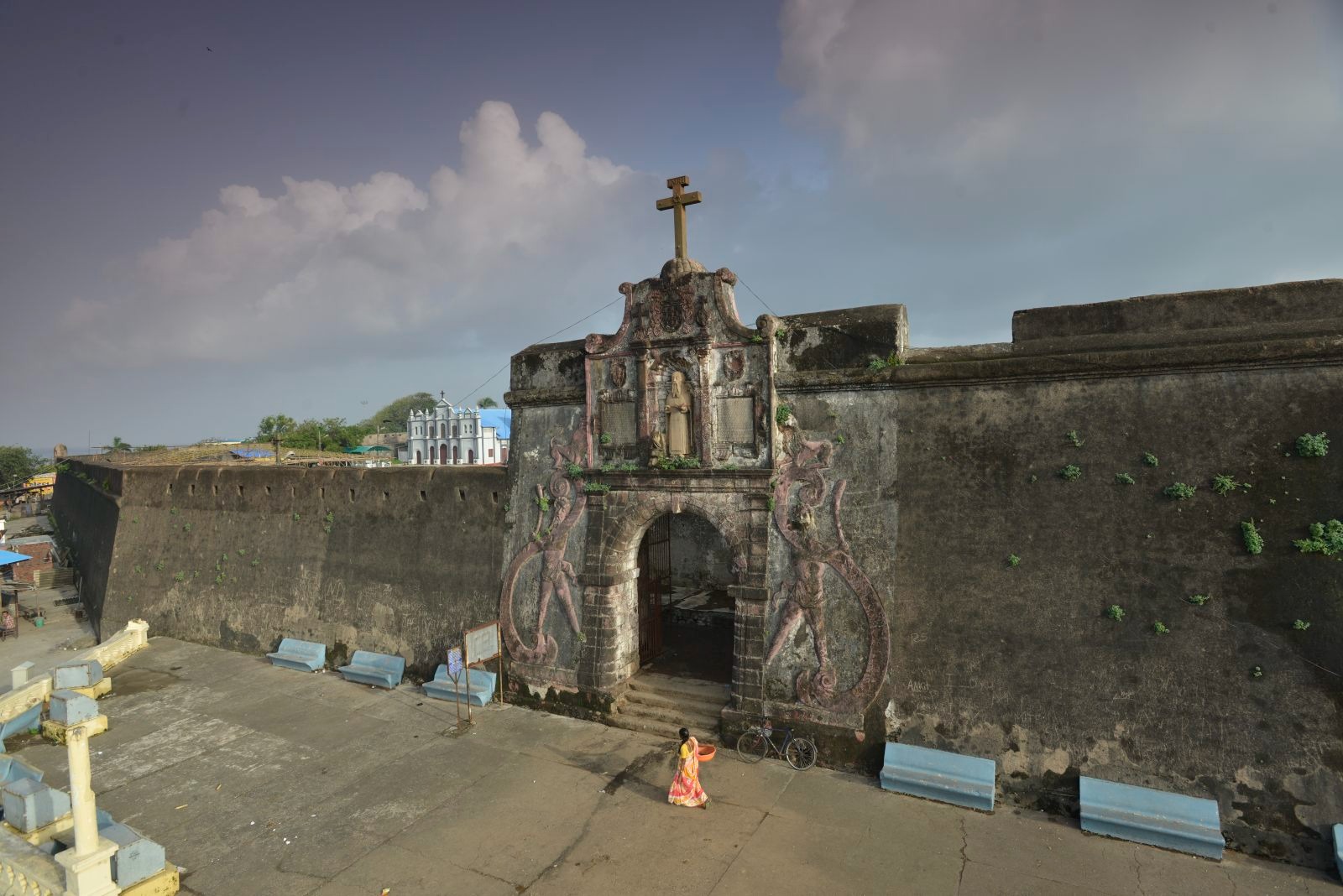
Moti Daman Fort is one of the most remarkable reminders of Portuguese rule along India’s western coastline. Standing proudly in the coastal town of Daman, the fort reflects centuries of history, colonial ambition, and architectural brilliance. Built by the Portuguese in 1559 after they captured Daman, the fort was designed to protect their growing trade network in the Arabian Sea and defend the settlement from rival powers and sea invasions.
Even today, the massive stone walls, old gateways, and quiet colonial streets inside the fort create an atmosphere that feels frozen in time. Unlike many historical forts that have lost their original character, Moti Daman Fort still retains much of its old-world charm, making it one of the most fascinating heritage sites in western India.
History of Moti Daman Fort
The Portuguese arrived in Daman during the 16th century when European powers were competing for control over maritime trade routes in India. Recognizing Daman’s strategic location on the Arabian Sea, they transformed it into an important naval and commercial center. To secure their territory, the Portuguese constructed the fort over several years, turning it into a heavily fortified settlement.
The fort served not only as a military stronghold but also as an administrative headquarters for Portuguese officials. It housed government offices, soldiers’ quarters, warehouses, and religious institutions. During its peak, the fort was bustling with traders, missionaries, sailors, and military officers.
For more than four centuries, Daman remained under Portuguese control until it became part of India in 1961. Today, the fort stands as a powerful symbol of that colonial era and offers visitors a glimpse into the region’s layered past.
Architecture and Design
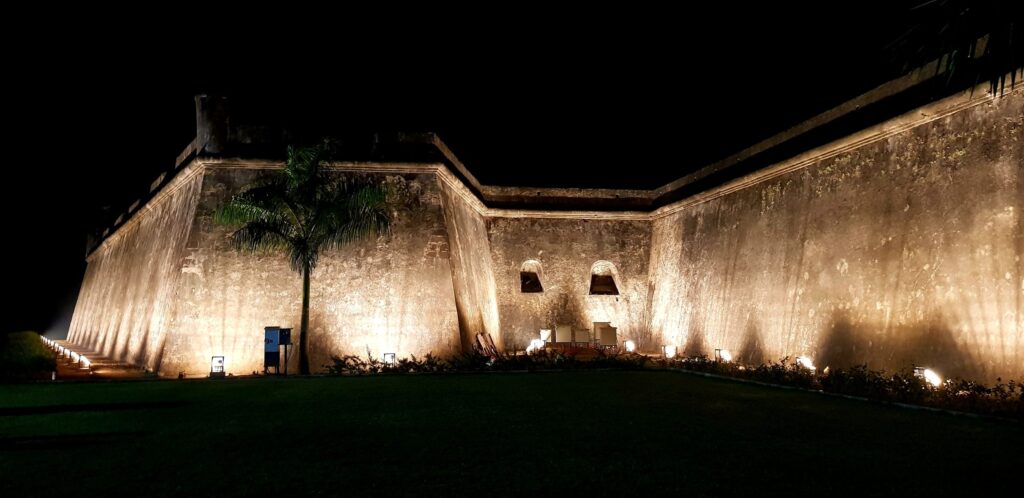
One of the most striking aspects of Moti Daman Fort is its impressive Portuguese military architecture. Spread across nearly 30,000 square meters, the fort is shaped like an irregular polygon and is surrounded by strong stone ramparts. It features ten bastions that were once equipped with cannons to defend the coast from enemy attacks.
The walls are thick and sturdy, showcasing the engineering techniques used during the colonial period. The fort’s massive gateways, narrow lanes, and defensive structures reveal how carefully it was planned for security and surveillance.
Inside the fort complex, visitors can still find several colonial-era buildings that preserve their Portuguese style. Arched windows, wooden balconies, old administrative buildings, and weathered stone pathways create a unique blend of European and Indian influences. Walking through the fort almost feels like stepping into a historical Portuguese town preserved within India.
Churches Inside the Fort
The fort is also known for its beautiful churches, which add spiritual and cultural depth to the site. Among the most famous are the Church of Bom Jesus and the Church of Our Lady of the Rosary.
These churches are excellent examples of Baroque-style architecture and are admired for their intricately carved wooden altars, decorative interiors, and religious artwork. The Portuguese placed great importance on spreading Christianity in their colonies, and these churches became important centers of worship and community life.
Even today, religious ceremonies and prayers are conducted here, making them active spiritual landmarks rather than just historical monuments. Visitors often admire the peaceful atmosphere and artistic craftsmanship preserved within these sacred structures.
Present-Day Experience
Today, Moti Daman Fort attracts history lovers, photographers, architecture enthusiasts, and travelers looking to experience a quieter side of coastal India. Although certain parts of the fort have weathered with time, much of the structure remains intact and open for exploration.
A walk along the ramparts offers stunning views of the Arabian Sea, nearby fishing settlements, and the scenic surroundings of Daman. The sea breeze, swaying coconut trees, and calm environment make the fort an ideal place for relaxed sightseeing.
Unlike crowded tourist attractions, the fort has a peaceful charm that allows visitors to appreciate its history at a leisurely pace. Early mornings and evenings are especially beautiful, when sunlight reflects off the old stone walls and creates a picturesque setting.
The area around the fort also features small cafes, local markets, and colonial-style streets that enhance the overall travel experience.
Best Time to Visit
The ideal time to visit Moti Daman Fort is between October and March, when the weather remains pleasant and comfortable for sightseeing. Winters are particularly enjoyable because of the cool sea breeze and clear skies.
The monsoon season also gives the fort a lush and dramatic appearance, though heavy rainfall may make exploration slightly difficult. Summers can be hot and humid due to the coastal climate.
How to Reach Moti Daman Fort
Moti Daman Fort is well connected by road, rail, and air, making it easily accessible from major cities in western India.
The nearest railway station is Vapi Railway Station, located around 12 kilometers from Daman. Vapi lies on the busy Mumbai–Delhi railway route and has regular train connectivity with cities such as Mumbai, Surat, Ahmedabad, and Vadodara.
From Vapi, visitors can hire taxis, auto-rickshaws, or local buses to reach the fort comfortably.
The nearest airport is Surat Airport, approximately 120 kilometers away. Travelers can also use Chhatrapati Shivaji Maharaj International Airport in Mumbai, which is around 170 kilometers from Daman.
Road travel is another convenient option, as Daman enjoys excellent connectivity through national highways. Frequent buses and private taxis operate from Mumbai, Surat, Vadodara, and nearby cities. Within Daman, local transport such as taxis and auto-rickshaws are easily available for sightseeing.
Nearby Attractions
Visitors exploring Moti Daman Fort can also discover several nearby attractions in Daman, including beaches, churches, and gardens. Popular spots include Devka Beach, Jampore Beach, and the scenic Daman Ganga River waterfront.
Together, these attractions make Daman an appealing destination for travelers interested in history, coastal scenery, and colonial heritage.
Google Maps
FAQs
1. Why is Moti Daman Fort famous?
Moti Daman Fort is famous for its Portuguese colonial architecture, massive fortifications, historic churches, and scenic coastal location. It is considered one of the most important heritage landmarks in Daman.
2. Who built Moti Daman Fort?
The fort was built by the Portuguese in 1559 after they conquered Daman to strengthen their control over maritime trade routes.
3. Are visitors allowed inside the fort?
Yes, large sections of the fort are open to visitors. Tourists can walk through the old streets, explore the churches, and enjoy views from the ramparts.
4. What is the best time to visit Moti Daman Fort?
The best time to visit is from October to March when the weather is cooler and more pleasant for sightseeing.
5. How far is Moti Daman Fort from Vapi Railway Station?
The fort is located about 12 kilometers from Vapi Railway Station and can be reached easily by taxi or auto-rickshaw.
6. Are there any churches inside the fort?
Yes, the fort houses famous churches such as the Church of Bom Jesus and the Church of Our Lady of the Rosary, both known for their beautiful Portuguese-style architecture.
7. Is Moti Daman Fort suitable for photography?
Absolutely. The fort’s colonial structures, sea views, ancient walls, and peaceful surroundings make it a great location for photography and heritage exploration.