Image Source: ddd.gov.in
About St. Jerome Fort
Nestled along the banks of the Daman Ganga River in Daman, St. Jerome Fort is one of the most recognizable reminders of the region’s Portuguese past. Locally known as Nani Daman Fort, this historic structure may be smaller than the famous Moti Daman Fort, but it possesses a charm and character entirely of its own. With its riverside setting, old stone walls, colonial architecture, and peaceful atmosphere, the fort continues to attract travelers interested in history, culture, photography, and architecture.
Built during the Portuguese colonial era, the fort once played an important role in protecting Daman from invasions and maintaining Portuguese control over important maritime trade routes along the Arabian Sea. Today, it stands not as a military outpost, but as a fascinating heritage monument that reflects centuries of cultural blending between European and Indian traditions.
History of St. Jerome Fort
The construction of St. Jerome Fort began in 1614 under Portuguese rule. At the time, the Portuguese were strengthening their coastal defenses across western India to protect their settlements from attacks by the Mughals and competing European powers. Daman was strategically important because of its location on the Arabian Sea and its access to trade networks, making defensive forts essential for securing Portuguese influence in the region.
The fort was named after St. Jerome, a respected Christian saint and scholar known for translating the Bible into Latin. The dedication reflects the strong religious influence that accompanied Portuguese governance in India. During this period, religion and administration often went hand in hand, and many forts, churches, and public structures carried religious symbolism.
Over the centuries, the fort witnessed changing political landscapes, maritime trade activities, and the gradual decline of Portuguese colonial power in India. Even after Portuguese rule ended in the 20th century, the fort remained an important historical landmark and continues to preserve memories of Daman’s colonial past.
Architecture and Design
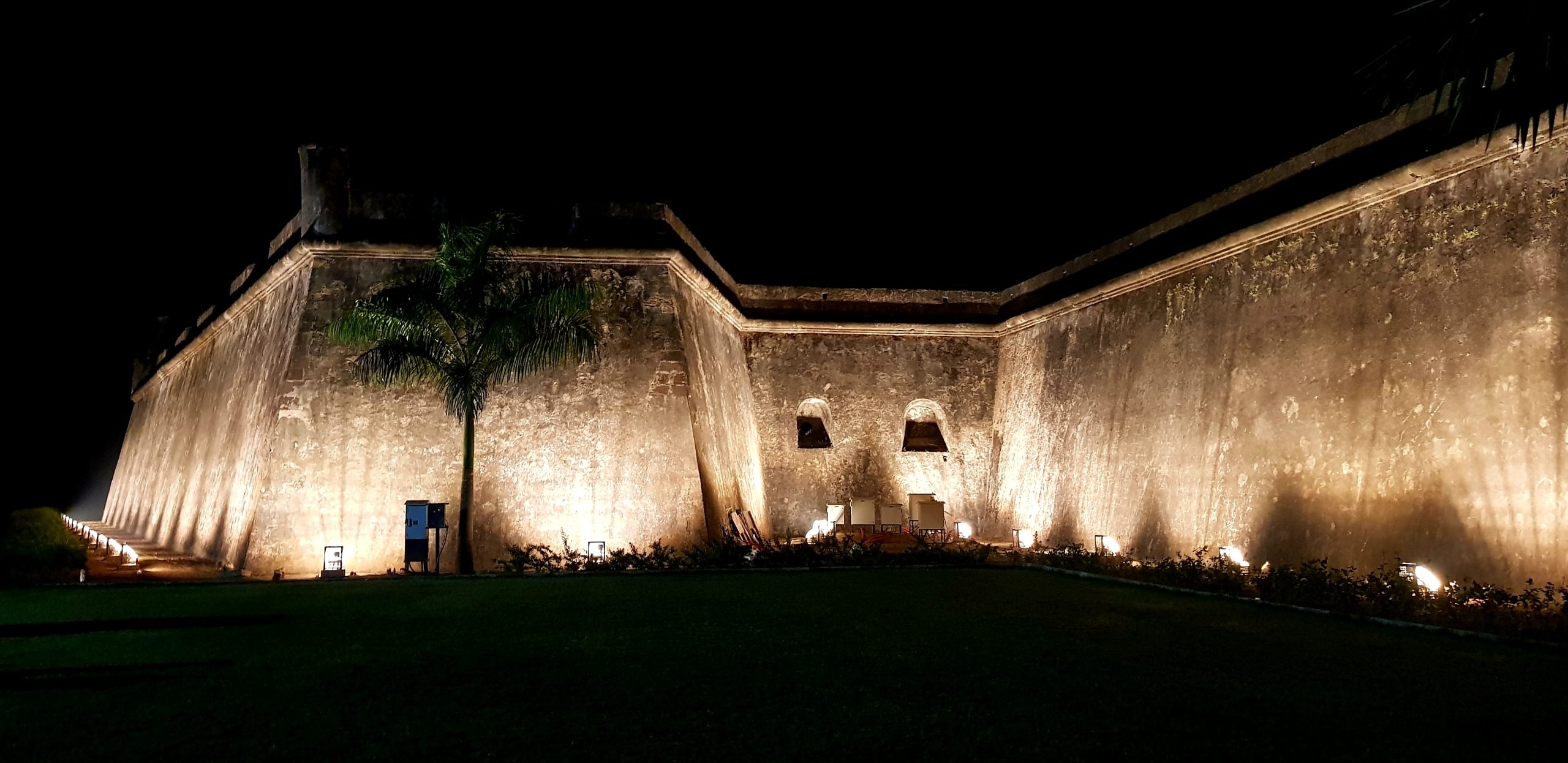
Although smaller than Moti Daman Fort, St. Jerome Fort is admired for its elegant Portuguese military architecture. The fort is enclosed by sturdy stone walls and defensive bastions that once guarded the riverfront against enemy attacks. Its strategic position allowed Portuguese soldiers to monitor movements along the Daman Ganga River and nearby coastal areas.
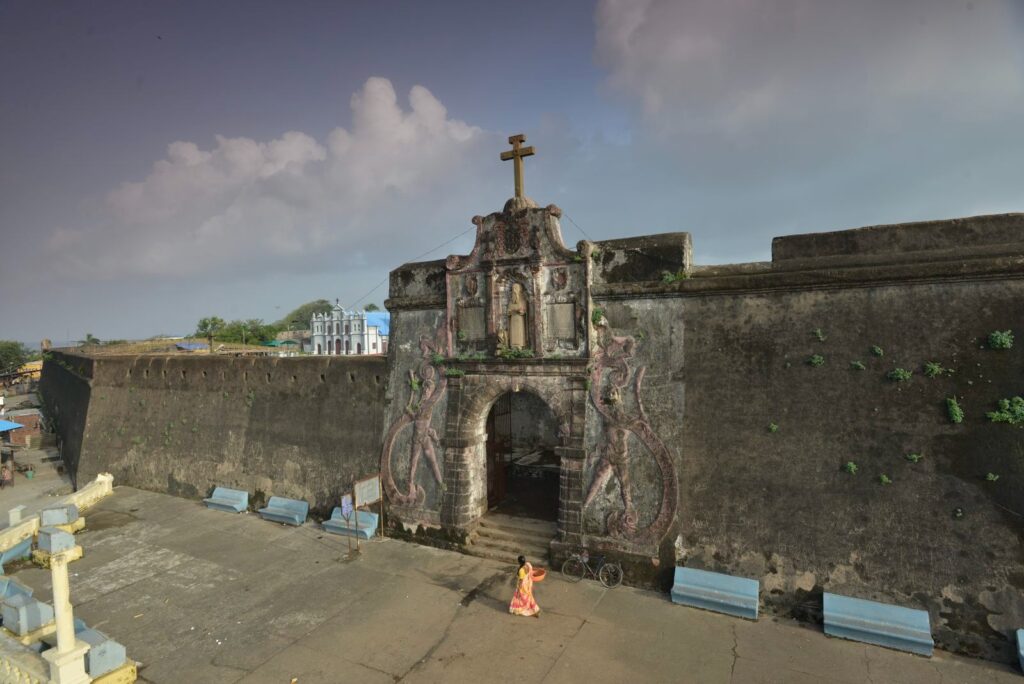
One of the most striking features of the fort is its massive entrance gateway facing the river. The gateway immediately catches the eye with its impressive design and the statue of St. Jerome placed prominently above it. This grand entrance reflects the artistic and religious influences of Portuguese architecture in India.
Inside the fort, visitors can still see traces of old administrative buildings, barracks, storage spaces, and other colonial-era structures. Though many parts have weathered with time, the fort retains its historic atmosphere and architectural beauty.
Another major highlight inside the complex is the Church of Our Lady of the Sea. The church showcases beautiful Baroque-style influences, especially in its altar and interior decorations. The peaceful surroundings and old-world charm of the church make it one of the most admired spots within the fort.
The fort also offers scenic views of the river, nearby fishing boats, and the surrounding town. During sunrise and sunset, the riverside landscape becomes especially picturesque, making the location popular among photographers and travelers seeking quiet moments away from crowded tourist spots.
Cultural and Religious Importance
St. Jerome Fort is more than just a military structure. It also represents the cultural and spiritual legacy left behind by the Portuguese in Daman. The presence of the Church of Our Lady of the Sea inside the fort highlights how religion played a central role in Portuguese settlements.
Even today, the church remains active and continues to attract worshippers as well as tourists. Religious festivals and church gatherings occasionally bring the fort area to life with local traditions and celebrations.
The fort also symbolizes the blending of cultures that shaped Daman over centuries. Portuguese architecture, Indian coastal traditions, Christian heritage, and local Gujarati influences all coexist in this historic space. This cultural fusion is visible not only in the buildings but also in the lifestyle, cuisine, and traditions of Daman itself.
Present-Day Experience
Today, St. Jerome Fort is one of the most visited heritage attractions in Daman. Travelers often come here to enjoy its peaceful environment, historical ambiance, and scenic river views. Unlike many crowded tourist sites, the fort offers a calm and relaxed atmosphere where visitors can walk along old pathways, admire colonial architecture, and explore the riverside surroundings at leisure.
Photography enthusiasts particularly enjoy capturing the massive gateway, ancient walls, church interiors, and colorful fishing boats along the riverbank. The fort is also a favorite spot for history lovers interested in Portuguese-era architecture and colonial history.
Because of its location in Nani Daman, the fort is surrounded by local markets, seafood restaurants, and promenades, allowing travelers to combine sightseeing with local cultural experiences. Evening walks near the fort are especially pleasant as cool sea breezes flow through the riverside area.
Best Time to Visit
The best time to visit St. Jerome Fort is between October and March, when the weather in Daman remains relatively cool and comfortable. During these months, sightseeing becomes more enjoyable, especially during mornings and evenings.
Monsoon season also adds beauty to the fort and surrounding landscape, as the greenery becomes more vibrant and the river appears fuller. However, heavy rains can sometimes affect outdoor exploration.
Summer months can be hot and humid due to Daman’s coastal climate, so early morning visits are generally recommended during that time.
How to Reach St. Jerome Fort
St. Jerome Fort is located in Nani Daman and is easily accessible from different parts of the town.
The nearest railway station is Vapi, situated around 12 kilometers away. Vapi is well connected by rail to major cities such as Mumbai, Surat, and Ahmedabad. From the station, visitors can hire taxis, auto-rickshaws, or local buses to reach the fort.
The nearest airport is in Surat, approximately 120 kilometers away, while Mumbai’s international airport is located around 170 kilometers from Daman.
Daman is also well connected by road through highways linking it to Gujarat and Maharashtra. Regular buses and private taxis operate from Mumbai, Surat, Vadodara, and nearby cities. Once inside Daman, local transport options make it easy to visit the fort and nearby attractions.
Nearby Attractions
Travelers visiting St. Jerome Fort often explore other attractions in Daman as well. Some popular nearby places include:
- Moti Daman Fort.
- Devka Beach.
- Jampore Beach.
- Bom Jesus Church.
- Dominican Monastery.
These attractions together provide a deeper understanding of Daman’s colonial history, coastal beauty, and cultural heritage.
Google Maps
FAQs
1. Why is St. Jerome Fort famous?
St. Jerome Fort is famous for its Portuguese-era architecture, historic gateway, riverside setting, and the Church of Our Lady of the Sea located inside the fort complex.
2. Who built St. Jerome Fort?
The fort was built by the Portuguese in the early 17th century to strengthen their defenses in Daman against invasions and rival powers.
3. Is St. Jerome Fort different from Moti Daman Fort?
Yes, St. Jerome Fort is located in Nani Daman and is smaller in size compared to the larger Moti Daman Fort, though both are important colonial-era landmarks.
4. What is the best time to visit the fort?
The ideal time to visit is from October to March, when the weather remains pleasant for sightseeing and photography.
5. How far is St. Jerome Fort from Vapi Railway Station?
The fort is approximately 12 kilometers from Vapi Railway Station and can be reached easily by taxi, bus, or auto-rickshaw.
6. Is there an entry fee for St. Jerome Fort?
Entry policies may change over time, but the fort is generally accessible to visitors and remains one of the most popular heritage attractions in Daman.
7. Can visitors explore the church inside the fort?
Yes, visitors can usually explore the Church of Our Lady of the Sea, which remains an important religious and historical structure within the fort complex.