Image Source: ASHIS GHOSH
About Taranda Mata Temple
Nestled along the dramatic cliffs of the Hindustan–Tibet Road in Kinnaur, Himachal Pradesh, Taranda Mata Temple is one of the most revered roadside shrines in the region. Perched above the roaring Satluj River, the temple is not only a place of worship but also a symbol of faith, protection, and the enduring relationship between local traditions and modern infrastructure.
Thousands of travelers heading toward Kinnaur, Sangla Valley, Kalpa, and Spiti stop here to seek the blessings of Taranda Mata before continuing their journey through the rugged Himalayan terrain. The temple’s unique location, carved into a steep mountainside, makes it one of the most fascinating spiritual landmarks on the Hindustan–Tibet Highway.
The Legend Behind Taranda Mata Temple
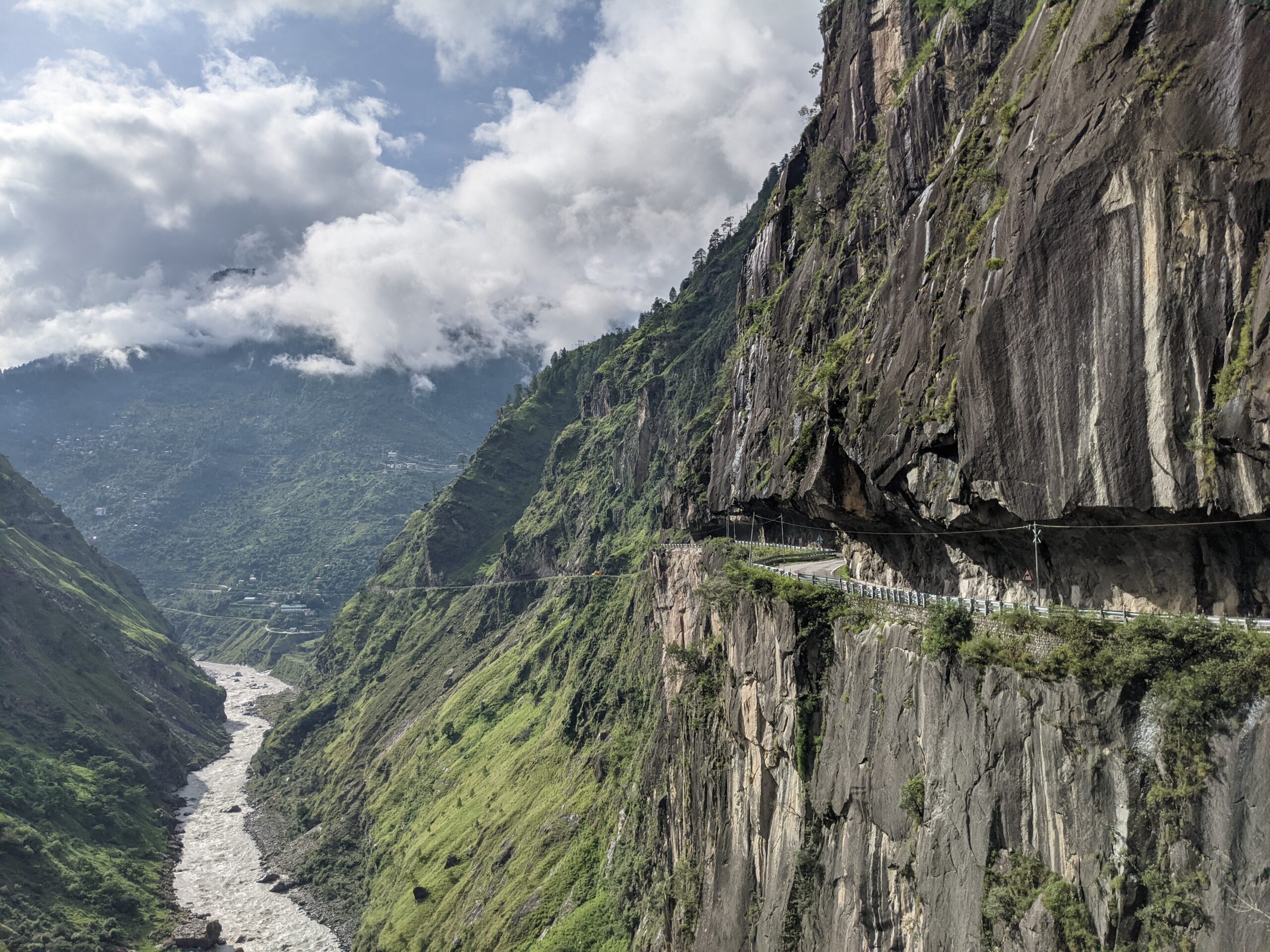
The story of Taranda Mata Temple dates back to the construction of the historic Hindustan–Tibet Road. Building a road through the deep gorges and towering cliffs of the Satluj Valley was an enormous engineering challenge. Workers had to cut through solid rock faces, often working in dangerous conditions where landslides and rockfalls were common.
During the early 1960s, after the India-China War of 1962, the Government of India recognized the strategic importance of improving connectivity to the border regions. In 1963, the Border Roads Organisation (BRO), under the GREF (General Reserve Engineer Force), began major road construction work in this section of Kinnaur.
However, the project was plagued by frequent accidents. Workers repeatedly lost their lives due to falling rocks and difficult terrain. Concerned by the rising number of casualties, BRO officials sought advice from local villagers.
According to local belief, the accidents occurred because the area was the sacred abode of Maa Chandralekha, a powerful local deity whose divine energy resided in the mountains. Villagers suggested that a temple dedicated to the goddess should be established at the construction site to seek her blessings and protection.
Accepting the advice, an idol of the goddess was brought from Taranda Village near Nigulsari, and a shrine was built along the highway. Local folklore says that after the temple was established, the fatal accidents significantly reduced, strengthening the faith of both workers and residents in the protective powers of Taranda Mata.
Spiritual Importance of the Temple
For the people of Kinnaur, Taranda Mata is regarded as a guardian deity who watches over travelers navigating the challenging mountain roads. Drivers, pilgrims, tourists, and local residents routinely stop at the temple to offer prayers for a safe and successful journey.
It is common to see vehicles briefly halt outside the temple while passengers bow their heads in reverence. Many truck drivers and bus operators who frequently travel the route consider it auspicious to seek the goddess’s blessings before entering the narrow and landslide-prone stretches of the highway.
The Temple’s Scenic Setting
One of the most remarkable aspects of Taranda Mata Temple is its breathtaking location. The shrine sits against a towering rock face overlooking the deep Satluj Gorge. From the temple, visitors can enjoy spectacular views of the valley, steep mountain slopes, and the winding Hindustan–Tibet Road below.
The dramatic landscape creates a unique blend of spirituality and natural beauty, making the temple a popular stop for photographers and travelers exploring Kinnaur.
Connection with Taranda Village
Although the current temple stands beside the highway, the original connection of the deity remains with Taranda Village near Nigulsari. The sacred chariot (rath) of Devi Chandralekha is still preserved in the village and plays an important role during local religious ceremonies and festivals.
This continuing connection highlights the deep cultural roots of the deity and her significance in the traditions of the Kinnauri people.
Best Time to Visit Taranda Mata Temple
The temple can be visited throughout the year, but the best time is between April and October when weather conditions are favorable and road access is relatively easy. During winter, snowfall and occasional landslides may affect travel in parts of Kinnaur.
Travelers heading to Sangla, Chitkul, Kalpa, Reckong Peo, or Spiti Valley often include a stop at the temple as part of their journey.
How to Reach Taranda Mata Temple
Taranda Mata Temple is located on National Highway 5 (formerly NH-22), approximately 15–20 km from Bhabanagar and around 70 km from Reckong Peo in Kinnaur district.
By Road: Regular buses and taxis connect Shimla with Kinnaur via the Hindustan–Tibet Road. The temple is situated directly beside the highway and is easily accessible by private vehicles.
By Rail: The nearest major railway station is Shimla Railway Station. From there, travelers can continue by road.
By Air: The nearest airport is Shimla Airport at Jubbarhatti. From the airport, taxis and buses are available toward Kinnaur.
Maps
FAQs
1. Where is Taranda Mata Temple located?
Taranda Mata Temple is located on the Hindustan–Tibet Road (NH-5) in Kinnaur district of Himachal Pradesh, overlooking the Satluj River Valley.
2. Why is Taranda Mata Temple famous?
The temple is famous for its unique history linked to the construction of the Hindustan–Tibet Road and for being considered a protector of travelers journeying through Kinnaur.
3. Who is worshipped at Taranda Mata Temple?
The temple is dedicated to Maa Chandralekha, locally known as Taranda Mata, a revered deity of the Kinnaur region.
4. What is the story behind the temple?
According to local belief, the temple was built after repeated accidents during road construction. After the shrine was established, fatal accidents reportedly decreased, strengthening faith in the goddess.
5. Is Taranda Mata Temple a popular stop for travelers?
Yes. Most travelers heading to Kinnaur, Sangla Valley, Kalpa, Chitkul, and Spiti stop here to seek blessings for a safe journey.
6. Can tourists visit the temple?
Yes. The temple is open to visitors and is easily accessible from the highway.
7. What are the main attractions near the temple?
Nearby attractions include Nigulsari, Bhabanagar, Karcham, Sangla Valley, Chitkul, Kalpa, and the scenic Satluj River Gorge.
8. What is the best time to visit Taranda Mata Temple?
April to October is considered the best time due to pleasant weather and better road conditions.
9. Is photography allowed at the temple?
Photography is generally allowed around the temple and surrounding viewpoints, though visitors should respect local customs and worshippers.
10. Does the original deity still have connections to Taranda Village?
Yes. The sacred chariot of Devi Chandralekha remains in Taranda Village near Nigulsari and continues to be used during traditional religious events.