Image Source: Tarun Panwar/ Google Maps
Introduction
Perched on a wooded hillside overlooking the Kullu Valley, Naggar Castle is one of the most fascinating historical landmarks in Himachal Pradesh. Located in the historic village of Naggar, between Kullu and Manali, the castle brings together royal history, traditional Himalayan architecture, and sweeping views of the surrounding mountains.
Once associated with the rulers of the former Kullu kingdom, Naggar Castle is now operated as a heritage hotel by the Himachal Pradesh Tourism Development Corporation (HPTDC). Even if you are not planning to stay overnight, the castle is worth visiting for its traditional timber and stone construction, historic interiors, and elevated views of the valley.
History
Naggar Castle is generally dated to around the 15th or 16th century and is traditionally associated with Raja Sidh Singh of Kullu. Naggar itself played an important role in the history of the Kullu kingdom. Before the capital was transferred to Sultanpur, in present day Kullu town, Naggar served as the seat of the kingdom’s administration. The transfer is associated with Raja Jagat Singh in the 17th century.
The castle’s position above the Beas Valley was both practical and impressive. From this hillside settlement, the rulers could oversee much of the surrounding countryside and maintain connections with nearby villages and routes through the mountains. Local tradition also connects the castle’s construction with stone brought from an older fort across the valley, although such accounts are best understood as part of the region’s oral history.
Over time, Naggar lost its position as the political centre of Kullu, but its historic buildings and temples preserved the memory of its royal past. The castle was eventually taken over by the Himachal Pradesh Tourism Development Corporation in 1978 and converted into a heritage hotel. It continues to be one of the most recognisable examples of the region’s traditional architecture.
Unique Himalayan Architecture
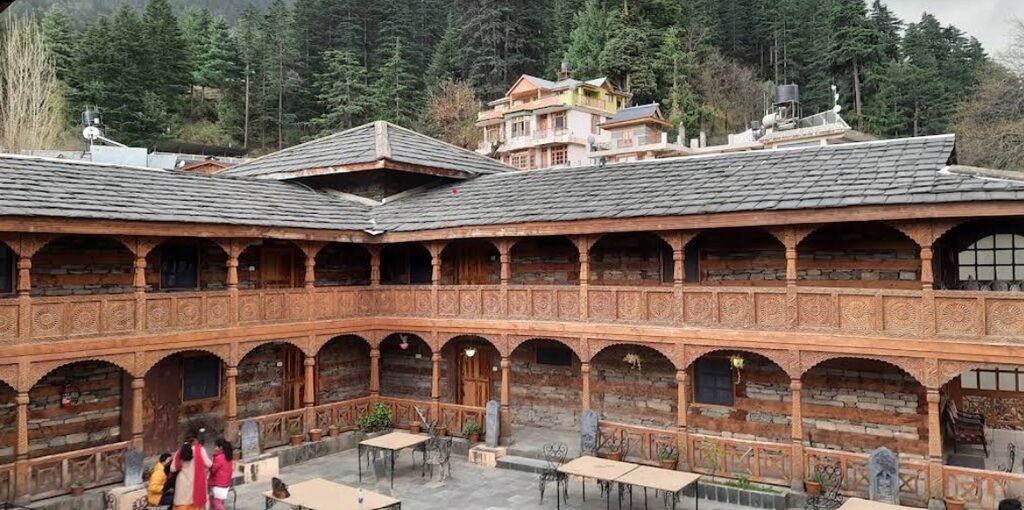
Naggar Castle is particularly notable for its traditional Kath Kuni architecture, a construction technique found in parts of the western Himalayas. It uses alternating courses of timber and stone, with the wooden beams helping to bind the structure together. Local materials and construction methods made this style suitable for mountain conditions, where buildings must cope with cold weather, heavy rain, snow, and seismic activity.
The castle’s most distinctive features include thick stone and timber walls, wooden balconies, carved architectural details, and sloping roofs. Rather than relying on elaborate ornamentation alone, the building’s beauty comes from the way its materials are assembled and the craftsmanship visible in its wooden elements.
Kath Kuni construction is also valued for its ability to accommodate some movement during earthquakes, although the performance of any individual building depends on its condition, design, and maintenance. The castle’s survival through the centuries makes it an important example of the traditional building knowledge developed in the Himalayan region.
From outside, the structure has a solid, almost fortress like appearance. Inside, the timber work and balconies create a warmer, more intimate atmosphere. The contrast between rugged stone, dark wood, and the green mountain landscape gives Naggar Castle a character quite different from the colonial era buildings found in Shimla and other hill stations.
Cultural and Artistic Importance
Naggar Castle is part of a wider cultural landscape that makes Naggar worth exploring beyond a quick visit to the building itself. The village has several historic temples, including Gauri Shankar Temple, Tripura Sundari Temple, and Vasuki Nag Temple. These sites reflect the religious traditions and craftsmanship that have shaped life in the Kullu Valley over generations.
Naggar is also closely associated with the Russian artist Nicholas Roerich, who settled in the area in the early 20th century. Drawn to the Himalayan landscape, Roerich produced paintings inspired by the mountains, valleys, and spiritual atmosphere of the region. His former residence is now the Nicholas Roerich Art Gallery and Museum, where visitors can see his paintings and learn about his life and work.
The castle and Roerich’s former home represent two different aspects of Naggar’s heritage: one rooted in the political and architectural history of the Kullu rulers, and the other in the village’s later role as a place of artistic inspiration. Visiting both gives travellers a fuller understanding of why Naggar has attracted historians, artists, and visitors from outside the valley.
Scenic Views and Surroundings
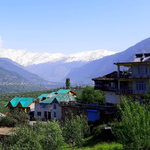
One of the main pleasures of visiting Naggar Castle is the view from its elevated position above the Beas Valley. The castle’s balconies and surrounding areas offer glimpses of the river, terraced fields, orchards, villages, and forested slopes. On clear days, distant Himalayan peaks form an impressive backdrop.
The landscape changes with the seasons. During spring and summer, the hills become greener, and orchards and cultivated fields bring colour to the valley. After the monsoon, the air can be particularly clear, although cloud and rain may still affect visibility. In winter, snow may appear on the higher mountains, while the lower valley can remain comparatively snow free.
For photographers, the castle offers opportunities to capture both architectural details and the broader landscape. It is also a rewarding stop for travellers who prefer places where history and scenery come together. However, views depend on weather and visibility, so a clear panorama is never guaranteed.
Visiting the Castle
Today, Naggar Castle functions as an HPTDC heritage hotel, with accommodation and a restaurant. Visitors who are not staying overnight can generally explore designated areas of the property, subject to current entry arrangements and hotel operations. Access to particular rooms or sections may vary, so it is sensible to confirm the latest visitor rules before travelling.
Inside, look for the combination of timber and stone, traditional wooden details, balconies, and the castle’s courtyard. A small shrine is also associated with the complex. Rather than expecting a large museum filled with extensive displays, approach the visit as an opportunity to experience a historic Himalayan building and observe how its construction relates to the surrounding landscape.
The restaurant can make the castle a pleasant place to pause during a day trip around Naggar. You can combine the visit with the nearby Nicholas Roerich Art Gallery and the village’s historic temples. Allow extra time if you enjoy architecture, photography, or walking through the older lanes of Naggar.
Remember that the castle is also a functioning hotel. Respect guest privacy, follow any restrictions on photography, and avoid entering areas that are closed to visitors.
How to Reach Naggar Castle
Naggar Castle is located in Naggar village on the left bank of the Beas River, above the valley floor. It is approximately 25 to 27 km from Kullu and around 20 to 22 km from Manali, depending on the starting point and route. The drive from Manali follows the Kullu Valley road network, with the final approach climbing towards Naggar.
By Road
Travelling by road is the most convenient way to reach the castle. Local buses and other public transport services connect settlements in the Kullu Valley, but not every service will stop directly at the castle. If you are using a bus, confirm the stop and onward walking distance before boarding.
Taxis can be hired from Kullu or Manali. Fares vary according to the season, traffic, vehicle type, and whether the driver is hired for a one way transfer or a longer sightseeing trip. Treat any fare quoted before travel as an estimate and confirm the price with the driver.
Once you reach Naggar, the castle is easy to identify near the village road. Depending on where your vehicle stops, a short walk may be required.
By Air
The nearest airport serving the region is Kullu Manali Airport at Bhuntar. The onward road distance to Naggar is often quoted differently by different sources and can vary with the route, so check the actual journey distance before making plans. Taxis are the most practical option for continuing from the airport to Naggar.
By Train
There is no broad gauge railway station in Naggar or Manali. Travellers arriving by train generally continue by road from a suitable railway station, such as Chandigarh, depending on their wider itinerary. The road journey into the Kullu Valley takes several hours, so allow sufficient time, particularly during busy holiday periods or poor weather.
Best Time to Visit
Naggar Castle can be visited throughout much of the year, but March to June is a popular period for pleasant daytime temperatures, greener scenery, and exploring the village on foot. This is also a busy travel season in the wider Manali region.
September to November can be rewarding for travellers seeking post monsoon landscapes and clearer mountain views. Conditions vary from year to year, and rain, cloud, or early snowfall can affect visibility and road travel.
Winter offers a different atmosphere, with cold mornings and the possibility of snow on surrounding peaks. Snowfall at the castle itself is not guaranteed. If you visit during winter, carry warm clothing and check road and weather conditions before setting out.
Whenever you travel, try to leave enough time to explore Naggar beyond the castle. The village’s temples, traditional houses, and Roerich Art Gallery make it a worthwhile destination in its own right rather than merely a stop between Kullu and Manali.
Conclusion
Naggar Castle is a remarkable meeting point of royal history, traditional Himalayan architecture, and natural beauty. Once associated with the rulers of the Kullu kingdom, it now offers visitors a chance to experience a historic timber and stone building that remains part of the living heritage of the valley.
For travellers exploring Kullu and Manali, the castle is an opportunity to slow down and discover another side of the region. Combine its balconies and architectural details with the nearby temples and Nicholas Roerich Art Gallery, and Naggar becomes more than a scenic detour: it becomes a window into the history, craftsmanship, and cultural life of the Kullu Valley.