Image Source: Meinal
About Vittala Temple
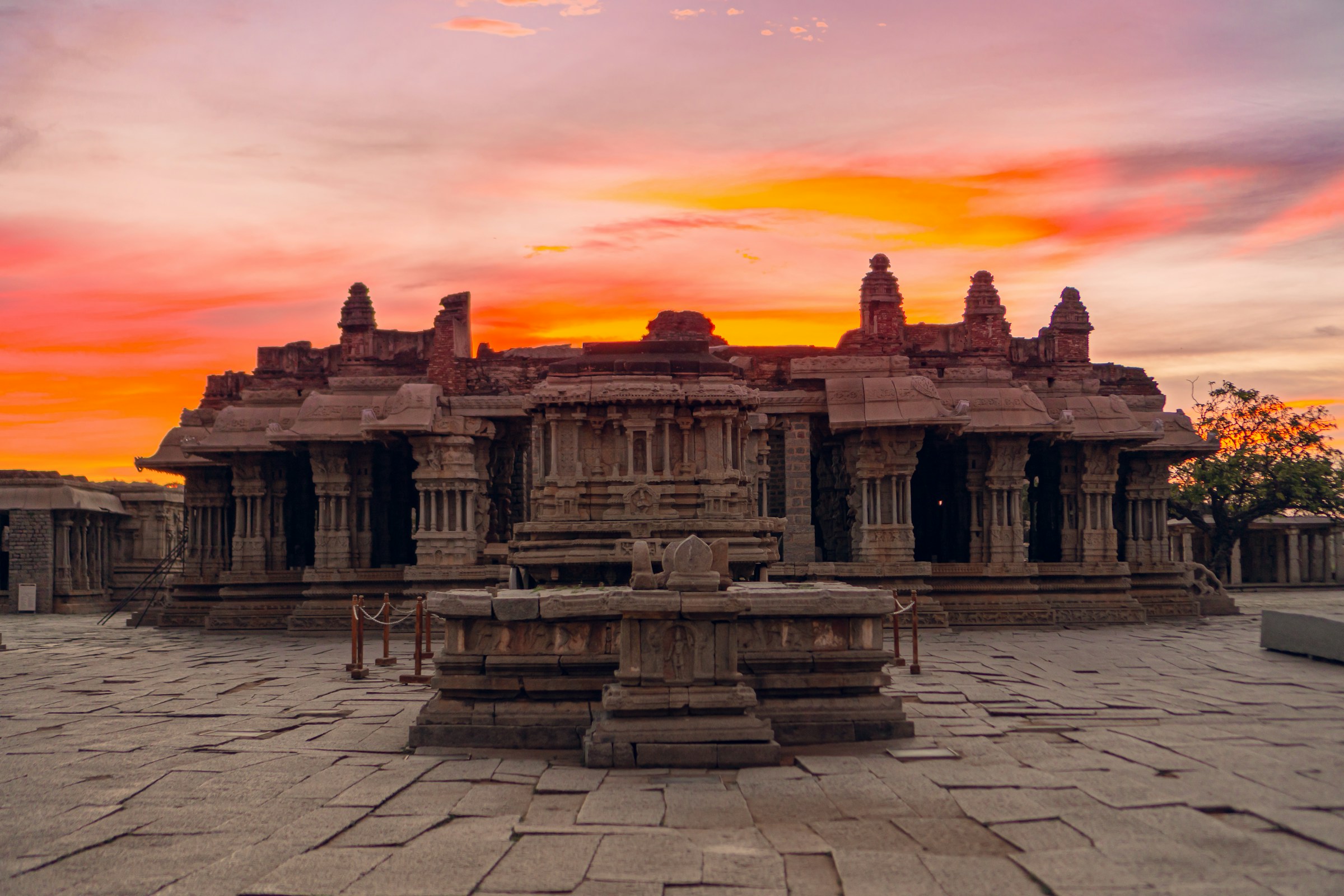
Among the many breathtaking ruins of Hampi, the Vittala Temple stands out as a true masterpiece of Vijayanagara architecture. Set along the southern banks of the Tungabhadra River, this temple is dedicated to Vishnu in his form as Vittala.
What makes this temple so special isn’t just its size or history—it’s the incredible craftsmanship, the iconic stone chariot, and the mysterious musical pillars that continue to fascinate visitors even today. Walking through the complex feels like stepping into a time when art, devotion, and engineering came together in extraordinary ways.
History and Architectural Grandeur
The Vittala Temple dates back to the 15th century and was originally built during the reign of Devaraya II. Later, it was expanded and refined under the rule of Krishnadevaraya, who played a key role in shaping many of Hampi’s iconic structures.
The temple reflects the classic Dravidian style of architecture, with towering gateways (gopurams) facing multiple directions. The complex itself is vast, filled with beautifully carved halls, pavilions, and courtyards. Every structure within the परिसर (complex) carries intricate detailing—whether it’s mythological scenes, floral patterns, or depictions of daily life during the Vijayanagara period.
The Iconic Stone Chariot
One of the most recognizable symbols of Hampi is the stunning stone chariot located within the Vittala Temple complex. Carved entirely from granite, this chariot was originally designed as a shrine for Garuda, the divine vehicle of Lord Vishnu.
Set on a rectangular platform, the chariot is adorned with intricate carvings, including scenes that resemble mythical battles and royal processions. Traditionally, it was accompanied by sculpted horses, although today elephants stand beside it, adding to its visual appeal.
This chariot is so iconic that it has even been featured on Indian currency notes, making it one of the most celebrated monuments in the country.
The Fascinating Musical Pillars
Perhaps the most intriguing feature of the Vittala Temple is its famous musical pillars. Located in the main hall (Ranga Mandapa), there are 56 slender pillars, often referred to as the “SAREGAMA pillars.”
Each of these pillars is said to produce a distinct musical note when gently tapped. Though visitors are no longer allowed to touch them to preserve the structure, the mystery behind their acoustic design continues to amaze historians and engineers alike. It’s a brilliant example of how advanced and imaginative Vijayanagara craftsmanship truly was.
Exploring the Temple Complex
The Vittala Temple is not just about one or two attractions—it’s an entire world of architectural beauty waiting to be explored. As you walk around, you’ll come across:
- Kalyana Mandapa – A beautifully carved hall believed to have been used for ceremonial events.
- 100-pillared hall – Known for its symmetry and detailed carvings.
- Shrines and corridors – Featuring ornate pillars and serene spaces for reflection.
- Temple courtyards – Offering wide views of the surrounding ruins.
Every corner of the complex has something unique to offer, whether it’s a hidden carving or a grand structure.
Visitor Experience
Visiting the Vittala Temple is as much about the atmosphere as it is about the architecture. The open spaces, ancient stone structures, and quiet surroundings create a sense of timelessness. Early mornings and evenings are especially magical, with soft light enhancing the carvings and fewer crowds around.
It’s a must-visit for history lovers, photographers, and anyone curious about India’s rich cultural heritage.
Timings and Entry
- Timings: 8:30 AM to 5:30 PM.
- Entry: Included as part of the Hampi monuments ticket.
How to Reach Vittala Temple
The Vittala Temple, one of the most celebrated monuments in Hampi, is located in the northeastern part of the UNESCO World Heritage Site. Famous for its iconic Stone Chariot and musical pillars, the temple lies about 4 km from Virupaksha Temple and Hampi Bazaar.
By Air:
The nearest airport to Vittala Temple is Hubballi Airport, located approximately 165 km away. Travelers can also use Kempegowda International Airport in Bengaluru, about 340 km from Hampi. From the airport, taxis and buses are available to reach Hampi.
By Rail:
The closest railway station is Hosapete Junction (Hospet), situated around 13 km from Hampi. The station is well connected to major cities such as Bengaluru, Hyderabad, Goa, and Hubballi. From Hospet, visitors can hire taxis, auto-rickshaws, or take local buses to Hampi.
By Road:
Hampi is well connected by road to major cities in Karnataka and neighboring states. Regular KSRTC and private buses operate from Bengaluru, Hyderabad, and Hubballi to Hospet. From Hampi Bazaar, battery-operated vehicles are available to transport visitors to the Vittala Temple parking area.
From the parking zone, visitors must either walk approximately 1 km or use the eco-friendly electric carts provided by the authorities, as private vehicles are not permitted near the temple complex. The scenic pathway passes through ancient ruins and offers beautiful views of the Hampi landscape.
Nearby Attractions
A visit to Vittala Temple can easily be combined with several nearby attractions that showcase the grandeur of the Vijayanagara Empire:
- Stone Chariot – The iconic granite chariot within the temple complex and one of the most photographed landmarks in Hampi.
- King’s Balance – A historic stone structure where Vijayanagara kings were ceremonially weighed against gold and grains for charity.
- Purandaradasa Mantapa – Located on the banks of the Tungabhadra River, this site is associated with the renowned saint-composer Purandaradasa.
- Tungabhadra River – Enjoy picturesque views and traditional coracle rides along the river.
- Achyutaraya Temple – A magnificent temple known for its grand architecture and peaceful surroundings.
- Courtesans’ Street – The ancient market street leading to Achyutaraya Temple, offering a glimpse into Hampi’s vibrant past.
- Matanga Hill – One of the best spots in Hampi for sunrise and panoramic views of the ruins.
- Virupaksha Temple – Hampi’s most revered and continuously functioning temple dedicated to Lord Shiva.
- Hampi Bazaar – The historic marketplace that once thrived during the Vijayanagara era.
Travel Tips
- Visit early morning or late afternoon for the best experience.
- Wear comfortable footwear—there’s a lot of walking involved.
- Carry water, especially during warmer months.
- Consider hiring a guide to understand the deeper history and symbolism.
Map and Location of Vittala Temple
FAQs
1. Why is Vittala Temple famous?
It is famous for its extraordinary architecture, the iconic stone chariot, and the unique musical pillars.
2. Where is the temple located?
The temple is located in Hampi, Karnataka, on the banks of the Tungabhadra River.
3. Who built the Vittala Temple?
It was built during the reign of King Devaraya II and later expanded by Krishnadevaraya.
4. Can visitors play the musical pillars?
No, touching or tapping the pillars is now restricted to preserve the structure.
5. What is the stone chariot used for?
It was originally a shrine dedicated to Garuda, the vehicle of Lord Vishnu.
6. How much time is needed to explore the temple?
You should ideally spend 2–3 hours to fully explore the complex.