Image Source: Dineshkannambadi
About Tarakeshvara Temple
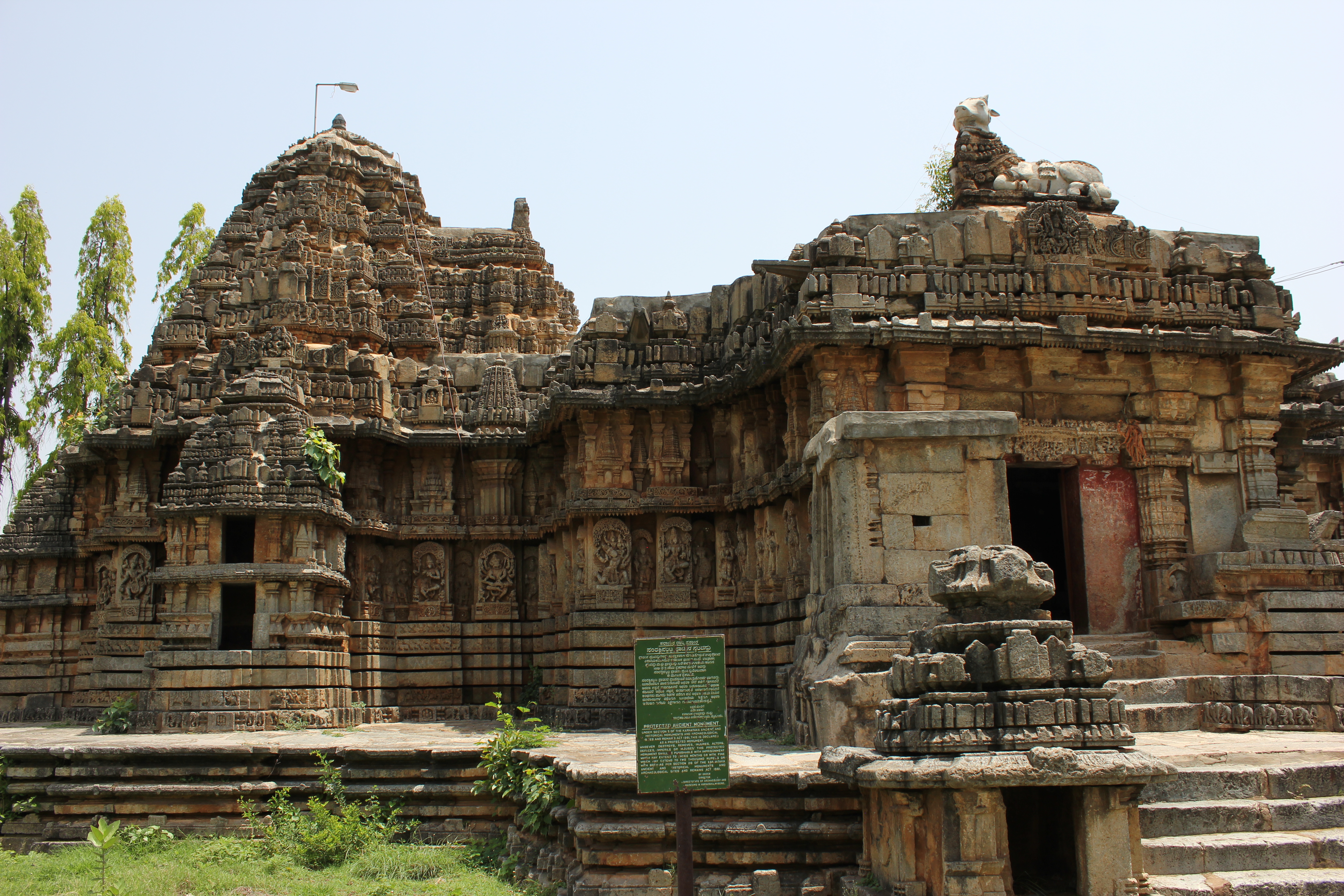
The Tarakeshvara Temple at Hangal in Haveri district, Karnataka, is one of the largest and most magnificent creations of the Western Chalukyas. Dedicated to Lord Shiva, this 12th-century temple is renowned for its massive scale, intricate carvings, and unique architectural features.
History
The Tarakeshvara Temple was constructed around the 12th century CE during the reign of the Western Chalukyas of Kalyana, who ruled much of the Deccan between the 10th and 12th centuries. Hangal, then known as Panungal, was a significant administrative and cultural hub under their rule. Inscriptions suggest that the temple received patronage from local chiefs and merchants, showcasing the community’s role in temple building.
Architecture
Grand Scale
The temple is remarkable for its huge size, built on a large square platform that immediately commands attention.
Navaranga and Hall Design
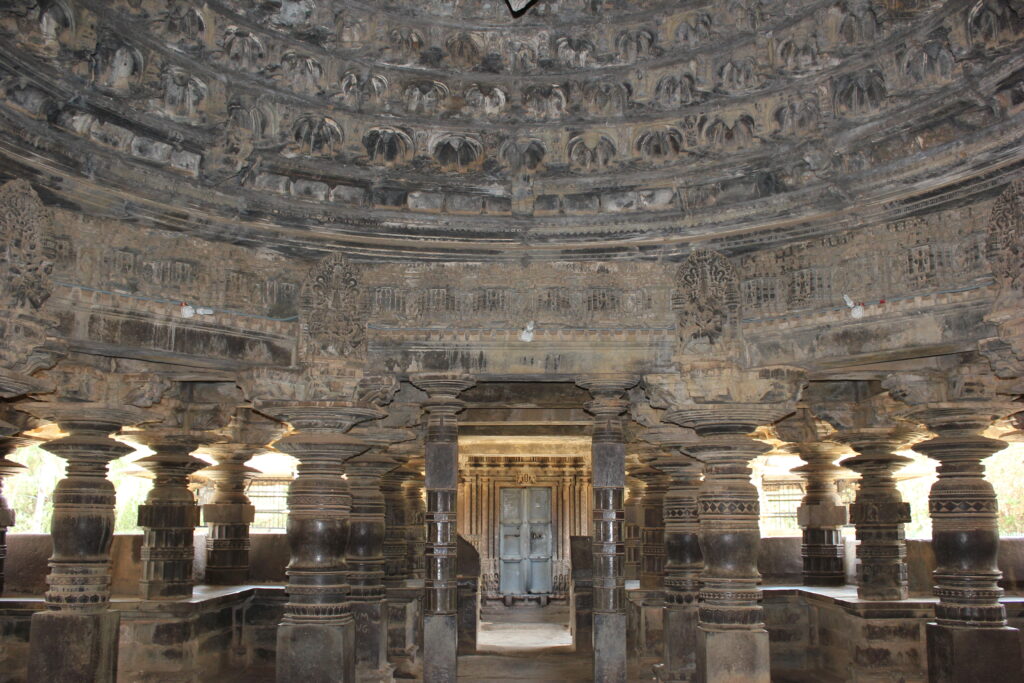
The navaranga (main hall) consists of numerous lathe-turned pillars that are highly polished, a signature feature of Chalukyan artistry.
The hall is spacious, allowing large congregations for religious gatherings.
Dome and Ceiling Work
One of the most unique aspects of this temple is its ornate domical ceiling, often described as a “lotus ceiling.” It consists of concentric rings with intricate carvings of petals, figures, and mythological motifs radiating outwards.
Shikhara and Garbhagriha
The garbhagriha (sanctum) houses the Shiva Linga, the central object of worship.
Above it rises a tower (shikhara) in the Kadamba-Nagara style, simple yet majestic.
Sculptural Details
The temple walls are adorned with:
Images of gods, goddesses, dancers, musicians, and mythical beasts.
Decorative friezes showcasing the Chalukyan mastery over stonework.
Religious Importance
As a Shaiva temple, Tarakeshvara has long been a prominent pilgrimage site in northern Karnataka. Devotees from across the region visit the temple during annual festivals, especially during Maha Shivaratri, when the temple becomes a hub of spiritual activity.
Unique Aspects
The enormous scale of the temple makes it stand out among Western Chalukya monuments.
The domical ceiling is considered one of the finest examples of medieval Indian ceiling design.
The temple combines structural grandeur with artistic delicacy, showcasing the peak of Chalukyan architectural achievement.
How to Reach
By Road: Hangal is well connected by road and lies about 75 km from Hubballi and 30 km from Haveri town. KSRTC and private buses operate frequently.
By Rail: The nearest railway station is Haveri (30 km), on the Bengaluru–Hubballi line.
By Air: The closest airport is Hubballi Airport (80 km), which has flights to major cities like Bengaluru and Mumbai.
Nearby Attractions
The magnificent Ancient Chalukya Shri Tarakeshwara Swamy Temple is one of Karnataka’s finest examples of Kalyani Chalukyan architecture. Famous for its spectacular lotus-shaped dome, intricately carved pillars, and richly decorated walls, the temple is a major heritage attraction in Haveri district. The monument is protected by the Archaeological Survey of India and dates largely to the 11th–12th centuries.
1. Ancient Shri Billeshwara Swamy Temple
Located within Hangal town, this ancient Shiva temple is another important example of medieval temple architecture. Its peaceful atmosphere and historic significance make it a worthwhile stop for visitors exploring Hangal’s heritage circuit.
2. Madhukeshwara Temple, Banavasi
Situated about 35 km from Hangal, this celebrated Kadamba-era temple is dedicated to Lord Shiva and is one of the oldest surviving temples in Karnataka. The historic town of Banavasi itself is believed to be one of Karnataka’s oldest urban settlements.
3. Siddheshwara Temple, Haveri
Renowned for its intricate carvings and elegant Chalukyan craftsmanship, this temple is among the most important historical monuments in the Haveri region.
4. Mukteshwara Temple, Chaudayyadanapura
Known for its beautifully sculpted doorways, inscriptions, and decorative stonework, this temple is considered one of the finest Western Chalukyan monuments in Karnataka.
5. Hangal Fort
The remains of the historic Hangal Fort reflect the town’s importance under the Kadambas, Chalukyas, Hoysalas, and Vijayanagara rulers. Several ancient structures and ruins can still be explored in the area.
6. Anekere Lake
A scenic lake near Hangal that offers a tranquil setting for photography and relaxation. It is particularly attractive during the monsoon and winter months.
7. Bankapura Peacock Sanctuary
Located within Haveri district, this sanctuary is famous for its large population of Indian peafowl and provides an excellent opportunity for birdwatching and nature photography.
Google Maps
FAQs
1. Where is Tarakeshvara Temple located?
Tarakeshvara Temple is situated in Hangal town of Haveri district, Karnataka. It lies approximately 40 km from Haveri and around 75 km from Hubballi.
2. Which deity is worshipped in the temple?
The temple is dedicated to Lord Shiva, who is worshipped here as Tarakeshvara. The complex also contains shrines dedicated to Nandi and Lord Ganesha.
3. What is the temple famous for?
The temple is especially famous for its remarkable lotus-shaped domical ceiling, often called the “Lotus of Hangal,” which is regarded as one of the masterpieces of Chalukyan architecture.
4. When was the temple built?
The present structure largely dates to the 11th–12th centuries and is associated with the Kadambas and Kalyani Chalukyas, who contributed significantly to its development.
5. What architectural style does the temple represent?
The temple is a classic example of Kalyani Chalukyan architecture with influences from Hoysala, Nagara, and Dravidian styles.
6. What are the temple timings?
The temple is generally open from 8:00 AM to 8:00 PM daily, though timings may vary during festivals and special religious events.
7. Is there any entry fee?
No, visitors can generally enter the temple complex free of charge.
8. Which is the nearest railway station?
Haveri Railway Station is the nearest major railhead, located about 40 km from Hangal. From there, buses and taxis are easily available.
9. What is the best time to visit?
The ideal period is from October to February when the weather is pleasant. Maha Shivaratri is also an excellent time to experience the temple’s religious significance and festive atmosphere.
10. Why is Tarakeshvara Temple important in Karnataka’s history?
The temple is regarded as one of the finest surviving monuments of the Kalyani Chalukyas. Its intricate carvings, memorial stones, sculpted pillars, and extraordinary lotus ceiling make it a landmark in the evolution of medieval South Indian temple architecture.