About Brahma Jinalaya
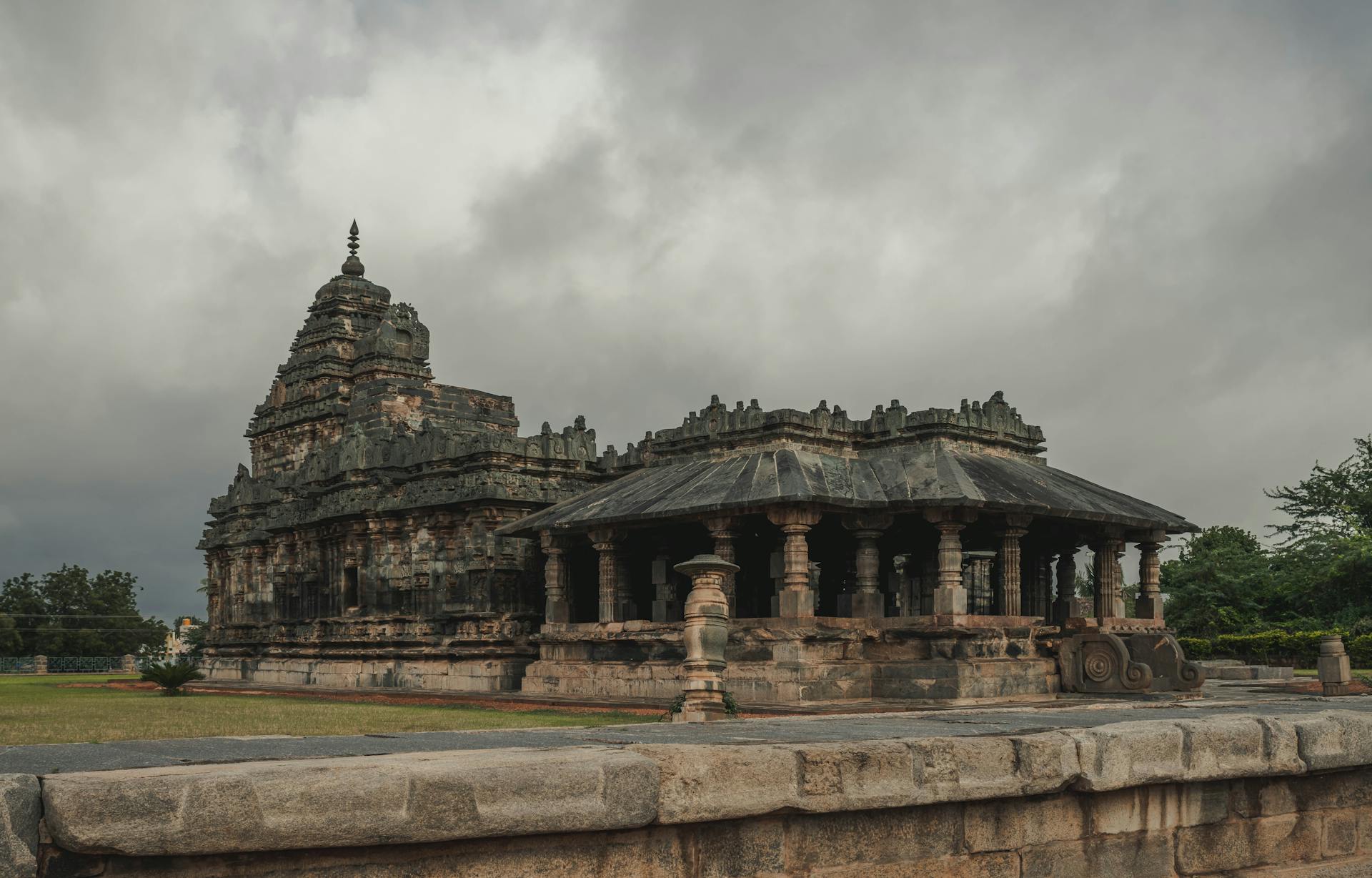
Nestled in the historic village of Lakkundi in Karnataka’s Gadag district, the Brahma Jinalaya stands as one of the finest surviving Jain temples from the Western Chalukya era. Built during the 11th century, this magnificent monument beautifully reflects the artistic excellence, religious harmony, and architectural innovation of medieval Karnataka. Among the many ancient temples and stepwells scattered across Lakkundi, Brahma Jinalaya remains the largest and most impressive Jain shrine in the region.
Dedicated to Lord Mahavira, the 24th Tirthankara of Jainism, the temple is admired not only for its spiritual importance but also for its extraordinary stone craftsmanship. Every corner of the structure—from its sculpted pillars to its detailed ceilings—reveals the remarkable skill of Chalukyan artisans. Even today, the temple attracts historians, architecture enthusiasts, pilgrims, and travelers who wish to experience the grandeur of Karnataka’s rich heritage.
History of Brahma Jinalaya
The temple was constructed around 1050 CE during the reign of the Kalyani Chalukya king Somesvara I. What makes the monument especially significant is that it was commissioned by Attimabbe, one of the most respected Jain patrons in South Indian history. She was known for her devotion, generosity, and support for Jain literature and education. Historical records describe her as a philanthropist who distributed thousands of Jain scriptures and played a major role in promoting Jainism across the region.
The name “Brahma Jinalaya” symbolizes the temple’s grandeur. In Jain tradition, “Jinalaya” refers to a temple dedicated to a Jina or Tirthankara, while “Brahma” signifies greatness or magnificence. The temple therefore represents not only a place of worship but also a statement of cultural prestige and artistic achievement.
During the 11th century, Lakkundi flourished as a major center of trade, learning, and religion. The town was home to numerous temples, stepwells, and scholarly institutions, making it one of the most important urban settlements of the Western Chalukya kingdom. Brahma Jinalaya remains one of the clearest reminders of that prosperous era.
Architectural Brilliance
Grand Layout and Design
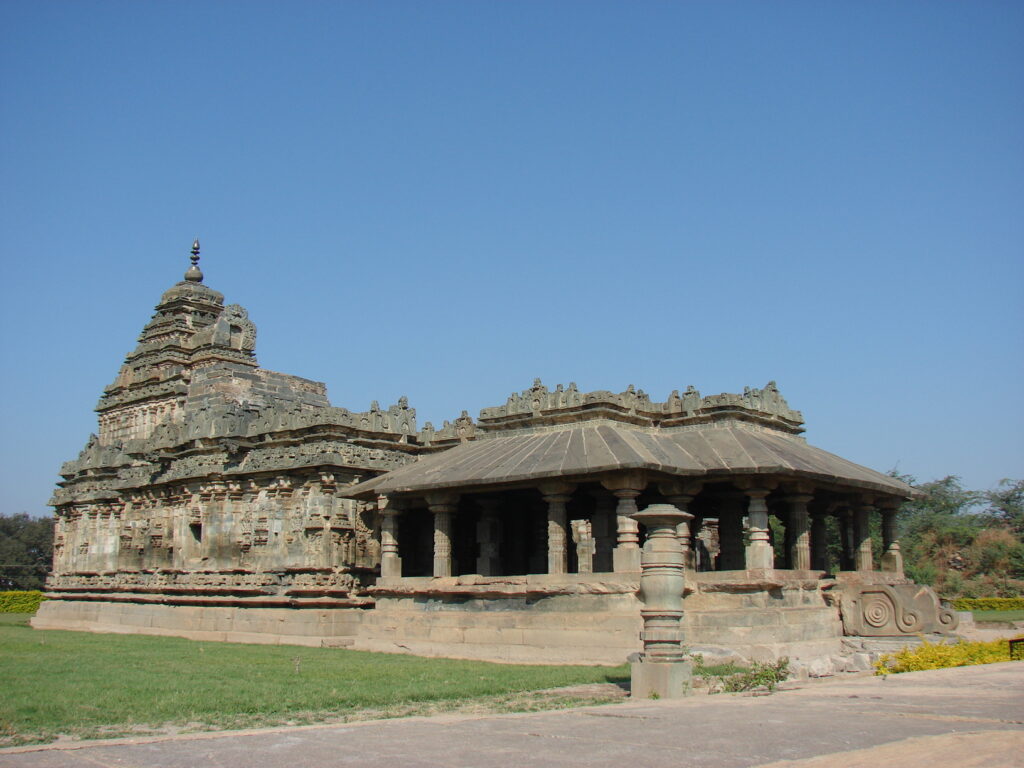
The Brahma Jinalaya is built on an elevated platform known as a jagati, giving the structure a commanding appearance. The temple follows a traditional layout consisting of a sanctum (garbhagriha), vestibule (antarala), and a spacious pillared hall or mahamantapa. Its design combines Dravidian architectural principles with the decorative elegance typical of Western Chalukya craftsmanship.
One of the temple’s most distinctive features is its Dravida-style vimana, or tower, above the sanctum. This style is relatively uncommon in Jain temples of the Chalukya period, making Brahma Jinalaya architecturally unique. The tower is decorated with miniature shrine motifs, ornamental pilasters, and layered carvings that create a refined multi-tiered appearance.
Intricate Sculptures and Carvings
Inside the sanctum sits a serene image of Lord Mahavira in a seated posture, radiating calmness and spiritual dignity. The walls of the temple are richly adorned with floral patterns, Jain iconography, and miniature shrines carved with astonishing precision.
The entrance doorways are especially striking, featuring beautifully sculpted makara toranas, celestial figures, and decorative motifs. The ceilings display elegant lotus medallions and geometric patterns that demonstrate the sophistication of Chalukyan artistry.
The Famous Pillared Hall
The mahamantapa is supported by finely polished lathe-turned pillars, one of the hallmarks of Western Chalukya architecture. These pillars are admired for their symmetry, smooth finish, and geometric precision. The engineering skill required to create such perfectly proportioned stone pillars during the medieval period continues to impress visitors and scholars alike.
Unique Features of the Temple
One of the most remarkable aspects of Brahma Jinalaya is its association with Attimabbe, a woman patron whose contributions to religion and culture were extraordinary for her time. The temple highlights the important role Jain women played in shaping Karnataka’s religious and artistic history.
The monument also stands apart because of its scale. While Lakkundi contains several smaller Jain shrines and basadis, Brahma Jinalaya is the largest among them, giving it a distinct presence within the historic town.
Architecturally, the temple represents a fascinating blend of styles. The integration of a Dravidian-style tower with Western Chalukya decorative elements showcases an experimental and evolving approach to temple design during the 11th century.
Cultural and Religious Importance
Brahma Jinalaya is much more than an ancient monument—it is a symbol of Jain devotion, prosperity, and intellectual tradition in medieval Karnataka. The temple reflects a time when Jain communities flourished in the Deccan region and actively contributed to art, education, trade, and literature.
For followers of Jainism, the temple remains an important spiritual destination. For historians and travelers, it offers a rare opportunity to witness the artistic richness of the Western Chalukya dynasty. Its peaceful atmosphere, combined with its architectural beauty, makes it one of the most rewarding heritage sites in North Karnataka.
How to Reach Brahma Jinalaya, Lakkundi
Brahma Jinalaya is located in the historic village of Lakkundi in Gadag district of Karnataka, about 12 km from Gadag city. The 11th-century Jain temple is one of the finest examples of Western Chalukyan architecture and is a major heritage attraction in northern Karnataka.
By Road
Lakkundi is well connected by road and lies near National Highway 67. The temple is approximately 12 km from Gadag, 70 km from Hubballi (Hubli), 50 km from Koppal, and about 400 km from Bengaluru. Regular buses and taxis are available from Gadag to Lakkundi. Private vehicles are the most convenient option for exploring the village’s numerous heritage monuments.
By Train
The nearest railway station is Gadag Junction, located around 12 km away. Gadag is well connected to Bengaluru, Hubballi, Ballari, Mysuru, and other major cities. From the station, visitors can hire an auto-rickshaw or taxi to reach the temple.
By Air
The nearest airport is Hubballi Airport, situated about 75 km from Lakkundi. From the airport, taxis and rental vehicles are available for a comfortable journey to the temple.
Nearby Attractions
Visitors exploring Lakkundi can also visit several other historical sites nearby, including the beautifully carved Kasivisvesvara Temple and the famous stepwell known as Musu Kattina Bhavi. The village itself is often described as an open-air museum because of its concentration of ancient temples and heritage structures.
Best Time to Visit
The ideal time to visit Brahma Jinalaya is between October and February, when the weather in Karnataka is pleasant and suitable for sightseeing. Early mornings and evenings offer a particularly peaceful experience, allowing visitors to appreciate the temple’s carvings and tranquil surroundings without the heat of the afternoon sun.
Google Maps
FAQs
What is Brahma Jinalaya famous for?
Brahma Jinalaya is famous for being one of the finest Jain temples of the Western Chalukya period. It is especially admired for its detailed stone carvings, Dravidian-style tower, and beautifully polished pillars.
Who built Brahma Jinalaya?
The temple was commissioned by Attimabbe, a renowned Jain patron and philanthropist, around 1050 CE during the reign of King Somesvara I of the Kalyani Chalukya dynasty.
Which deity is worshipped in Brahma Jinalaya?
The temple is dedicated to Lord Mahavira, the 24th Tirthankara of Jainism.
Where is Brahma Jinalaya located?
The temple is located in Lakkundi village in Karnataka’s Gadag district, approximately 12 km from Gadag town.
What makes the architecture unique?
Its combination of Western Chalukya decorative style with a Dravidian-style vimana makes the temple architecturally distinctive among Jain monuments of the period.
Is Brahma Jinalaya still active as a religious site?
Yes, the temple continues to hold religious importance for the Jain community while also serving as a major heritage attraction for tourists and historians.
What other attractions can be visited near the temple?
Travelers can explore the Kasivisvesvara Temple, ancient Jain basadis, and Lakkundi’s famous stepwells such as Musu Kattina Bhavi.