About Kere Basadi
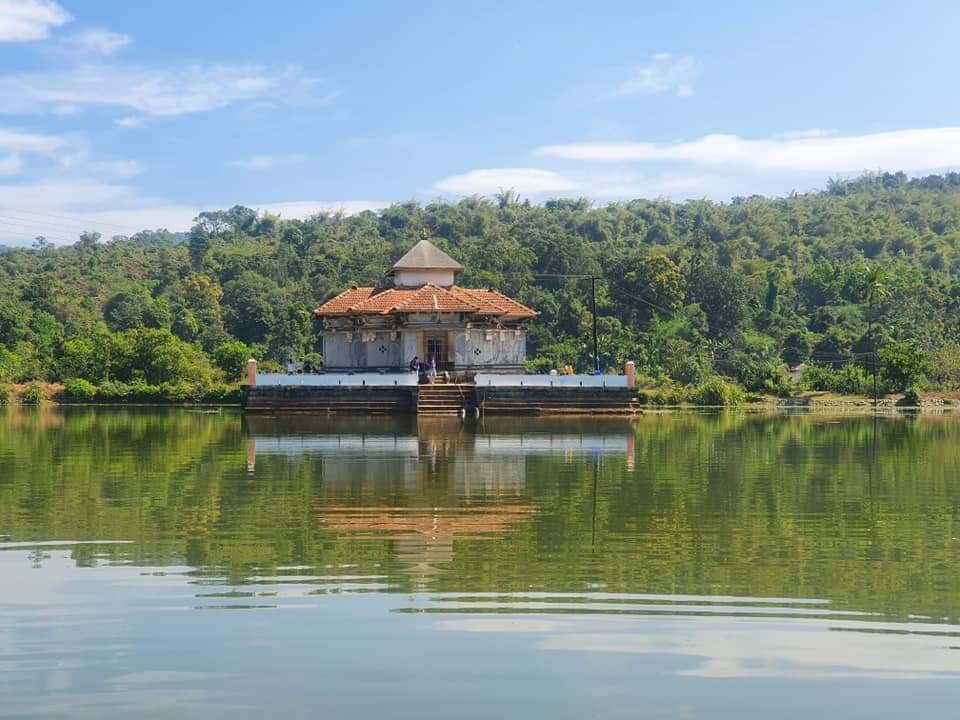
Nestled amidst the tranquil surroundings of Varanga village in Karnataka’s Udupi district, Kere Basadi is one of the most unique and picturesque Jain temples in the region. The name “Kere Basadi” literally translates to “Lake Temple,” and the temple truly lives up to its name. Situated on a small island in the middle of a serene lake, it creates a stunning visual spectacle, especially during the early morning and evening hours when the still waters reflect the temple’s ancient structure.
The temple is reached by a small boat ride across the lake, adding to its charm and making the visit a memorable experience. Surrounded by lush greenery and a peaceful atmosphere, Kere Basadi offers an ideal retreat for devotees, history enthusiasts, photographers, and travelers seeking a quiet escape from the bustle of city life. The calm environment and spiritual significance of the site make it one of the hidden gems of coastal Karnataka.
Architecture
Kere Basadi is an important Jain pilgrimage site and showcases traditional Jain architectural elements. The temple houses four beautifully carved idols representing revered Jain Tirthankaras—Bhagwan Parshvanatha, Bhagwan Neminatha, Bhagwan Ananthanatha, and Bhagwan Shantinatha. These idols are uniquely positioned facing the four cardinal directions: north, south, east, and west.
The temple’s simple yet elegant stone architecture reflects the artistic traditions of medieval Jain craftsmanship. Despite its relatively modest size, the shrine exudes a timeless spiritual aura. The surrounding lake enhances the temple’s beauty, creating a rare combination of architecture and nature that leaves a lasting impression on visitors.
Historical Significance
Varanga has been an important center of Jainism for centuries and is home to several ancient Jain monuments. Kere Basadi stands as a testament to the region’s rich religious heritage and the influence of Jain culture in coastal Karnataka. The temple continues to attract Jain pilgrims from different parts of the state while also drawing tourists interested in Karnataka’s historical and architectural treasures.
How to Reach Kere Basadi
Kere Basadi is located in Varanga village, approximately 34 km from Udupi, 22 km from Karkala, and around 72 km from Mangaluru.
By Road
Varanga is well connected by road to major towns such as Udupi, Karkala, Kundapura, and Mangaluru. Regular buses and private taxis are available from Udupi and Karkala. The scenic drive through rural Karnataka adds to the overall travel experience.
By Rail
The nearest major railway station is Udupi Railway Station, which is connected to cities such as Bengaluru, Mangaluru, Mumbai, and Kochi. From the station, visitors can hire a taxi or board a local bus to Varanga.
By Air
The nearest airport is Mangaluru International Airport, located about 80 km away. From the airport, taxis and rental vehicles are readily available to reach the temple.
Local Access
After arriving at the lake, visitors typically use a small boat service to reach the temple situated in the middle of the water body. The short ride itself is one of the highlights of the visit.
Nearby Attractions
Kalla Basadi
Located close to Kere Basadi, Kalla Basadi is another ancient Jain temple known for its stone architecture and historical significance. Together, these temples showcase the rich Jain heritage of Varanga.
Varanga Jain Matha
The Jain monastery in Varanga is an important religious center and offers deeper insights into the traditions and spiritual practices of the Jain community.
Chaturmukha Basadi, Karkala
About 22 km away, this magnificent Jain monument is renowned for its four-faced architectural design and intricate stonework.
Bahubali Statue, Karkala
One of Karnataka’s famous Jain landmarks, the towering monolithic statue of Bahubali attracts pilgrims and tourists throughout the year.
Moodabidri
Often referred to as the “Jain Kashi of South India,” Moodabidri is home to several ancient Jain temples, including the famous Thousand Pillar Temple.
Udupi
Visitors can also combine their trip with a visit to Udupi, known for its beautiful beaches, temples, and rich cultural heritage.
Best Time to Visit
The ideal time to visit Kere Basadi is between October and March when the weather is pleasant and the lake surroundings are particularly scenic. The monsoon season also enhances the beauty of the landscape, though occasional rainfall may affect travel plans.
Maps
Kere Basadi, situated 34 km from Udupi, 72 km from Mangalore, and 22 km from Karkala in Varanga.
FAQs
Why is Kere Basadi called the Lake Temple?
The temple is located on a small island in the middle of a lake, which is why it is known as Kere Basadi or “Lake Temple.”
Is there an entry fee to visit Kere Basadi?
Generally, there is no major entry fee, though visitors may need to pay a nominal charge for the boat ride depending on local arrangements.
How much time is needed for a visit?
Most visitors spend around 1–2 hours exploring the temple, enjoying the lake views, and visiting nearby Jain monuments.
Is Kere Basadi suitable for families?
Yes, the temple’s peaceful atmosphere and scenic surroundings make it a great destination for families, pilgrims, and nature lovers.
Can photography be done at Kere Basadi?
Photography is usually permitted in the temple surroundings, but visitors should respect any restrictions inside the shrine and follow local guidelines.
What is the nearest town to Kere Basadi?
Karkala is the nearest major town, located about 22 km away, while Udupi serves as the nearest major city and transportation hub.