Image Source: Dr Sachin Patidar
Introduction
Often referred to as the “Somnath of North India,” Bhojpur Temple is one of the most remarkable historical and religious landmarks in Madhya Pradesh. Located near Bhopal and within easy reach of Bhimbetka, this ancient Shiva temple attracts pilgrims, history enthusiasts, and architecture lovers alike. The temple is renowned for housing one of the largest Shiva Lingams in India and stands as a testament to the architectural brilliance of medieval India.
Surrounded by rocky hills and overlooking the Betwa River, Bhojpur Temple offers visitors a unique blend of spirituality, history, and scenic beauty.
History of Bhojpur Temple
The origins of Bhojpur Temple date back to the 11th century during the reign of the famous Paramara king, Raja Bhoja, one of the most celebrated rulers of central India. Although the temple was intended to be a grand architectural masterpiece, its construction was mysteriously abandoned before completion. Historians continue to debate the reasons behind its unfinished state, with theories ranging from political conflicts to natural calamities.
Despite remaining incomplete, the temple impresses visitors with its massive scale and elegant design. Historical records, including references in the Jain text Prabandha-Chintamani, mention that King Bhoja commissioned numerous temples during his reign. Among them, Bhojpur Temple is the structure most confidently attributed to him.
One of the most fascinating aspects of the site is the presence of ancient architectural markings, unfinished stone blocks, and construction plans etched into nearby rocks. These remains have provided scholars with valuable insights into temple-building techniques used in 11th-century India.
Architecture of Bhojpur Temple
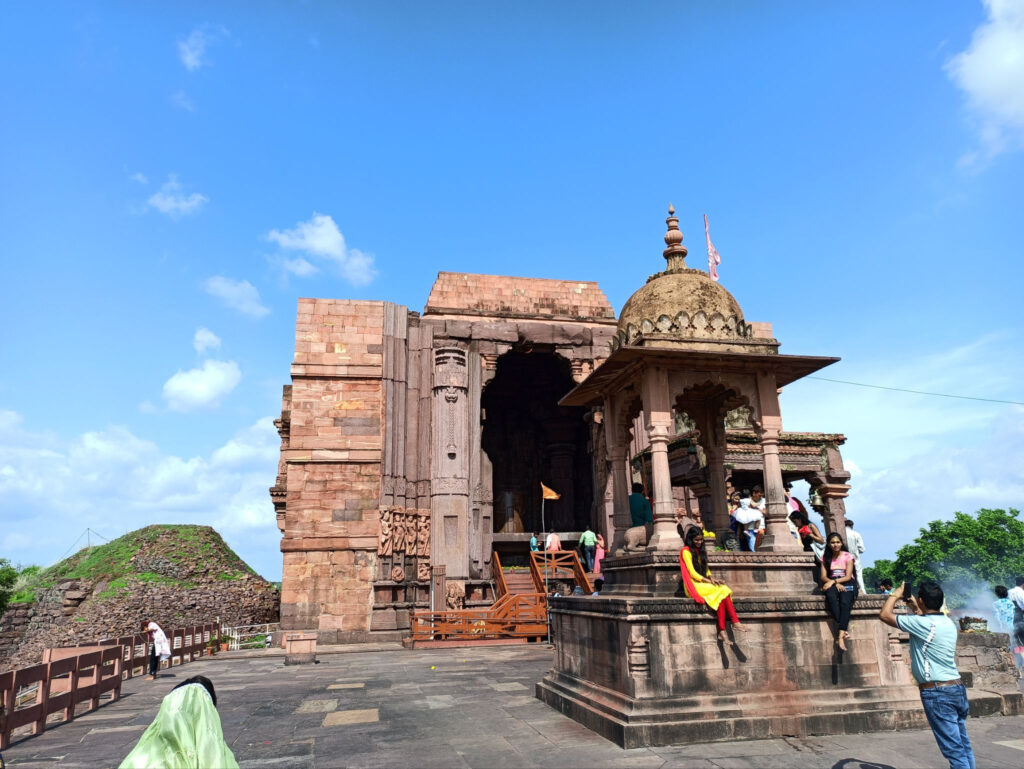
Bhojpur Temple is an outstanding example of medieval temple architecture. The temple stands on a massive raised platform and is crowned by a towering sanctum that creates an awe-inspiring atmosphere.
The main attraction is the gigantic Shiva Lingam carved from a single block of stone. Standing approximately 7.5 feet (2.3 meters) high and mounted on a large sandstone platform, it is considered one of the largest monolithic Shiva Lingams in India. The sheer size of the Lingam leaves visitors amazed and reflects the ambitious vision of its builders.
The temple’s entrance features beautifully carved doorways adorned with intricate sculptures and decorative motifs. Massive pillars support the structure, while balconies on three sides add elegance to the overall design. Even though the temple was never fully completed, the craftsmanship visible throughout the monument highlights the artistic excellence of the Paramara period.
Due to the height and structure of the sanctum, special arrangements are required for daily worship. Today, only temple priests are permitted to perform rituals directly at the Shiva Lingam, a measure introduced for safety reasons.
Other Attractions Within the Temple Complex
Apart from the main shrine, visitors can explore several lesser-known but historically significant sites within the complex.
The Parvati Cave, located to the west of the temple, contains ancient sculptures and archaeological remains that offer a glimpse into the artistic traditions of the era. The complex also includes a memorial dedicated to Acharya Mantunga, the revered Jain scholar who composed the famous Bhaktamar Stotra.
The temple is protected and maintained by the Archaeological Survey of India (ASI), ensuring the preservation of its historical and cultural significance.
Festivals Celebrated at Bhojpur Temple
Bhojpur Temple comes alive during major Hindu festivals, especially those dedicated to Lord Shiva.
Maha Shivratri
Maha Shivratri is the grandest celebration at the temple. Thousands of devotees gather here to offer prayers and seek blessings. The three-day festival transforms the temple complex into a vibrant center of devotion, music, and cultural activities.
Makar Sankranti
Another important festival celebrated here is Makar Sankranti. Special prayers and religious ceremonies are organized, attracting devotees from across Madhya Pradesh and neighboring states.
Location
Bhojpur Temple is located in Bhojpur village of Raisen district, approximately 28 km from Bhopal and around 35 km from the famous Bhimbetka Rock Shelters. Its convenient location makes it an ideal stop on a heritage tour of central Madhya Pradesh.
How to Reach Bhojpur Temple
By Air
The nearest airport is Raja Bhoj Airport, Bhopal, situated about 35 km from the temple. Taxis and private cabs are readily available from the airport.
By Train
Bhopal Junction Railway Station is the nearest major railhead, located around 30 km away. Visitors can hire taxis or use local transport to reach Bhojpur.
By Road
Bhojpur is well connected by road to Bhopal, Bhimbetka, Sanchi, and other nearby destinations. Regular buses, taxis, and private vehicles operate on this route. The drive from Bhopal takes around 45 minutes to one hour.
Nearby Attractions
Bhimbetka Rock Shelters
A UNESCO World Heritage Site famous for prehistoric cave paintings that date back thousands of years. It is one of India’s most important archaeological treasures.
Bhojeshwar Dam Remains
Near the temple are the remains of an ancient dam believed to have been constructed during King Bhoja’s reign. The site offers insight into the engineering skills of the period.
Bhimbetka Auditorium Cave
One of the largest and most impressive caves within the Bhimbetka complex, known for its unique rock formations and historical significance.
Sanchi Stupa
Located about 70 km away, Sanchi is home to one of the oldest Buddhist monuments in India and a UNESCO World Heritage Site.
Van Vihar National Park
Situated in Bhopal, this wildlife sanctuary is ideal for visitors interested in nature, birdwatching, and wildlife photography.
Upper Lake, Bhopal
One of the largest artificial lakes in India, offering boating, scenic views, and pleasant evening outings.
Maps
FAQs
1. Why is Bhojpur Temple called the “Somnath of North India”?
The temple is often compared to the famous Somnath Temple because of its grandeur, religious significance, and impressive Shiva Lingam.
2. Who built Bhojpur Temple?
The temple was commissioned by the Paramara ruler Raja Bhoja during the 11th century.
3. Why was the temple left incomplete?
The exact reason remains unknown, though historians suggest political instability, warfare, or natural events may have halted construction.
4. What is the main attraction of the temple?
The gigantic monolithic Shiva Lingam, one of the largest in India, is the temple’s biggest attraction.
5. Is there an entry fee?
The temple is generally open to visitors free of charge, though specific rules may change over time.
6. What are the temple timings?
The temple is usually open from early morning until evening. Visitors are advised to check local timings before planning their trip.
7. What is the best time to visit?
The months from October to March offer pleasant weather and are considered the best time for sightseeing.
8. Can Bhojpur Temple and Bhimbetka be visited on the same day?
Yes. Both destinations are located relatively close to each other and can easily be covered in a day trip from Bhopal.
9. Is photography allowed?
Photography is generally permitted in the temple premises, though visitors should follow any guidelines issued by temple authorities.
10. How much time is required for a visit?
Most visitors spend one to two hours exploring the temple and its surrounding attractions.