Image Source: Ansari Rehan Ahmad
About Brahma Temple
The Khajuraho temples are world-famous for their artistic brilliance and intricate carvings, and among their lesser-explored treasures is the Brahma Temple. Located in the Eastern Group of temples, this small yet historically rich shrine often surprises visitors with its simplicity compared to the more elaborate temples nearby. Despite its modest appearance, it holds deep spiritual and architectural importance that reflects the early phase of temple building in Khajuraho.
History and Spiritual Significance
The Brahma Temple is believed to date back to around 900 AD, making it one of the earliest surviving structures in the Eastern Group. As the name suggests, it is associated with Lord Brahma, the creator in Hindu mythology, who is depicted with four faces symbolizing wisdom and universal knowledge.
Interestingly, historical studies suggest that the temple may not have originally been dedicated to Lord Brahma. Some architectural clues and carvings, especially on the doorway lintel, indicate strong connections to Lord Vishnu worship. Over time, however, the presence of a four-faced idol led to its current identification as a Brahma temple. This blend of history and reinterpretation adds an intriguing layer to its story.
Architecture and Design
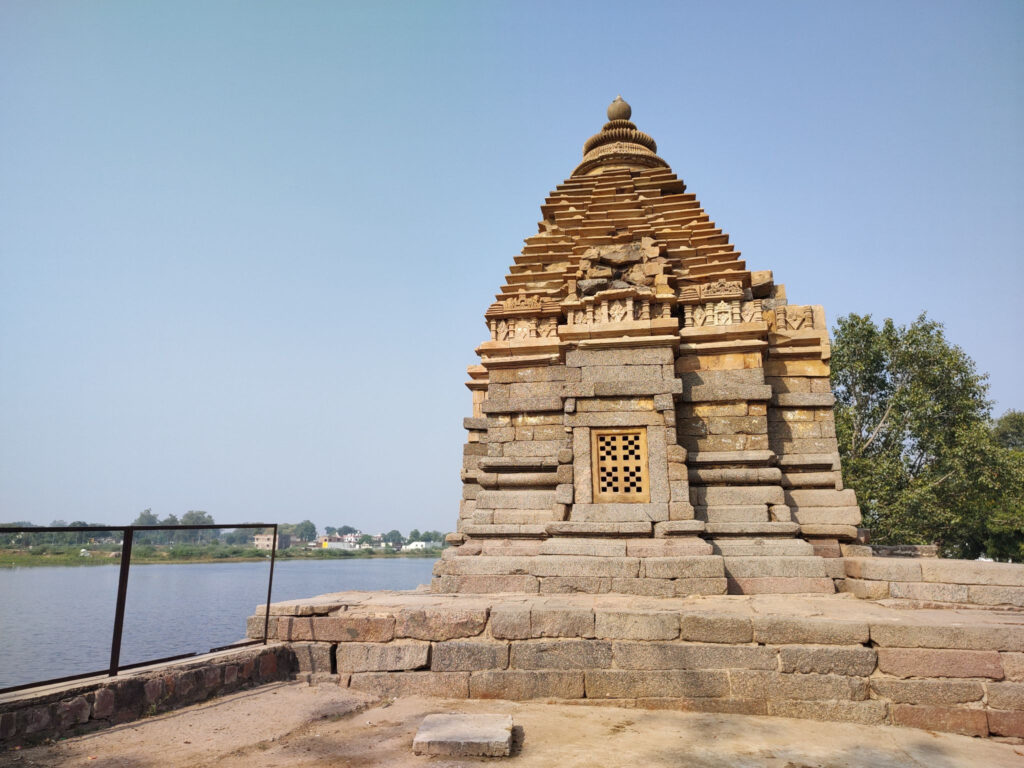
Unlike the grand and highly ornamented temples of Khajuraho, the Brahma Temple follows a much simpler architectural style. It is built primarily using granite and sandstone, reflecting early construction techniques of the region.
The temple rests on a raised platform and consists of a compact sanctum topped by a pyramid-shaped shikhara (spire). One notable feature is its absence of a mandapa (pillared hall), which is commonly seen in later temple designs. Instead, a small entrance porch leads directly into the sanctum.
Even in its simplicity, the temple carries artistic elegance. The outer walls feature carved depictions of river goddesses Ganga and Yamuna, symbolizing purity and sacredness. The northern and southern walls also include projecting windows that enhance both ventilation and visual appeal, giving the structure a balanced and peaceful aesthetic.
Atmosphere and Visitor Experience
The Brahma Temple offers a calm and reflective environment, quite different from the more crowded and ornate temples in Khajuraho. Its elevated position and minimal design create a quiet spiritual atmosphere, making it an ideal spot for those who want to slow down and absorb the historical essence of the site.
Visitors often find it to be a place for quiet contemplation, where the simplicity of the structure allows the surrounding history to speak more clearly.
Visiting Information
The temple is open to visitors daily from 6:00 AM to 6:00 PM, providing ample time to explore it at a relaxed pace. Early mornings and late afternoons are especially pleasant for visiting, as the lighting enhances the texture of the stone carvings and the surroundings are relatively peaceful.
How to Reach Brahma Temple
- By Air: The nearest airport is Khajuraho Airport, located about 5–6 km from the temple complex. It has regular flights connecting Delhi and other major cities. From the airport, taxis and auto-rickshaws are easily available.
- By Train: The nearest railway station is Khajuraho Railway Station, around 5 km away. It is connected to major routes via nearby junctions like Mahoba and Jhansi. From the station, you can hire an auto or taxi to reach the temple.
- By Road: Khajuraho is well-connected by road to nearby cities such as Chhatarpur (45 km), Jhansi (175 km), and Satna (120 km). Regular buses (state and private) and taxis operate to Khajuraho.
- Local Transport: Once in Khajuraho, the Brahma Temple is part of the Western Group of Temples and is easily accessible on foot, by bicycle, or by local auto-rickshaw.
Nearby Attractions to Brahma Temple
- Vamana Temple – A beautifully preserved Chandela-era temple dedicated to Lord Vishnu’s Vamana avatar, known for its intricate carvings.
- Javari Temple – A small but elegant temple featuring exquisite sculptures and classic Nagara-style architecture.
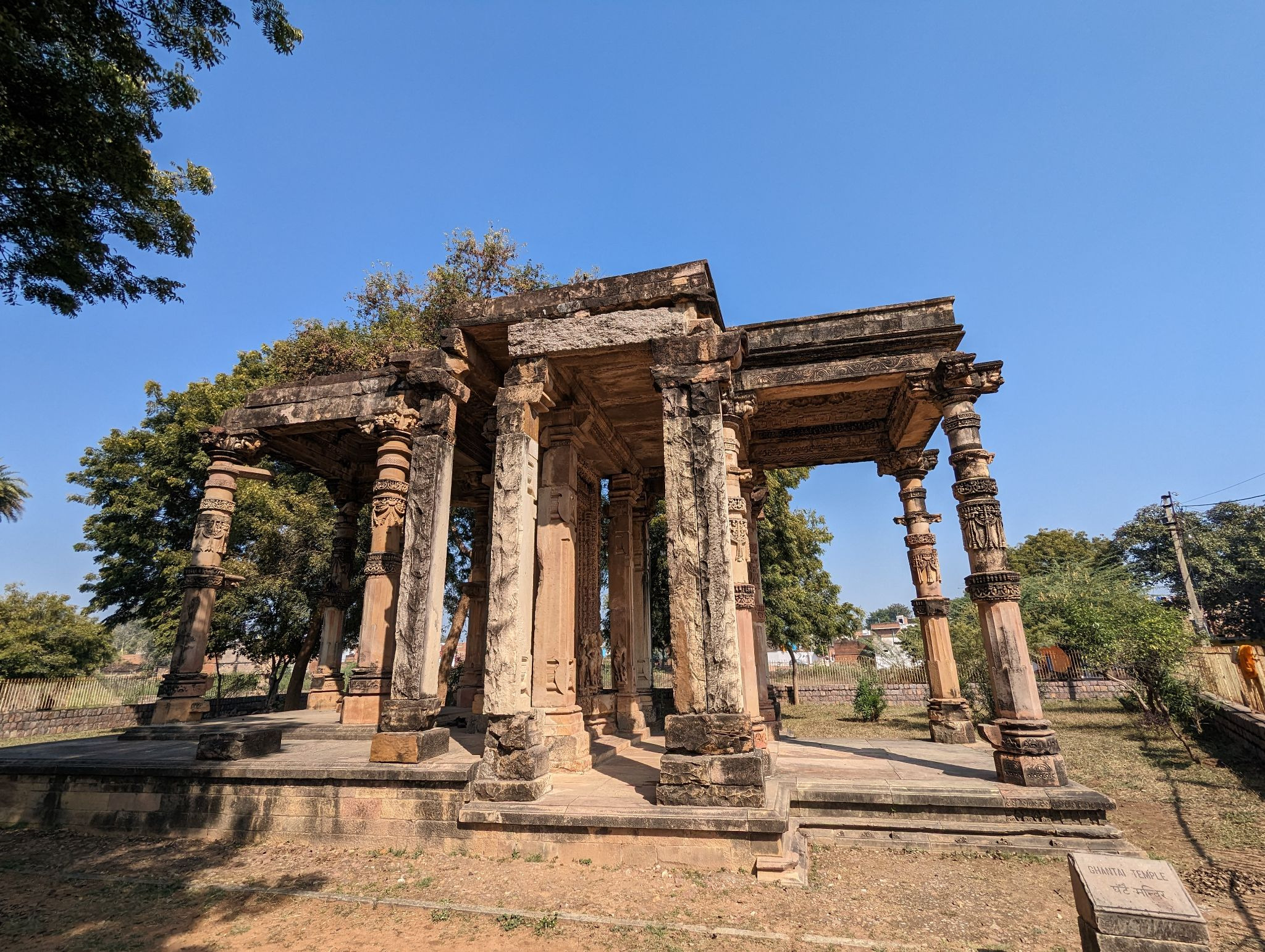
- Ghantai Temple – An important Jain monument famous for its ornate pillars and bell-chain carvings.
- Parsvanath Temple – The largest Jain temple in Khajuraho, admired for its detailed sculptures and artistic craftsmanship.
- Adinath Temple – A historic Jain temple dedicated to the first Tirthankara, showcasing fine Chandela architecture.
- Kandariya Mahadeva Temple – The grandest temple in Khajuraho, renowned for its towering shikhara and extraordinary stone carvings.
- Lakshmana Temple – One of the oldest and best-preserved temples in the Western Group, dedicated to Vaikuntha Vishnu.
- Vishvanatha Temple – A magnificent Shiva temple known for its sculptural richness and impressive architecture.
- Chausath Yogini Temple – One of the oldest surviving temples in Khajuraho, dedicated to the Yoginis and built from granite.
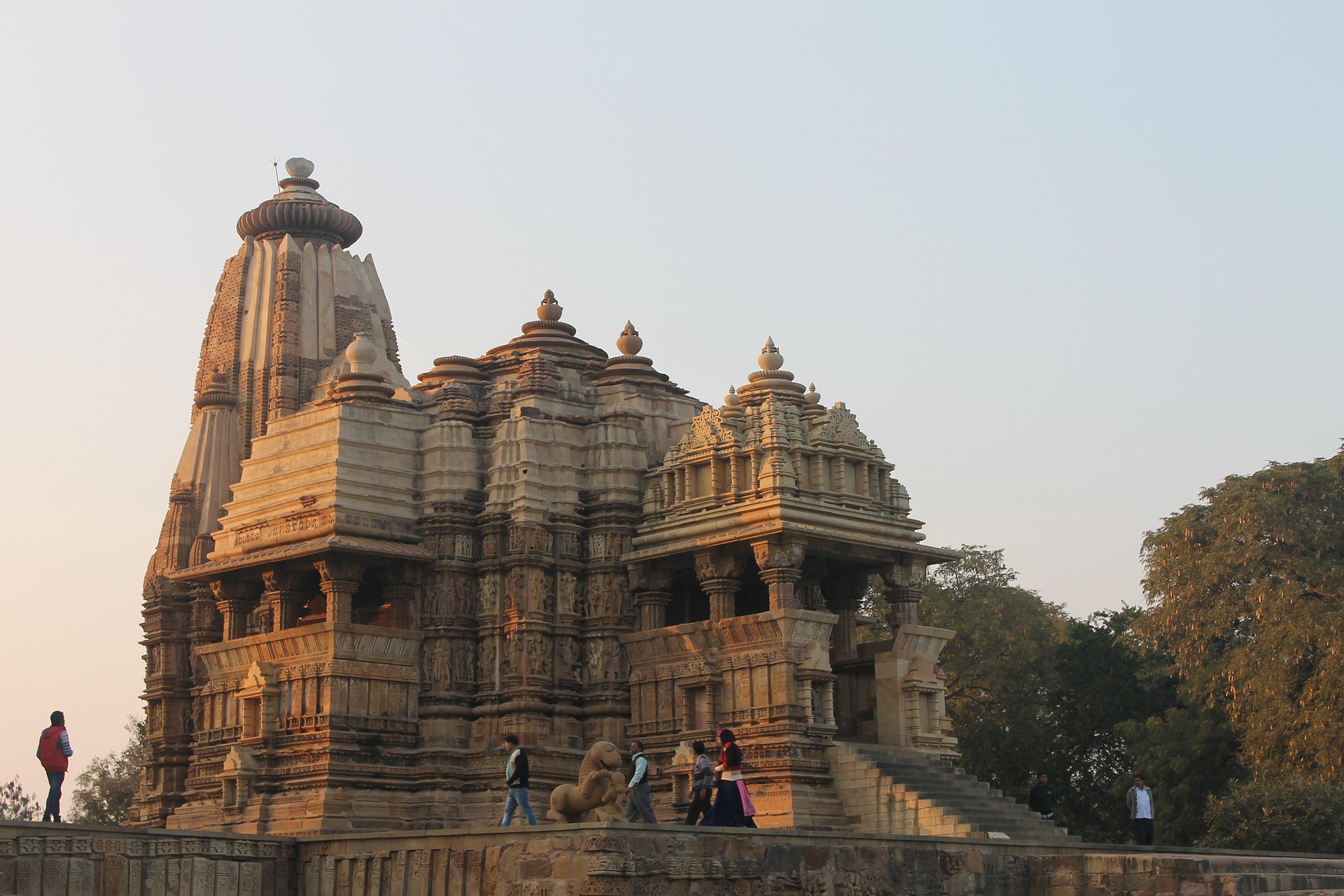
- Khajuraho Group of Monuments – A UNESCO World Heritage Site comprising a remarkable collection of medieval Hindu and Jain temples.
Location
FAQs
1. Where is the Brahma Temple located?
It is located in the Eastern Group of temples in Khajuraho.
2. How old is the Brahma Temple?
The temple dates back to around 900 AD, making it one of the oldest structures in the Khajuraho temple complex.
3. Who is the temple dedicated to?
It is traditionally associated with Lord Brahma, though some historical evidence suggests it may have originally been dedicated to Lord Vishnu.
4. What makes the architecture special?
Its simplicity, early structural design, use of granite and sandstone, and minimal ornamentation distinguish it from other Khajuraho temples.
5. What are the visiting hours?
The temple is open daily from 6:00 AM to 6:00 PM.