Image Source: Vaghela
Overview
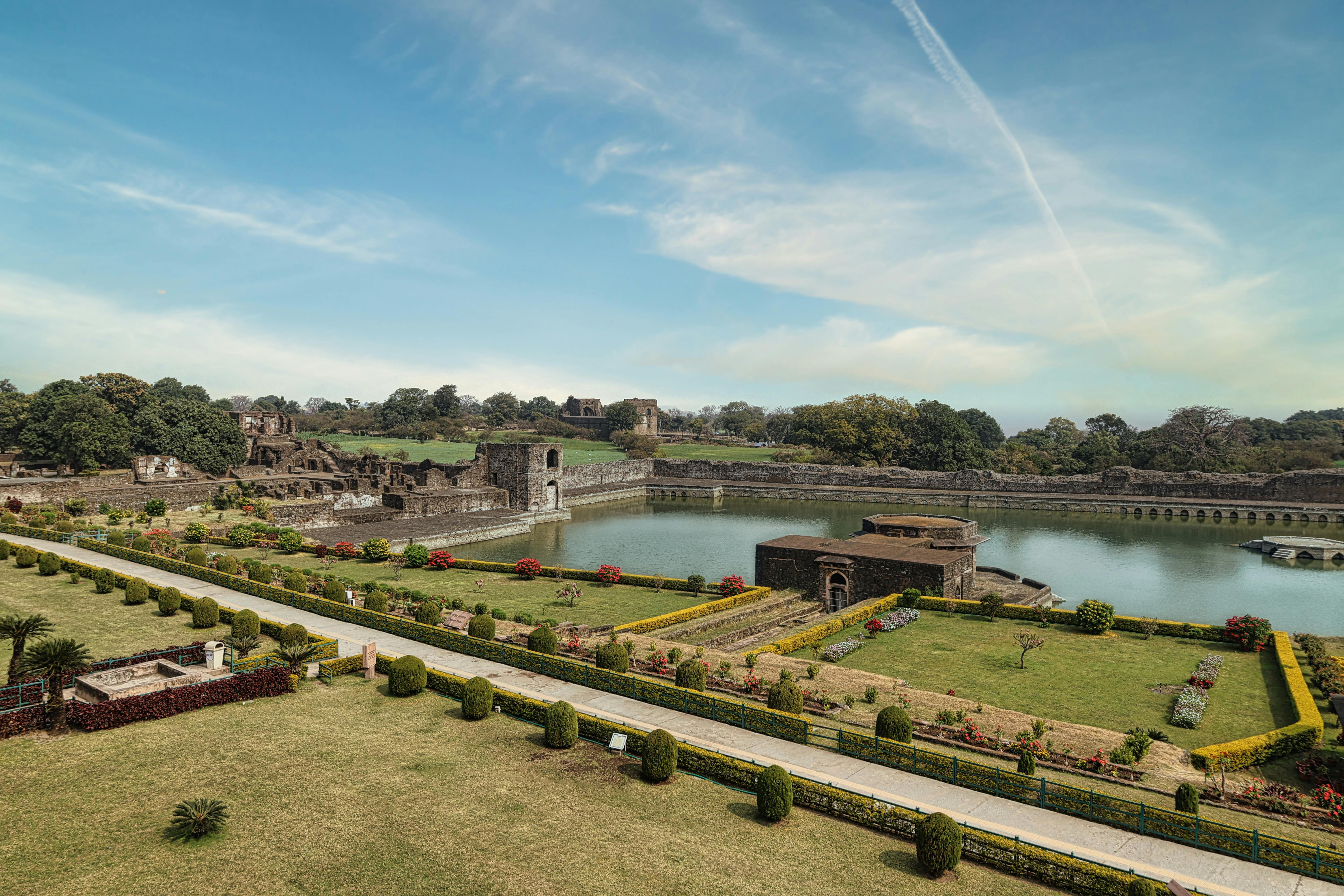
Standing opposite the famous Jama Masjid in Mandu, Ashrafi Mahal is one of the most intriguing historical monuments in the region. Today, only a few remains of this grand structure survive, but they still tell a remarkable story of ambition, victory, learning, and royal legacy. Built during the reign of Sultan Mahmud Khilji in the 15th century, Ashrafi Mahal originally served as a madrasa (Islamic educational institution) where students pursued religious and scholarly studies.
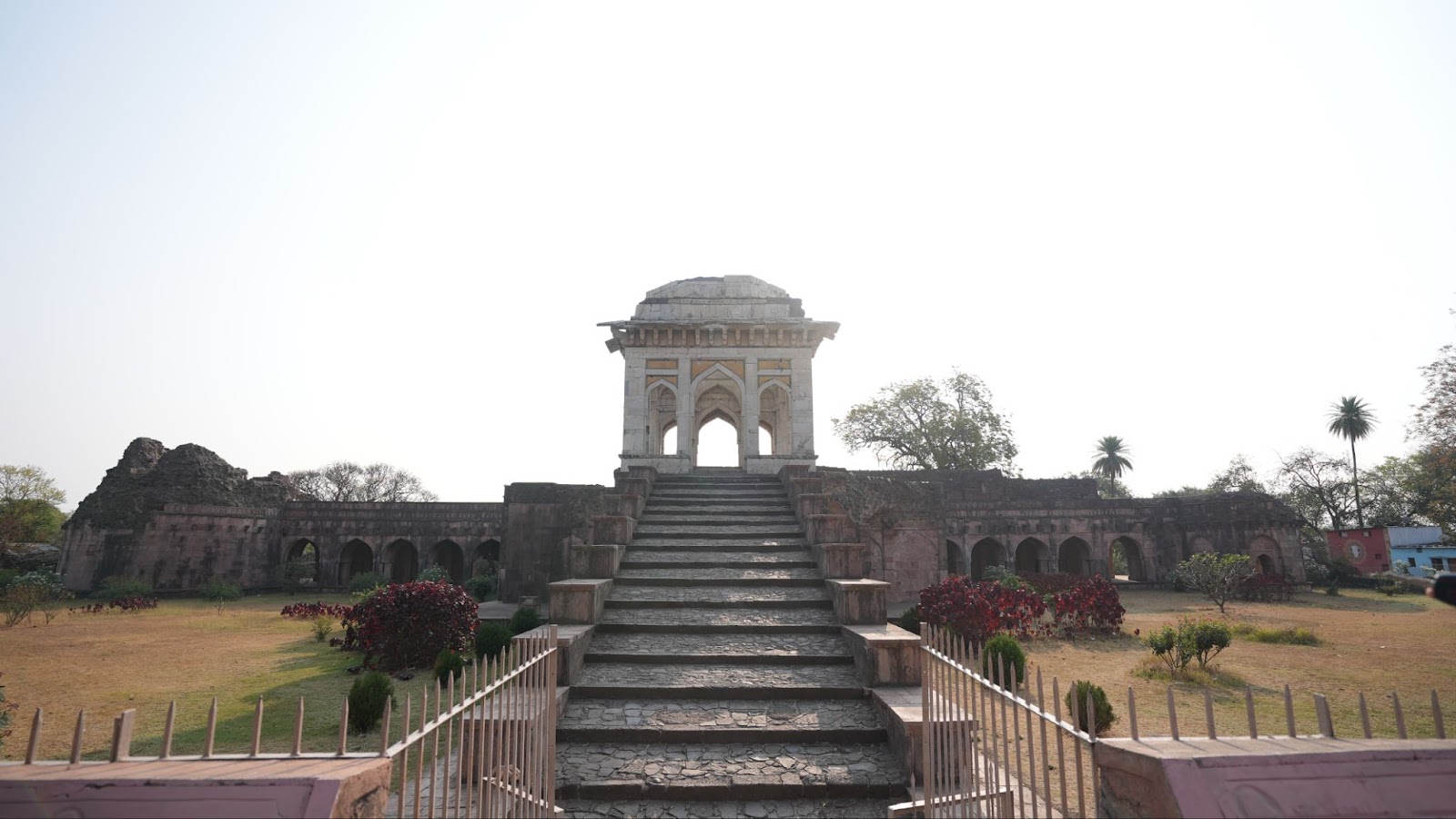
As you explore the site, you can still spot traces of long corridors, rows of student cells, and the foundations of towers that once stood proudly at the corners. The layout resembles a large educational complex, reflecting its original purpose as a center of learning.
History and Architecture
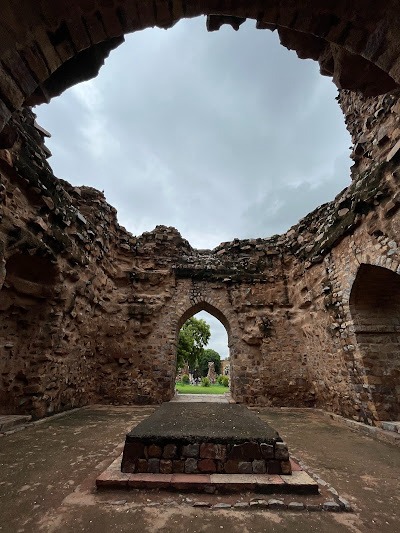
Ashrafi Mahal underwent several transformations over the years. What began as a madrasa was later converted into a royal complex when Sultan Mahmud Khilji decided to build his mausoleum here. A massive elevated terrace, approximately 27 feet high, was constructed to support the grand tomb. Visitors reached the terrace through an impressive flight of steps built above an elegant portico, with decorative loggias on either side.
Although much of the mausoleum has disappeared over time, historians believe it once featured a magnificent square hall measuring around 65 feet on each side and crowned by a huge dome. The surviving fragments showcase intricate stone carvings, beautifully designed doorways, and decorative window frames. The monument was further enhanced with inlaid stone patterns and friezes decorated in vibrant blue and yellow glazed tiles, adding to its architectural charm.
One of the most notable structures associated with Ashrafi Mahal was the Victory Tower. Sultan Mahmud Khilji commissioned it in 1443 to commemorate his victory over Rana Kumbha of Mewar. Constructed from red sandstone, the tower was inspired by the famous Vijay Stambh tradition. Though only a portion of the structure survives today, historical accounts suggest it was once a towering monument connected by nearly 198 spiral steps leading to the top.
The Story Behind the Name “Ashrafi Mahal”
A popular local legend gives Ashrafi Mahal its unique name. It is said that Sultan Ghiyas-ud-din Khilji, known for maintaining a vast royal harem, became concerned about the health and fitness of his queens. To encourage physical activity, he instructed them to climb the steps of the Victory Tower regularly. For every step climbed, the queens were rewarded with an “Ashrafi”—a gold coin. Over time, the place became associated with these rewards and came to be known as Ashrafi Mahal. While historians debate the authenticity of the story, it remains one of Mandu’s most fascinating legends.
Best Time to Visit Ashrafi Mahal
The monsoon season, from July to September, is considered the best time to visit Ashrafi Mahal. During these months, Mandu transforms into a lush green paradise, with rolling hills, mist-covered valleys, and overflowing water bodies creating a magical atmosphere. The cooler weather makes sightseeing more enjoyable, and the ruins look especially picturesque against the vibrant landscape.
Winter, from October to February, is also an excellent time to explore the monument, as the pleasant temperatures are ideal for walking around Mandu’s historic sites.
How to Reach Ashrafi Mahal
Ashrafi Mahal is located in the historic town of Mandu (Mandav), about 35 km from Dhar and approximately 100 km from Indore in Madhya Pradesh.
By Air: The nearest airport is Devi Ahilyabai Holkar Airport in Indore, which is well connected to major Indian cities. From the airport, visitors can hire a taxi to reach Mandu in around 2.5 to 3 hours.
By Train: The closest major railway station is Indore Junction. Other nearby railheads include Ratlam and Mhow. Taxis and buses are readily available from these stations to Mandu.
By Road: Mandu enjoys good road connectivity with Indore, Dhar, Ujjain, and other cities of Madhya Pradesh. Regular buses and private taxis operate to Mandu. Ashrafi Mahal is situated near Jama Masjid and can easily be reached on foot while exploring the central monument complex.
Nearby Attractions
Jama Masjid
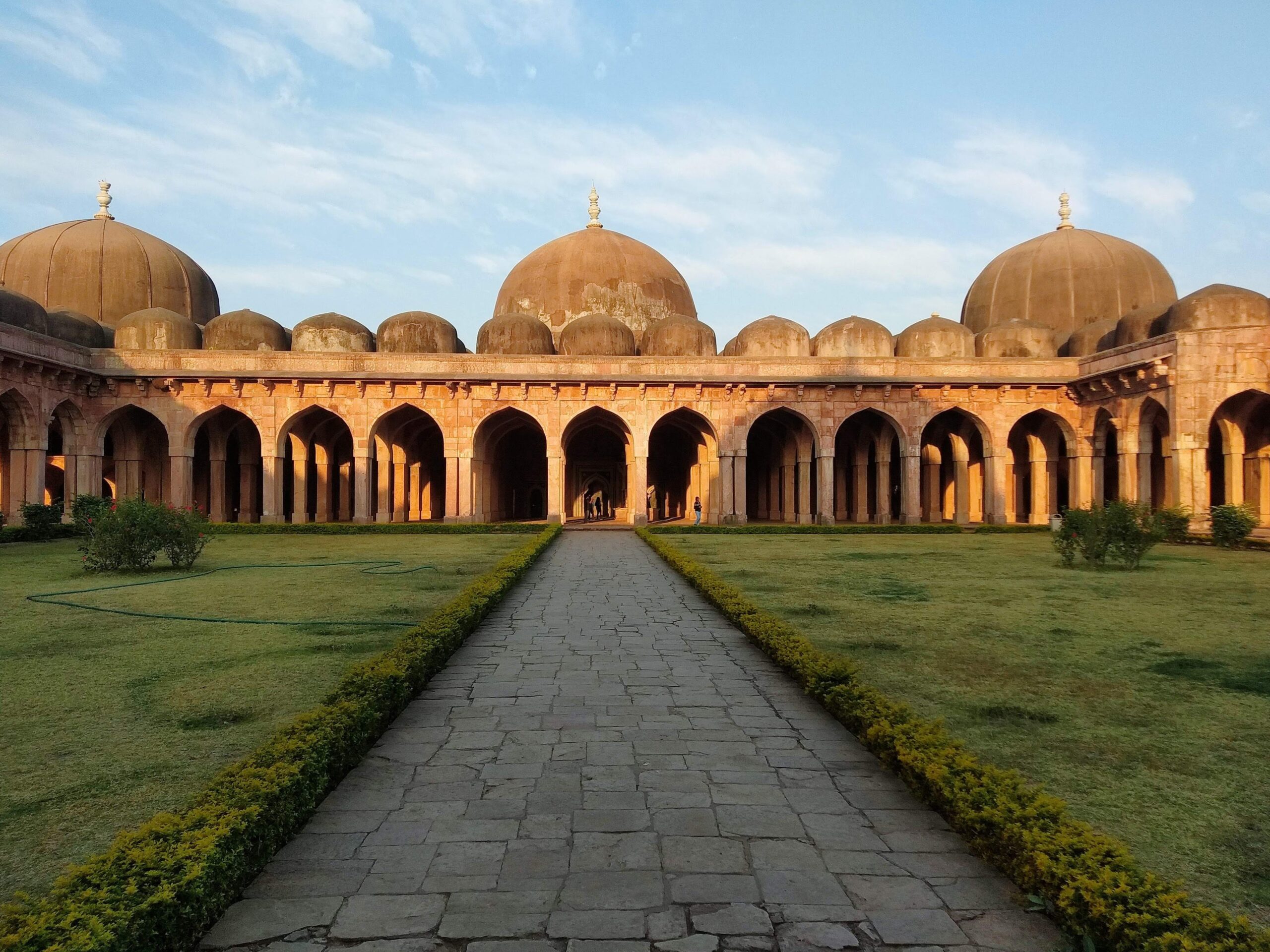
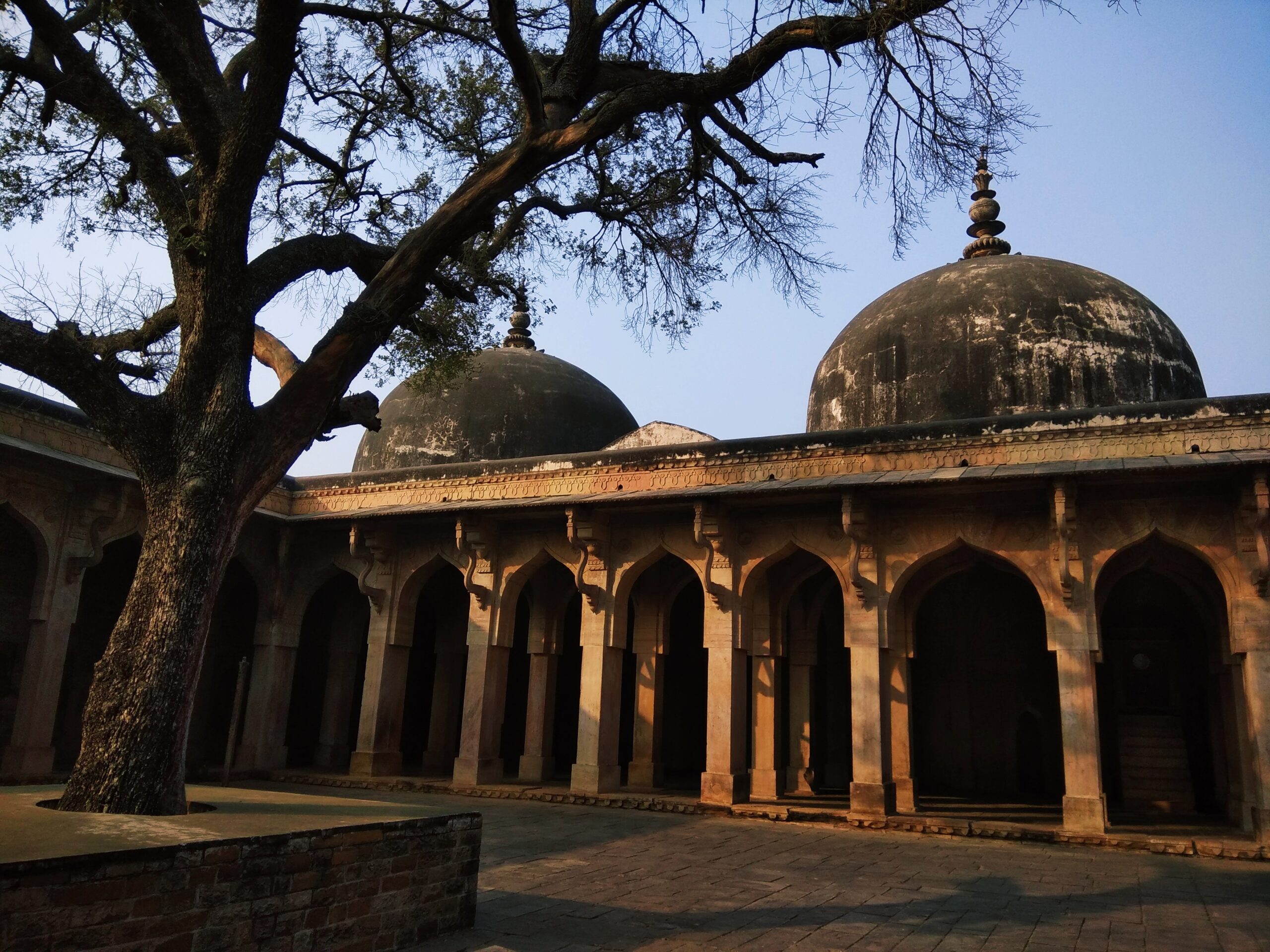
Located directly opposite Ashrafi Mahal, this magnificent mosque is one of Mandu’s finest architectural landmarks. Its grand domes, massive courtyard, and Afghan-inspired design make it a must-visit attraction.
Hoshang Shah’s Tomb
Often regarded as India’s first marble mausoleum, Hoshang Shah’s Tomb is famous for its elegant architecture and is believed to have inspired the design of the Taj Mahal.
Jahaz Mahal
One of Mandu’s most iconic structures, Jahaz Mahal appears like a floating ship between two lakes and offers stunning views during the monsoon season.
Hindola Mahal
Known as the “Swinging Palace,” this unique building features sloping walls and impressive medieval architecture.
Baz Bahadur’s Palace
A beautiful example of Mughal and Rajput architectural influences, this palace offers scenic views of the surrounding hills.
Rani Roopmati Pavilion
Perched atop a hill, this romantic monument provides breathtaking panoramic views of the Narmada Valley and is closely linked to the legendary love story of Baz Bahadur and Roopmati.
Map
Its located 500 m from the mandu bus stand that is well connected to other parts of Madhya Pradesh.
FAQs
1. What was the original purpose of Ashrafi Mahal?
Ashrafi Mahal was originally built as a madrasa, or Islamic educational institution, during the reign of Sultan Mahmud Khilji.
2. Why is it called Ashrafi Mahal?
According to local legend, queens were rewarded with gold coins called “Ashrafis” for climbing the steps of the Victory Tower, leading to the monument’s name.
3. Where is Ashrafi Mahal located?
It is situated in Mandu, Madhya Pradesh, directly opposite Jama Masjid within the central group of monuments.
4. Who built Ashrafi Mahal?
The structure was built during the reign of Sultan Mahmud Khilji of the Malwa Sultanate.
5. What remains of the monument today?
Visitors can see portions of the madrasa, terrace foundations, architectural fragments, and remains associated with the royal mausoleum and Victory Tower.
6. What is the significance of the Victory Tower?
The tower was constructed to commemorate Mahmud Khilji’s victory over Rana Kumbha of Mewar in 1443.
7. How much time is needed to explore Ashrafi Mahal?
Around 30 to 45 minutes is usually sufficient, though visitors often combine it with nearby attractions like Jama Masjid and Hoshang Shah’s Tomb.
8. Is there an entry fee for Ashrafi Mahal?
Entry is generally included within the ticket for the Mandu monument complex. Visitors should check current ASI ticket rates before traveling.
9. What is the best season to visit Mandu?
The monsoon and winter seasons are ideal due to pleasant weather and beautiful landscapes.
10. Can Ashrafi Mahal be visited in a single-day Mandu tour?
Yes, Ashrafi Mahal is one of the key attractions included in most one-day sightseeing tours of Mandu.