Image Source: guru coat
Overview
Nestled amidst the scenic hills of Mandu in Madhya Pradesh, Neelkanth Mahadev Temple is one of the region’s most fascinating spiritual and historical landmarks. Located about 3 km off the main Mandu road, the temple sits in a tranquil valley surrounded by lush greenery and rocky cliffs. The peaceful setting, combined with its unique architectural style and religious importance, makes it a must-visit destination for devotees, history enthusiasts, and nature lovers alike.
The temple complex offers breathtaking views of the surrounding landscape and provides visitors with a serene escape from the bustle of everyday life. Its blend of Hindu spirituality and Indo-Islamic architecture reflects the rich cultural heritage of Mandu.
History of Neelkanth Mahadev Temple
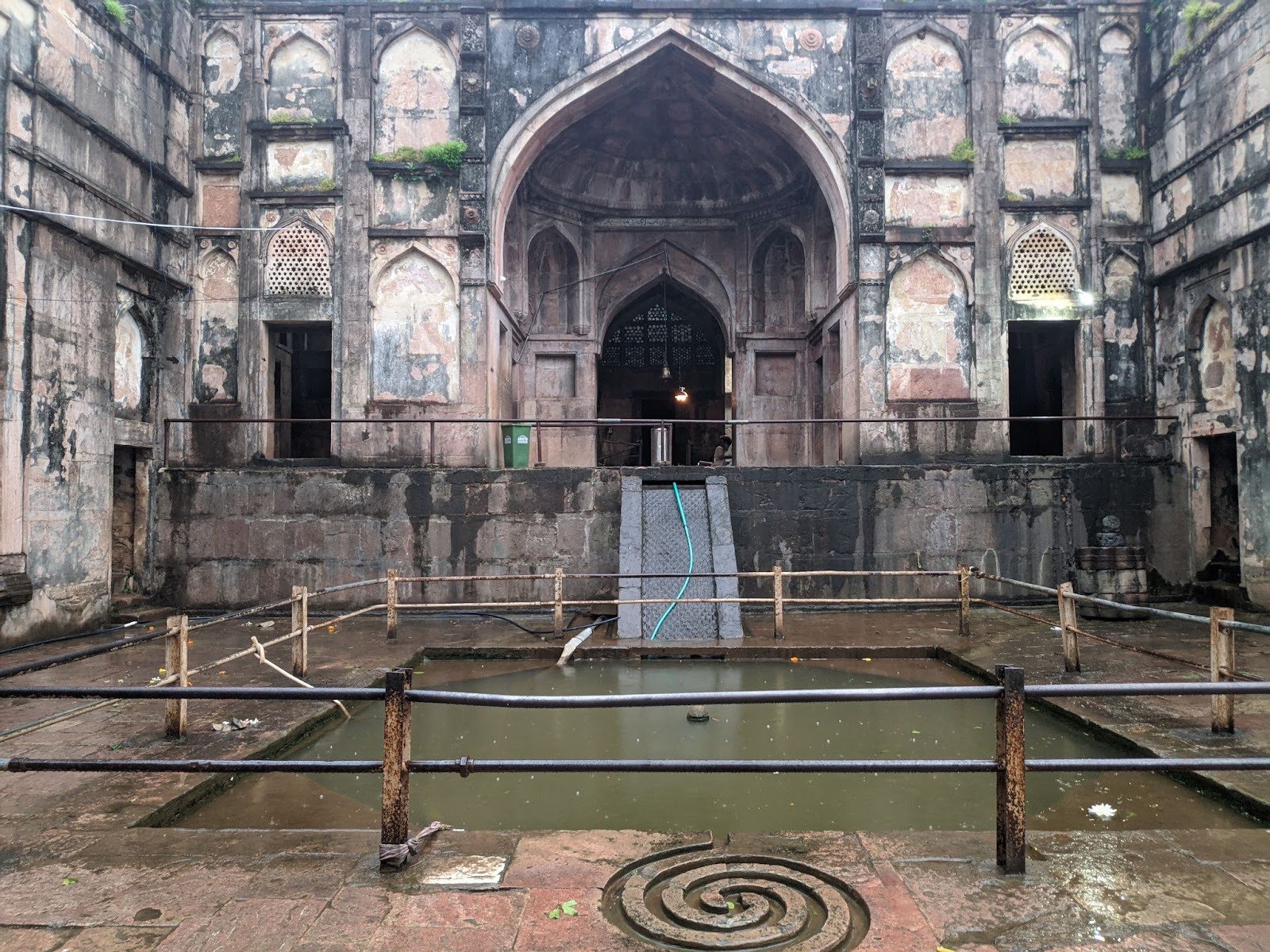
Neelkanth Mahadev Temple is an ancient shrine dedicated to Lord Shiva and has witnessed several transformations throughout its long history. Constructed from striking red sandstone, the structure displays strong Islamic architectural influences, making it quite different from traditional Hindu temples.
Historical accounts suggest that the site originally housed a Shiva temple. During the Mughal era, the shrine was altered and converted into a pleasure retreat by a governor under Emperor Akbar’s administration. However, after the decline of Mughal rule, the temple was restored as a place of Hindu worship, and Lord Shiva once again became the presiding deity of the shrine.
One of the temple’s most unique features is the Shiva Linga, located in a sanctum slightly below the main level. Visitors reach it via a metal ladder. A natural stream continuously flows behind the Linga and collects in a sacred water tank in front of the shrine, creating a tranquil atmosphere.
To enter the temple courtyard, visitors descend around 60 stone steps leading to a sacred pond fed by natural springs. Pilgrims consider the pond highly auspicious and often offer prayers here. A local belief states that placing a leaf within the central section of the water labyrinth while making a wish can help fulfill one’s prayers.
How to Reach Neelkanth Mahadev Temple
Neelkanth Mahadev Temple is located within the historic town of Mandu in the Dhar district of Madhya Pradesh.
By Air: The nearest airport is Devi Ahilya Bai Holkar Airport in Indore, approximately 100 km away. From the airport, taxis and buses are available to Mandu.
By Train: The closest major railway station is Indore Junction. Travelers can hire a cab or take a bus from Indore to Mandu.
By Road: Mandu is well connected by road to Indore, Dhar, and nearby cities. Regular buses and private taxis operate from Indore to Mandu. Once in Mandu, the temple is about 3 km from the main town area and can be reached by auto-rickshaw, taxi, or private vehicle.
Best Time to Visit: The monsoon and winter months, from July to February, offer pleasant weather and beautiful green surroundings, making the temple especially scenic.
Nearby Attractions
Jahaz Mahal
One of Mandu’s most iconic monuments, Jahaz Mahal appears like a floating ship between two lakes and is renowned for its stunning architecture.
Hindola Mahal
Known as the “Swinging Palace,” this historic structure features sloping walls and impressive Afghan-style architecture.
Rani Roopmati Pavilion
Perched atop a hill, this pavilion offers panoramic views of the Narmada Valley and is closely associated with the legendary love story of Baz Bahadur and Rani Roopmati.
Baz Bahadur’s Palace
A beautiful example of Mughal and Rajput architectural influences, this palace was once the residence of Mandu’s last independent ruler.
Rewa Kund
A historic reservoir believed to have supplied water to Rani Roopmati’s residence, located near Baz Bahadur’s Palace.
Jami Masjid
Inspired by the grand mosques of Damascus, this magnificent monument is one of the finest examples of Afghan architecture in India.
Maps
FAQs
Is there an entry fee for Neelkanth Mahadev Temple?
No, entry to the temple is generally free for devotees and visitors.
What are the temple timings?
The temple is usually open from early morning until evening. Timings may vary during festivals and special religious occasions.
Why is the temple architecturally unique?
The temple combines Hindu religious significance with strong Islamic architectural elements, reflecting the historical changes it underwent over the centuries.
How much time is needed to explore the temple?
Most visitors spend around 30 minutes to 1 hour exploring the temple complex and its surroundings.
Is photography allowed?
Photography is generally permitted in the outer areas, but visitors should respect local customs and seek permission before taking photographs inside the sanctum.
Which is the best season to visit?
Monsoon and winter are considered the best times to visit, as the valley becomes lush green and the weather remains pleasant.
Is the temple suitable for elderly visitors?
Yes, although visitors need to descend approximately 60 steps to reach the courtyard. Elderly visitors should take care while navigating the steps.