Image Souce: Vishal Gupta
About Sanchi Stupa 3
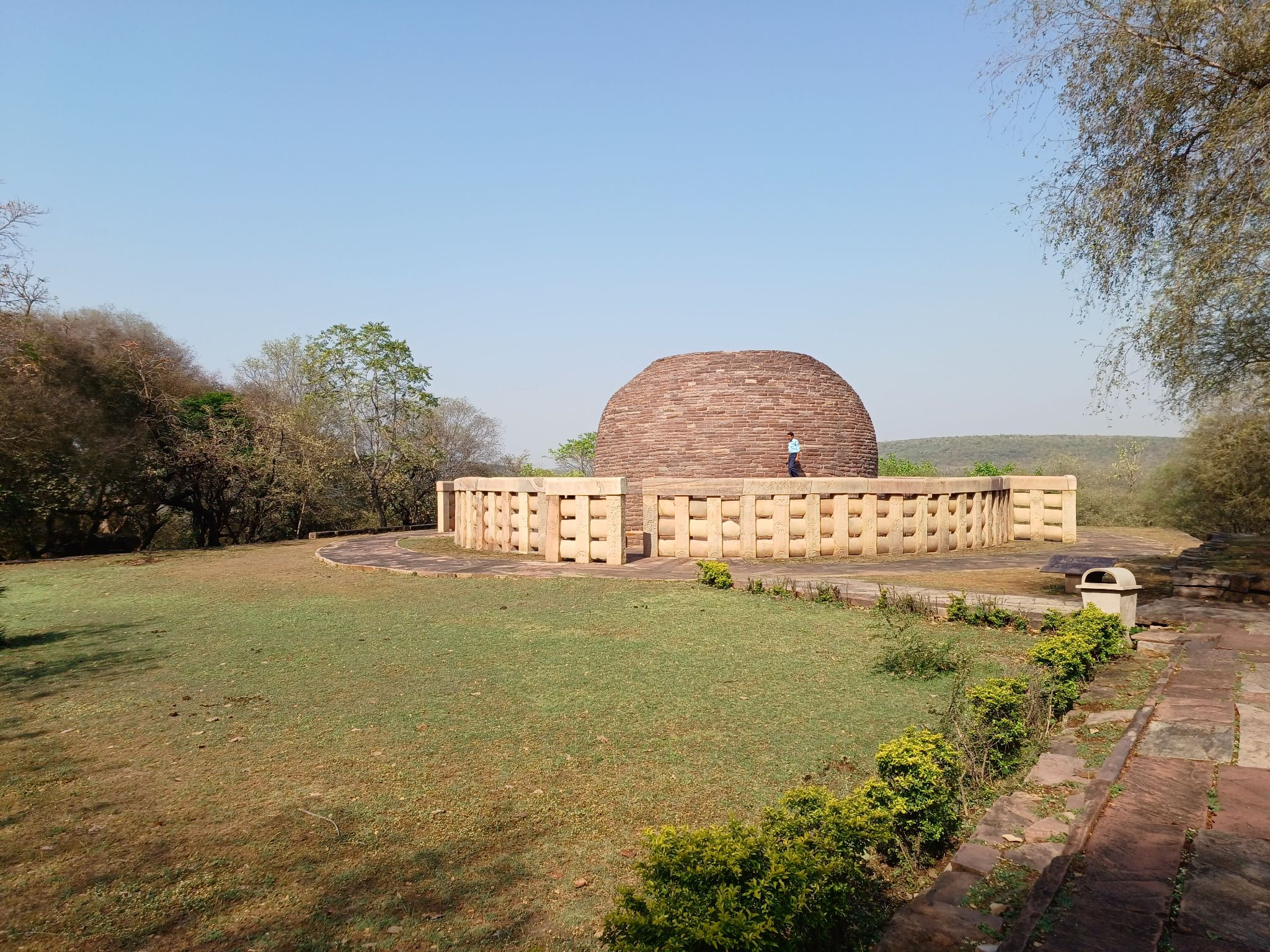
Located in the historic town of Sanchi, Stupa 3 is one of the lesser-known yet highly significant Buddhist monuments in the region. Sitting just about 1.5 km from Sanchi Railway Station, it lies close to the famous Great Stupa of Sanchi, making it an easy and rewarding stop for visitors exploring the heritage complex.
Though smaller in size, Stupa 3 carries deep historical and spiritual importance and reflects the artistic and religious development of early Buddhism in India.
History
Stupa 3 is positioned just about 100 meters north of the Great Stupa. It dates back to the 2nd century BCE, during the reign of the Shunga dynasty, a period known for its strong patronage of Buddhist architecture and stone craftsmanship.
With a diameter of around 15 meters, it is almost equal in scale to Stupa 2, though it appears more modest in design. Unlike larger monuments with multiple gateways, Stupa 3 originally had a simpler structure with a single entrance, reflecting an earlier phase of stupa architecture.
Architecture and Design Features
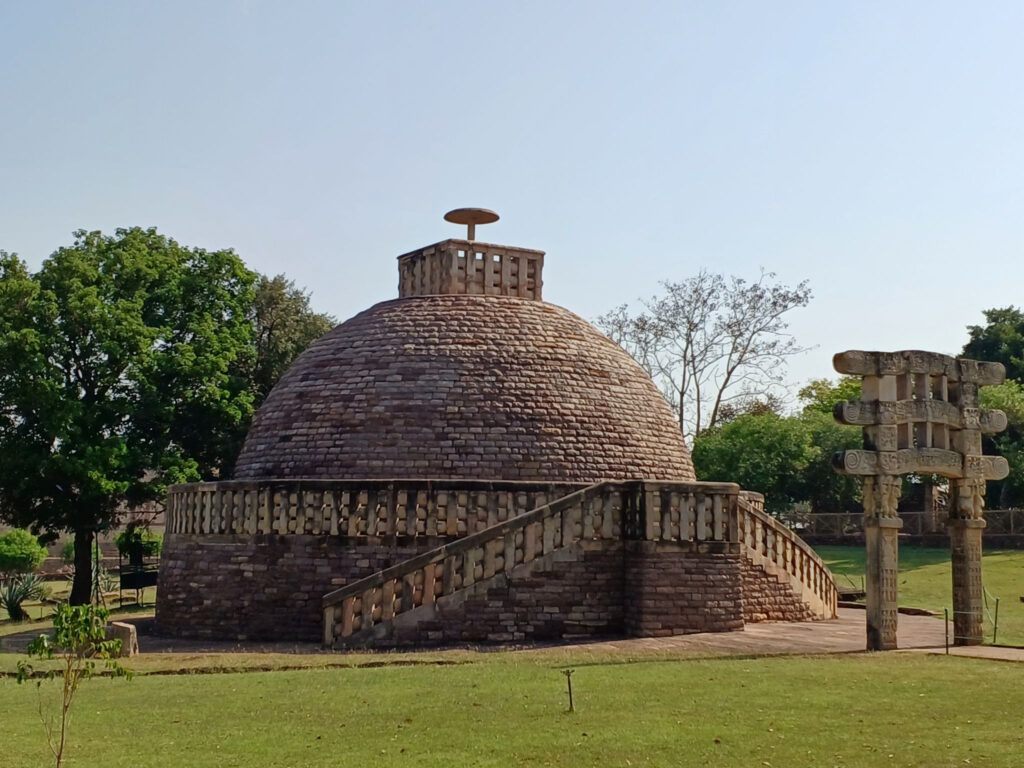
The design of Stupa 3 closely follows the classic hemispherical form seen in early Buddhist stupas. Built primarily from polished stone, its dome reflects both simplicity and refinement.
One of its most striking features is the crown-like umbrella (chhatra) placed at the top of the dome. This umbrella symbol symbolizes spiritual attainment and protection, and it adds a graceful finish to the structure.
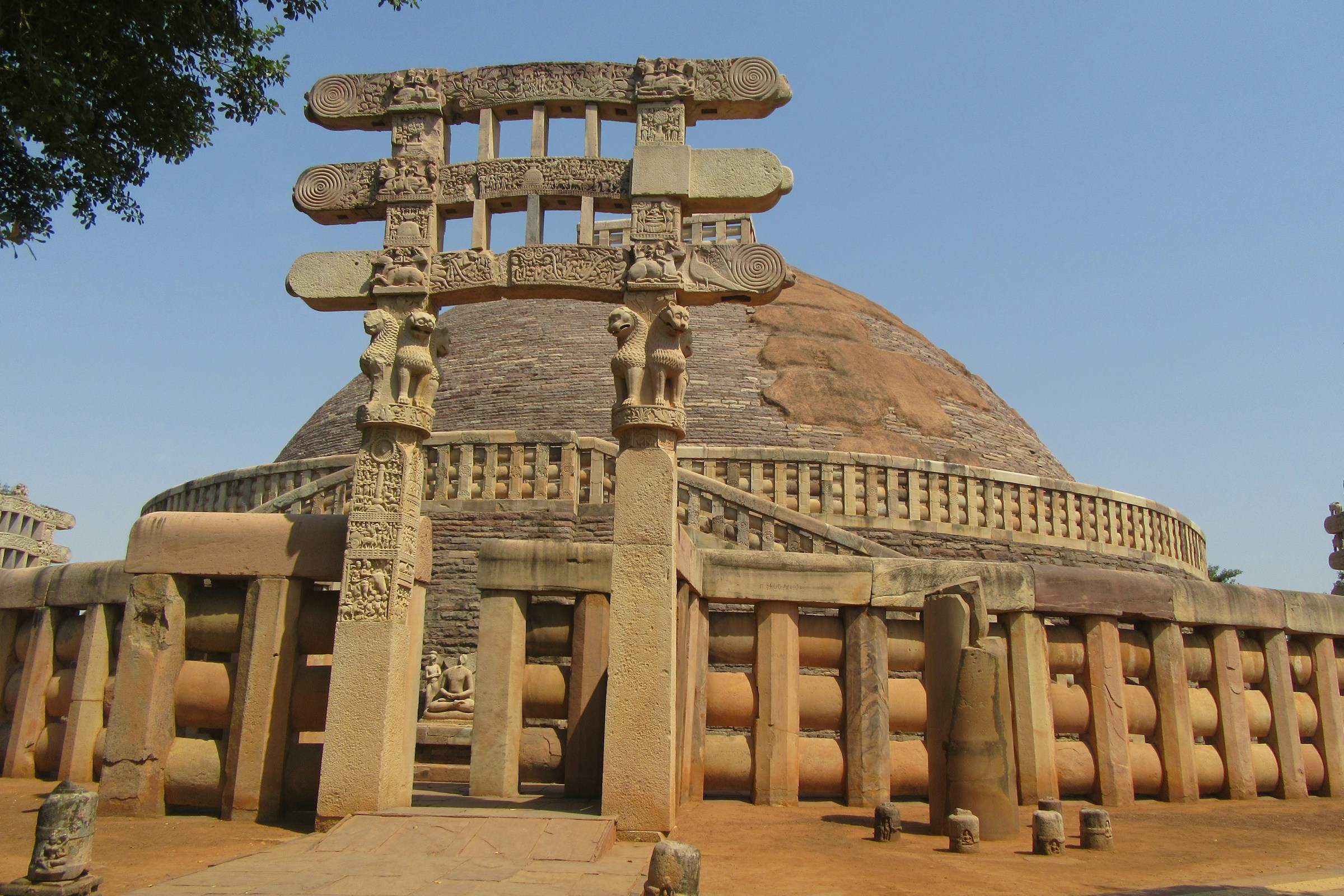
Although the stupa originally had multiple decorative elements, only the southern torana (gateway) remains intact today. This gateway is a later addition, built during the Satavahana period, and showcases detailed stone carvings that differ slightly in style from the earlier Shunga craftsmanship seen in Stupa 2.
The Sacred Relic Chamber
One of the most important discoveries inside Stupa 3 is its relic chamber. It contains two steatite caskets believed to hold the ashes of two of Buddha’s foremost disciples—Shariputra and Mahamoggallana.
These caskets are not only spiritually significant but also archaeologically rich. They contain various sacred materials such as pearls, crystal fragments, amethysts, and bone relics, all carefully preserved as objects of reverence.
During the 19th century, these relics were taken to London by British archaeologists but were later returned to India in 1952. Today, they are preserved at the Chethiyagiri Vihara, located near the Sanchi complex.
Cultural and Historical Importance
Stupa 3 is more than just a monument; it is a direct link to early Buddhist traditions and the spread of Buddhism across ancient India. Its association with key disciples of the Buddha makes it especially sacred for followers and historians alike.
The stupa also highlights the transition of architectural styles between the Shunga and Satavahana periods, offering valuable insight into how Buddhist art evolved over time.
Visiting Sanchi Stupa 3
The entire Sanchi heritage complex is open daily from 6:30 AM to 6:30 PM, making it accessible for both early morning and late afternoon visits.
- Entry fee for Indians and SAARC citizens: ₹30
- Entry fee for foreign visitors: ₹500
Visitors can explore Stupa 3 along with other monuments within the complex, making it a rich cultural and historical experience. The peaceful surroundings, combined with centuries-old stone structures, create an atmosphere that is both educational and deeply calming.
Map
Nearby Attractions
Sanchi Stupa 3 is one of the most important monuments within the Sanchi Buddhist complex. Built close to the Great Stupa, it is believed to have enshrined the relics of Buddha’s chief disciples, Sariputta and Mahamoggallana. While visiting Stupa 3, travelers can explore several fascinating historical and religious attractions nearby.
1. Great Stupa of Sanchi
The largest and most famous monument at Sanchi, renowned for its magnificent stone gateways, intricate carvings, and status as a UNESCO World Heritage Site.
2. Stupa 2
One of the oldest stupas in the Sanchi complex, famous for its beautifully carved railings and medallions depicting early Buddhist art and symbolism.
3. Ashoka Pillar
A historic pillar commissioned by Emperor Ashoka in the 3rd century BCE, representing the spread of Buddhism during the Mauryan era.
4. Sanchi Archaeological Museum
This museum showcases sculptures, relics, inscriptions, and architectural fragments excavated from Sanchi and nearby Buddhist sites, helping visitors better understand the region’s history.
5. Chetiyagiri Vihara
A modern Buddhist monastery that houses sacred relics of Sariputta and Mahamoggallana. It is an important pilgrimage destination, especially during the annual Chetiyagiri Festival.
6. Great Bowl of Sanchi
A massive stone bowl believed to have been used by monks for collecting and distributing food within the monastic community.
7. Temple 18
An ancient temple structure located within the Sanchi complex, representing one of the earliest examples of temple architecture in India.
8. Temple and Monastery 45
An important archaeological site featuring the remains of a Buddhist monastery and temple, offering insight into monastic life at Sanchi.
9. Udayagiri Caves
Located around 13 km from Sanchi, these rock-cut caves are known for their Gupta-era sculptures and the famous Varaha relief.
10. Heliodorus Pillar
An ancient stone column erected by the Greek ambassador Heliodorus in the 2nd century BCE, highlighting the cultural exchanges between ancient India and the Hellenistic world.
FAQs
1. Where is Sanchi Stupa 3 located?
It is located in Sanchi, just north of the Great Stupa within the main archaeological complex.
2. How far is Stupa 3 from the railway station?
It is approximately 1.5 km from Sanchi Railway Station.
3. What is special about Sanchi Stupa 3?
It is believed to house relics of Buddha’s disciples Shariputra and Mahamoggallana, making it highly sacred.
4. Who built Sanchi Stupa 3?
It was built during the Shunga dynasty in the 2nd century BCE, with later additions from the Satavahana period.
5. What are the visiting hours?
The Sanchi site is open from 6:30 AM to 6:30 PM every day.
6. Where are the relics of Stupa 3 now?
The relics are currently preserved at Chethiyagiri Vihara near Sanchi.