Image Source: Puja Rakshit
About Lingaraja Temple
Right in the heart of Bhubaneswar—often called the “City of Temples”—stands the magnificent Lingaraja Temple. It’s not just one of the most important religious sites in Eastern India, but also one of the finest examples of Kalinga architecture you’ll come across.
Dedicated to Lord Shiva, worshipped here as Harihara (a unique form that combines both Shiva and Vishnu), the temple beautifully reflects a blend of spiritual traditions. Whether you’re visiting as a devotee or a traveler interested in history and architecture, Lingaraja Temple leaves a lasting impression.
History
The origins of Lingaraja Temple go back to the 7th century, though much of what you see today was developed during the 11th century under the Somavamsi dynasty. Later, the Ganga rulers added to its scale and grandeur.
Over time, Bhubaneswar evolved into a major Shaivite center, but what’s fascinating is how this temple also embraced Vaishnavite influences. That’s why the main deity is worshipped as Harihara—a symbolic union of Shiva (Hara) and Vishnu (Hari). It’s a rare and meaningful blend that sets this temple apart.
Architecture
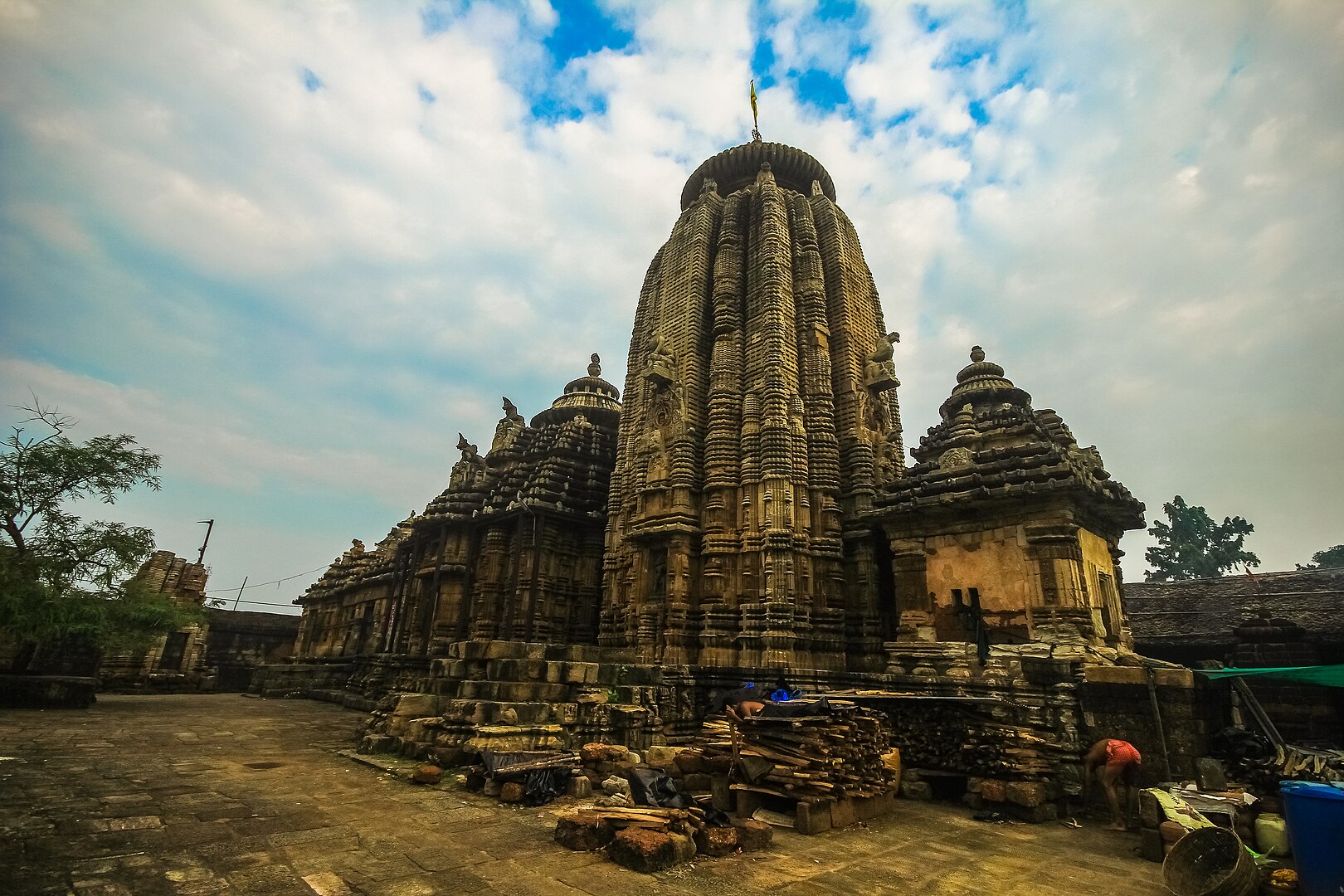
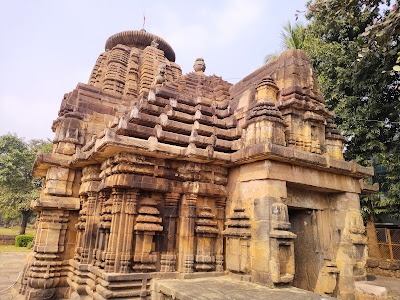
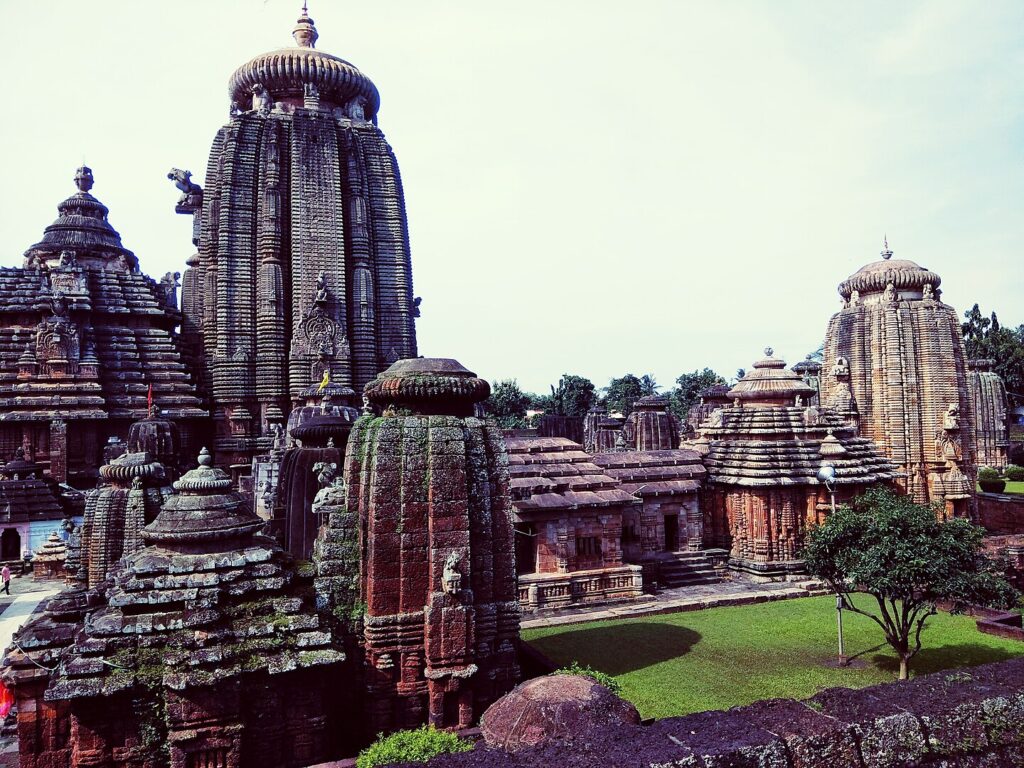
Lingaraja Temple is a classic example of Kalinga architecture at its peak. Built using sandstone, the temple rises to an impressive height of about 180 feet, dominating the skyline of the old town.
The structure follows the traditional four-part layout:
- Vimana (Sanctum): The towering spire where the main deity resides
- Jagamohana (Assembly Hall): A space for devotees to gather and pray
- Natamandira (Dancing Hall): Once used for temple dances and rituals
- Bhoga Mandapa (Offering Hall): Where offerings are made to the deity
The complex itself is quite large, with over 60 smaller shrines dedicated to various gods and goddesses. As you walk around, you’ll notice intricate carvings—flowers, animals, divine figures—all showcasing the incredible craftsmanship of ancient Odishan artisans.
Religious Importance
At the heart of the temple is a swayambhu (self-manifested) Shiva Lingam, believed to have emerged naturally from the earth. Devotees revere Lingaraja as the guardian deity of Bhubaneswar.
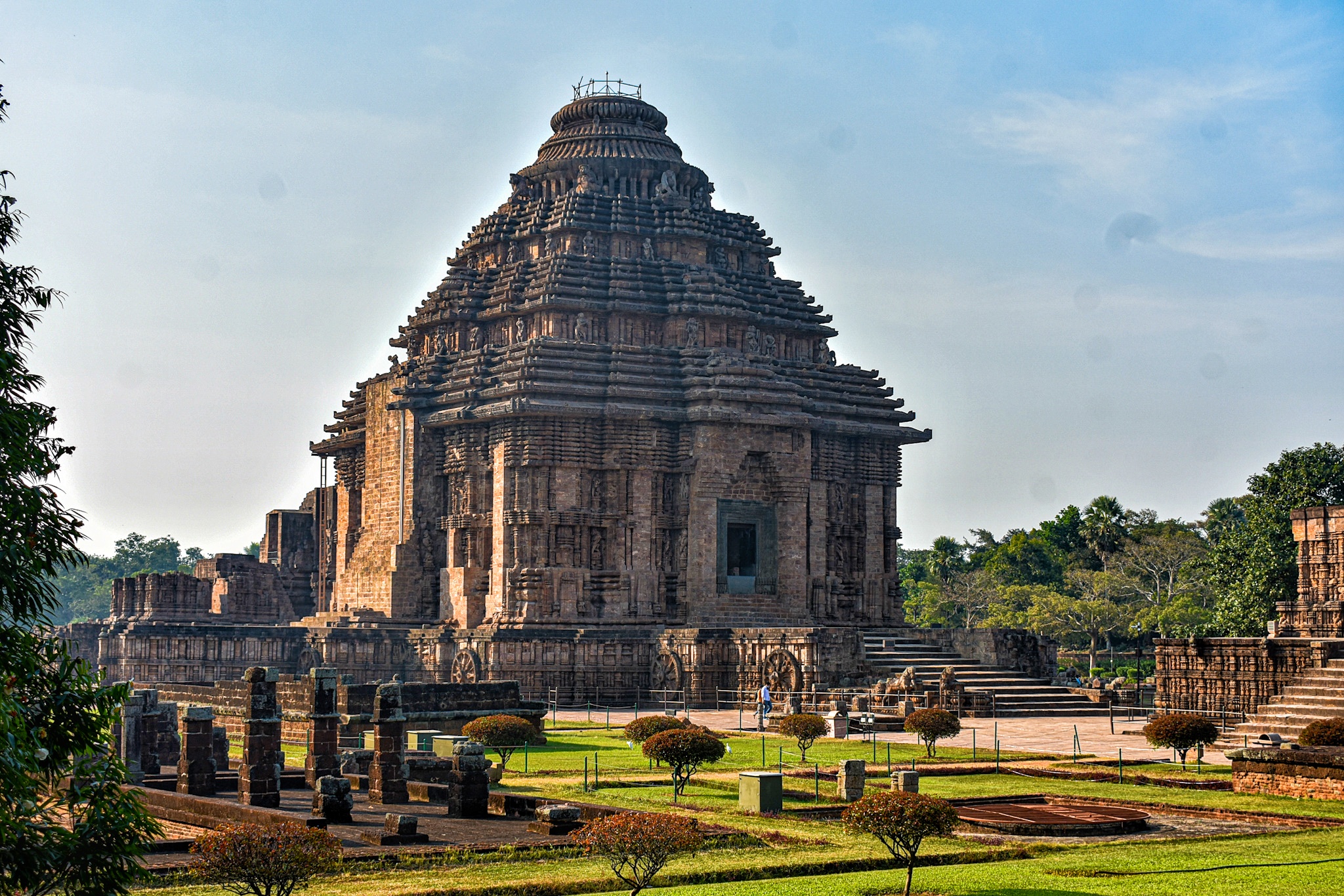
Many pilgrims believe that visiting Lingaraja Temple completes a sacred journey that includes Jagannath Temple and Konark Sun Temple, making it an essential part of Odisha’s spiritual circuit.
Festivals and Rituals
The temple is active throughout the year, but festivals bring it to life in a special way.
One of the most important celebrations is the Chandan Yatra, a 22-day festival where deities are taken in a ceremonial procession and boat ride on the nearby lake.
Another major occasion is Maha Shivaratri, when thousands of devotees gather, offer prayers, light lamps, and stay awake through the night in devotion.
Bindu Sagar Lake Connection
Just next to the temple lies Bindu Sagar Lake, which plays an important role in temple rituals. According to legend, the waters of all sacred rivers of India meet here, making it highly auspicious.
During festivals, deities are brought here in grand processions for ritual bathing and ceremonies, adding to the spiritual atmosphere of the area.
Local Culture and Surroundings
The temple is located in Bhubaneswar’s Old Town, a place full of character. Narrow lanes, traditional homes, local sweet shops, and small markets create a vibrant, lived-in feel.
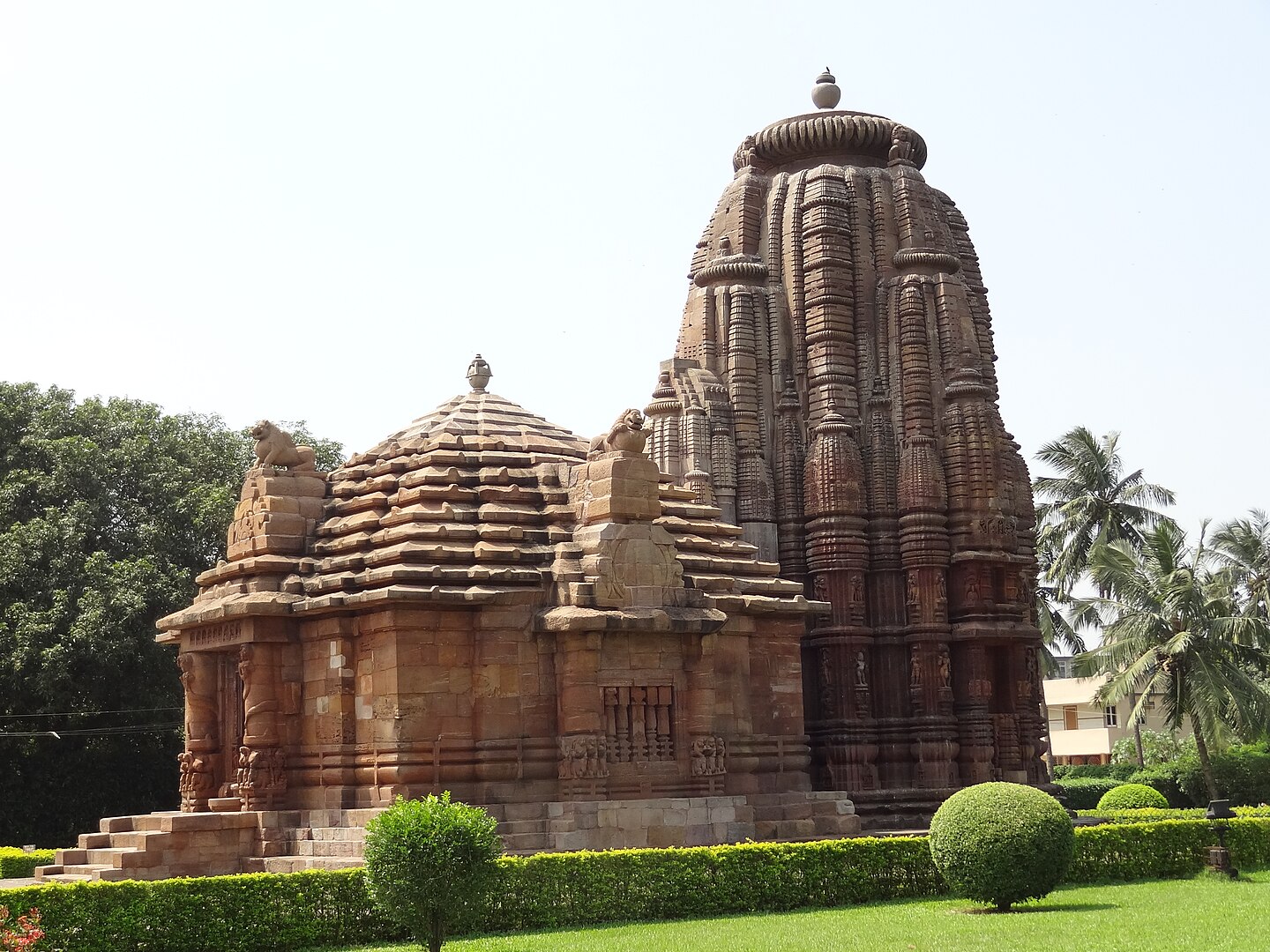
You’ll find plenty to explore nearby as well, including Mukteshwar Temple, Rajarani Temple, and Parasurameswara Temple—making this area a rich cultural circuit for temple lovers.
Travel Tips
- Location: Old Town, Bhubaneswar.
- Entry Note: Only Hindus are allowed inside the main temple. Others can view it from a designated platform outside.
- Best Time to Visit: October to March for pleasant weather and festival experiences.
- Nearby Spots: Kedar Gouri Temple, Ekamra Kanan Botanical Garden, Odisha State Museum.
How to Reach
By Air:
The nearest airport is Biju Patnaik International Airport, just about 3 km away.
By Rail:
Bhubaneswar Railway Station is around 4 km from the temple and well connected to major cities like Delhi, Kolkata, Mumbai, and Chennai.
By Road:
Bhubaneswar is easily accessible via NH-16 and NH-316. The Baramunda Bus Stand connects the city to nearby places like Puri, Cuttack, Konark, Sambalpur, and Rourkela.
Nearby Attractions
- Bindu Sagar Lake (about 200 m) – A sacred lake beside Lingaraja Temple, surrounded by numerous ancient shrines. It is an important pilgrimage site and offers a peaceful atmosphere.
- Ananta Vasudeva Temple (about 300 m) – A 13th-century Vaishnavite temple dedicated to Lord Krishna, Balarama, and Subhadra, renowned for its beautiful Kalinga architecture and traditional temple kitchen.
- Brahmeswar Temple (about 1.5 km) – An 11th-century Shiva temple celebrated for its intricate carvings, elegant architecture, and historical importance.
- Mukteswara Temple (about 1.5 km) – Known as the “Gem of Odisha Architecture,” this temple is admired for its exquisitely carved stone torana and finely sculpted walls.
- Parashurameswar Temple (about 1.5 km) – One of the oldest surviving temples in Bhubaneswar, showcasing early Kalinga-style architecture dating back to the 7th century.
- Siddhesvara Temple (about 1.6 km) – A small yet historically significant Shiva temple known for its classic Kalinga architectural style.
- Rajarani Temple (about 2 km) – A magnificent temple built of reddish-golden sandstone, famous for its elegant sculptures and ornate carvings.
- Vaital Deul Temple (about 2 km) – An 8th-century temple dedicated to Goddess Chamunda, distinguished by its unique Khakhara-style architecture and Tantric associations.
- Odisha State Museum (about 3 km) – A museum featuring archaeological discoveries, palm-leaf manuscripts, sculptures, coins, and exhibits on Odisha’s rich cultural heritage.
- Khandagiri and Udayagiri Caves (about 7 km) – Ancient Jain rock-cut caves dating to the 2nd century BCE, famous for their carvings, inscriptions, and panoramic views of Bhubaneswar.
- Dhauli Shanti Stupa (about 8 km) – A serene white Peace Pagoda built on Dhauli Hills, marking the site where Emperor Ashoka embraced Buddhism after the Kalinga War.
- Nandankanan Zoological Park (about 18 km) – A renowned zoological park known for its white tigers, lion safari, botanical gardens, boating facilities, and conservation initiatives.
Google Maps
FAQs
1. Why is Lingaraja Temple famous?
It’s one of the largest and most important Shiva temples in India, known for its grand architecture and spiritual significance.
2. Which deity is worshipped here?
Lord Shiva is worshipped here as Harihara, a combined form of Shiva and Vishnu.
3. Can non-Hindus enter the temple?
Non-Hindus are not allowed inside the temple but can view it from an elevated platform outside.
4. What is the best time to visit?
Winter (October to March) is ideal. Maha Shivaratri is also a great time if you want to witness the temple’s energy at its peak.
5. How much time should I spend here?
Around 1–2 hours is enough to explore the temple complex and nearby areas.
6. What should I wear while visiting?
Modest and respectful clothing is recommended as it’s an active place of worship.
7. Can I visit nearby attractions on the same day?
Yes, the Old Town area has several temples and cultural spots within a short distance.