Image Source: Devinder kaur007
About Qila Mubarak
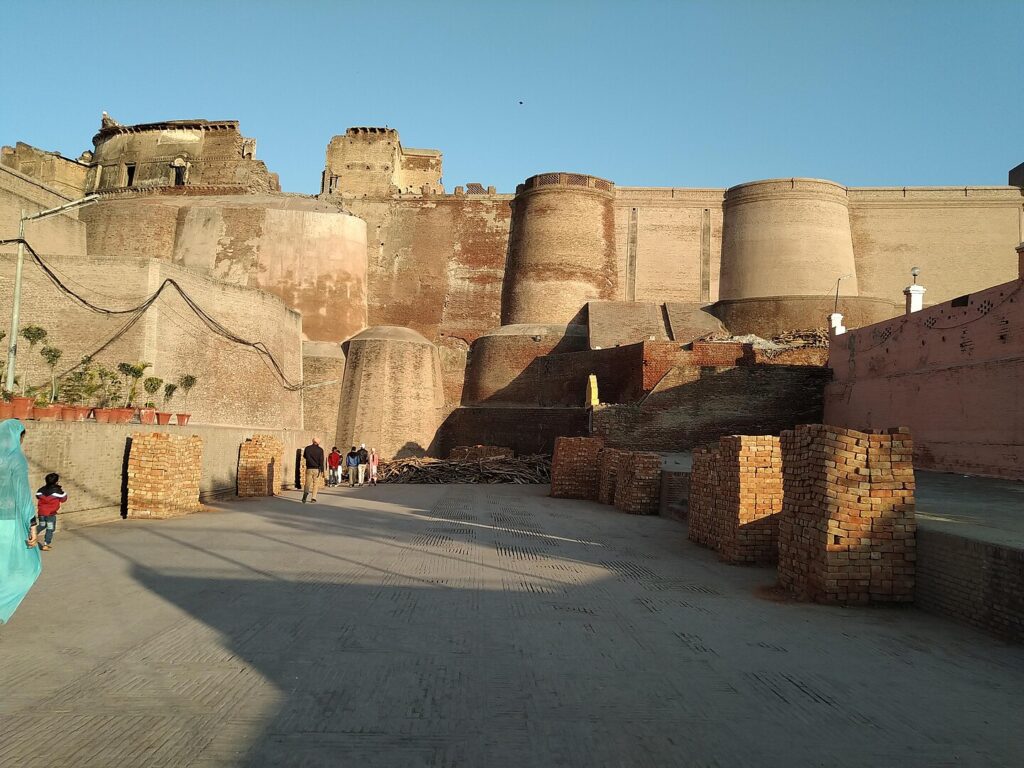
Qila Mubarak, literally ‘The Blessed Fort,’ is one of Punjab’s grandest and oldest forts. Located in the heart of Patiala city, the fort is unlike other forts that dominate hillsides or riversides. Standing at the very core of Patiala’s royal heritage, the fort narrates the rise of the Phulkian dynasty that showcases a blend of Mughal, Rajput, and Sikh architectural influences.
History
The origin of the fort dates back to the mid-18th century, and it is considered the oldest part of the city. It was built by Baba Ala Singh, the founder of the Patiala State and the first of the Phulkian rulers.
The construction of the fort began around 1763 CE and since then has served as a military stronghold and the principal royal residence of the Patiala rulers until they expanded into the grand Moti Bagh Palace and other estates.
Qila Mubarak was a hub of political and cultural life for the Sikh rulers who rose in power during the decline of the Mughal Empire and the Afghan incursions into Punjab. Over time, it was expanded by successive Maharajas, notably Maharaja Amar Singh and Maharaja Bhupinder Singh , who added new wings and decorative elements.
Architecture
Qila Mubarak is not a single fort — it’s a complex that includes:
Qila Androon:
This inner fort-palace is the main highlight—its rooms are famous for intricate frescoes , mirror work , and wall paintings that depict scenes from Hindu mythology, court life, and floral motifs. Many chambers have influences of Rajput wall painting styles fused with Mughal floral decoration.
Darbar Hall:
An exquisite hall with a high ceiling, massive chandeliers, gilt work, and antique furniture. Historically, this is where the Maharaja held court and received visitors.
Artistic Detailing:
You’ll notice Mughal arches, jharokhas (overhanging balconies), carved wooden doors, and richly painted ceilings. The fort’s decorative style reflects how Sikh rulers adapted Mughal-Rajput motifs into their own identity.
Defensive Features:
Though more a royal residence than a battle fort, Qila Mubarak’s thick ramparts and sturdy gates provided protection during turbulent periods.
Restoration Efforts
Due to age, neglect, and lack of funds, Qila Mubarak suffered significant deterioration. Thankfully, it has been under various phases of restoration supported by the Archaeological Survey of India (ASI) and the Indian National Trust for Art and Cultural Heritage (INTACH) . Conservation work aims to preserve its frescoes, wooden structures, and delicate ornamentation.
Why Travelers Should Visit
For travelers, Qila Mubarak is:
A time capsule of Punjab’s princely state era.
An architectural gem that reveals how Sikh rulers blended regional influences to express their power.
A photographer’s delight, with old arches, painted ceilings, and regal courtyards.
A great complement to nearby heritage sites in Patiala, such as Sheesh Mahal, Moti Bagh Palace, and the Old Moti Bagh Mini Zoo. Traveler Tips Best Time to Visit: October to March, when the weather is pleasant. Entry & Timings: The fort is generally open daily, but restoration work can limit access to certain areas—check locally for timings and any guided tours. Photography: Allowed in most public areas—the painted rooms are a highlight! How to Reach:
Nearest City: Patiala, Punjab.
Railway Station: Patiala Railway Station (~2 km from the fort).
By Road: Well connected to Chandigarh (~70 km) and Ludhiana (~95 km).
Combine With: A stroll through Patiala’s old bazaars for Phulkari embroidery , Punjabi juttis , and local sweets. Don’t miss the Sheesh Mahal Museum nearby.
How to Reach Qila Mubarak
Qila Mubarak is located in the heart of Patiala, Punjab, and is one of the city’s most iconic historical landmarks. Constructed in the 18th century by Baba Ala Singh, the founder of the Patiala dynasty, the fort complex showcases an impressive blend of Rajput, Mughal, and Sikh architecture. It houses magnificent courtyards, palaces, museums, and historic gateways that reflect the royal heritage of the former princely state. Its central location makes it easily accessible from all parts of Patiala. (patiala.nic.in)
By Air
The nearest airport is Chandigarh International Airport, located about 65 km from Qila Mubarak. The airport is well connected to major Indian cities, and taxis and app-based cab services are readily available for the journey to Patiala.
By Train
Patiala Railway Station is the nearest railhead, situated approximately 3 km from the fort. Regular trains connect Patiala with Delhi, Chandigarh, Ambala, Ludhiana, Amritsar, and several other cities. Auto-rickshaws and taxis are easily available outside the station.
By Road
Qila Mubarak enjoys excellent road connectivity with Chandigarh (70 km), Ambala (55 km), Ludhiana (95 km), and Delhi (around 250 km) via national and state highways. Punjab Roadways and private buses operate frequent services to Patiala. From the Patiala Bus Stand, the fort is only about 2 km away and can be reached by auto-rickshaw, taxi, or local bus. (patiala.nic.in)
Nearby Attractions
- Sheesh Mahal (About 4 km) – Built by Maharaja Narinder Singh, Sheesh Mahal is famous for its exquisite mirror work, beautiful frescoes, and the Medal Gallery that showcases rare medals and artworks from around the world.
- Moti Bagh Palace (Around 4 km) – A magnificent royal palace that now houses the Netaji Subhas National Institute of Sports and the North Zone Cultural Centre. Its beautiful gardens and grand architecture make it one of Patiala’s top attractions.
- Baradari Gardens (Around 2 km) – A beautifully landscaped garden featuring fountains, walking paths, and the historic Baradari Palace, making it a popular recreational spot for families and visitors.
- Kali Mata Temple (Around 2 km) – One of Patiala’s most revered temples, dedicated to Goddess Kali. It attracts thousands of devotees, especially during Navratri.
- National Institute of Sports (NIS) Museum (Around 4 km) – Located within the Moti Bagh Palace complex, the museum showcases India’s sporting heritage, Olympic memorabilia, and achievements of legendary athletes.
- Bahadurgarh Fort (Around 8 km) – A historic Sikh-era fort known for its massive walls, impressive gateways, and Gurudwara Sahib located within the fort complex.
- Gurdwara Dukh Niwaran Sahib (Around 5 km) – One of Punjab’s most important Sikh pilgrimage sites, associated with Guru Tegh Bahadur Ji and believed to possess healing powers.
- Bir Moti Bagh Wildlife Sanctuary (Around 8 km) – A peaceful wildlife sanctuary on the outskirts of Patiala, home to nilgai, peacocks, jackals, and several bird species.
- Lachman Jhoola Park (Around 6 km) – A popular family destination featuring a small suspension bridge, gardens, and boating facilities.
- Patiala Heritage Walk (Within the Old City) – Explore the historic streets around Qila Mubarak to discover traditional havelis, bustling bazaars, old gates, and famous eateries serving authentic Patiala cuisine.
Why Qila Mubarak is Special
Qila Mubarak is more than just an old fort. It’s the birthplace of Patiala’s royal legacy and a standing reminder of the Sikh Confederacy’s rise in 18th-century Punjab. Its frescoes, painted walls, and regal chambers speak volumes of a time when the Phulkian rulers balanced diplomacy, culture, and art amid the shifting sands of North Indian politics.
For any traveler interested in Punjab’s royal stories, Qila Mubarak is a must-see.
Google Maps
FAQs
1. Why is Qila Mubarak famous?
Qila Mubarak is famous for being the historic seat of the Patiala royal family and for its magnificent blend of Sikh, Rajput, and Mughal architecture. The fort complex includes palaces, courtyards, museums, and beautifully decorated halls that reflect Punjab’s royal heritage. (patiala.nic.in)
2. What is the best time to visit Qila Mubarak?
The ideal time to visit is from October to March, when the weather is pleasant for exploring the fort and other attractions in Patiala.
3. Is there an entry fee for Qila Mubarak?
Yes. A nominal entry fee is generally charged for visitors. Additional charges may apply for photography, videography, or access to specific museum sections. It is advisable to check the latest rates before visiting.
4. How much time is required to explore Qila Mubarak?
Most visitors spend 2 to 3 hours exploring the fort, museums, courtyards, and nearby heritage sites.
5. Is Qila Mubarak suitable for family visits?
Yes. The fort is an excellent destination for families, students, photographers, and history enthusiasts interested in Punjab’s royal heritage.
6. Are guided tours available?
Guided tours may be available through the Punjab Tourism Department or local guides, helping visitors understand the history, architecture, and significance of the fort complex.
7. Are food and parking facilities available nearby?
Yes. Parking facilities, restaurants, cafés, and local food outlets are available close to the fort, making it convenient for visitors.
8. Can Qila Mubarak be combined with other attractions in Patiala?
Yes. Visitors often combine Qila Mubarak with Sheesh Mahal, Moti Bagh Palace, Baradari Gardens, Kali Mata Temple, and Gurdwara Dukh Niwaran Sahib for a full-day heritage tour of Patiala.