Image Source: Vijay Mahawer
About Rampuria Group of Havelis
Located in the heart of Bikaner, the magnificent Rampuria Group of Havelis is one of the finest examples of Rajasthan’s rich architectural heritage. Famous for their intricate carvings, grand facades, and artistic beauty, these historic havelis reflect the luxurious lifestyle and refined taste of the wealthy merchant families of old Bikaner.
Situated just around 2 kilometers from Bikaner Junction Railway Station, the Rampuria Havelis are among the city’s most admired landmarks. Their narrow lanes, richly decorated windows, and red sandstone structures transport visitors back to a time when Bikaner flourished as an important trading center on the desert routes of Rajasthan.
Often referred to as the “Pride of Bikaner,” these havelis are not just architectural marvels but also living symbols of the city’s cultural and artistic legacy.
History of Rampuria Havelis
The construction of the Rampuria Group of Havelis began several centuries ago under the patronage of the affluent Rampuria family, who were among the most influential merchants and financiers of Bikaner. The family gained wealth and prominence through trade and commerce and invested heavily in building lavish residences that reflected their prosperity and social status.
Over generations, multiple havelis were constructed by different members of the Rampuria family, each showcasing unique artistic elements while maintaining a harmonious architectural style. These mansions gradually became symbols of prestige and craftsmanship in the region.
The havelis stand today as an enduring reminder of Bikaner’s prosperous mercantile history and the cultural richness of Rajasthan during the Rajput and colonial periods.
Architectural Splendor
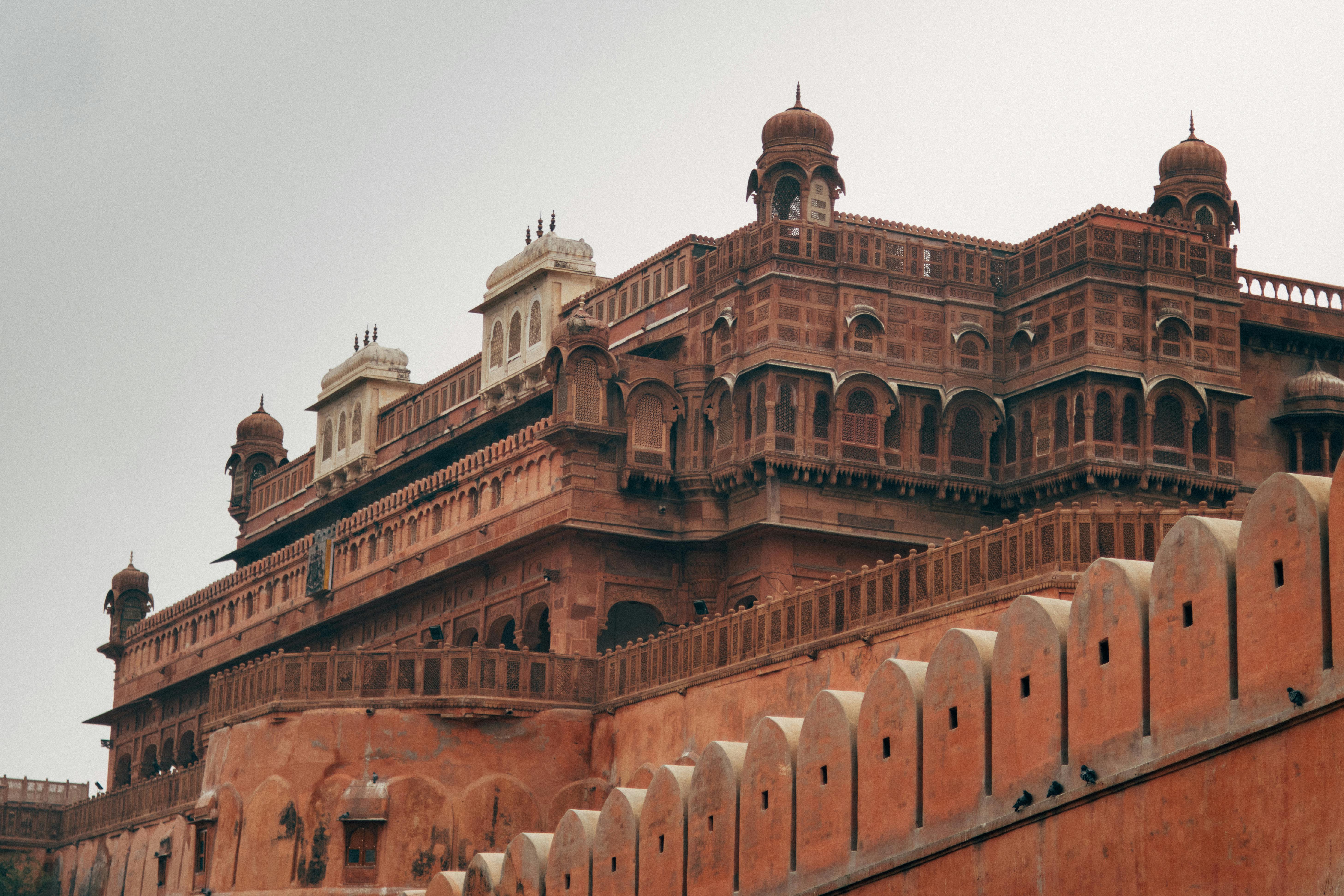
One of the most striking features of the Rampuria Havelis is their stunning architecture crafted from the famous Dulmera red sandstone. The reddish hue of the stone gives the structures a royal appearance, especially during sunrise and sunset when the buildings glow beautifully under the desert light.
The havelis are renowned for their highly detailed carvings and exquisite craftsmanship. Every balcony, archway, and window displays intricate artistry that reflects the skill of local craftsmen from centuries ago.
Beautiful Jharokhas and Facades
The beautifully carved jharokhas (overhanging balconies) are among the most eye-catching elements of the havelis. These balconies were traditionally used by women of the household to observe street activities while maintaining privacy.
The exterior walls are adorned with delicate stone carvings, floral patterns, geometric motifs, and ornamental designs that demonstrate the artistic excellence of Rajasthan’s traditional architecture.
Intricate Latticed Windows
The latticed windows, also known as jalis, are another remarkable feature of the havelis. Apart from adding elegance to the buildings, these finely carved stone screens allowed natural ventilation and filtered sunlight into the interiors, helping maintain cool temperatures during the hot desert climate.
Blend of Rajput, Mughal, and Victorian Influences
The architecture of the Rampuria Havelis beautifully combines Rajput, Mughal, and Victorian design elements. While the exteriors reflect traditional Rajasthani craftsmanship, the interiors reveal traces of colonial-era influence in their décor and furniture arrangements.
Drawing rooms and halls feature Victorian-style furnishings alongside Mughal-inspired arches and Rajput decorative patterns, creating a unique fusion of artistic traditions.
Interior Beauty and Artistic Craftsmanship
The interiors of the Rampuria Group of Havelis are equally impressive. Fine woodwork, painted ceilings, antique furniture, and decorative wall art add richness to the living spaces.
The wooden carvings found throughout the havelis depict birds, flowers, animals, and traditional motifs in extraordinary detail. The use of handcrafted wood, mirror work, and artistic paintings reflects the luxurious lifestyle of the merchant families who once lived here.
Many rooms still preserve their old-world charm, offering visitors a glimpse into the royal and aristocratic lifestyle of historic Rajasthan.
Cultural Importance
The Rampuria Havelis are more than just beautiful mansions — they are an important part of Bikaner’s cultural identity. These heritage structures showcase the prosperity of the city’s trading community and highlight the remarkable skills of local artisans and craftsmen.
Walking through the narrow lanes surrounding the havelis feels like stepping into a living museum of Rajasthan’s architectural and cultural heritage. The atmosphere around the havelis, with their richly carved facades and timeless elegance, continues to captivate travelers, photographers, historians, and architecture enthusiasts.
A Visual Delight for Visitors
Visiting the Rampuria Havelis is truly a memorable experience. The close grouping of these massive mansions creates a spectacular streetscape unlike anywhere else in Rajasthan.
Every haveli has its own distinct personality and decorative style, making the area a paradise for photography lovers and heritage explorers. Whether admired during the soft morning light or illuminated during the evening, the havelis leave a lasting impression on visitors.
The surrounding old city markets and traditional streets further enhance the cultural charm of the experience.
Timings and Visitor Information
Timings
- Open daily from 6:00 AM to 6:00 PM
Visitors are advised to explore the havelis during daylight hours to fully appreciate the intricate architectural details and carvings.
Photography
The beautifully decorated facades and narrow heritage lanes make the Rampuria Havelis one of the most photogenic locations in Bikaner. Carrying a camera is highly recommended for capturing the intricate artwork and historic ambiance.
How to Reach Rampuria Havelis
By Road
Rampuria Group of Havelis is located within the old city area of Bikaner and can easily be reached by auto-rickshaw, taxi, or local transport from any part of the city.
By Train
The nearest railway station is Bikaner Junction Railway Station, situated about 2 kilometers away. The station is well-connected to major Indian cities including Delhi, Jaipur, Jodhpur, and Mumbai.
By Air
The nearest airport is Nal Airport, located around 15 kilometers from the city center. Travelers can also use Jaipur International Airport for wider flight connectivity.
Best Time to Visit
The ideal time to visit Bikaner and the Rampuria Havelis is between October and March when the weather remains pleasant and suitable for sightseeing. Summers in Rajasthan can be extremely hot, making winter the preferred season for exploring the city’s heritage attractions.
Nearby Attractions
- Junagarh Fort – One of the most impressive forts in Rajasthan, known for its richly decorated palaces, courtyards, museums, and remarkable blend of Rajput and Mughal architecture.
- Bhandasar Jain Temple – A beautifully crafted Jain temple famous for its intricate carvings, vibrant frescoes, and exquisite architectural details.
- Ganga Singh Museum – A treasure trove of historical artifacts, sculptures, paintings, and manuscripts that provide insight into the cultural heritage of the region.
- Lalgarh Palace – A grand palace built from red sandstone, showcasing a unique blend of Rajput, Mughal, and European architectural influences.
- Prachina Museum – Located within the Junagarh Fort complex, this museum displays royal costumes, textiles, photographs, and artifacts from Bikaner’s princely era.
- Shiv Bari Temple – A peaceful temple dedicated to Lord Shiva, admired for its elegant architecture and serene surroundings.
- National Research Centre on Camel – A unique attraction where visitors can learn about camel breeding and research, enjoy camel rides, and sample camel milk products.
Map
FAQs
Why are Rampuria Havelis famous?
Rampuria Group of Havelis are famous for their intricate red sandstone architecture, carved jharokhas, and blend of Rajput, Mughal, and Victorian design styles.
Who built the Rampuria Havelis?
The havelis were built by the wealthy Rampuria merchant family, who were prominent traders in Bikaner.
What material was used to build the havelis?
The havelis were primarily constructed using Dulmera red sandstone, known for its rich color and durability.
How far are Rampuria Havelis from Bikaner Railway Station?
The havelis are located about 2 kilometers from Bikaner Junction Railway Station.
What is special about the architecture of Rampuria Havelis?
The havelis feature beautifully carved balconies, latticed windows, fine woodwork, decorative interiors, and a fusion of Rajput, Mughal, and Victorian architectural influences.
What is the best time to visit Rampuria Havelis?
The best time to visit is during the winter months from October to March.
Are Rampuria Havelis suitable for photography?
Yes, the havelis are considered one of the best heritage photography spots in Bikaner due to their intricate carvings and historic charm.