Image Source: Merk István
Overview and History
Located in the heart of Jaipur, Jantar Mantar is one of the city’s most fascinating historical landmarks and a remarkable example of India’s scientific heritage. Recognized as a UNESCO World Heritage Site, this astronomical observatory stands close to Jaipur’s famous City Palace and Hawa Mahal, making it an essential stop for visitors exploring the Pink City.
Built in the early 18th century by Maharaja Sawai Jai Singh II, Jantar Mantar was designed to study celestial movements and improve the accuracy of astronomical calculations. The name itself reflects its purpose—”Jantar” is derived from “Yantra,” meaning instrument, while “Mantar” refers to calculation or measurement. Jai Singh II, who had a deep interest in astronomy and mathematics, commissioned five observatories across India in Jaipur, Delhi, Ujjain, Mathura, and Varanasi. Among these, the Jaipur observatory is the largest and best preserved.
Although the observatory was actively used for only a few decades, its scientific significance remained undisputed. Over time, the monument underwent restoration efforts, particularly during the early 20th century. Following India’s independence, Jantar Mantar was declared a protected national monument in 1948. Today, it stands as a testament to the advanced astronomical knowledge possessed by Indian scholars centuries ago.
Architecture and Astronomical Instruments
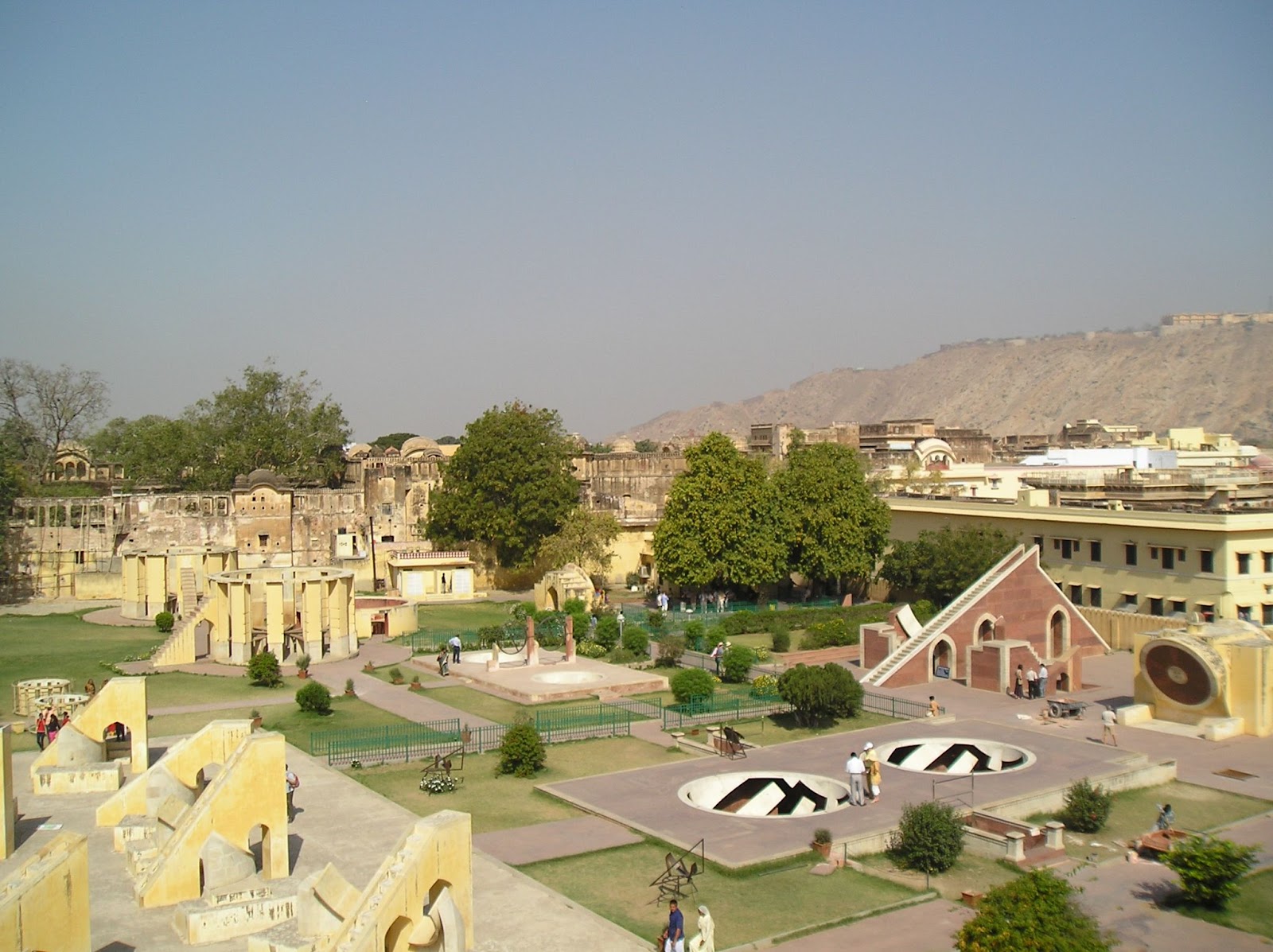
Jantar Mantar is an extraordinary blend of science, architecture, and art. The observatory houses a collection of massive masonry instruments built using stone, marble, and brass. Unlike modern telescopes, these instruments rely on the naked eye and precise geometric designs to track celestial bodies and measure astronomical events.
The most famous structure within the complex is the Samrat Yantra, the world’s largest stone sundial. Rising approximately 27 meters high, this monumental instrument can measure time with an accuracy of about two seconds under ideal conditions. Its enormous triangular gnomon casts a shadow that moves steadily across calibrated scales, allowing remarkably precise timekeeping.
The observatory contains more than a dozen major instruments, each designed for a specific purpose. The Jai Prakash Yantra helps determine the position of celestial objects, while the Ram Yantra measures altitude and azimuth. Other notable instruments include the Narivalaya Yantra, Dakshin Bhitti Yantra, Disha Yantra, Dhruv Yantra, and Raj Yantra. Together, these structures were used to predict eclipses, calculate planetary positions, determine local time, and observe seasonal changes.
Walking through the observatory feels like stepping into a giant open-air laboratory where astronomy, mathematics, and architecture come together in a unique and visually striking way.
Visitor Information
Jantar Mantar is open to visitors daily from 9:30 AM to 4:30 PM. Guided tours are available and highly recommended, as they help visitors understand the scientific principles behind the instruments.
The best time to visit is during the cooler months from October to March when Jaipur’s weather is pleasant for exploring outdoor monuments. Early mornings are ideal for photography and avoiding crowds.
Since the observatory is located in Jaipur’s old city area, visitors can easily combine their trip with nearby attractions such as City Palace, Hawa Mahal, and local markets.
How to Reach Jantar Mantar
By Air
The nearest airport is Jaipur International Airport, located approximately 13 kilometers away. Taxis, app-based cabs, and airport buses are readily available for reaching the monument.
By Train
Jaipur Junction Railway Station is about 5 kilometers from Jantar Mantar. Auto-rickshaws, taxis, and local buses provide convenient transportation from the station.
By Road
Jaipur is well connected to major cities such as Delhi, Agra, Udaipur, and Jodhpur through a network of national highways. Local buses, cabs, e-rickshaws, and auto-rickshaws can easily take visitors to the observatory.
Local Transport
The nearest Jaipur Metro station is Chandpole. From there, visitors can take an auto-rickshaw or cab to reach the monument within a few minutes.
Nearby Attractions
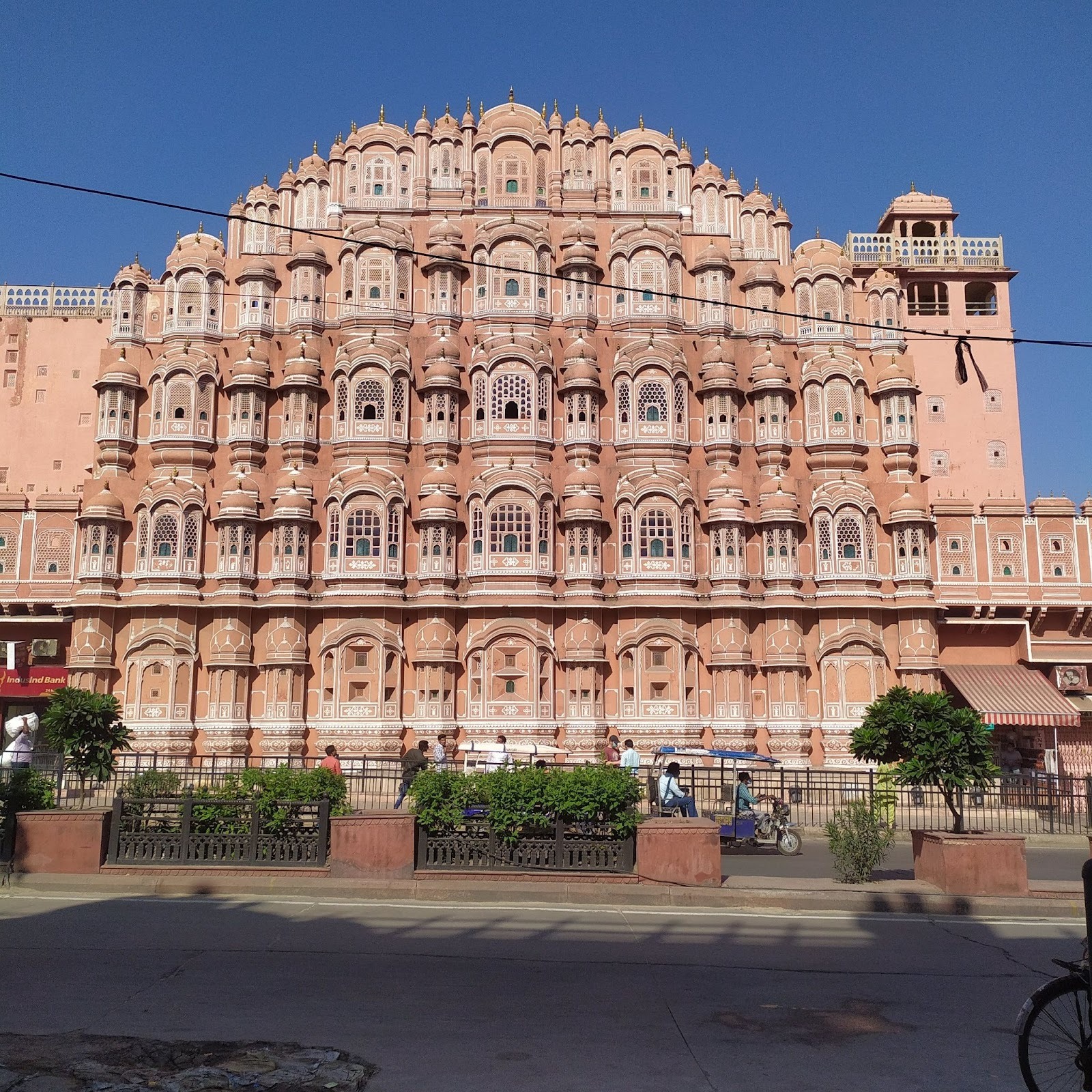
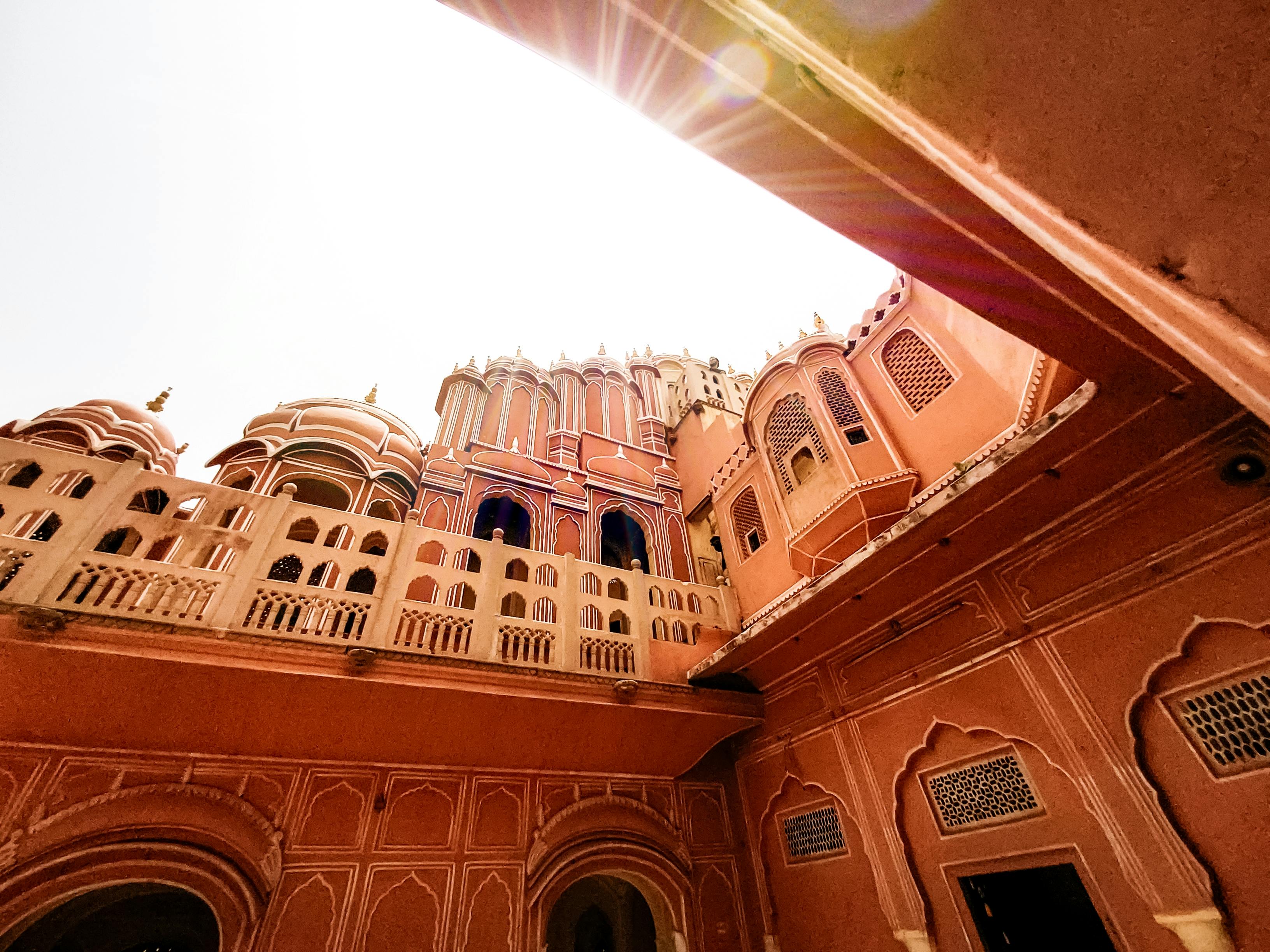
1. Hawa Mahal (350 m)
Known as the “Palace of Winds,” this iconic pink sandstone structure is famous for its intricate honeycomb windows and royal Rajput architecture.
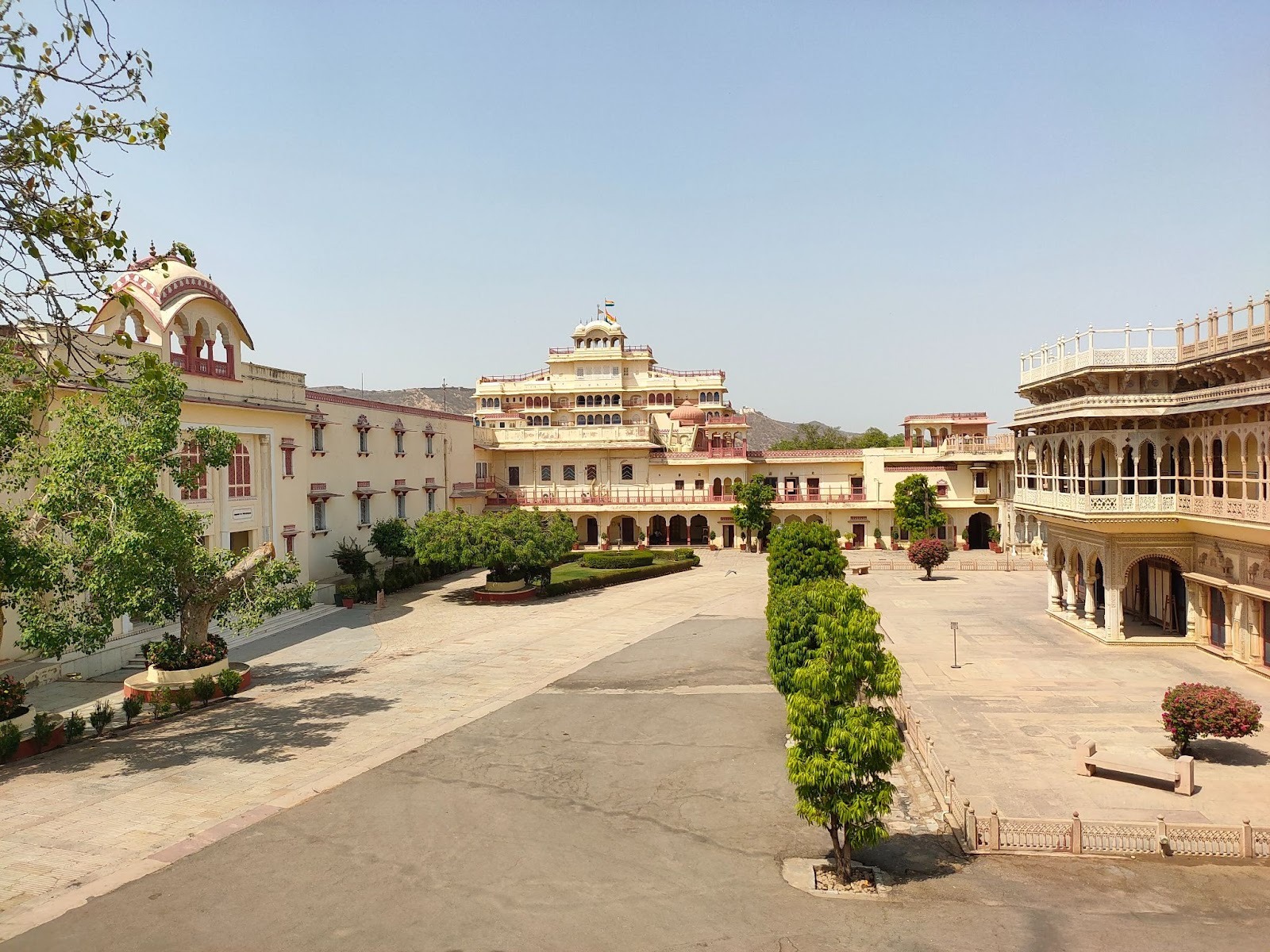
2. City Palace (Adjacent)
A magnificent royal residence featuring courtyards, museums, royal collections, and beautiful palace architecture.
3. Tripolia Bazaar (500 m)
One of Jaipur’s traditional markets, known for lac bangles, handicrafts, textiles, and local souvenirs.
4. Govind Dev Ji Temple (700 m)
A revered Krishna temple attracting thousands of devotees and known for its vibrant daily rituals.
5. Albert Hall Museum (2.5 km)
Rajasthan’s oldest museum, showcasing artifacts, paintings, sculptures, and historical collections.
6. Nahargarh Fort (6 km)
Perched on the Aravalli Hills, this fort offers panoramic views of Jaipur and spectacular sunset experiences.
Maps
Faqs
Q: What is Jantar Mantar in Jaipur?
A: It’s an astronomical observatory that is located in Jaipur, Rajasthan.
Q: Who built Jantar Mantar in Jaipur?
A: It was built by Rajput king, Maharaja Sawai Jai Singh II who constructed the astronomical observatory between 1727 and 1734.
Q: How many instruments are there in Jantar Mantar in Jaipur?
A: There are 19 architectural astronomical instruments that are designed to measure time, Celestial bodies, and other astronomical phenomena.
Q: Can visitors explore Jantar Mantar in Jaipur on their own?
A: Yes visitors can explore on their own or you can hire a guide to gain a deeper understanding of the instruments.
Q: Is there an entry fee for visiting Jantar Mantar in Jaipur?
A: Yes it’s Rs 50 per person and Rs 150 for foreigners.
Q: Is photography allowed?
A: Yes photography is allowed.
Q: Is Jantar Mantar wheelchair accessible?
A: Yes, it is wheelchair accessible.
Q: How much time does it take to visit Jantar Mantar?
A: Jantar Mantar usually takes around 2-3 hours.
Q: What is the best time to visit Jantar Mantar in Jaipur?
A: The best time to visit is during the daytime when sunlight is available,