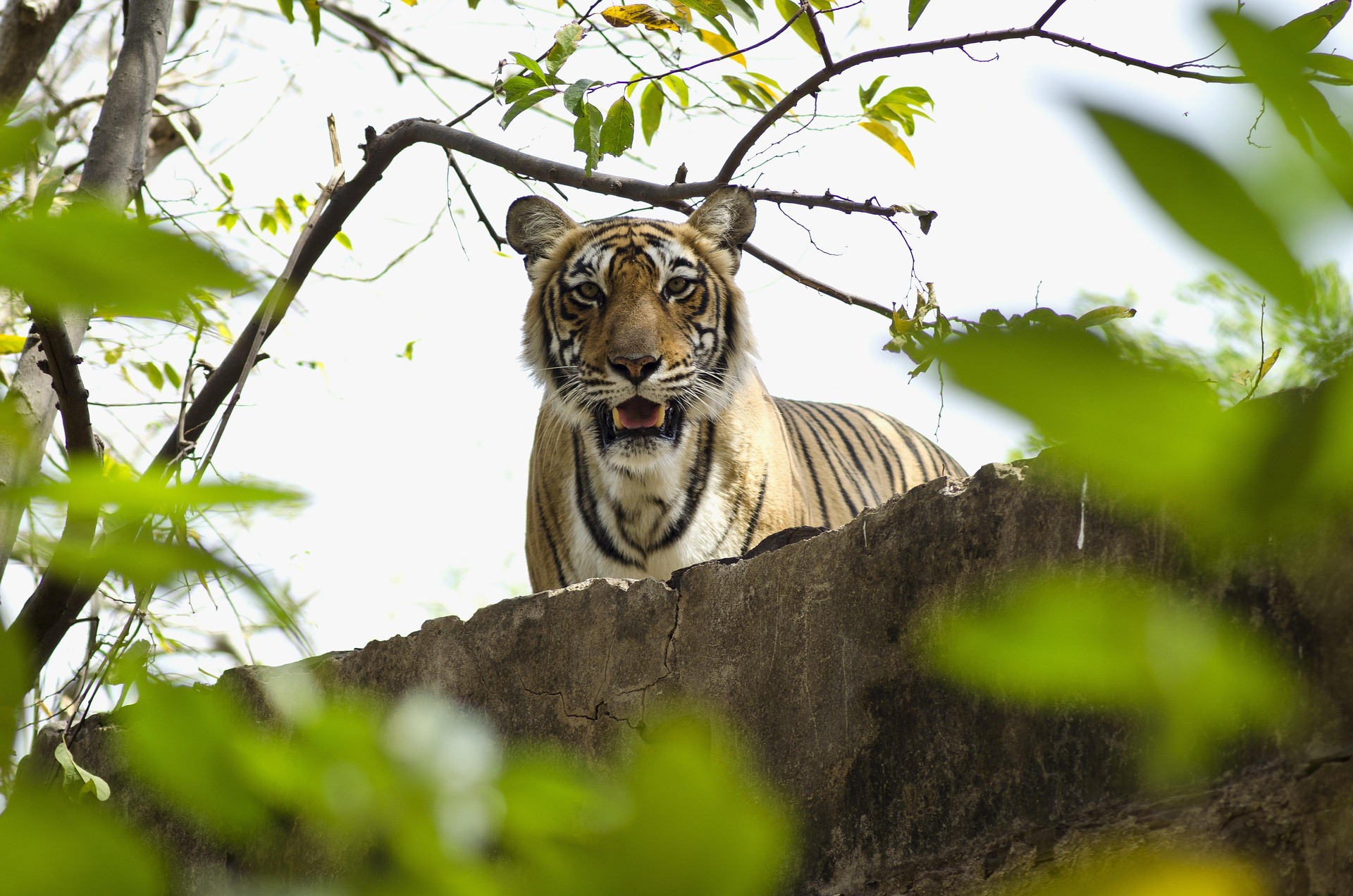
Image Source: Shivaji Chatterjee
About Ranthambore Fort
Nestled inside the famous Ranthambore National Park, Ranthambore Fort is one of Rajasthan’s most remarkable historical landmarks. Surrounded by dense forests, rocky hills, and wildlife-rich landscapes, the fort stands proudly atop a hill overlooking the wilderness of Ranthambore. Located around 13 kilometers from Sawai Madhopur and about 4.5 kilometers from the national park’s entry gate, the fort offers a fascinating blend of history, architecture, spirituality, and natural beauty.
Recognized as part of the UNESCO-listed Hill Forts of Rajasthan, Ranthambore Fort is more than just an ancient structure. It is a place where stories of Rajput valor, royal battles, devotion, and heritage still echo through massive stone walls and ancient gateways. Whether you are a history enthusiast, a wildlife lover, or a spiritual traveler, the fort offers an unforgettable experience.
History of Ranthambore Fort
The history of Ranthambore Fort dates back to the 8th century, making it one of the oldest forts in Rajasthan. Historical records suggest that the fort was built during the rule of the Chauhan Rajputs, with construction associated with King Sapaldaksha around 944 AD. Over the centuries, the fort became a strategically important stronghold because of its elevated location and natural defenses provided by the surrounding forests and cliffs.
Ranthambore Fort witnessed several fierce battles and invasions throughout its history. One of the most significant events occurred during the reign of Alauddin Khilji in the 13th century. Khilji attacked the fort to defeat the Rajput ruler Hammir Dev Chauhan, leading to one of the most famous sieges in medieval Indian history. The battle is remembered for the bravery and sacrifice of the Rajput warriors.
Later, in 1558, the fort came under the control of the Mughal Empire during the reign of Akbar. This marked the end of independent rule in Ranthambore. The fort remained under Mughal control until the mid-18th century before eventually becoming part of the Jaipur kingdom.
Today, the fort stands as a symbol of Rajasthan’s glorious past and continues to attract visitors from across the world.
Architecture of Ranthambore Fort
Ranthambore Fort is an excellent example of Rajput military architecture blended with Mughal influences. Built on a hill nearly 700 feet above the surrounding plains, the fort covers a vast area with a circumference of around 7 kilometers. Massive stone walls, defensive bastions, steep pathways, and giant gateways showcase the fort’s strength and strategic importance.
The fort’s elevated position provides spectacular panoramic views of the forests, lakes, and valleys of Ranthambore National Park. The approach to the fort itself feels dramatic, with ancient gates and rugged pathways creating an atmosphere that transports visitors back in time.
Inside the fort complex are several important structures, including the Hammir Palace, Rani Palace, Battis Khamba Chhatri, and old reservoirs. Though many parts are now in ruins, the remaining architecture still reflects the grandeur of the Rajput era.
One of the most interesting aspects of the fort is its blend of religious structures. Several temples and shrines are located within the fort premises, highlighting the cultural diversity that existed during medieval times.
Temples Inside the Fort
The fort is home to numerous Hindu and Jain temples that add spiritual significance to the historical site. Temples dedicated to Lord Shiva, Lord Rama, and Lord Ganesha were built using beautiful red Karauli stone during the 12th and 13th centuries. There are also Jain temples dedicated to Lord Sambhavnath and Lord Sumatinath.
Among all these shrines, the most famous is the Trinetra Ganesh Temple. Located near the main entrance of the fort, this temple is considered one of the oldest Ganesh temples in Rajasthan.
According to legend, during the intense battle between Hammir Dev Chauhan and Alauddin Khilji, the king dreamt of Lord Ganesha assuring him victory. The next morning, an idol of Lord Ganesha with three eyes mysteriously appeared within the fort. Believing it to be a divine blessing, the king installed the idol along with representations of Riddhi, Siddhi, Shubh, and Labh.
Even today, thousands of devotees send invitation cards for weddings and auspicious ceremonies to the Trinetra Ganesh Temple, believing that Lord Ganesha must be invited first before any important event.
Annual Fair and Religious Importance
Every year during September, a grand fair is organized at the Trinetra Ganesh Temple. Pilgrims from different parts of India visit the temple to seek blessings and participate in religious celebrations. The atmosphere during the festival becomes vibrant with devotional songs, rituals, local markets, and cultural activities.
The temple’s spiritual significance makes Ranthambore Fort not only a historical attraction but also an important pilgrimage destination in Rajasthan.
Exploring the Eastern Side of the Fort
Most tourists usually explore the western section of the fort, but the eastern part remains relatively untouched and peaceful. This lesser-known area is ideal for travelers looking to experience the quieter side of Ranthambore.
A small perennial stream known as Gupt Ganga flows through this section, adding to the scenic beauty of the surroundings. Dense vegetation, rocky terrain, and isolated pathways create a magical atmosphere for nature lovers and photographers.
The eastern section is also known for occasional wildlife sightings. Visitors may spot langurs, peacocks, exotic birds, and, if extremely fortunate, even leopards moving through the forested areas near the fort.
Scenic Views from the Fort
One of the highlights of visiting Ranthambore Fort is the breathtaking view from the top. The fort overlooks vast stretches of forest, lakes, and grasslands within Ranthambore National Park. During sunrise and sunset, the scenery becomes especially mesmerizing as golden light spreads across the rugged landscape.
From various points inside the fort, visitors can also spot famous water bodies such as Padam Talao and Rajbagh Lake, which are known for attracting wildlife, including tigers.
Best Time to Visit Ranthambore Fort
The best time to visit Ranthambore Fort is between October and March when the weather remains pleasant and comfortable for sightseeing. Summers in Rajasthan can be extremely hot, making daytime exploration difficult.
Early mornings and late afternoons are considered ideal for visiting the fort because the weather is cooler and the lighting is perfect for photography.
Travel Tips for Visitors
- Wear comfortable shoes because exploring the fort involves walking on uneven stone paths and climbing steps.
- Carry water, sunglasses, and a hat, especially during warmer months.
- If possible, combine your fort visit with a wildlife safari in Ranthambore National Park.
- Photography enthusiasts should carry cameras with zoom lenses for capturing scenic landscapes and wildlife views from the fort.
- Respect the religious significance of temples located within the fort premises.
Timings and Entry Fee
- Opening Hours: 8:00 AM to 5:00 PM.
- Entry Fee: Approximately ₹10 per person.
- Nearest Railway Station: Sawai Madhopur Railway Station.
- Nearest Airport: Jaipur International Airport.
How to Reach Ranthambore Fort
Ranthambore Fort is easily accessible from Sawai Madhopur. Visitors can hire private taxis, auto-rickshaws, or drive their own vehicles to reach the fort entrance. From the base area, a short uphill walk leads to the main fort complex.
Sawai Madhopur is well connected by rail and road to major cities such as Jaipur, Delhi, and Kota.
Map and Location
FAQs
Is Ranthambore Fort inside the national park?
Yes, Ranthambore Fort is located within Ranthambore National Park and is one of the park’s major historical attractions.
Why is Ranthambore Fort famous?
The fort is famous for its historical significance, Rajput architecture, panoramic views, ancient temples, and its location inside a tiger reserve.
How much time is needed to explore the fort?
Most visitors spend around 2 to 3 hours exploring the fort and its surrounding structures.
Is trekking involved in reaching the fort?
A moderate uphill walk is required from the parking area to the fort entrance, but it is manageable for most visitors.
Can wildlife be spotted near the fort?
Yes, visitors may spot monkeys, peacocks, deer, birds, and occasionally leopards in the surrounding forest areas.
What is special about the Trinetra Ganesh Temple?
The temple is believed to house one of the oldest three-eyed Ganesh idols in Rajasthan and holds immense religious importance among devotees.
Is photography allowed inside the fort?
Yes, photography is allowed, and the fort offers excellent opportunities for landscape and heritage photography.
What is the best season to visit Ranthambore Fort?
Winter, from October to March, is considered the best time due to pleasant weather and comfortable sightseeing conditions.