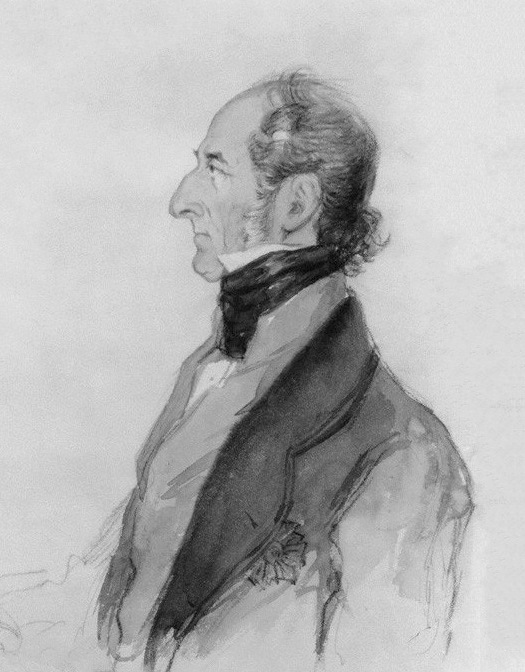
Image Source: Captain Martin
Restoring Law and Order
When the British took over Mysore in 1831 after the uprising, Cubbon’s first priority was to restore peace. At that time, violence was common, with murders often used to settle disputes. Disturbed by this, he strengthened the Silladar system—a force of native horsemen—by raising their pay to prevent corruption. He created a cavalry of 4,000 horses organized into seven regiments, with detachments for every taluk.
In 1834, he introduced a police code, separating the military from the police. The police had both armed and unarmed units: the armed group dealt with prisoners, guarded towns, prevented thefts, protected sandalwood trees, and even hunted tigers for a reward. The unarmed peons (called khalihaths, or “empty hands”) supported civic works like repairing roads and tanks. Cubbon also built a reporting structure staffed almost entirely by Indians.
Judicial and Administrative Reforms
Before Cubbon, Mysore had no uniform legal code. Drawing on ideas from his uncle, Colonel Wilks, he established a hierarchical judicial system. His reforms:
Abolished torture, mutilation, and corporal punishment.
Enforced one code of law for all classes and communities.
Reduced the powers of local chieftains (poligars), granting them pensions instead of authority.
Handled serious crimes personally when needed, though this sometimes conflicted with court rulings.
By 1841, to prevent abuse of the system, fines were imposed on frivolous lawsuits. His administration also had to manage frequent tensions between different communities. In some religious disputes, Cubbon introduced the idea of resolving conflicts by majority vote.
Cubbon set up nine departments (kacheris):
Revenue (Dewan)
Posts (Anche)
Police (Kandachar)
Public Works (Maramat)
Military (Sowar and Barr)
Medical
Public Cattle (Amrit Mahal)
Judiciary
Public Instruction
He also simplified administration by restricting official languages to Kannada and Marathi, reducing misuse and corruption.
Fiscal and Social Reforms
Cubbon introduced strict financial accountability, with records maintained in the Kantarayi Pagoda currency until it was replaced by East India Company currency in 1855.
He supported education and healthcare, funding schools, missionary institutions, hospitals, and homes for lepers. He outlawed slavery, forced labor, and torture in civil life. The prison system was modernized, with convict labor used for public works.
During the 1857 Revolt, Mysore remained largely peaceful under his governance. A small planned uprising in Srirangapatna was swiftly suppressed with help from Coorg warriors, who were later rewarded with an exception under the Disarmament Act.
Agricultural and Irrigation Initiatives
Cubbon gave great importance to agriculture. Farmers often suffered under corrupt officials and moneylenders, so he improved irrigation through projects on rivers like the Nugu, Shimsha, Hemavathi, Tunga, Bhadra, and Kaveri.
He founded the Agri-Horticultural Society in 1839 and transferred Lalbagh Gardens to it, envisioning it as a center for agricultural innovation. He introduced new crops like sugarcane, cotton, and tobacco, promoted horticulture, and worked on forestry. Plantations of sissoo and teak were established, and he restricted slash-and-burn farming to protect forests.
Infrastructure and Roads
Cubbon oversaw construction of an extensive road and bridge network. Roads were classified into four categories, linking towns and trade routes. He also opened passes through the Western Ghats at Agumbe, Boond, Sampaje, and Periambadi, connecting Mysore with the coast.
Religious and Cultural Support
While modernizing governance, Cubbon respected tradition. He supported maths, temples, old age homes, and religious institutions funded by the Maharaja.
He also contributed to Kannada literature by financing the first Kannada translation of the Bhagavad Gita (1849) and supporting the publication of the first Kannada-English dictionary (1858).
Style of Administration
Cubbon’s administration was remarkably cost-effective, requiring only about £13,000 a year and just four European officers. He preferred to rely on Indian officials, setting an example admired even decades later. Some scholars suggested that famine relief in India could be improved by “Cubbonizing administration,” meaning to rely more on local governance.
Honours and Later Years
In 1856, Cubbon was knighted as K.C.B. (Knight Commander of the Order of the Bath). When Mysore’s affairs were to be transferred to the Madras Presidency in 1859, he opposed the decision and offered his resignation. Though the order was withdrawn, failing health compelled him to resign in 1860.