Image Source: Vijender Singh NK
About ARIES
Astrotourism has become one of the fastest-growing forms of experiential travel, attracting people who want to witness the beauty of the night sky far away from city lights. Watching countless stars, planets, galaxies, meteor showers, and other celestial events with the help of powerful telescopes is both fascinating and educational. It offers visitors a chance to understand astronomy, space science, and our place in the vast universe while enjoying the serenity of nature.
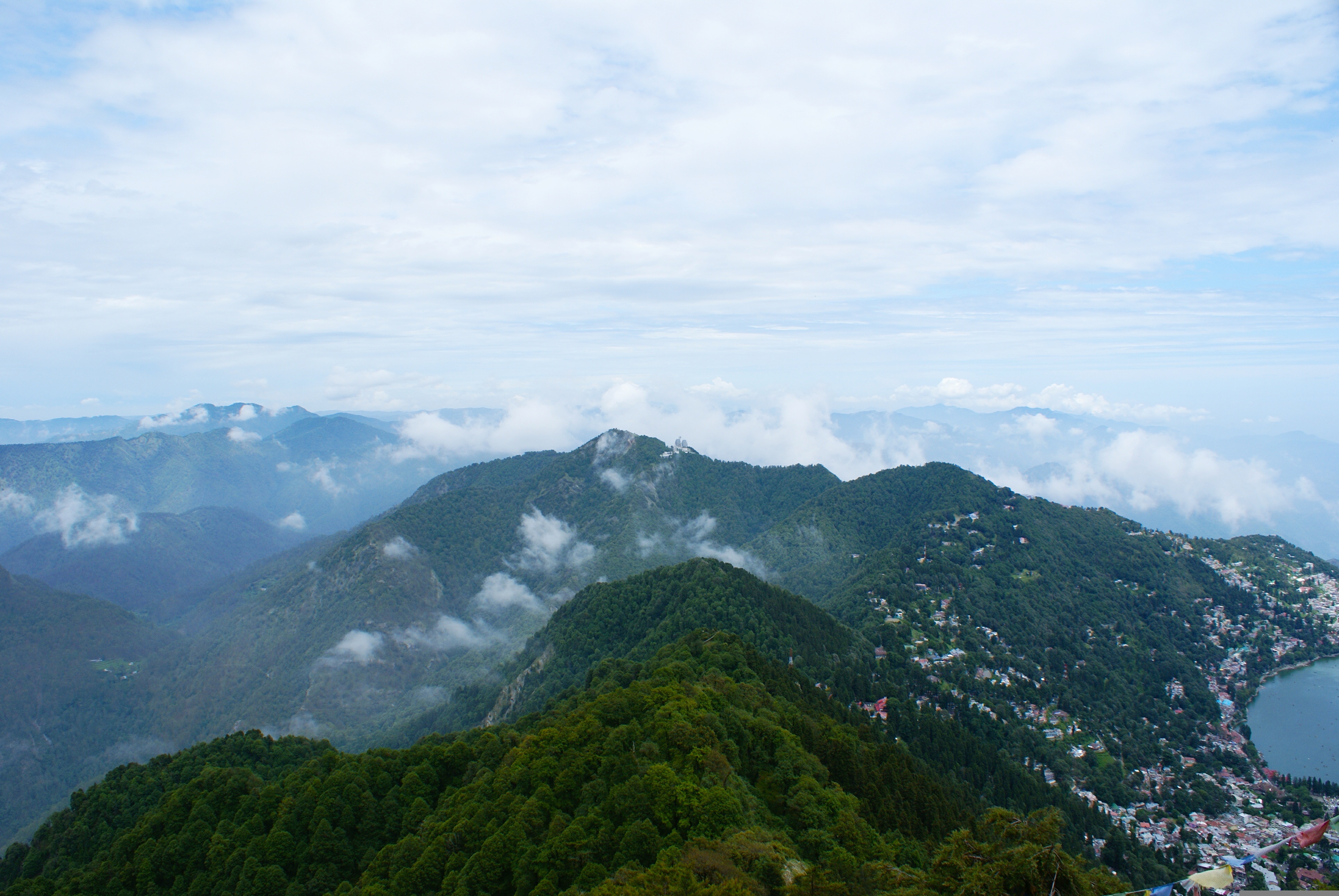
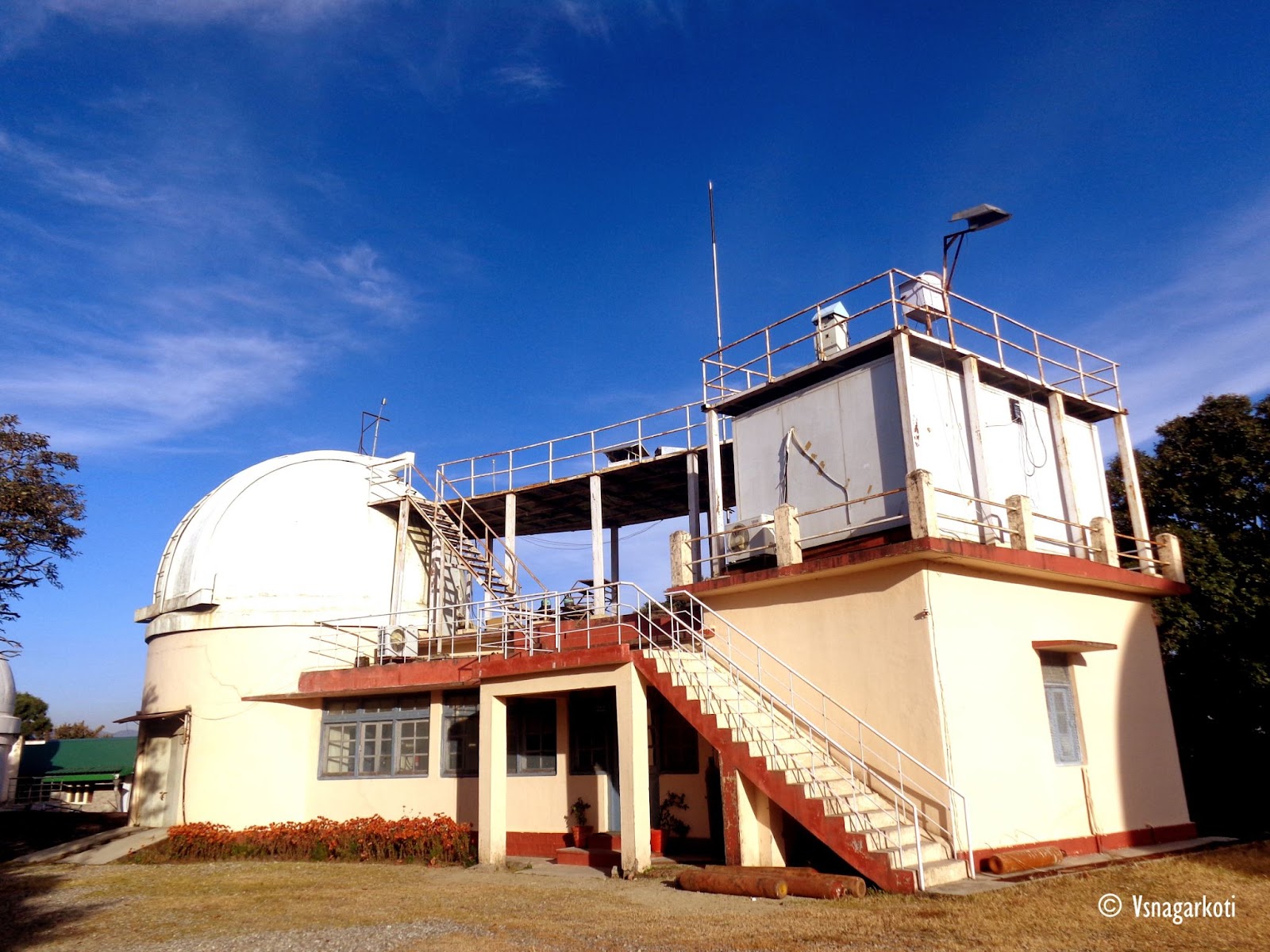
Since clear, dark skies are essential for astronomical observations, astrotourism destinations are usually located in remote mountains, deserts, and high-altitude regions with very little light pollution. Uttarakhand, with its pristine Himalayan landscapes and pollution-free skies, is one of the best places in India for stargazing. Among its most important scientific institutions is the Aryabhatta Research Institute of Observational Sciences (ARIES), situated at Manora Peak near Nainital.
Established in 1954 as the State Observatory of Uttar Pradesh, the institute was later reorganized and, in 2004, became an autonomous research institute under the Department of Science and Technology (DST), Government of India. It was renamed Aryabhatta Research Institute of Observational Sciences (ARIES) in honour of the legendary Indian mathematician and astronomer Aryabhata. Today, ARIES is one of India’s leading centres for astronomical and atmospheric research and contributes significantly to international scientific studies.
The institute carries out advanced research in astronomy, astrophysics, atmospheric sciences, and solar physics. Scientists at ARIES study stars, galaxies, exoplanets, black holes, supernovae, and various cosmic phenomena using sophisticated observational equipment. Its peaceful location on Manora Peak, surrounded by pine and oak forests overlooking the Kumaon Himalayas, provides ideal conditions for astronomical observations.
Major Telescopes at ARIES
Devasthal Optical Telescope (3.6-m)
The 3.6-metre Devasthal Optical Telescope (DOT) is India’s largest operational optical telescope and one of the most advanced astronomical facilities in Asia. Located at Devasthal near Nainital, this telescope is equipped with a high-precision primary mirror that enables scientists to observe extremely distant stars, galaxies, nebulae, and other celestial objects. It also supports research in visible and near-infrared astronomy, helping astronomers study the formation and evolution of galaxies and planetary systems.
Himalayan Chandra Telescope
The 2-metre Himalayan Chandra Telescope is another important observational instrument used by ARIES researchers. It plays a crucial role in studying galaxies, variable stars, star clusters, active galactic nuclei, and planetary systems. Its high-resolution imaging capabilities contribute to both national and international astronomy research projects.
Solar Tower Telescope
The Solar Tower Telescope is dedicated to observing the Sun. Scientists use it to study sunspots, solar magnetic fields, solar flares, prominences, and other solar activities that influence Earth’s space weather. Research conducted through this telescope helps improve our understanding of solar cycles and their effects on satellites, communication systems, and climate.
Research and Scientific Facilities
Apart from its world-class telescopes, ARIES has modern laboratories, engineering workshops, optical instrument facilities, electronics divisions, and precision mechanical units that help maintain and develop sophisticated scientific equipment. The institute’s workshops are equipped with advanced tools required for designing, repairing, and calibrating delicate astronomical instruments.
ARIES also houses a modern computer centre that supports large-scale astronomical data processing and computational research. Its well-stocked scientific library contains more than 10,000 books, journals, research publications, and technical documents related to astronomy, astrophysics, atmospheric sciences, mathematics, and physics. These facilities enable researchers and scientists to collaborate with leading international observatories and contribute to cutting-edge scientific discoveries.
Visiting ARIES
Although ARIES is primarily a research institution and not a conventional tourist attraction, visitors can explore certain parts of the campus through educational visits and special outreach programmes. The observatory occasionally organizes astronomy awareness programmes, telescope demonstrations, and public outreach events, especially during significant celestial events.
Since the institute functions as an active scientific research centre, prior permission is required before visiting the campus. Visitors should contact the institute in advance to obtain approval and confirm visiting schedules. Following institute guidelines helps ensure that research activities remain uninterrupted.
How to Reach ARIES
ARIES is located at Manora Peak, about 9 km from Nainital town in Uttarakhand.
By Road: Nainital is well connected by road to Delhi, Haldwani, Kathgodam, Almora, Ranikhet, and other towns in Uttarakhand. From Nainital, taxis and local cabs are easily available to reach Manora Peak, where the institute is situated.
By Train: The nearest railway station is Kathgodam Railway Station, approximately 35 km from ARIES. Kathgodam has regular train services from Delhi, Lucknow, Dehradun, and other major cities. From the railway station, visitors can hire taxis or take buses to Nainital and then continue to ARIES.
By Air: The nearest airport is Pantnagar Airport, located around 70 km away. Regular flights connect Pantnagar with Delhi. From the airport, taxis are available to Nainital and Manora Peak.
Nearby Attractions
- Nainital Lake – The iconic lake surrounded by hills, famous for boating and scenic walks.
- Naina Devi Temple – One of the most revered temples in Uttarakhand, situated on the northern shore of Naini Lake.
- Snow View Point – Offers spectacular views of Nanda Devi, Trishul, and other Himalayan peaks via ropeway or road.
- Eco Cave Gardens – A family-friendly attraction featuring interconnected caves and landscaped gardens.
- Tiffin Top (Dorothy’s Seat) – A popular viewpoint offering panoramic views of Nainital and the surrounding mountains.
- Governor’s House (Raj Bhavan) – A magnificent Scottish-style heritage building surrounded by beautifully maintained gardens.
- Hanuman Garhi – A hilltop temple famous for its peaceful atmosphere and stunning sunset views.
- Kilbury Bird Sanctuary – A paradise for birdwatchers, home to hundreds of Himalayan bird species.
- Sattal – A picturesque cluster of seven interconnected freshwater lakes surrounded by dense forests.
- Bhimtal – A peaceful lake town known for boating, kayaking, and its island aquarium.
Maps
FAQs
1. What is ARIES?
ARIES (Aryabhatta Research Institute of Observational Sciences) is India’s premier astronomical and atmospheric research institute located near Nainital.
2. Where is ARIES located?
It is situated at Manora Peak, about 9 km from Nainital in Uttarakhand.
3. Can tourists visit ARIES?
Yes, but visitors generally require prior permission because it is an active scientific research institution.
4. Why is ARIES famous?
It is known for advanced astronomical research, modern telescopes, and its contributions to astrophysics and atmospheric sciences.
5. Which is the largest telescope at ARIES?
The 3.6-metre Devasthal Optical Telescope is India’s largest operational optical telescope.
6. Is ARIES suitable for children and students?
Yes. Educational visits are highly informative for students interested in astronomy, physics, and space science.
7. What is the best time to visit ARIES?
October to April offers clearer skies and pleasant weather, making it the best season for astronomy-related visits.
8. How far is ARIES from Nainital Lake?
The institute is approximately 9 km from Nainital Lake.
9. Can visitors use the telescopes?
Public telescope access is generally limited and depends on outreach programmes or special astronomy events organized by the institute.
10. Is ARIES one of the best places for astrotourism in Uttarakhand?
Yes. Combined with the dark skies of the Kumaon Himalayas and nearby observatories, ARIES is among the most important destinations for astronomy enthusiasts and science-based tourism in Uttarakhand.