Image Source: Mayank Pandey
About Dwaj Temple
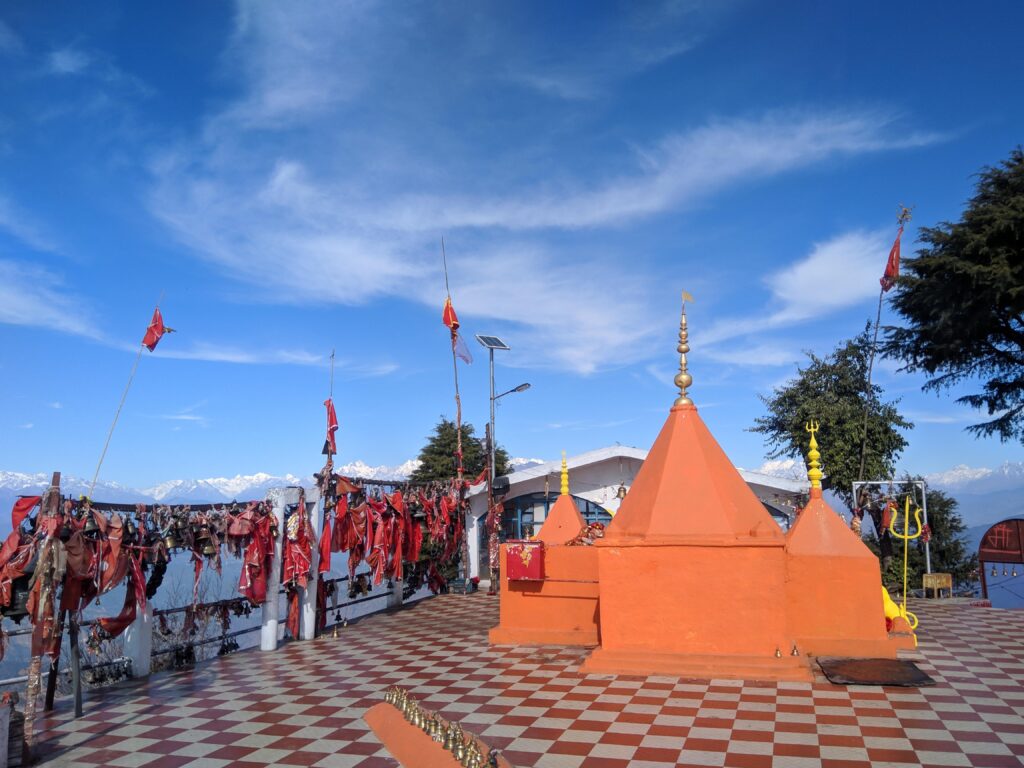
Nestled amidst the serene hills of Pithoragarh, Dwaj Temple is a peaceful and spiritually significant shrine dedicated to Lord Shiva and Goddess Jayanti, a revered form of Goddess Parvati. Perched at an altitude of around 2,100 meters above sea level, the temple is surrounded by dense forests, rolling hills, and breathtaking Himalayan landscapes that attract both pilgrims and nature lovers alike.
Reaching the temple is an experience in itself. Visitors need to undertake a scenic trek of nearly 4 kilometers, which usually takes around two hours to complete. Although the trail involves a moderate climb, the mesmerizing views of the surrounding valleys and snow-covered peaks make the journey enjoyable and refreshing. The cool mountain breeze, chirping birds, and untouched natural beauty create a calming atmosphere throughout the trek.
Located about 10 kilometers from the main road in Pithoragarh town, the temple stands atop a hill and offers panoramic views of the Kumaon Himalayas. On clear days, visitors can witness stunning mountain vistas stretching far into the horizon. The peaceful environment around the temple makes it an ideal destination for meditation, photography, and spiritual retreats.
Mythological Significance of Dwaj Temple
Dwaj Temple holds deep mythological importance in Hindu tradition. According to local beliefs and legends, the temple is associated with a fierce battle between good and evil. It is believed that Lord Shiva defeated the demons Shumbh and Nishumbh at this very location. Goddess Jayanti, considered an incarnation of Goddess Parvati, is also said to have played a divine role in the victory.
The word “Dhwaj” means “flag” or “symbol of victory,” representing the triumph of righteousness over evil forces. Devotees visit the temple seeking blessings for courage, protection, and inner peace. The spiritual aura of the temple, combined with its mythological background, makes it a revered pilgrimage site in the Kumaon region.
Trekking Experience
The trek to Dwaj Temple is one of the major highlights for visitors. The route passes through beautiful forests filled with oak and rhododendron trees, especially vibrant during spring. Adventure enthusiasts and trekkers often include this trail in their travel plans while exploring Pithoragarh.
The path is relatively manageable for beginners, though comfortable trekking shoes and water are recommended. Early morning visits are considered the best, as the weather remains pleasant and the mountain views are clearer.
Best Time to Visit
The ideal time to visit Dwaj Temple is between March and June and again from September to November. During these months, the weather remains pleasant, and the trekking route becomes more enjoyable. Winters can be quite cold, and occasional snowfall may make the trail difficult.
Temple Timings
According to information available online, Dwaj Temple remains open on all days of the week. However, there is no officially confirmed or authentic information available regarding the exact opening and closing timings. Visitors are advised to plan their trip during daylight hours for a safer trekking experience.
How to Reach Dwaj Temple
- By Road: Pithoragarh is well connected by road to major towns of Uttarakhand.
- By Rail: The nearest major railway station is Tanakpur Railway Station.
- By Air: The nearest airport is Pantnagar Airport.
- From Pithoragarh town, visitors can drive towards the base point and then begin the 4-kilometer trek to the temple.
Nearby Attractions
While visiting Dwaj Temple, travelers can also explore several nearby attractions in and around Pithoragarh, including:
- Pithoragarh Fort.
- Kapileshwar Mahadev Temple.
- Askot Wildlife Sanctuary.
- Chandak Hills.
Maps and Location
FAQs
1. Where is Dwaj Temple located?
Dwaj Temple is located in the Pithoragarh district of Uttarakhand, India, on a hilltop surrounded by scenic Himalayan landscapes.
2. Which deity is worshipped at Dwaj Temple?
The temple is dedicated to Lord Shiva and Goddess Jayanti, a form of Goddess Parvati.
3. How difficult is the trek to Dwaj Temple?
The trek is moderately easy and covers around 4 kilometers. Most visitors complete it in approximately two hours.
4. What is the significance of the name “Dhwaj”?
The word “Dhwaj” symbolizes victory and represents the triumph of good over evil according to Hindu mythology.
5. What is the best time to visit Dwaj Temple?
The best time to visit is from March to June and September to November when the weather is pleasant and the trekking route is accessible.
6. Are there any entry fees for visiting the temple?
No major entry fee is generally charged for visiting Dwaj Temple.
7. Is photography allowed at the temple?
Yes, visitors can usually take photographs of the scenic surroundings, though respectful behavior inside the temple premises is advised.
8. Are food and accommodation facilities available nearby?
Basic facilities may be available in Pithoragarh town, but visitors should carry water and light snacks during the trek.